Edinburgh Neighbourhoods: Complete Area-by-Area Guide (2026)
Almost everyone’s first trip to Edinburgh happens inside a rectangle about a mile long: the Royal Mile, Princes Street, and the gardens in the valley between them. It is a magnificent rectangle. It is also roughly two per cent of the city, and it is the part with the highest prices, the densest crowds and the least idea of what Edinburgh is actually like to live in.
Step out of it and you find something unusual for a capital city: Edinburgh is a collection of absorbed villages that never quite lost their edges. Stockbridge still behaves like a market town. Duddingston has a loch, a twelfth-century kirk and Scotland’s most argued-over pub. Portobello has a proper beach, twenty minutes from the Castle by bus. This guide takes every district a visitor might reasonably want, tells you what each is honestly good for, how long it takes to reach on foot, and whether it is worth an afternoon, an hour, or a polite pass.
Edinburgh’s Neighbourhoods at a Glance
Walking times are from the middle of Princes Street, and every one of them involves a hill in at least one direction.
| Neighbourhood | Best for | Walk | Worth it? |
|---|---|---|---|
| Old Town | History, closes, the big sights | 0–5 min | Unavoidable, and rightly so |
| New Town | Georgian architecture, shopping, flat streets | 0–10 min | Yes — the other half of the World Heritage Site |
| West End | Independent shops, quiet Georgian corners | 10–15 min | Yes, for an hour |
| Grassmarket & West Bow | Pubs, Victoria Street, Castle views | 12–15 min | Yes, before 9pm |
| Stockbridge | Village feel, Sunday market, Circus Lane | 20 min | Yes — the best half-day off the tourist trail |
| Dean Village | Photographs, the Water of Leith | 15–20 min | Yes, but it is 30 minutes’ worth |
| Broughton | Bohemian bars, brunch, LGBTQ+ venues | 10 min | Yes, for an evening |
| Southside & Newington | Student life, Summerhall, the Meadows | 15–20 min | Yes, especially in August |
| Bruntsfield & Marchmont | Cafés, delis, green space | 20–25 min | Yes, if you like walking |
| Morningside | Genteel high street, second-hand shops | 35–40 min | Bus it, and only with time to spare |
| Tollcross | Cask ale, theatres, cheaper rounds | 15 min | Yes, for a pub crawl |
| Leith & The Shore | Food, waterfront, Britannia, distilleries | 44 min — take the tram | Yes. The single best day out. |
| Newhaven | Harbour, lighthouse, quiet seafront | Tram terminus | Yes, tacked onto Leith |
| Portobello | Beach, promenade, swimming | 20–25 min by bus | Yes on a good day, genuinely |
| Cramond | Tidal island walk, Roman fort, estuary | Bus, c. 35 min | Yes — check the tide first |
| Duddingston | Loch, secret garden, ancient pub | 40 min via Holyrood Park | Yes, combined with Arthur’s Seat |
| Colinton | The painted tunnel, river walk | Bus, c. 30 min | Only on a repeat visit |
| Corstorphine | Edinburgh Zoo, suburban Edinburgh | Bus, c. 25 min | For the zoo, nothing else |
How Edinburgh Is Put Together
The geography explains almost everything, and thirty seconds of it will save you an hour of confusion.
The Old Town sits on a crag and tail — a volcanic plug with a long ridge of glacial debris trailing east behind it. The plug is Castle Rock; the tail is the Royal Mile, running downhill to Holyrood. Everything in the medieval city was squeezed onto that ridge, which is why the closes run steeply off it on both sides rather than sprawling.
To the north lay the Nor Loch, an artificial defensive lake, drained in stages from the 1760s. It is now Princes Street Gardens, and it is the reason the Old and New Towns face each other across a green trench instead of merging. Beyond it, the New Town was laid out from 1767 on a deliberate grid — flat, wide, rational, and the exact opposite of everything south of the valley. The two together form the UNESCO World Heritage Site.
Everything else was a separate settlement that Edinburgh grew into: Leith was an independent burgh until 1920 and has never entirely forgiven the merger; Stockbridge, Dean Village, Duddingston, Cramond, Corstorphine and Colinton were all villages first. The Water of Leith, a small river running north-east from the Pentlands to the sea, threads several of them together and gives you a 12-mile walkway you can join and leave at will. Our guides to the Royal Mile and Old Town, the Georgian New Town and the UNESCO site cover the centre in depth.
The Central Neighbourhoods
Old Town
The Royal Mile, the Castle, St Giles’, Holyrood, the closes, the vaults and the great majority of Edinburgh’s paid attractions. It is the oldest continuously inhabited part of the city and it looks it, in the best way: seven-storey tenements, blackened stone, stairs that vanish into gaps between buildings.
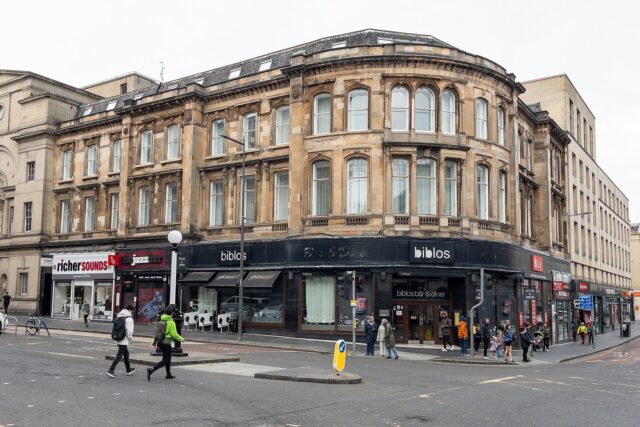
The honest verdict: essential, and also the most heavily touristed street in Scotland. The Mile itself has drifted towards tartan shops, fudge and bagpipe buskers; the good things are 30 to 90 seconds off it, down a close or up a stair. Treat the Mile as a corridor between the closes rather than a destination. See our guide to Edinburgh’s closes and wynds.
Grassmarket and the West Bow
A wide cobbled square under the south face of the Castle, historically a livestock market and a place of public execution, now a run of pubs and outdoor tables with the best free Castle view in the city. Victoria Street curves up out of its north-east corner — the rainbow-coloured terrace of independent shops that everyone photographs and half the internet believes inspired Diagon Alley.
The honest verdict: lovely in daylight and early evening; from about 9pm on a Friday or Saturday it belongs to stag and hen parties. If that is not your night, cross to Tollcross, ten minutes away, and you are in a different city. More in our Grassmarket guide and Victoria Street guide.
New Town
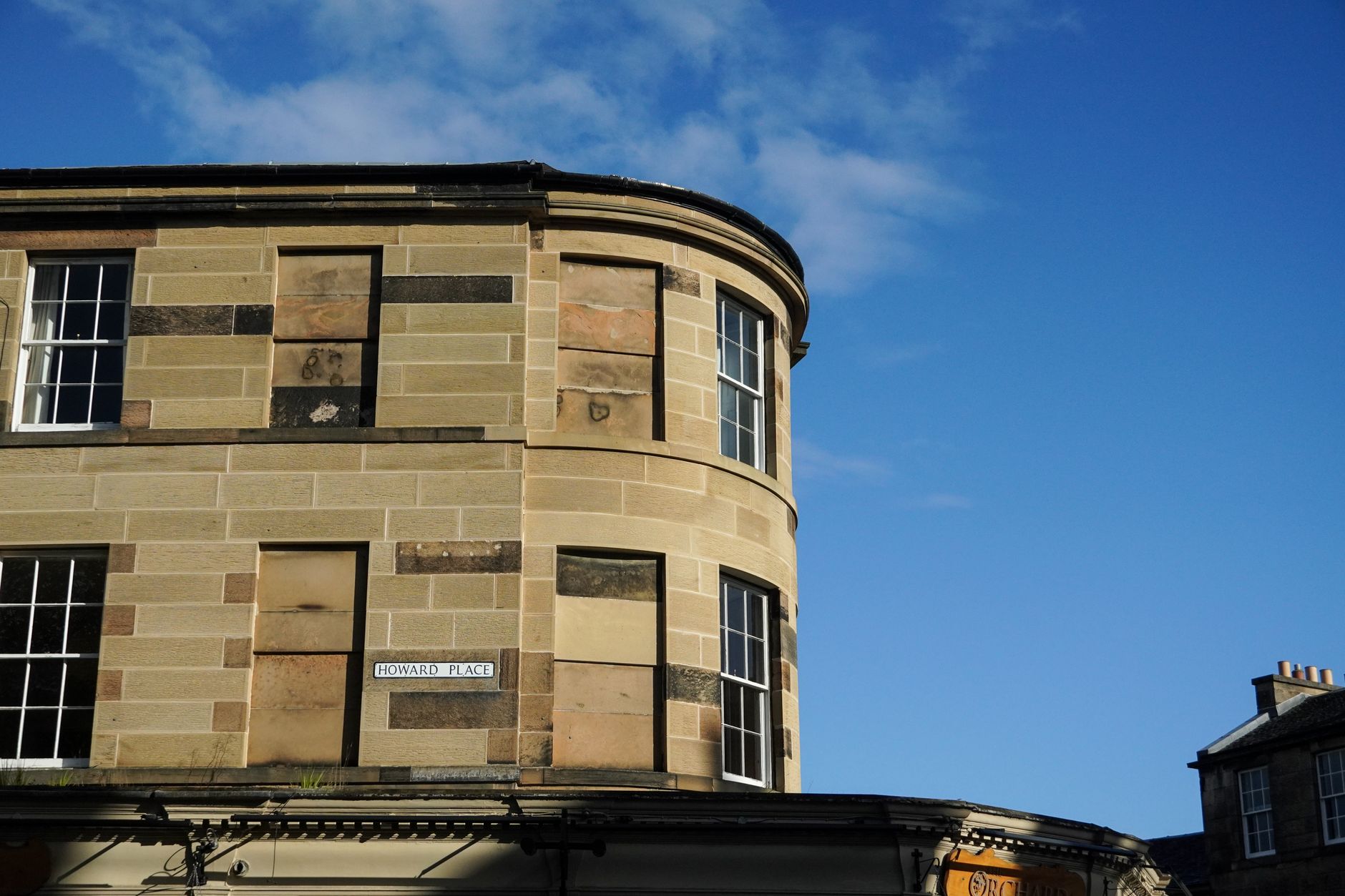
The largest surviving planned Georgian townscape in the world, and the reason Edinburgh’s World Heritage listing covers two towns rather than one. Princes Street, George Street and Queen Street run parallel east–west, anchored by Charlotte Square at one end and St Andrew Square at the other, with Rose Street and Thistle Street tucked between them.
This is where the shopping is, where the flat walking is, and where a large share of the good restaurants and cocktail bars sit. It is also where you should stay if hills or steps are a concern.
The honest verdict: Princes Street itself is a tired retail strip with a spectacular south-facing view; George Street and the streets north of Queen Street are where the architecture actually rewards you. Walk up to Moray Place and the Northern New Town if you want to see what the money looked like.
West End
The wedge west of the New Town, around Shandwick Place and the crescents behind it. William Street — two short blocks of independent boutiques, delis and small bars — is the bit worth walking for, along with the West End Village around Stafford and Alva Street. St Mary’s Cathedral, the Usher Hall, the Lyceum and the Traverse theatres are all here, which makes it the pre-theatre eating district.
The honest verdict: underrated for a wander, and a very good place to stay — quiet, Georgian, five minutes from Haymarket station and fifteen from the Castle.
Broughton and Bellevue
Broughton Street runs downhill from the east end of Princes Street towards Canonmills, and it is the most relaxed street in central Edinburgh: independent delis and record shops, brunch places that are busy at 11am on a Tuesday, and the heart of the city’s LGBTQ+ scene around the top of the street.
The honest verdict: ten minutes from Waverley and almost entirely free of tourists. If you want one evening that feels like the city rather than the visit, spend it here.
Tollcross and Lothian Road
South-west of the Castle, where five roads meet. Cask ale pubs, cheaper rounds than anywhere central, the Cameo cinema, the King’s Theatre and the Filmhouse. It is unglamorous and it is where a lot of Edinburgh actually drinks.
The honest verdict: not a sightseeing destination. An excellent evening destination, and the escape hatch when the Grassmarket turns.
Southside, Newington and the Meadows
South of the Old Town across the Bridges: the university quarter, and in August one of the busiest Fringe zones in the city. The Meadows is a broad flat park crossed by tree-lined paths, the closest thing Edinburgh has to a common. Summerhall, a former veterinary school turned arts complex, is the most interesting single venue south of the Mile. Nicolson Street and Clerk Street give you cheap eats, second-hand bookshops and Surgeons’ Hall.
The honest verdict: good value for food and accommodation, walkable to everything, and genuinely lively in term time. Less picturesque than the north side of the city, and it does not pretend otherwise.
Bruntsfield, Marchmont and Morningside
The southside villages, running out from the Meadows towards the Pentlands. Marchmont is dense Victorian tenements full of students and families, facing the Meadows. Bruntsfield has the best independent high street in south Edinburgh — delis, bakeries, a very good cheesemonger — plus Bruntsfield Links, where the city picnics the moment the sun appears and where a short-hole golf course has run since the sixteenth century. Morningside, further out, is the genteel one: charity shops of unusually high quality, tearooms, and Muriel Spark’s Edinburgh.
The honest verdict: Bruntsfield rewards a 25-minute walk. Morningside is a bus ride and a nice hour rather than a must-see — go if you like second-hand shopping or literary pilgrimage, skip it on a three-day trip.
Along the Water of Leith
Dean Village
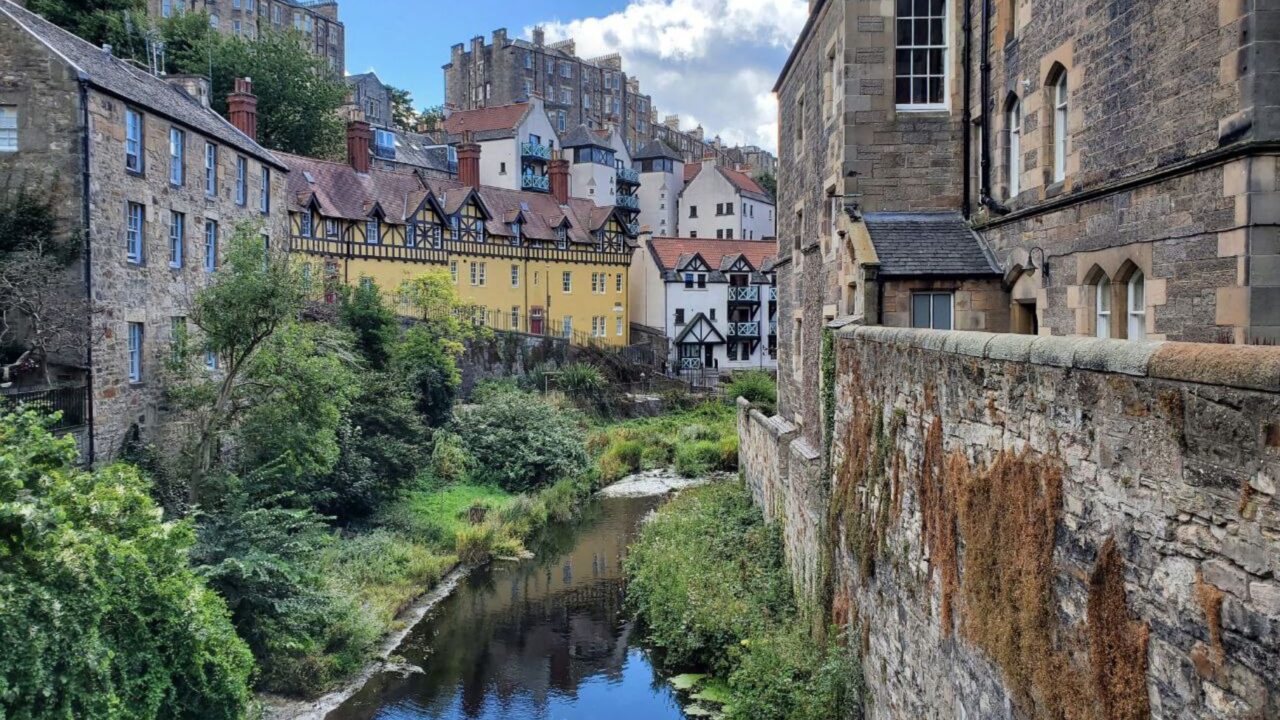
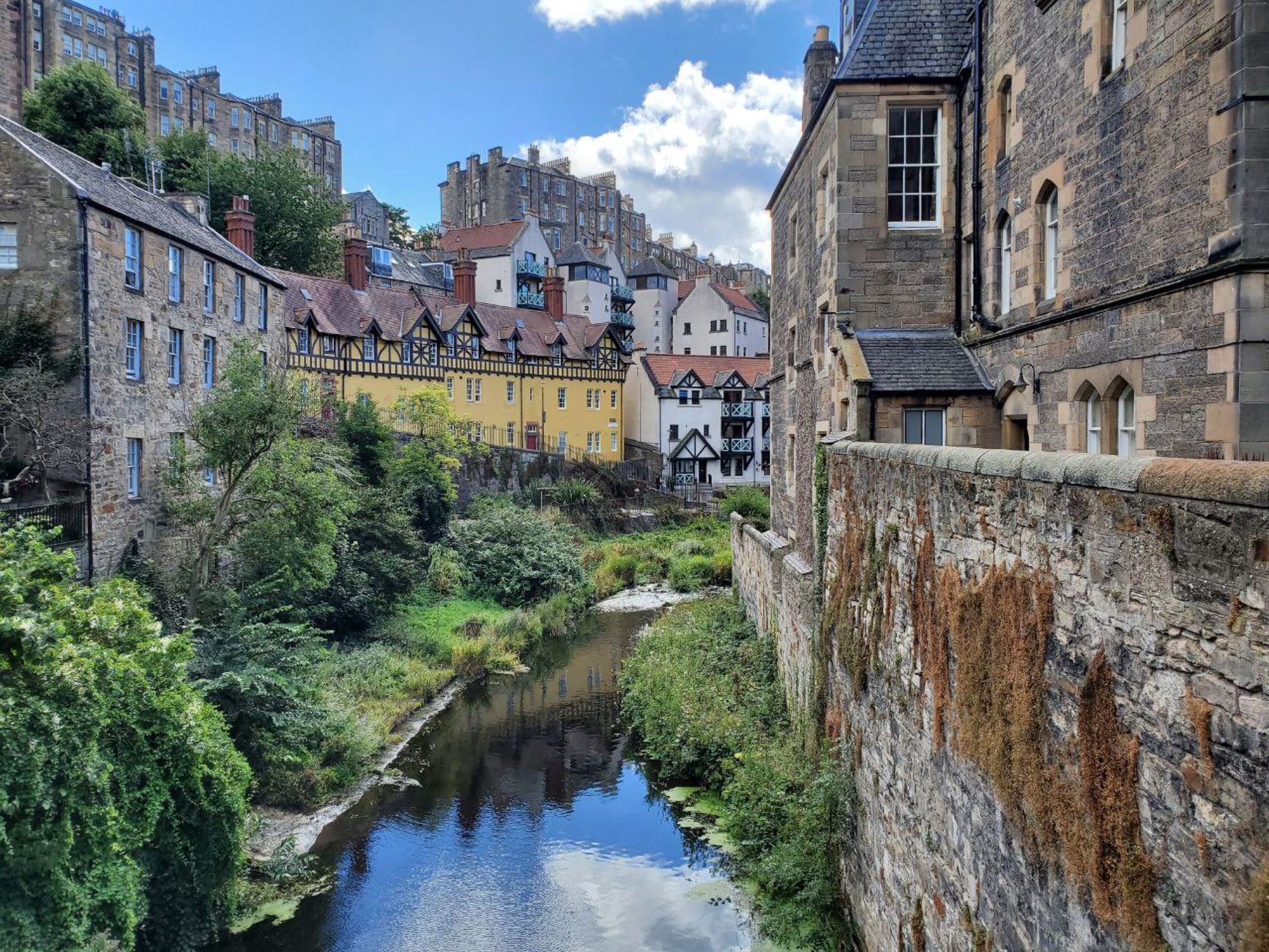
A pocket of red-and-cream mill buildings in a gorge below the level of the city, fifteen minutes’ walk from Princes Street and completely hidden until you are in it. As many as eleven water mills once ran here, grinding grain for Edinburgh; the surviving buildings are mostly nineteenth-century workers’ housing, now some of the most photographed frontages in Scotland.
The honest verdict: beautiful, tiny, and about thirty minutes of actual content. Do not make a special trip; make it the middle of a walk. The right route is Princes Street → Dean Village → the Water of Leith walkway → Stockbridge, which takes 1.5 to 2 hours with stops and is one of the best free things to do in the city. Note that people live here, in numbers, and the village has grown weary of visitors photographing through their windows.
Detail and maps in our Dean Village walk guide.
Stockbridge
Twenty minutes downhill from Princes Street and the neighbourhood most visitors wish they had found sooner. It has a proper high street of independents, a very good Sunday market on Saunders Street (10am–4pm), the award-winning Golden Hare bookshop, an unusual density of charity shops with good stock, and Circus Lane — a cobbled mews of former stables under the spire of St Stephen’s, which is the single most photographed lane in Edinburgh and a residential street where people are trying to have breakfast.
The Royal Botanic Garden is a ten-minute walk north and free to enter; the Water of Leith runs along the bottom of the neighbourhood and takes you to Dean Village in one direction and Leith in the other. The Scottish National Gallery of Modern Art sits between Stockbridge and Dean, also free.
The honest verdict: the best half-day off the tourist trail in Edinburgh, and the answer to “where would a local take me?”. It closes early — this is not a late-night neighbourhood. See the Botanics guide and Modern One and Two.
The Coast
Leith and The Shore
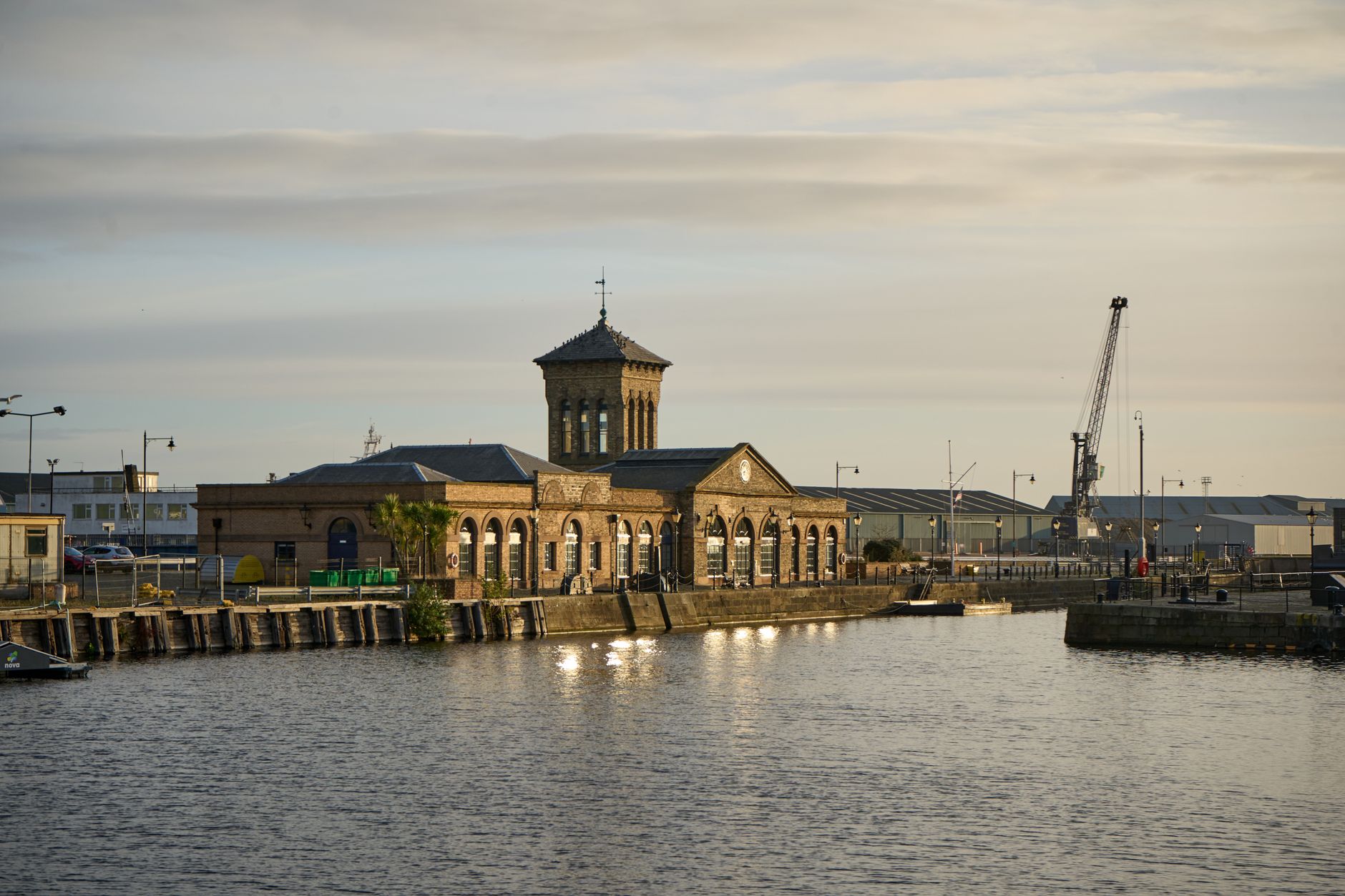
Edinburgh’s port, two miles north of the centre, an independent burgh until 1920 and still culturally distinct from the city that absorbed it. The Shore — the old harbour frontage on the Water of Leith — is the pretty part: a curve of stone quayside, moored boats, and a cluster of restaurants that includes several of the city’s Michelin-starred kitchens. Leith Walk, the long climb back to the New Town, is scruffier and more interesting.
What is here: the Royal Yacht Britannia, permanently berthed at Ocean Terminal and consistently one of the highest-rated attractions in the UK; the Port of Leith Distillery, a vertical whisky distillery with a viewing deck over the Forth; craft breweries, a dense strip of good and unfussy restaurants, and the best seafood in the city.
Getting there: the tram runs from Princes Street to Newhaven via Leith in about 15 minutes for £2.40; frequent buses do the same. Walking is genuinely 44 minutes from the centre, mostly downhill on the way out and entirely uphill on the way back — plan the return leg before you start drinking.
The honest verdict: the best single day out beyond the centre, and the neighbourhood where you will eat best. See our Leith seafood guide.
Newhaven
A former fishing village at the end of the tram line, ten minutes west of The Shore along the waterfront. A small stone harbour, a squat lighthouse, a view straight across the Forth to Fife, and a fish restaurant or two. There is not much of it.
The honest verdict: not a destination on its own. A perfect twenty-minute extension to a Leith afternoon, and the tram makes it free effort.
Portobello
Edinburgh has a beach. Two miles of sand, a Victorian promenade, beach huts, an ice cream shop queue in summer, and — the detail that surprises everyone — Portobello Baths, a restored Victorian swimming pool with the last working Turkish baths in Scotland. Locals swim in the Forth all year, which tells you more about locals than about the water temperature.
Getting there: Lothian routes 19 and 26 run regularly from Princes Street, 20 to 25 minutes.
The honest verdict: genuinely good on a bright day and genuinely bleak on a grey one, and Edinburgh produces both in the same week. If the forecast is kind, go — a beach twenty minutes from a medieval Old Town is not a normal thing to have. See our Portobello Beach guide.
Cramond
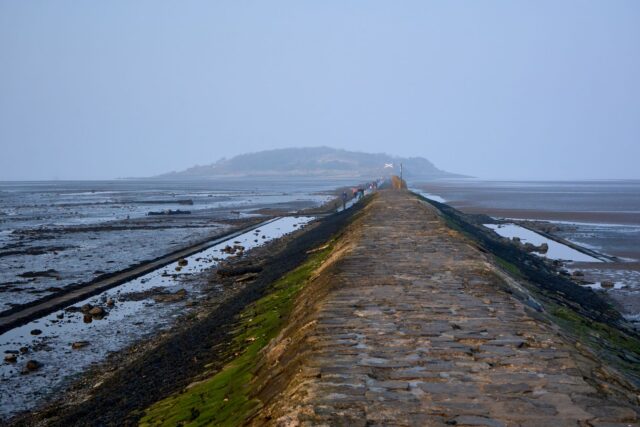
A whitewashed village where the River Almond meets the Forth, on the far north-west edge of the city. There was a Roman fort here in the second century; there is a medieval tower house, a kirk, a small harbour and an estuary full of wading birds. The draw is Cramond Island, reachable on foot along a mile-long causeway lined with the concrete pylons of a wartime anti-submarine boom.
Read this before you go. The causeway floods. It is crossable for roughly two hours either side of low tide, and the safe crossing times are posted on a board at the start of the causeway. The coastguard is called out to stranded walkers here several times a year, and it is entirely avoidable: check the board, note the time you must be back, and do not improvise. There is a refuge tower on the causeway if you misjudge it, and the emergency number is 999 for the Coastguard.
The honest verdict: one of the best free half-days in Edinburgh if the tide cooperates, and a wasted bus journey if it does not. Check before you leave the city, not when you arrive.
The Villages
Duddingston
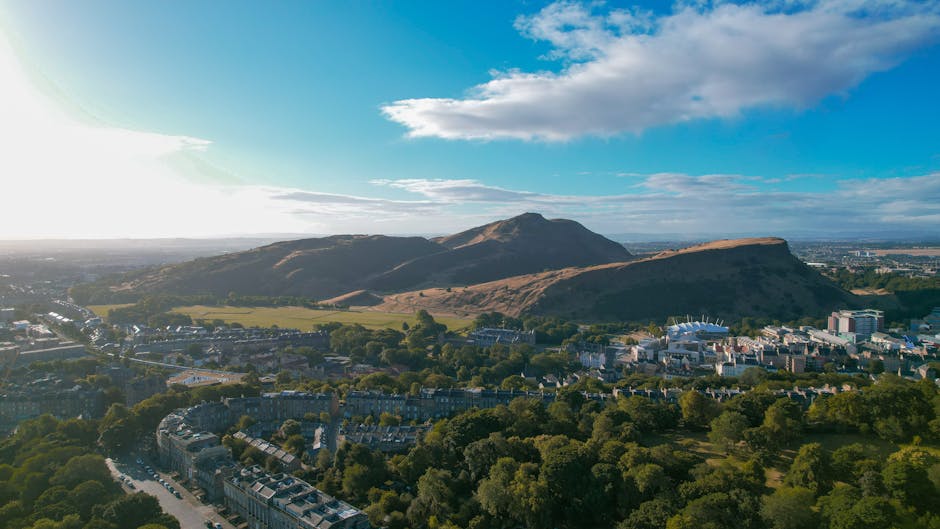
Tucked behind Arthur’s Seat on the far side of Holyrood Park, and one of the oldest villages inside the city. Cobbled lanes, stone cottages, a twelfth-century kirk, a loch that is a bird reserve, and Dr Neil’s Garden — a hillside garden created from waste ground by two GPs in 1963 and reached through the kirkyard. It is free, it is quiet, and it is the closest thing Edinburgh has to a secret.
The village also holds the Sheep Heid Inn, which advertises 1360 and a claim to be Scotland’s oldest pub. The date has no documentary support and the current building is much later, but the skittle alley in the back is real and unusual.
The honest verdict: excellent, and best reached the right way — walk over or around Arthur’s Seat from Holyrood and drop down into the village for lunch. About 40 minutes on foot from the Palace.
Colinton
South-west, on the Water of Leith. The reason to come is the Colinton Tunnel: 140 metres of disused Victorian railway tunnel, completely covered in 2021 by the largest mural of its kind in Scotland, illustrating Robert Louis Stevenson’s poem From a Railway Carriage. Stevenson spent childhood summers at the manse here. The tunnel sits on the Water of Leith walkway and is free and always open.
The honest verdict: a genuinely surprising thing that almost no visitor sees, and a 30-minute bus each way. Repeat visitors and anyone with children should go; first-timers on three days should not.
Corstorphine
Western suburb, on the airport tram and bus corridor. It has a fifteenth-century kirk and a pleasant hill with a view, but for visitors it means one thing: Edinburgh Zoo, built up the side of Corstorphine Hill and best known for its penguin parade and for being the only UK zoo with giant pandas — a loan that ended in 2023.
The honest verdict: go for the zoo if you have children, and otherwise do not go at all.
Which Neighbourhood Should You Stay In?
Where you sleep changes an Edinburgh trip more than in most cities, because the distances are short but the hills are not.
| You are… | Stay in | Why |
|---|---|---|
| A first-time visitor, 2–3 nights | Old Town edge or New Town | Walk to everything; New Town if stairs are a problem |
| Travelling with a mobility need | New Town or West End | Flat, gridded, step-free transport |
| On a budget | Southside, Newington or Leith | Cheaper beds, 15–20 minutes out |
| Here to eat and drink | Leith or Broughton | The best food, the fewest tourists |
| With children | West End or Bruntsfield | Quiet at night, near parks, easy buses |
| Coming for the Fringe | Southside, Tollcross or Bruntsfield | Walkable to venues without Old Town prices |
| After a quiet, local trip | Stockbridge | Village feel, 20 minutes in, sleeps well |
| Arriving late or leaving early | West End near Haymarket | Tram and trains on the doorstep |
Our full where to stay in Edinburgh guide and the best area to stay comparison go into hotels and prices.
How to Fit Neighbourhoods Into a Short Trip
The trap is trying to tick off districts. Edinburgh’s neighbourhoods work as walks, not as boxes. Three routes cover almost everything worth seeing:
- The north-west walk (half a day). Princes Street → Dean Village → Water of Leith walkway → Modern One and Two → Stockbridge → Royal Botanic Garden. Flat after the first descent, mostly riverside, entirely free. This is the best walk in Edinburgh that is not a hill.
- The east walk (half a day). Holyrood → up or around Arthur’s Seat → down to Duddingston Loch → Dr Neil’s Garden → the Sheep Heid → bus or walk back through the park. Best on a clear morning.
- The Leith run (an afternoon and evening). Tram or bus to Ocean Terminal for Britannia → walk to The Shore → Newhaven harbour if the light is good → dinner on The Shore → tram home. Do not walk both ways.
On a three-day trip, one of these plus the Old and New Towns is a complete visit. Two of them and you have seen the city properly. Our three-day itinerary and walking guide put the routes in order.
Getting Between Neighbourhoods
- Walk wherever it is under 25 minutes, which covers the Old Town, New Town, West End, Grassmarket, Tollcross, Southside, Bruntsfield, Stockbridge and Dean Village.
- Take the tram to Leith and Newhaven. Princes Street to The Shore is about 15 minutes for a £2.40 single, and it is the one journey where the tram beats everything.
- Take a bus to Portobello (19 or 26), Cramond, Colinton and Corstorphine. All are 25 to 40 minutes from the centre.
- Tap the same contactless card all day and your fares cap at £5.70, so hopping between neighbourhoods costs no more than a single day ticket.
- Use the Water of Leith walkway as a route, not a river. It connects Balerno, Colinton, Dean Village, Stockbridge and Leith with almost no road crossings.
Fares and route detail are in our Lothian buses and trams guide and Edinburgh transport guide.
A Note on Visiting Places Where People Live
Two of the loveliest corners in this guide — Circus Lane in Stockbridge and the lane through Dean Village — are residential streets that now receive a steady stream of photographers. Both communities have asked, politely and repeatedly, for the same three things: keep the noise down, do not photograph through windows or into doorways, and do not block the lane. It costs nothing and it is the difference between a neighbourhood that tolerates visitors and one that resents them.
Edinburgh Neighbourhoods FAQs
What is the nicest neighbourhood in Edinburgh?
For visitors, Stockbridge — a village high street twenty minutes’ walk from Princes Street, with a Sunday market, independent shops, Circus Lane and the Botanic Garden nearby. If you want food and a waterfront instead, Leith and The Shore. The New Town wins on architecture.
Which Edinburgh neighbourhood should I stay in?
The New Town for flat streets and easy walking, the Old Town edge to be in the middle of everything, the Southside or Leith for value, the West End for quiet and station access, and Stockbridge for a local feel. Distances are short, so the choice is more about hills and noise than about location.
Is Leith worth visiting?
Yes — it is the best day out beyond the city centre. The Shore has the best restaurants in Edinburgh, the Royal Yacht Britannia is at Ocean Terminal, and there are distilleries and breweries within walking distance of each other. Take the tram: it is 15 minutes, while walking is 44 minutes and uphill on the way back.
How long do you need in Dean Village?
About 30 minutes for the village itself — it is very small. The better plan is to walk from Princes Street through Dean Village and on along the Water of Leith to Stockbridge, which takes 1.5 to 2 hours with stops and is one of the best free walks in the city.
Can you walk to Cramond Island?
Yes, along a mile-long causeway, but only for around two hours either side of low tide. Safe crossing times are posted on a board at the start of the causeway — check them, note when you must be back, and do not improvise. People are cut off and rescued here every year.
Does Edinburgh have a beach?
Yes. Portobello, two miles of sand with a Victorian promenade, is 20 to 25 minutes from Princes Street on Lothian routes 19 and 26. It also has restored Victorian baths with the last working Turkish baths in Scotland. It is excellent on a bright day and bleak on a grey one.
What is the difference between the Old Town and the New Town?
The Old Town is the medieval city on the ridge below the Castle — narrow, steep, tangled with closes. The New Town is a planned Georgian grid laid out from 1767 on the other side of the drained Nor Loch, now Princes Street Gardens. Both are part of the same UNESCO World Heritage Site, and the contrast between them is the point.
Which parts of Edinburgh should tourists avoid?
None on safety grounds — Edinburgh’s visitor-facing districts are all safe. The ones not worth your limited time are the outer housing schemes, which have nothing for visitors, and Corstorphine unless you are going to the zoo. The Grassmarket after 9pm at weekends is fine but rowdy.
Where to Go Next
Pick a neighbourhood and build a day around it. Our guides to things to do in Edinburgh, where to eat and Edinburgh after dark are organised by area, our shopping guide goes street by street, and the best views guide tells you which hill in which district to climb for the light you want. Planning the practical side? Start with our Edinburgh travel tips.
Walking times, fares and opening details on this page were checked in September 2026. Tide times at Cramond change daily — always check the board.
Neighbourhood Guides in Full
Each of these districts has its own full guide, with opening times, fares, walking routes and an honest verdict on how long it is worth.