The Oldest Pubs in Edinburgh: Historic Bars and Their Stories (2026)
Three different Edinburgh pubs will tell you they are the oldest in the city, and the dates painted on their walls — 1360, 1456, 1516 — do not agree with each other or, in two cases, with any surviving document. Search the question and you get twelve listicles that reprint the pubs’ own claims without checking a single one, which is how a fourteenth-century founding date nobody can evidence has become an established fact.
This page ranks the oldest pubs in Edinburgh by separating what is claimed from what is recorded. It is not an attempt to debunk anybody — these are genuinely old buildings in a genuinely old city, and the Sheep Heid Inn does not need an invented century to be worth the walk. But if you are going to spend an afternoon drinking your way through six hundred years of Edinburgh, you should know which of those years are documented. The short version: the earliest written record for both the Sheep Heid Inn and the White Hart Inn is 1516. Everything earlier is tradition.
At a Glance
- Nobody can prove a pub in Edinburgh older than 1516. That is the earliest written record for both the leading claimants.
- The Sheep Heid Inn advertises 1360. That date is the pub’s own claim. Its earliest written record is 1516 and the core of the present building is eighteenth-century.
- The White Hart Inn in the Grassmarket has the strongest documentary claim — records to 1516 — but the building you drink in dates from 1740.
- The Golf Tavern advertises 1456. That date is the pub’s own claim too.
- The Tolbooth Tavern is in a building of 1591 but only became a tavern in 1820.
- “Oldest site” and “oldest pub” are different questions, and almost every list conflates them.
- The genuinely old interiors are Victorian: the Café Royal (1863), the Guildford Arms (1896) and the Abbotsford (1902).
- Four Edinburgh pubs are on CAMRA’s national register of interiors of outstanding historic importance. None of them is one of the “oldest pub” claimants.
- A walkable historic route exists and it is about 45 minutes of walking in total, laid out at the end of this page.
- The Sheep Heid is worth the journey anyway. Not for the date — for the village, the skittle alley and the walk over Arthur’s Seat.
The Claims, Adjudicated
| Pub | Date claimed | Earliest documented | Present building | Verdict |
|---|---|---|---|---|
| Sheep Heid Inn, Duddingston | 1360 | 1516 | Core 18th century, later additions | 1360 is the pub’s own claim. Strong case as longest continuously operating |
| White Hart Inn, Grassmarket | — | 1516 | 1740 | The strongest documentary claim in the city |
| Golf Tavern, Bruntsfield | 1456 | Pub’s own claim | Rebuilt and extended | The date is the pub’s own claim. Genuinely old site beside the Links |
| Beehive Inn, Grassmarket | 15th-century coaching inn | Tradition | Much altered | Plausible as a site; the date is tradition |
| Tolbooth Tavern, Canongate | 1591 | Building 1591; tavern from 1820 | Canongate Tolbooth, 1591 | Oldest building housing a pub. Not the oldest pub |
| Ensign Ewart, Lawnmarket | 1680 | Pub on the site from 1680 | Top of the Royal Mile | A solid seventeenth-century claim |
| Oxford Bar, Young Street | 1811 | Founded 1811 | Two small rooms, largely unaltered | The least changed of all of them |
| Café Royal, West Register Street | 1863 | Opened 1863 | 1863, interior nationally listed | The finest interior in Edinburgh |
| Guildford Arms, West Register Street | 1896 | Built 1896 | 1896 | A recorded building date |
| Abbotsford, Rose Street | 1902 | Built 1902 | 1902, barely altered | Nationally listed |
The Sheep Heid Inn, Duddingston
The most famous claim, and the most repeated. The Sheep Heid advertises a founding date of 1360, which would make it not merely Edinburgh’s oldest pub but one of the oldest in Britain. The date appears on the pub’s own materials, on tour scripts, and in essentially every article written about Edinburgh drinking.
What the record shows. There has reputedly been an inn on the site since 1360. The earliest written record of it, however, is 1516 — a gap of over a century and a half between the tradition and the first piece of paper. Meanwhile the core of the building you actually walk into appears to date from the eighteenth century, with later additions and alterations on top of that. So there is no medieval fabric, and there is no medieval document.
The honest verdict: the 1360 date is tradition rather than history, and it should be reported as such. What the Sheep Heid can fairly claim is to be among Edinburgh’s oldest continuously operating pubs, which is a real distinction and does not need embellishing. More to the point, it is a genuinely lovely place: a conservation village behind Arthur’s Seat, a working Victorian skittle alley you can book by the hour, a proper Sunday lunch, and a twelfth-century kirk two minutes away. Go, and enjoy it for what it is.
Getting there: the walk over Arthur’s Seat from Holyrood and down into Duddingston is one of the best hours in Edinburgh and lands you at the door. Allow an hour and proper shoes; there is also a bus if the weather is against you. Our neighbourhoods guide covers Duddingston in more detail.
The White Hart Inn, Grassmarket
The White Hart’s earliest written records also date to 1516, which puts it level with the Sheep Heid on documentary evidence while making no fourteenth-century claim of its own. On the narrow question of what can be proved, this is the strongest claim in Edinburgh, and it is the one historians tend to favour.
The building itself, though, dates from 1740. The pub trades heavily on its associations — Burns is said to have stayed here in 1791, Wordsworth to have visited, and Burke and Hare to have found victims among its drinkers — and on being reputedly haunted. The Grassmarket setting adds gallows history: the public execution site stood a few metres away, marked today by the memorial in the square.
The honest verdict: the history is real and the pub is not the best place to absorb it. At five in the afternoon the White Hart is a perfectly pleasant old bar with low beams and a good story. By eleven at night, at a weekend, the western Grassmarket has become a stag- and hen-party corridor and the atmosphere is somewhere between boisterous and grim. Come early, look at the room, read the plaques, and get your history from a walking tour or from our medieval Edinburgh guide rather than from a wall.
The Golf Tavern and the Beehive Inn
The Golf Tavern sits opposite Bruntsfield Links, where a short-hole golf course has been played over for centuries and where locals still play a free public round in summer. The pub advertises 1456. That date is the pub’s own claim, so read it as a claim rather than a fact. What is not in dispute is that the site has been associated with golf on the Links for a very long time and that the position — a green in front of you, the Castle away to the north — is genuinely pleasant.
The Beehive Inn, in the Grassmarket, traces its origins to a fifteenth-century coaching inn on the site. Again, the site’s antiquity is credible and the specific date is tradition. The present pub has been much altered, has a beer garden that is one of the few sunny ones in the Old Town, and is where several literary pub tours begin.
The honest verdict: both are worth a drink and neither is worth crossing the city for on the strength of its date. The Golf Tavern, though, pairs well with an afternoon on Bruntsfield Links, which is a good and largely visitor-free part of Edinburgh.
The Tolbooth Tavern: The Oldest Building, Not the Oldest Pub
Here is the case where the distinction really matters. The Tolbooth Tavern occupies the ground floor of the Canongate Tolbooth, built in 1591 — a date that is documented, uncontested and visible in the building’s own fabric, complete with its projecting clock and turreted tower. It is one of the most important surviving buildings on the Royal Mile.
But it was a tolbooth: a burgh council house, courtroom and jail. The ground floor only became the Tolbooth Tavern in 1820. So it is simultaneously the oldest building in Edinburgh that contains a pub and a pub that is younger than the Oxford Bar.
The honest verdict: this is our pick of the historic Royal Mile pubs, precisely because the history is in the walls rather than on a plaque. You are drinking inside a sixteenth-century burgh jail on the Canongate, next door to the People’s Story museum, which occupies the rest of the same building and is free.
The Ensign Ewart and the Seventeenth Century
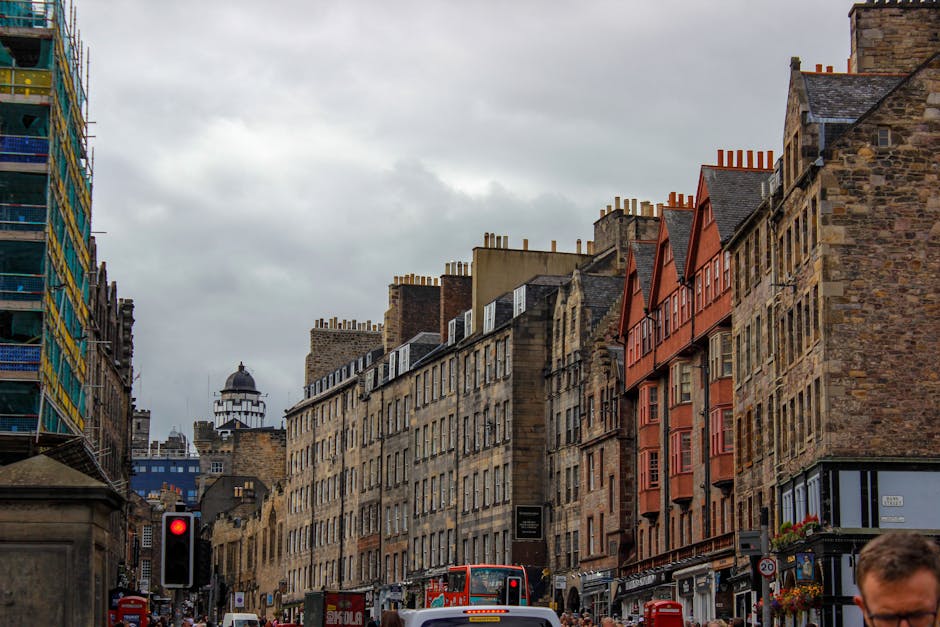
At the very top of the Lawnmarket, a few paces from the castle esplanade, the Ensign Ewart occupies a site where a pub has stood since 1680. It is named after Charles Ewart, the Scots Greys sergeant who captured a French eagle standard at Waterloo, and there is a large painting of the moment inside.
A seventeenth-century founding is a serious claim and rather less contested than the medieval ones. The pub is small, dark, low and — being the closest bar to the castle gates — extremely busy with people who have just walked out of them.
The honest verdict: genuinely historic and genuinely overrun. Go in the morning or on a weekday in winter. If you are visiting the castle and the Royal Mile in summer, expect to stand.
The Ones Where the History Is Actually Intact
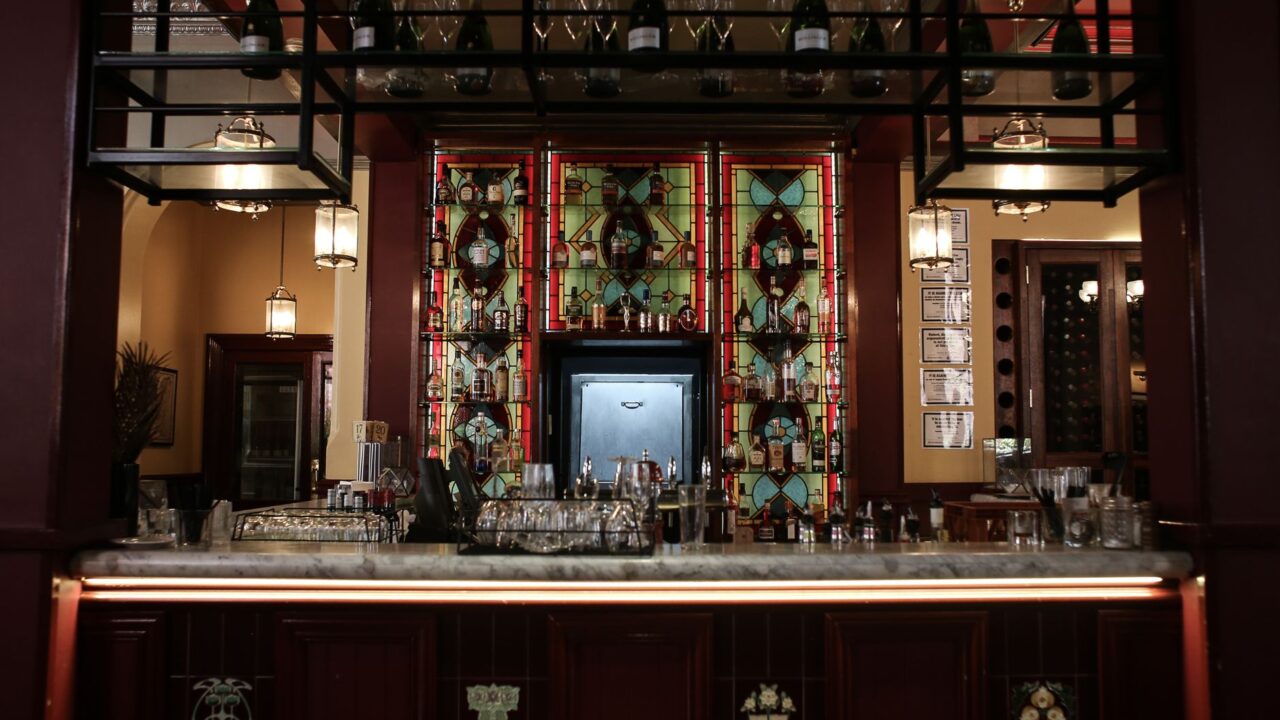
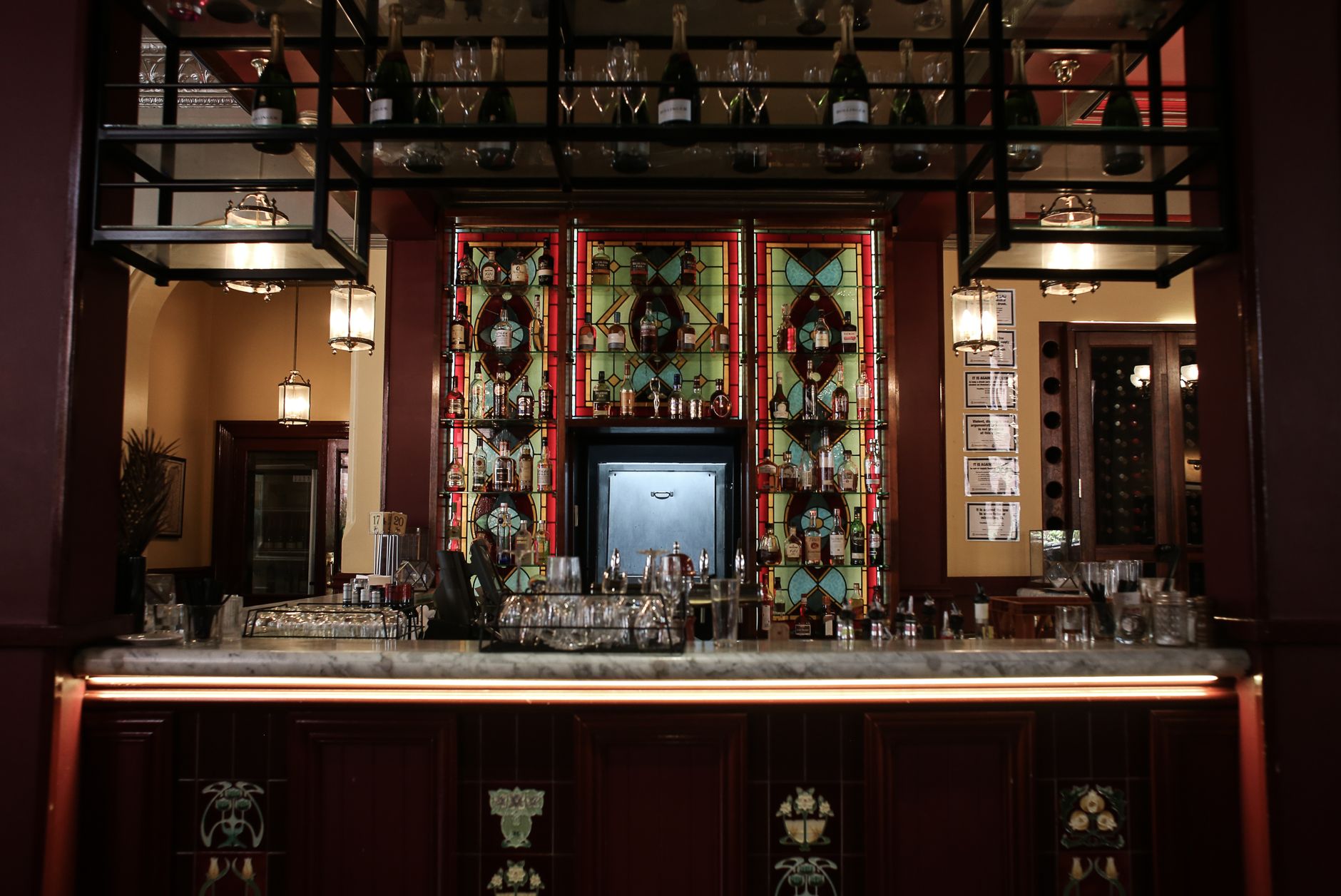
Here is the thing that the “oldest pub” argument obscures. Edinburgh’s medieval pub sites have all been rebuilt; what survives from them is a location and a story. What Edinburgh does have, to an extent almost no other British city matches, is a set of late-Victorian interiors that are still there — the actual counters, gantries, tiles, mirrors and snugs, in use, unaltered.
CAMRA maintains a national register of pub interiors of outstanding historic importance. It is a short and strict list — only 34 pubs in the whole of Scotland qualify, and Edinburgh holds roughly a quarter of them. Four are:
- The Café Royal, West Register Street, opened 1863. A vast island bar, Doulton tiled portraits of Victorian inventors, stained glass, and a separate Oyster Bar. Generally regarded as the finest pub interior in the city.
- Bennets Bar, Leven Street, Tollcross. A Grade B listed building with etched Jeffrey’s Brewery door panels, decorative wall tiles, a Bernard’s mirror and a surviving “jug bar” — a tiny enclosed snug with its own street entrance and serving hatch, built so that people could buy beer to carry home without entering the pub proper.
- The Abbotsford, Rose Street, built 1902. One of the finest island-style pubs anywhere, essentially unaltered apart from the rear.
- The Barony Bar, Broughton Street. A tiled dado carrying eleven small painted panels of Scottish scenes, a little-altered Victorian counter and gantry, two massive mirrors above the tiling, and two Victorian tiled fireplaces with mirrored over-mantels.
To these you can add the Guildford Arms (built 1896, high Victorian ceiling and a raised gallery), the Kenilworth on Rose Street, and Leslie’s Bar in the Southside, which retains a tall serving screen between public bar and lounge so that drinks are passed through a hatch — a class distinction preserved in joinery.
The honest verdict: if what you want is to stand in a room that has not changed, go to these and not to the medieval claimants. A pub whose interior dates from 1863 and is intact is a more genuine historical experience than a pub founded in 1516 and rebuilt three times since.
The Historic Pub Walk
A route that takes in the strongest claims and the best-preserved rooms in one afternoon, walking downhill wherever possible. Walking times are between doors.
| Stop | Why | Walk to next |
|---|---|---|
| 1. Ensign Ewart, Lawnmarket | Pub on the site since 1680; start at the top of the Mile | 10 min downhill |
| 2. Tolbooth Tavern, Canongate | A 1591 building; tavern since 1820 | 15 min back up and west |
| 3. White Hart Inn, Grassmarket | Records to 1516; the strongest documentary claim | 4 min |
| 4. Beehive Inn, Grassmarket | 15th-century coaching inn site, sunny beer garden | 12 min north |
| 5. Café Royal, West Register Street | 1863, and the finest interior in Edinburgh | 1 min |
| 6. Guildford Arms, next door | 1896, gallery seating, excellent cask ale | 6 min |
| 7. Abbotsford, Rose Street | 1902 island bar, nationally listed | End here |
Two pubs are deliberately not on this route. The Sheep Heid is in Duddingston, an hour’s walk over Arthur’s Seat, and deserves its own afternoon. Bennets Bar is in Tollcross, twenty minutes south-west, and pairs better with an evening at the King’s Theatre next door. Both are worth the separate journey; neither fits into a single crawl.
For the practical side of drinking your way round — prices, ordering, closing times — see our guide to the best pubs in Edinburgh. A pint runs £5.00 to £7.00 across the city in 2026, and ordinary pubs close at 1am with no weekend extension.
Why the Dates Are So Unreliable
It is worth understanding why this is such a mess, because it is not simply pubs making things up.
Before the eighteenth century, licensed premises in Scotland were not systematically registered, and what evidence survives tends to be indirect — a property transfer, a court record, a tax roll mentioning a brewer at an address. A pub can therefore be old without being documented, and a documented date usually marks the first time somebody happened to write the place down rather than the day it opened.
On top of that, Edinburgh’s Old Town has been rebuilt repeatedly: the Nor Loch was drained from the 1760s, the New Town laid out from 1767, and successive Improvement Acts in the nineteenth century swept away and replaced whole closes. A pub can occupy a site continuously for five hundred years and contain no material older than Victoria.
And finally, a founding date is marketing. Once one pub on a street claims the fourteenth century, its neighbours have an incentive to find one too, and no incentive at all to check.
Frequently Asked Questions
What is the oldest pub in Edinburgh?
On documentary evidence, it is a tie: both the Sheep Heid Inn in Duddingston and the White Hart Inn in the Grassmarket have earliest written records dating to 1516. The Sheep Heid is usually described as the oldest continuously operating pub in the city; the White Hart is generally credited with the strongest documentary claim.
Is the Sheep Heid Inn really from 1360?
1360 is the pub’s own claim. The tradition is that an inn has stood on the site since then, but the earliest written record is 1516, and the core of the present building appears to be eighteenth-century with later additions. Treat 1360 as tradition rather than history.
How old is the White Hart Inn in the Grassmarket?
Its earliest written records date to 1516, which is the strongest documentary claim of any Edinburgh pub. The building you drink in, however, dates from 1740 — so the site is early sixteenth century and the fabric is Georgian.
Which Edinburgh pub is in the oldest building?
The Tolbooth Tavern, in the Canongate Tolbooth, which was built in 1591 and still has its projecting clock and turreted tower. It was a burgh council house, courtroom and jail; the ground floor only became a tavern in 1820. So it is the oldest building containing a pub rather than the oldest pub.
Which Edinburgh pub has the most original interior?
Four Edinburgh pubs are on CAMRA’s national register of interiors of outstanding historic importance: the Café Royal, Bennets Bar, the Abbotsford and the Barony Bar. Only 34 pubs in the whole of Scotland qualify, and Edinburgh holds roughly a quarter of them. The Café Royal, opened in 1863, is usually regarded as the finest.
Is the Golf Tavern really from 1456?
The Golf Tavern gives 1456 as its founding date, and that is the pub’s own claim. What is well established is that the site opposite Bruntsfield Links has long been associated with golf on the Links, which have been played over for centuries. The pub is pleasant and the position is good; the 1456 figure should be treated as a claim.
Can you do a historic pub walk in Edinburgh?
Yes, and about 45 minutes of walking covers it: Ensign Ewart at the top of the Lawnmarket, down to the Tolbooth Tavern on the Canongate, across to the White Hart and the Beehive in the Grassmarket, then north to the Café Royal, the Guildford Arms and the Abbotsford. The Sheep Heid and Bennets Bar are better treated as separate trips.
Why do so many Edinburgh pubs claim to be the oldest?
Because licensed premises in Scotland were not systematically registered before the eighteenth century, so evidence is indirect and a documented date usually marks the first time somebody wrote a place down rather than when it opened. That leaves room for tradition — and a founding date is good marketing, which gives neighbouring pubs an incentive to find one of their own.
Is the White Hart Inn haunted?
It is widely reported to be, and it trades on the association along with links to Burns, Wordsworth, and Burke and Hare. The ghost stories are tradition rather than record. What is documented is that the Grassmarket held Edinburgh’s public execution site, marked today by the memorial in the square a few metres from the pub’s door.
Dates above were checked in September 2026, and the difference between the pubs’ own claims and the written record is stated in every case. Historic interior designations come from CAMRA’s national register.
For where to drink today rather than in 1516, see our best pubs in Edinburgh guide and the Edinburgh nightlife guide. For the history itself, medieval Edinburgh walks the Old Town through its actual documented past, and the Grassmarket area guide covers the square where three of these claims sit within a hundred metres of each other.