Edinburgh’s West End: Independent Shops, Georgian Streets and Dean Village (2026)

The Edinburgh West End is the part of the city most visitors walk through without noticing they have arrived. It begins where Princes Street runs out, takes in the last and grandest streets of the Georgian New Town, and holds the city’s concert hall, its producing theatre, its restored art-house cinema and a cathedral with the tallest spire in Edinburgh — all within about six hundred metres of each other. Then it drops, suddenly and steeply, into the valley of the Water of Leith at Dean Village.
Search for the Edinburgh West End and you will mostly find hotels, because a dozen of them use the phrase as an address. This guide is about the district itself: which streets are worth the detour, where the independent shops actually are, what is on in the cultural quarter on Lothian Road, and the half-day route down through Dean Village to Stockbridge that turns a couple of streets into one of the best walks in the city.
At a Glance
- Where it is: west of Charlotte Square, either side of Shandwick Place and Lothian Road, running out to Haymarket and down to Dean Village.
- Getting there: the tram stops at West End–Princes Street and Haymarket. Haymarket is the better station for the West End than Waverley if you are arriving by train.
- William Street is the shopping street to find — a Georgian side street of independents, not chains, two minutes off Shandwick Place.
- St Mary’s Episcopal Cathedral, Palmerston Place: three spires, the central one 90 metres and the tallest in Edinburgh. Consecrated 1879.
- The cultural quarter is on Lothian Road: the Usher Hall, the Royal Lyceum, the Traverse and the Filmhouse, all within two minutes of each other.
- The Filmhouse reopened on 27 June 2025 after closing in October 2022 — a four-screen cinema saved by a community buyout and a public crowdfunder.
- Melville Street and Palmerston Place are the architecture: wide, uniform, and largely untroubled by visitors.
- The best walk in the district is West End → Dean Village → Stockbridge, about 1.5 to 2 hours with stops.
- Honest framing: half a day, or an evening around a concert. There is no single unmissable sight here — the West End is a place to walk and to go out in.
Where the West End Begins and Ends
There is no formal boundary, which is why hotel listings stretch the term so freely. In practice the district works like this: Charlotte Square is the eastern edge, the last set piece of the first New Town. West of it, Shandwick Place and then West Maitland Street carry the tram and the traffic out to Haymarket. North of that line sit the quiet Georgian streets — Melville Street, Palmerston Place, Rutland Square, Stafford Street and William Street. South of it is Lothian Road and the cultural quarter. North again, the land falls away to the Water of Leith and Dean Village.
| Street or place | What it is for | Time needed |
|---|---|---|
| William Street | Independent shops, the best of the district’s retail | 30–45 minutes |
| Stafford Street | The connecting street; more independents | 10 minutes |
| Melville Street | Georgian architecture at its widest, aimed straight at the cathedral | 10 minutes |
| Palmerston Place | St Mary’s Episcopal Cathedral | 20–30 minutes |
| Lothian Road | Usher Hall, Lyceum, Traverse, Filmhouse | An evening |
| Rutland Square | A quiet Georgian square most visitors never see | 5 minutes |
| Dean Village | The mill village in the valley below | 30 minutes |
The honest verdict: the West End rewards walking and disappoints ticking off. Nothing here takes an hour by itself, and if you arrive with a list you will find yourself standing outside a cathedral wondering what to do next. Come with a route instead. The one at the end of this guide takes you from Charlotte Square to Stockbridge and is the best use of the district.
William Street and the Independent Shops
William Street is the West End’s answer to Victoria Street, and almost nobody outside Edinburgh knows it exists. It is a short, straight Georgian street of ground-floor shops running parallel to Shandwick Place, with bars and cafés at both ends. Because it is off the main road it has stayed independent while the streets around it went to chains and hotels.
Names worth knowing on and around it: Arkangel & Felon, a long-standing clothing boutique; Helen Bateman, a shoe designer with her own shop; and Agitate, a photography gallery and shop. Stafford Street, running off it, carries more of the same. Together they take about forty-five minutes to browse properly.
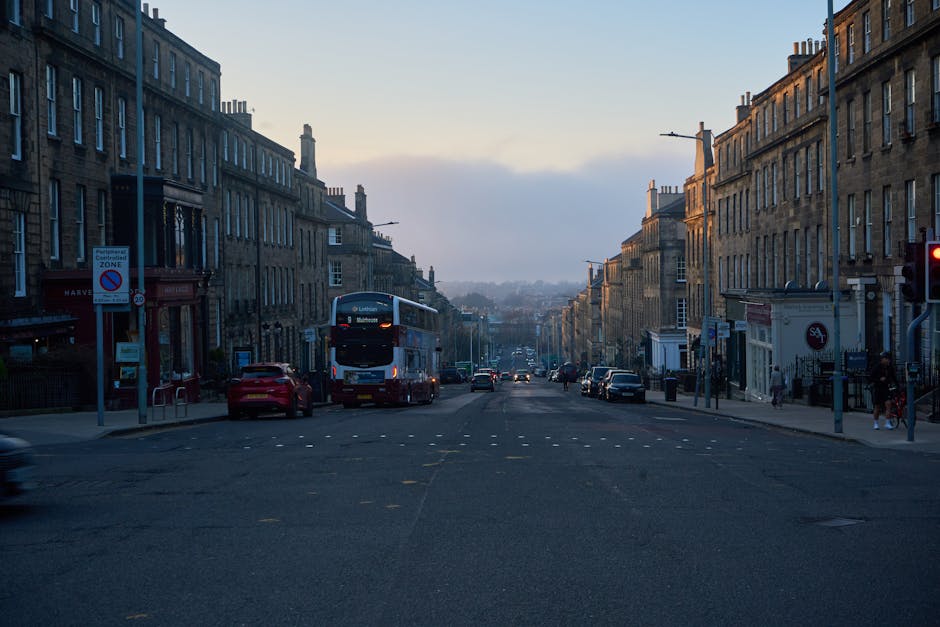
The honest verdict: this is boutique shopping, which means a small number of good shops at real prices rather than a browsing arcade. If you want scale, Multrees Walk and the St James Quarter are fifteen minutes east and hold Scotland’s only Harvey Nichols and Louis Vuitton. If you want character, William Street beats both. Our complete guide to shopping in Edinburgh sets out which street does what.
St Mary’s Cathedral and the Georgian Streets
St Mary’s Episcopal Cathedral on Palmerston Place is the biggest thing in the West End and the least visited major building in central Edinburgh. Sir George Gilbert Scott designed it; the foundation stone was laid on 21 May 1874 and it was consecrated on 30 October 1879. Its central spire is 90 metres — 295 feet — and is the tallest in the Edinburgh urban area, taller than anything on the Old Town skyline.
The two western spires were added later, completed in 1917 to a design by Scott’s grandson, and they are named Barbara and Mary after the Walker sisters, whose bequest of their West End property and an endowment paid for the whole building. It remains the only cathedral in Scotland maintaining a tradition of daily choral services, and it has a real claim on choral history: it was the first cathedral in Great Britain to employ girls as trebles, in 1978, and the first Anglican cathedral anywhere to have a female alto singing in daily services, in 2005.
Melville Street runs straight at it — a deliberately theatrical piece of planning, forty metres wide, terminating on the cathedral front. Walk down it from Queensferry Street rather than approaching from the far side, because the whole street was designed for that view.
The honest verdict: go for evensong rather than for a daytime look. As a building to walk around in silence for ten minutes it is fine and no more; as a place to hear a daily choral tradition that exists nowhere else in Scotland, it is genuinely distinctive and it costs nothing. Check the service times on the cathedral’s own site, and ask on the day whether a daytime admission charge or donation applies rather than assuming free entry.
The Lothian Road Cultural Quarter
Four of Edinburgh’s most important venues sit within two minutes’ walk on and just off Lothian Road. This is where the West End earns an evening.
- The Usher Hall, Lothian Road — the city’s flagship concert hall, capacity around 2,200. Classical, touring and festival programming.
- The Royal Lyceum Theatre, 30b Grindlay Street — Edinburgh’s producing theatre, in a building its own trust describes as 140 years old, drawing over 100,000 attendances a year across performances and participation work.
- The Traverse Theatre, immediately behind — Scotland’s new-writing theatre, and one of the most important venues of the Fringe every August.
- The Filmhouse, Lothian Road — a converted church, a cinema since 1978, and the city’s art-house.
The Filmhouse story is worth knowing
The Filmhouse closed in October 2022, without warning, when its parent company went into administration. Four former colleagues formed a new charity in January 2023, secured a lease, and launched an ‘Open the Doors!’ crowdfunder in September 2023 that raised over £324,000 from the public. That was matched with £1.5 million from the UK Government’s Community Ownership Fund, support from Screen Scotland and the Nancie Massie Charitable Trust, and £60,000 from the City of Edinburgh Council. It reopened on Friday 27 June 2025 as a four-screen cinema after a full refurbishment.
The honest verdict: this quarter is the single best reason to be in the West End after dark, and it is badly under-used by visitors, who tend to stay east of Charlotte Square. Check what is on at all four before you book anything else for the evening — a Lyceum play or a Traverse new-writing show is a better and cheaper night than most of the ticketed “experiences” in the Old Town. For the wider picture, see our guide to things to do in Edinburgh at night.
Dean Village: Down the Hill
Five minutes north of Queensferry Street the ground collapses into the valley of the Water of Leith, and at the bottom of it is Dean Village — a former milling settlement where up to eleven mills once worked the river, now a pocket of restored stone buildings that photographs better than almost anywhere in Scotland.
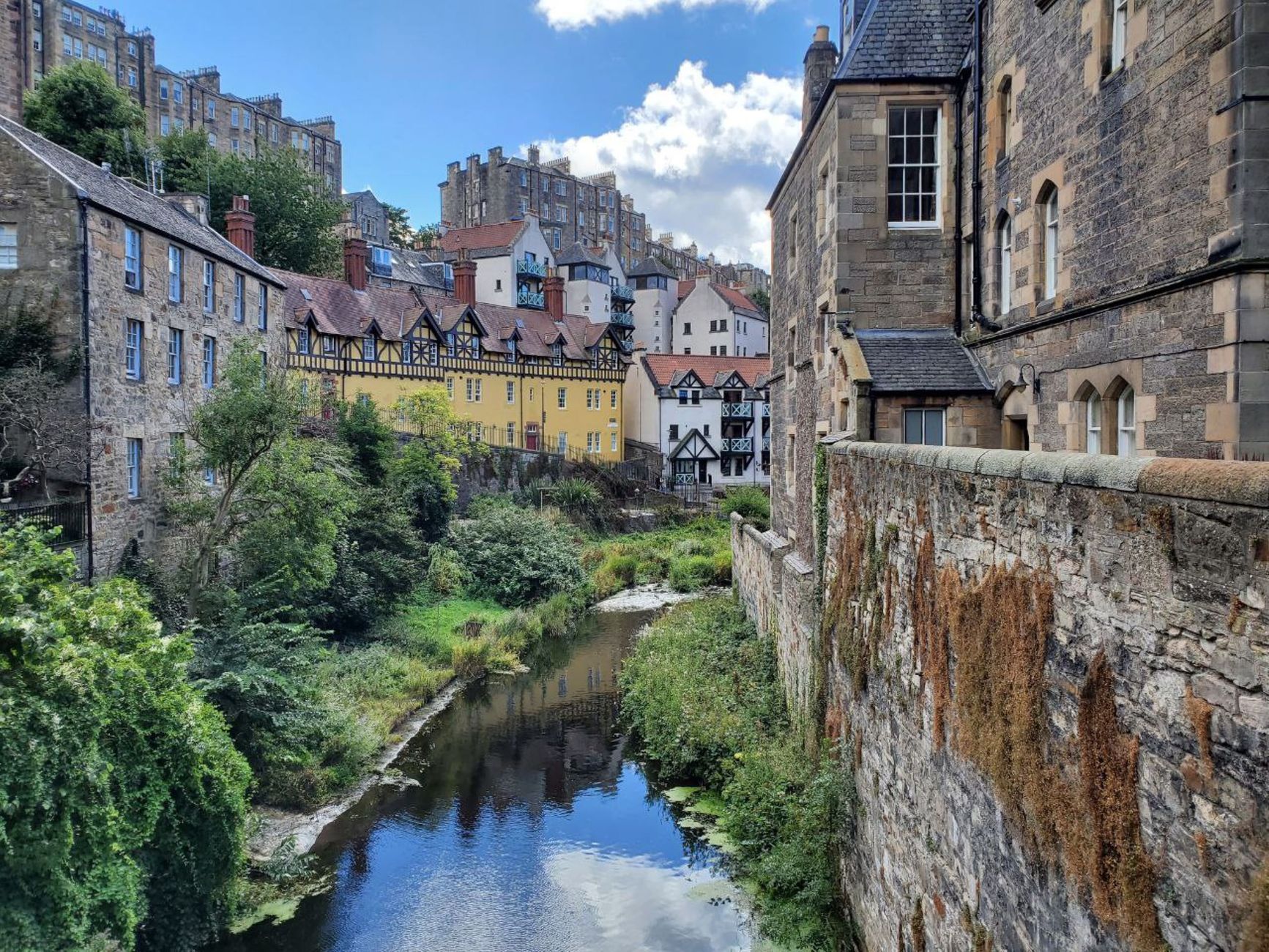
It takes about thirty minutes to see. It is also entirely residential, and its community has publicly asked visitors to stop photographing through windows — a request worth honouring, and the same one Circus Lane in Stockbridge has had to make. From Dean Village the Water of Leith walkway runs on to Stockbridge in 15 to 20 minutes, which is the best onward move.
The honest verdict: Dean Village is small and it is busy, and if you arrive at noon on an August Saturday you will be queuing for the same bridge photograph as everybody else. Go early, go on the way to somewhere else, and give it half an hour rather than an afternoon. Our full Dean Village and Water of Leith walkway guide covers the route in detail.
The Half-Day Route
This is the walk that makes sense of the whole district. Allow an hour and a half to two hours with stops, longer if you shop or stop for coffee.
- Start at Charlotte Square, the western set piece of the first New Town, and walk out along Hope Street into the West End proper.
- William Street and Stafford Street — forty-five minutes for the independent shops, and coffee at one end or the other.
- Melville Street, walked westwards so the cathedral fills the end of it, then St Mary’s on Palmerston Place.
- North to the Dean Bridge and down into Dean Village. Thirty minutes in the village itself.
- The Water of Leith walkway to Stockbridge, 15–20 minutes on a riverside path.
- Finish in Stockbridge — market on Sunday, shops and lunch any day — and walk back up into the New Town, or carry on to the Botanics.
Done in this direction it is downhill for the interesting half and it strings four distinct places together in one line. The onward links: Stockbridge at the end of it, the New Town’s Georgian architecture at the start, and our self-guided walking tour of Edinburgh if you want the full-day version.
Charlotte Square, and the Book Festival That Left It
Charlotte Square is the western full stop of the first New Town and the finest square in the city — a single palace-fronted composition rather than a row of separate houses. Bute House, the official residence of Scotland’s First Minister, is on the north side. The garden in the middle is privately owned and not generally open to the public, which is the first thing to know before you plan a picnic there.
The second thing to know is that the Edinburgh International Book Festival no longer happens here. For decades it filled Charlotte Square Gardens with marquees every August; it expanded onto George Street in 2017, partly to handle the crowds and partly to spare the private gardens, and it left the square after 2019. Since 2024 it has been held at the University of Edinburgh’s Futures Institute on Lauriston Place, running for two weeks each August.
The honest verdict: a lot of published guides still send readers to Charlotte Square for the Book Festival in August. They will find an empty private garden and a very good square. Go for the architecture, and if the festival is what you want, go to Lauriston Place — which is a fifteen-minute walk south, past the Lothian Road venues. Our guide to the Edinburgh Book Festival covers the programme and how to book.
Eating and Drinking in the West End
The district splits cleanly in two after dark. Lothian Road is loud: chain bars, late licences, a pre-theatre and post-office-drinks crowd, and it is one of the busier drinking strips in the city on a Friday. The Georgian streets north of Shandwick Place are the opposite — quiet, residential, with a handful of good restaurants and bar rooms tucked into basements, and almost nothing open late.
The practical pattern for a visitor is to eat early on or around William Street, where the independents are, and then use Lothian Road only if you are going to a performance. Licensing is city-standard: ordinary pubs to 1am, entertainment licences to 3am, no weekend extension. A pint is £5.00–£7.00.
The honest verdict: Lothian Road after 11pm on a weekend is not the West End’s best face — it is a wide, busy road with queues outside chain venues, and it feels a long way from the Georgian streets two minutes north. Nothing about it is unsafe; it is simply not what you came to Edinburgh for. Eat well, see something at the Lyceum or the Filmhouse, and walk home through Melville Street instead.
Getting Around, and Haymarket
The tram runs straight through the district, with stops at West End–Princes Street and Haymarket, and continues to the airport in one direction and Leith and Newhaven in the other. A city single is £2.40; the contactless daily cap is £5.70; the tram airport single is £7.90.
The useful piece of local knowledge: if you are arriving by train and staying in the West End, get off at Haymarket rather than Waverley. Most services from Glasgow and the north call there, it is a five-to-ten-minute walk from most West End addresses, and it saves you the climb out of Waverley with luggage. Our guide to Edinburgh’s train stations covers which trains call where, and Lothian buses and trams covers ticketing.
Should You Stay in the West End?
It is the most under-rated base in central Edinburgh. You are a ten-minute walk from Princes Street, five minutes from the concert hall and theatres, on the tram line to the airport, and next to a mainline station — and the streets are quiet at night, which the Old Town emphatically is not.
The honest verdict: the trade-off is atmosphere. Nobody looks out of a West End window at a castle, and the immediate streets have hotels and offices rather than pubs. If your priority is stepping out of the door into the Old Town at 9pm, stay in the Old Town and accept the noise. If your priority is sleeping, arriving easily and walking to a concert, the West End is the better choice and usually the cheaper one. Compare them in our guide to the best area to stay in Edinburgh and hotels in Edinburgh’s New Town.
Venue histories, cathedral dates and fares checked September 2026. Programmes and service times change — confirm with the venue before travelling for a specific event.
Frequently Asked Questions
Where is the West End in Edinburgh?
It runs west from Charlotte Square, along Shandwick Place and West Maitland Street to Haymarket, taking in Melville Street, Palmerston Place, William Street and Rutland Square to the north and Lothian Road to the south, and dropping into the Water of Leith valley at Dean Village. There is no formal boundary, which is why hotels use the label loosely.
What is there to do in Edinburgh’s West End?
Shop the independents on William and Stafford Streets, walk Melville Street to St Mary’s Episcopal Cathedral, take in a concert, play or film in the Lothian Road cultural quarter, and walk down into Dean Village and on to Stockbridge. Half a day, or an evening around a performance.
How tall is St Mary’s Cathedral spire?
The central spire is 90 metres, or 295 feet — the tallest in the Edinburgh urban area. The two western spires, completed in 1917, are named Barbara and Mary after the Walker sisters who funded the cathedral.
Has the Edinburgh Filmhouse reopened?
Yes. It closed in October 2022 when its parent company went into administration, and reopened on Friday 27 June 2025 as a four-screen cinema after a community buyout, a public crowdfunder that raised over £324,000, and £1.5 million from the UK Government’s Community Ownership Fund.
Should I get off at Haymarket or Waverley for the West End?
Haymarket. It sits at the western end of the district, most services from Glasgow and the north call there, and it puts you within a five-to-ten-minute walk of most West End addresses without the climb out of Waverley.
How do I walk from the West End to Dean Village?
Head north from Queensferry Street to the Dean Bridge and drop down into the valley — about five minutes. Dean Village itself takes around thirty minutes to see, and the Water of Leith walkway continues from there to Stockbridge in another 15 to 20 minutes.
Is the West End a good place to stay in Edinburgh?
Yes, and it is under-rated: ten minutes’ walk to Princes Street, next to Haymarket station, on the airport tram line, beside the theatres and concert hall, and quiet at night. The trade-off is atmosphere — the immediate streets are hotels and offices rather than pubs.
Is William Street worth visiting?
If you like independent shops, yes — it is a short Georgian street of boutiques, including Arkangel & Felon, the shoe designer Helen Bateman and the photography gallery Agitate, with bars at both ends. Allow forty-five minutes with Stafford Street. For volume rather than character, the St James Quarter and Multrees Walk are fifteen minutes east.
The West End is one of the districts in our complete area-by-area guide to Edinburgh’s neighbourhoods. The walk from here runs downhill to Stockbridge and on to Leith and The Shore; in the other direction, Morningside and Bruntsfield cover the southside. For the Georgian streets in full, see New Town architecture.