Medieval Edinburgh: Walking the Old Town Through History (2026)
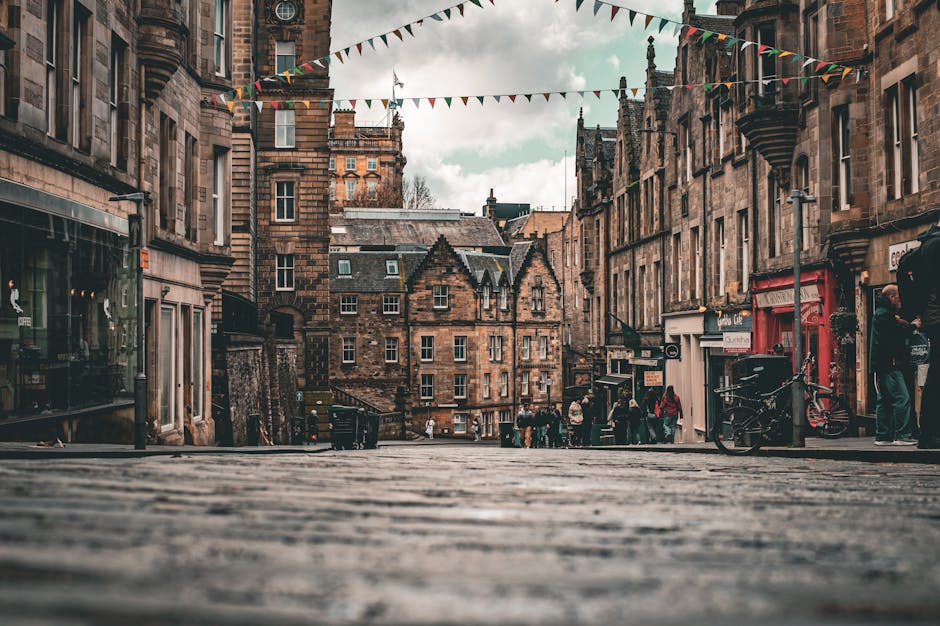
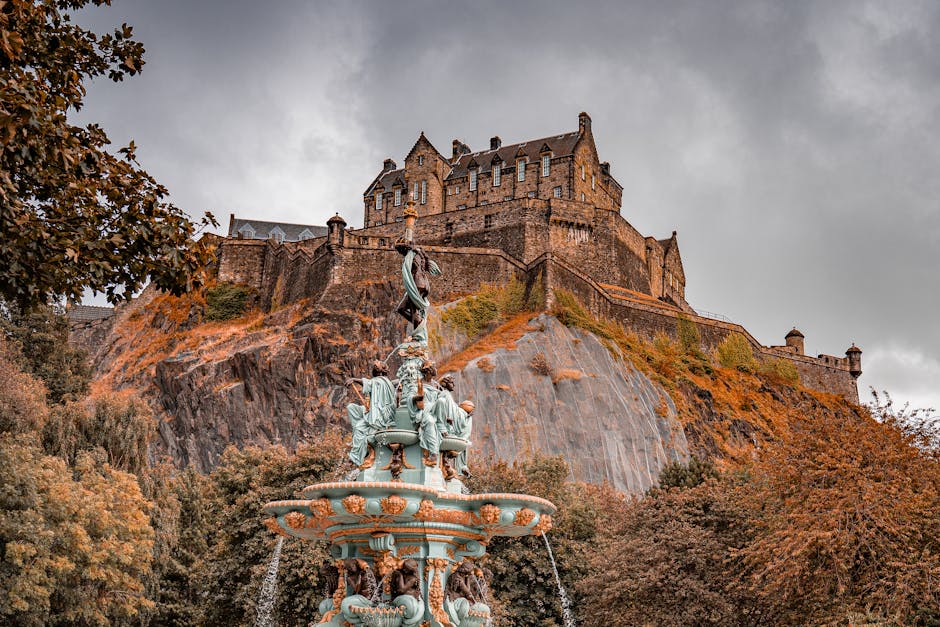
Medieval Edinburgh history runs nearly 1,000 years deep, from David I’s 1124 royal charter through the Reformation, the plague years, and the long centuries of vertical urban density that gave the city its famous “lands” — the world’s first skyscrapers. Walking the Old Town today, you can still trace the medieval geometry: the long high street ridge of the Royal Mile, the closes branching down each side, the 12th-century chapel inside Edinburgh Castle, the 14th-century cathedral on the High Street. Few European cities preserve their medieval bones so visibly.
This guide is a self-guided walking tour through medieval Edinburgh — every major surviving medieval site, every fragment of the original 16th-century city wall, the historical context for each, and how to assemble the pieces into a coherent half-day itinerary. We’ve drawn on Edinburgh World Heritage records, Historic Environment Scotland’s archaeology, and the City of Edinburgh Council’s medieval-history documentation. For broader context, see our pillar guide to the Edinburgh Royal Mile and Old Town and our companion piece on Edinburgh closes and wynds.
Why Walk Medieval Edinburgh?
Most European cities lost their medieval fabric to fire, war, or modernisation. Edinburgh, by historical luck, retained almost all of its. The Old Town’s defensive walls forced vertical building rather than horizontal expansion; the 17th-century plagues deepened the urban density; and the 18th-century construction of the New Town to the north spared the Old Town from demolition (the wealthy simply moved out, leaving the medieval fabric intact). The result is one of Europe’s most authentic surviving medieval cities — and a UNESCO World Heritage Site.
Walking medieval Edinburgh works at any time of year and almost any time of day. The closes are most atmospheric at dawn or dusk; St Giles’ Cathedral is most impressive during Sunday services or organ recitals; Edinburgh Castle is best visited at the 9:30am opening slot before crowds build.
The Medieval Edinburgh Walking Route
The most useful self-guided walk runs from Edinburgh Castle (top) to Holyroodhouse (bottom), with several detours into the closes and side streets. Total distance: approximately 1.5 miles, with significant downhill and several short uphill detours. Total walking time without stops: 35-45 minutes. With museum stops and proper exploration: 4-5 hours.
Stop 1: Edinburgh Castle (12th century onwards)
Begin at the medieval royal stronghold. Inside the castle, St Margaret’s Chapel (built around 1130) is the oldest surviving building in Edinburgh — a tiny Anglo-Norman Romanesque chapel in continuous use for nearly 900 years. The Great Hall (completed 1511) preserves one of Scotland’s finest medieval timber roofs. The Half Moon Battery was built after the Lang Siege of 1573. Mons Meg (gifted to James II in 1457) is one of Europe’s largest surviving medieval cannon. For full details see our what to see inside Edinburgh Castle guide.
Stop 2: The Castle Esplanade and Cannonball House
Walking down the Esplanade onto Castlehill, look for “Cannonball House” — a 16th-century townhouse with a cannonball lodged in its west wall, traditionally said to be a wayward shot from the 1745 Jacobite siege of the castle. The cannonball is real; the explanation is romantic but probably untrue. The actual building dates to 1630 and is one of Castlehill’s oldest surviving structures.
Stop 3: The Hub (Tolbooth Kirk)
The neo-Gothic spire that dominates Castlehill is The Hub, originally the Tolbooth Kirk built in the 1840s. While not strictly medieval, it occupies a site used for civic and religious buildings since the 13th century, and the Old Tolbooth (Edinburgh’s medieval town hall and prison) once stood nearby on the High Street.
Stop 4: The Lawnmarket and James Court
Continuing east down the Royal Mile, the Lawnmarket section is rich with medieval and 17th-century closes. James Court (1727) sits on medieval foundations; Boswell’s Court is genuinely 17th-century; Riddle’s Close opens to a 16th-century courtyard with original carved stonework. For a comprehensive close-by-close walkthrough, see our Edinburgh closes and wynds guide.
Stop 5: Lady Stair’s Close and the Writers’ Museum
Off the Lawnmarket, Lady Stair’s Close opens to a small cobbled courtyard housing the Writers’ Museum — set in a 1622 townhouse with original dormers, gables, and stone stair turret. The museum (free admission) is dedicated to Robert Burns, Sir Walter Scott, and Robert Louis Stevenson. Allow 30-45 minutes inside.
Stop 6: The Mercat Cross and St Giles’ Cathedral
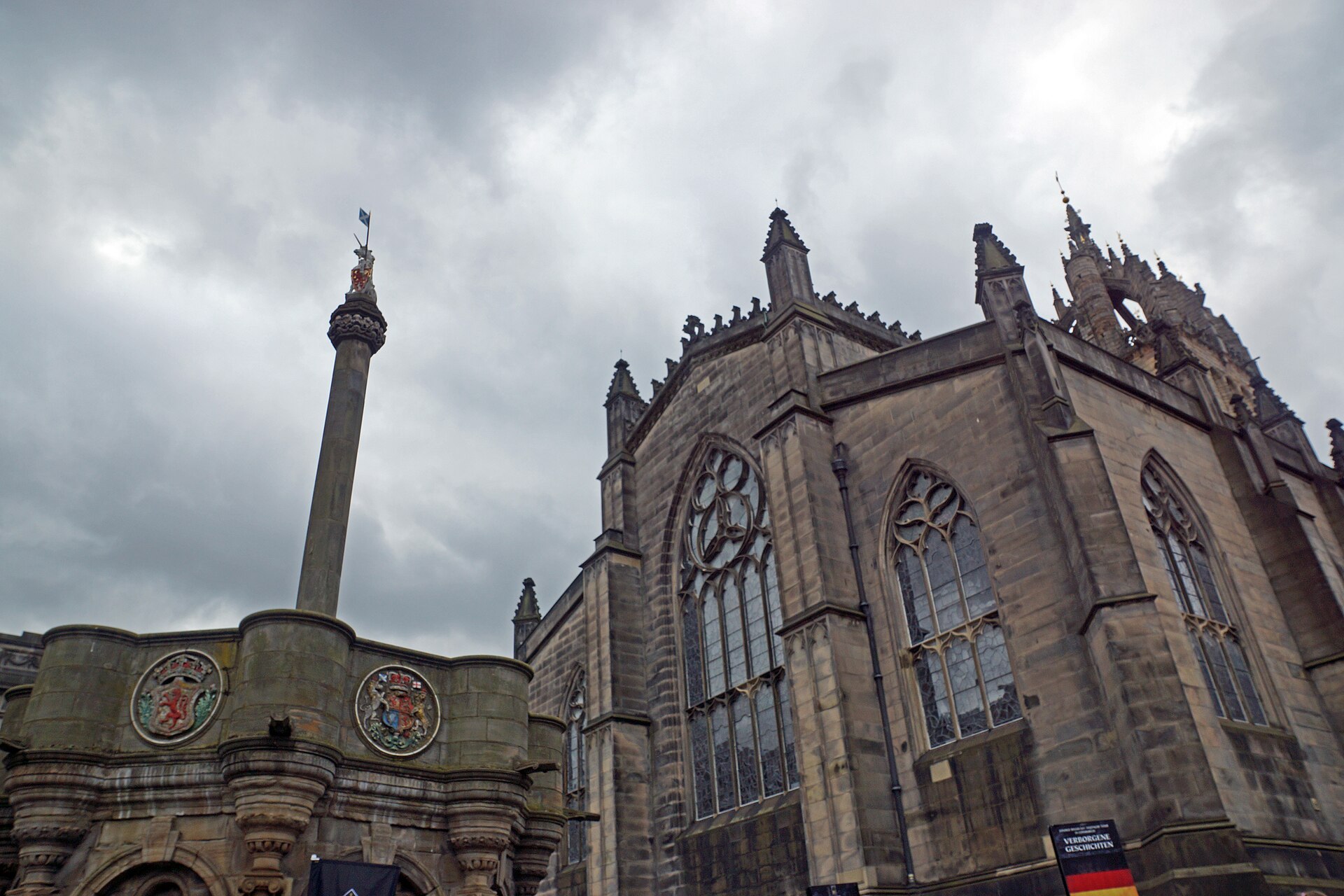
The High Stretching east, the medieval and ceremonial heart of Edinburgh. The Mercat Cross has stood here since the 14th century (current structure 1885, on medieval foundations), the spot from which royal proclamations were made and from which executions were conducted. Just to the south, St Giles’ Cathedral has roots stretching to 1124 (Norman foundation), with most of the visible structure dating to the 14th and 15th centuries. Don’t miss the Thistle Chapel (1911) — a Gothic-revival masterwork inside the medieval shell. Free entry; donations welcomed; allow 45 minutes.
Stop 7: Parliament Hall
Behind St Giles’ Cathedral stands Parliament Hall (1639), the original home of the Scottish Parliament before the 1707 Union. The hammer-beam roof is among the finest in Britain. Now used for legal functions; access is via the Court of Session (free, weekdays only).
Stop 8: Real Mary King’s Close
Beneath the Royal Exchange (now City Chambers) on the High Street lies a real 17th-century close, sealed when the Royal Exchange was constructed on top of it in 1753. The Real Mary King’s Close paid tour is one of the most authentic medieval/early-modern urban experiences in Britain. For full details see our Real Mary King’s Close companion guide.
Stop 9: The Tron Kirk and the Old Town Bridges
The Tron Kirk (1637) is a 17th-century church on the High Street, formerly used for worship and now a visitor information centre. From here, the road becomes the Canongate — historically a separate burgh until 1856.
Stop 10: John Knox’s House (1490s)
One of the few genuinely 15th-century buildings to survive on the Royal Mile, John Knox’s House dates to about 1490 and is the only surviving example of a medieval timber-fronted house in central Edinburgh. The Reformation theologian John Knox is said to have lived here in 1572. Now part of the Scottish Storytelling Centre. Small admission charge; allow 30 minutes.
Stop 11: World’s End Close and the Netherbow
At the boundary between the High Street and the Canongate, brass setts in the road mark the line of the Netherbow Port — Edinburgh’s medieval eastern town gate, demolished in 1764. The World’s End Close is named for the simple fact that, beyond the gate, you were leaving Edinburgh proper.
Stop 12: Canongate Tolbooth and the People’s Story Museum
The Canongate Tolbooth (1591) is the medieval-era former town hall and prison of the Canongate burgh. Now the People’s Story Museum (free admission), telling the social history of working Edinburgh. Allow 30-45 minutes.
Stop 13: The Canongate Kirk (1690)
The Canongate Kirk (also called Canongate Parish Kirk) was built in 1690, replacing an older church demolished when Holyrood Abbey was repurposed by James VII. The kirkyard contains the graves of Adam Smith, Robert Fergusson, and many other notable Edinburghers.
Stop 14: Holyrood Abbey and Holyroodhouse
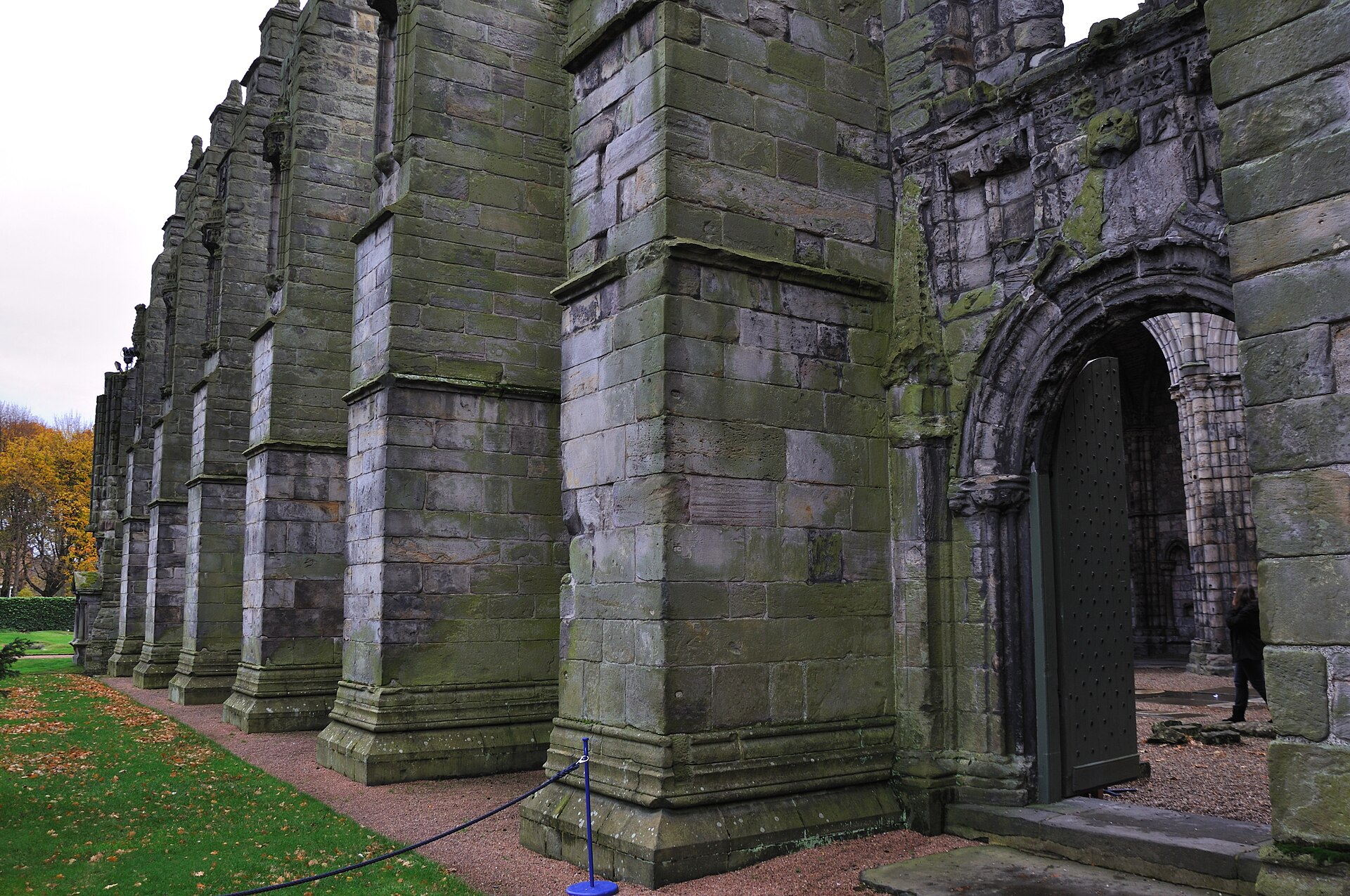
The walk concludes at Holyroodhouse, where Holyrood Abbey (founded 1128 by King David I) survives as ruined Gothic remains in the gardens behind the modern palace. Allow at least 90 minutes for the palace and abbey. For full details see our Palace of Holyroodhouse guide.
Major Surviving Medieval Buildings in Edinburgh
St Margaret’s Chapel (Edinburgh Castle, c. 1130): The oldest surviving building in Edinburgh.
St Giles’ Cathedral (foundations 1124, current structure 14th-15th c.): Edinburgh’s pre-Reformation cathedral.
Holyrood Abbey (founded 1128): Now ruins, but with substantial original Gothic stonework.
Lord Darnley’s House / John Knox’s House (1490s): Genuinely medieval timber-framed structure.
The Great Hall (Edinburgh Castle, 1511): James IV’s great hall with original medieval roof.
Magdalene Chapel (1541): A pre-Reformation chapel on Cowgate.
Acheson House (1633): Early-modern Canongate townhouse, now part of museum complex.
Moubray House (c. 1463): One of the very few surviving medieval Royal Mile facades.
Riddle’s Court (16th c.): Surviving medieval/Renaissance close.
The Medieval City Walls
Edinburgh had three successive defensive walls. The first was a medieval rampart of uncertain date. The Flodden Wall, built after the Scottish defeat at Flodden in 1513, was the most substantial — a stone wall enclosing the Old Town from approximately the modern Greyfriars Kirkyard around to the Cowgate. The Telfer Wall (c. 1620) extended the line further south.
Surviving fragments include:
The Vennel: A short stretch of the Flodden Wall complete with an original arch — the famous photographic location framing Edinburgh Castle.
Greyfriars Kirkyard: The southern wall of the kirkyard incorporates substantial Flodden Wall stonework.
Telfer Wall (Lauriston Place area): Several visible fragments.
Drummond Street: A continuous Flodden Wall stretch behind the modern Drummond Street.
The Medieval Edinburgh Experience: What to Read
Several historical novels set in medieval Edinburgh add depth to a walking tour:
“The Heart of Midlothian” (Walter Scott, 1818): Set in 18th-century Edinburgh but rooted in Old Town geography.
“Confessions of a Justified Sinner” (James Hogg, 1824): Gothic Edinburgh classic.
“The Witch of Edinburgh” series (Lyz Lyon): Modern historical fiction set in Reformation Edinburgh.
Several non-fiction histories — Antonia Fraser’s “Mary Queen of Scots,” Michael Lynch’s “Scotland: A New History” — provide essential context.
Sample Medieval Edinburgh Walking Itineraries
The 2-Hour Highlights Walk
9am: Edinburgh Castle (St Margaret’s Chapel only). 10:15am: Royal Mile to Lady Stair’s Close. 10:45am: St Giles’ Cathedral. 11:15am: John Knox’s House. 11:30am: Walk to Holyroodhouse exterior. Done by 12pm.
The Half-Day Deep Walk
9:30am: Edinburgh Castle (full visit). 12pm: Lunch on the Royal Mile. 1pm: Walk down the closes to Lady Stair’s. 2pm: St Giles’ Cathedral. 3pm: Real Mary King’s Close. 4pm: John Knox’s House. 5pm: Holyroodhouse exterior and abbey ruins. Done by 6pm.
The Full-Day Medieval Edinburgh Day
Above plus extended visits to Greyfriars Kirkyard, the Vennel viewpoint, the National Museum of Scotland’s Scottish galleries, and the Magdalene Chapel.
Tips for Walking Medieval Edinburgh
Wear good shoes. The cobbles and stone steps are uneven; medieval Edinburgh is not flat-footwear friendly.
Bring a small flask. Edinburgh weather is changeable; warm tea or coffee helps.
Read the ground. Brass markers in the road indicate the line of demolished medieval walls and gates.
Look up. Many of the most interesting medieval/early-modern features are above eye level — old date stones, carved heraldic emblems, original timber framing where it survives.
Visit churches during opening hours. St Giles’ charges adults £12 (under-16s go free), so budget for it. Check entry and opening hours for Greyfriars Kirk and the Canongate Kirk before you go.
Pay for the underground tours. Real Mary King’s Close (the only authentic surviving sealed medieval close) is worth the £28.50 adult admission (Standard ticket). Mercat Tours’ underground vault tour is also genuinely historical.
Frequently Asked Questions
How old is medieval Edinburgh?
Edinburgh became a royal burgh in 1124 under King David I. The earliest surviving building, St Margaret’s Chapel inside Edinburgh Castle, dates to around 1130. The Old Town’s medieval geometry — the Royal Mile spine, the closes branching off — was established by the 12th-13th centuries and remains essentially intact today.
What is the oldest building in Edinburgh?
St Margaret’s Chapel inside Edinburgh Castle is the oldest surviving building in Edinburgh, built around 1130 by King David I in memory of his mother Saint Margaret of Wessex. It remains in continuous use after nearly 900 years.
What is the oldest house on the Royal Mile?
John Knox’s House (also known as the John Knox & Mowbray House complex) is the oldest surviving house on the Royal Mile, dating to the 1490s. It is the only timber-fronted medieval house surviving in central Edinburgh.
Can you walk medieval Edinburgh in one day?
Yes. The full medieval Edinburgh walking route (Edinburgh Castle to Holyroodhouse via the Royal Mile) is 1.5 miles end to end and can be done as a 2-3 hour highlights walk or a full 6-8 hour day with museum visits and underground tours.
What is the best medieval site in Edinburgh?
For surviving medieval architecture, St Margaret’s Chapel inside Edinburgh Castle. For atmosphere and authenticity, Real Mary King’s Close (a 17th-century street sealed beneath the Royal Exchange). For grandeur, St Giles’ Cathedral. Together, these three give a comprehensive medieval Edinburgh experience.
Is medieval Edinburgh haunted?
Edinburgh is one of Britain’s most haunted cities by reputation, with strong paranormal claims at Real Mary King’s Close (the “Wee Annie” room), Greyfriars Kirkyard (the Mackenzie Poltergeist), and the Blair Street Underground Vaults. These reputations are well-documented; whether you believe in ghosts or not, the sites are genuinely atmospheric.
What was Edinburgh’s medieval population?
Estimates suggest Edinburgh had a population of around 5,000-10,000 in the 1300s, growing to perhaps 25,000-30,000 by 1700. The 17th-century overcrowding was extreme — the Old Town’s tall “lands” rose 8-12 storeys to accommodate the growing population within the city walls.
What happened to medieval Edinburgh?
Most of medieval Edinburgh survives. The construction of the New Town from 1767 onwards spared the Old Town from large-scale demolition. The 19th-century construction of George IV Bridge and Cockburn Street did demolish significant medieval fabric. Edinburgh’s UNESCO World Heritage Site status (1995) now protects the surviving medieval and 18th-century city.
Are there guided medieval Edinburgh walking tours?
Yes. Multiple operators run guided medieval-history tours, including Mercat Tours, Edinburgh Expert Walking Tours, and Cobble Tales. Expect £15-£25 per person for 90-120 minute tours. Real Mary King’s Close offers its own guided underground tour.
Are medieval buildings in Edinburgh accessible?
Many. St Giles’ Cathedral, Edinburgh Castle (with mobility vehicle assist), the People’s Story Museum, the Writers’ Museum, and Holyroodhouse are all largely accessible. Some specific medieval interiors (St Margaret’s Chapel, the John Knox House upper floors, Real Mary King’s Close) have stepped-only access.
Final Thoughts
Medieval Edinburgh history is woven into every cobbled street and stone wall of the Old Town. Walking the Royal Mile from Edinburgh Castle to Holyroodhouse takes you through nearly 1,000 years of European urban history, much of it preserved in remarkable detail. Allow at least half a day, ideally a full day; bring sensible shoes, a curious mind, and time to explore the closes branching off the high street. The medieval city is still here — you just need to know where to look.
For more, see our pillar guide to the Edinburgh Royal Mile and Old Town, our Edinburgh closes and wynds guide, our history of Edinburgh Castle piece, and the broader things to do in Edinburgh overview.
Photo Credits
Holyrood Abbey’s buttressed wall: 2010-11-05 14-16-28 United Kingdom Scotland Newington by Hansueli Krapf, CC BY-SA 3.0, via Wikimedia Commons.
St Giles and the Mercat Cross: 2017-08-26 09-09 Schottland 063 Edinburgh, The Royal Mile, St. Giles’ Cathedral (37570798586) by Allie_Caulfield, CC BY 2.0, via Wikimedia Commons.