Newington and the Southside: Summerhall, the Meadows and Where Locals Eat (2026)
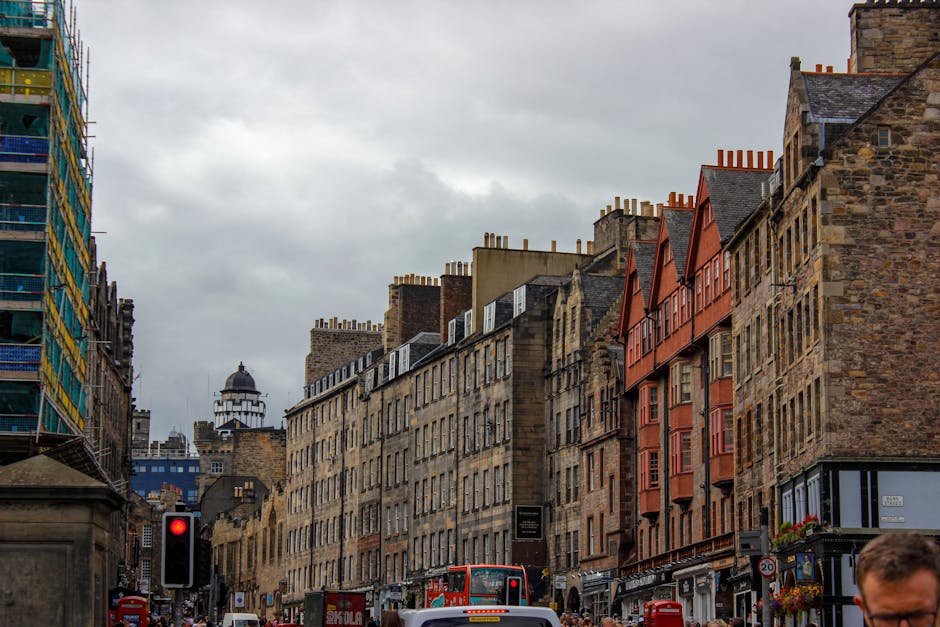
The Southside starts where the Old Town stops. Cross South Bridge, keep going, and the tourist city gives out within about four hundred metres: the shops stop selling tartan, the pubs fill up with students and staff from the Royal Infirmary’s old ground, and you are in Nicolson Street, then Clerk Street, then Newington Road — a mile-long spine of tenements, takeaways, second-hand shops and, unexpectedly, three of Edinburgh’s most important venues.
Search Southside Edinburgh things to do and the results are thin, because the field is genuinely uncontested — there is no pillar guide to this part of the city. That is a shame, because for anyone visiting in August, or anyone who wants to be twenty minutes’ walk from both Arthur’s Seat and the Royal Mile without paying Old Town prices, this is the best-value district in Edinburgh. Here is what is actually here, with prices, and an honest account of what is worth your afternoon.
At a Glance
- Where: immediately south of the Old Town. South Bridge becomes Nicolson Street, then Clerk Street, then Newington Road, running out towards Cameron Toll.
- Walking times: Royal Mile 5–10 minutes; the Meadows 5 minutes; Arthur’s Seat about 20 minutes to the foot of the hill; Waverley 15 minutes.
- Summerhall — the former Royal (Dick) Veterinary College, an arts complex since 2011, with a brewery, a distillery and over a million visitors a year.
- Festival Theatre, 13/29 Nicolson Street — 1,915 seats, Edinburgh’s longest continuous theatre site since 1830, and the Edinburgh home of Scottish Opera and Scottish Ballet.
- Surgeons’ Hall Museums, Nicolson Street — open 10:00–17:00 seven days, adult £10, child £5.50. The best-value serious museum in the city.
- The Queen’s Hall, Clerk Street — a 900-seat converted church doing jazz, folk and classical, all seated.
- Where to eat: Causewayside and Newington Road, not Nicolson Street. The good independent cooking is a block or two off the main drag.
- The Fringe case: this is the best-value base in Edinburgh in August — walkable to almost every major venue, and cheaper than anywhere north of the Meadows.
- Honest framing: the Southside is not pretty. It is a working, mixed, student-heavy district, and it is here for utility and value rather than views.
The Geography: One Road, Four Names
Like Morningside, the Southside is essentially a single road that changes its name as it goes. South Bridge carries you out of the Old Town over the Cowgate; it becomes Nicolson Street at the university, then Clerk Street, then Newington Road, then Minto Street. West of that line lie George Square and Bristo Square, the university’s heart and a major Fringe cluster; further west, the Meadows. East, Pleasance and Holyrood Park. Parallel to the south-west runs Causewayside.
| From Nicolson Street to… | On foot |
|---|---|
| The Royal Mile | 5–10 minutes |
| The Meadows | 5 minutes |
| George Square and Bristo Square | 3 minutes |
| Waverley Station | 15 minutes |
| The foot of Arthur’s Seat | About 20 minutes |
| Princes Street | 15–20 minutes |
| Summerhall | 10 minutes from the north end |
The honest verdict on the street itself: Nicolson Street and Clerk Street are functional rather than attractive. They carry a lot of buses, the shopfronts are a mix of phone repair, fast food and charity shops, and nobody photographs them. Do not judge the district from the main road — the interest is one street either side of it, and the venues are hidden in plain sight along it.
Summerhall
Summerhall is the most unusual building in this guide and one of the most unusual in Edinburgh. It was purpose-built for the Royal (Dick) Veterinary College: construction started in 1913, the memorial stone was laid on 21 July 1914, the college moved in during 1916, and it stayed until 2010, when the vet school relocated to Easter Bush. The main eleven-bay Edwardian Baroque block facing the Meadows is Category B listed, and inside it the Anatomy Lecture Theatre is the last surviving example of its type at any veterinary college in the United Kingdom.
The McDowell family bought the buildings in November 2011 and turned them into a multi-arts complex: galleries, performance spaces, artist studios, small museums, the Royal Dick bar and restaurant, Barney’s Beer microbrewery and the Summerhall distillery. It became one of the Fringe’s major venues and now draws over a million visitors a year. The New York Times described it as full of warrens and small hallways that make it a fine place to wander, which is exactly right — the pleasure of Summerhall is not knowing what is behind the next door.
The situation you should know about: in May 2024 the owners announced plans to sell the 130,000 square-foot complex, and the arts world spent the following year assuming it was lost. In March 2025 a new charity, Summerhall Arts — formed by former staff and tenants — signed a ten-year lease on the main building, securing the venue, while the developer AMA Newtown pursues planning consents for the rest of the campus.
The honest verdict: go, and go soon. The main building’s programme is secure for a decade but the wider site is being redeveloped around it, and the ramshackle, over-full, faintly institutional quality that makes Summerhall what it is will not survive that untouched. Outside August it is quiet — a bar, some galleries and a courtyard — so check the programme before you make the trip; in August it is one of the four or five venues that define the Fringe.
Surgeons’ Hall Museums
On Nicolson Street, behind a Playfair-designed portico, sit the Surgeons’ Hall Museums — the Royal College of Surgeons of Edinburgh’s collections of surgical pathology, instruments and anatomical specimens, among the largest of their kind anywhere. This is the museum that holds Edinburgh’s medical history in the most literal possible form, and it includes the Burke and Hare material.
| Ticket | Price |
|---|---|
| Adult | £10 |
| Student, NHS staff, over 60, visitor with a disability | £6.50 |
| Child 5–15 | £5.50 |
| Under 5 | Free |
| Family, 2 adults + 2 children | £25 |
| Family, 2 adults + 1 child | £21 |
| Family, 1 adult + 2 children | £17 |
| Annual ticket | £26 adult / £15 concession |
The honest verdict: at £10 this is the best-value ticketed museum in Edinburgh, and it is also the one to think carefully about. The collections are real human remains and surgical pathology, displayed seriously and without sensationalism, and they are genuinely confronting. Children under about twelve should not be taken on autopilot. If you have any interest in medicine, or in how Edinburgh became the city that produced modern surgery, allow ninety minutes. If squeamishness is a factor, spend the money on the National Museum of Scotland, ten minutes away and free.
The Theatres: Where Edinburgh’s Big Nights Happen
Two venues on this street do the heavy lifting for the city’s performing arts, and neither is in the Old Town.
The Edinburgh Festival Theatre, 13/29 Nicolson Street, seats 1,915. It sits on Edinburgh’s longest continuous theatre site — in use since 1830, through the Dunedin Hall, the Royal Amphitheatre, Pablo Fanque’s Amphitheatre, the Alhambra Music Hall of 1862 and the Queen’s Theatre. The Empire Palace Theatre opened here on 7 November 1892 to a design by Frank Matcham, the great Victorian theatre architect; it was rebuilt after a fire in 1911, reopened in October 1928, and was remodelled again into the present Festival Theatre, which reopened in June 1994 behind a full-height glass front. It is the Edinburgh home of Scottish Opera and Scottish Ballet and a main International Festival stage.
The Queen’s Hall on Clerk Street is the opposite in scale and much the more atmospheric: a 900-seat converted church, all seated, running jazz, folk, chamber and classical programmes year-round and a celebrated morning classical series during the International Festival. Our guide to Edinburgh’s live music venues covers where it sits in the city’s hierarchy.
The honest verdict: a ticket at the Queen’s Hall is one of the better-value evenings in Edinburgh and is almost entirely unknown to visitors, who default to the Old Town’s ghost tours and whisky tastings. Check both venues’ programmes before you book anything else — and note that neither has anything to see in the daytime. These are evening plans, not sights.
The University Quarter and the Meadows
George Square and Bristo Square, three minutes west of Nicolson Street, are the University of Edinburgh’s central campus. In term time they are a working university; in August they become one of the densest Fringe clusters in the city, with the Gilded Balloon, the Pleasance Dome and the big Underbelly venues all within a few minutes of each other.
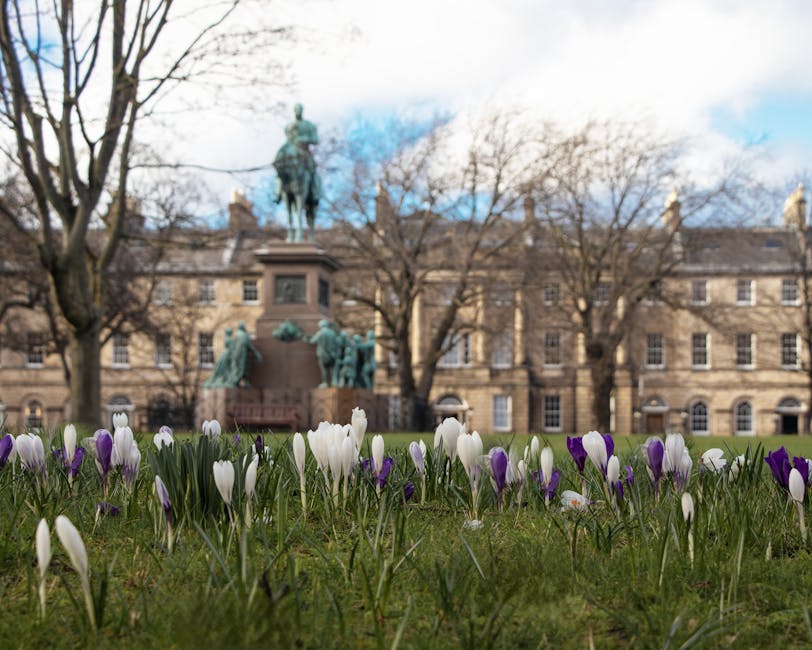
Beyond them is the Meadows — the flat mile of parkland that separates the Southside from Bruntsfield, crossed by Middle Meadow Walk. This is the district’s front garden and the reason it works: five minutes from Nicolson Street you have open grass, cherry trees in spring, and a direct walking route west to Bruntsfield and Morningside.
Arthur’s Seat the Back Way
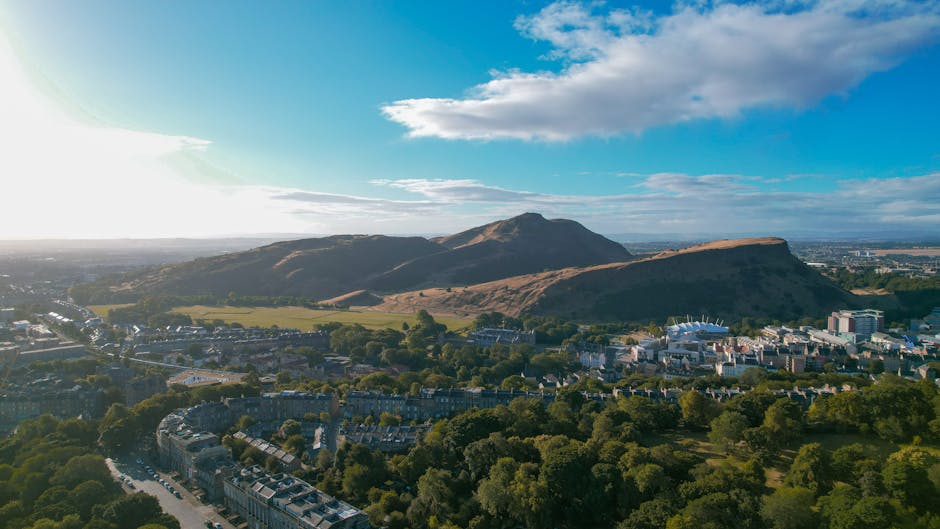
The Southside’s best free asset is that Holyrood Park is about twenty minutes’ walk away, and approaching Arthur’s Seat from this side means you skip the Holyrood Palace crowds entirely. Head east from Clerk Street and you reach the park’s southern and western edges, where the paths are quieter and the ascent is more gradual than the direct climb from the palace.
The honest verdict: this is the single strongest argument for staying in Newington. From an Old Town hotel, Arthur’s Seat is a project; from Newington it is a pre-breakfast walk. Our full Arthur’s Seat hiking guide sets out the routes and the times, and outdoor activities in Edinburgh covers the rest of the park.
Where to Eat: Causewayside and Newington Road
This is where the local knowledge earns its keep. Nicolson Street and Clerk Street, the main road, are dominated by fast food and chains serving a student market at speed. The independent cooking is one street away: Causewayside, running parallel to the south-west, and the stretch of Newington Road and South Clerk Street around it, hold the neighbourhood restaurants, delis and cafés that residents actually use.

The economics are the point. A student district keeps prices honest, so this is one of the few central parts of Edinburgh where you can eat properly for well under £20 a head, and the range — South Asian, Middle Eastern, East Asian, Italian, vegetarian — is wider than anything the Royal Mile offers. Our guides to cheap restaurants in Edinburgh and Edinburgh’s vegan restaurants both lean heavily on this part of town for good reason.
The honest verdict: do not eat on the main road. Walk one block west to Causewayside or south to Newington Road and the quality doubles for the same money. And do not expect a scene — this is a district that eats early and quietly outside August.
Second-Hand Shopping: the District’s Quiet Specialism
A large student population produces a particular kind of retail, and the Southside has it in depth: second-hand books, records, vintage clothing and charity shops, spread along Clerk Street, South Clerk Street and Causewayside. It is the opposite of the New Town’s boutiques — cheaper, messier and much more likely to turn something up.
The name to know is W. Armstrong & Son, established in 1840 and one of the oldest vintage clothing businesses in the United Kingdom, with shops in the Grassmarket and on the Southside. It is a genuine institution rather than a themed boutique, and it is where Edinburgh students have dressed for a century and a half.
The honest verdict: this is browsing, not shopping, and it works best with two unhurried hours and no list. If you want new clothes, brands or anything gift-wrapped, go north — our complete guide to shopping in Edinburgh maps the streets that do that properly. If you want a 1970s coat, a first edition or a record you have not seen since you were nineteen, this is the right mile of the city.
The Fringe Case: Why Stay Here in August
If you are coming for the festivals, this is the argument. In August the Southside is not a suburb of the Fringe — it is the Fringe. Summerhall, the George Square and Bristo Square venue clusters, the Pleasance, the Festival Theatre and the Queen’s Hall are all inside a fifteen-minute walking radius of Newington, and the Old Town venues are ten minutes north of that.
- You can walk everywhere, which matters more than anything else when you are doing five shows a day and the buses are full.
- Rates are lower than the Old Town, New Town or West End for the same distance from the venues.
- The eating is cheap and open late in a month when everywhere else is booked out.
- Student accommodation opens up across this district for the summer, which is where a large share of the affordable August beds are.
The honest verdict: book early — this is not a secret, and the Southside fills up for August faster than its off-season prices suggest. And remember the visitor levy: since 24 July 2026 Edinburgh charges 5% of the accommodation cost before VAT, on the first five consecutive nights, on every kind of paid accommodation including student lets to visitors. Our guide to Edinburgh festival accommodation covers how and when to book, and the ETA and visitor levy guide explains what the levy adds to your bill.
A Southside Afternoon
- 11:00 — Surgeons’ Hall Museums on Nicolson Street. £10, ninety minutes, open seven days.
- 12:45 — lunch on Causewayside, one block west of the main road.
- 14:00 — Summerhall: galleries, the courtyard, and the Royal Dick bar in the old vet school.
- 15:30 — east into Holyrood Park and up Arthur’s Seat from the quiet side, or west across the Meadows if the weather has turned.
- 18:00 — early dinner on Newington Road.
- 19:30 — a concert at the Queen’s Hall or a show at the Festival Theatre, both on the same street you started on.
Is the Southside Safe, and What Is It Like at Night?
It is a busy, mixed, student-heavy district on a main bus corridor, well lit and well used until late. Nothing about it requires special caution beyond the ordinary rules that apply anywhere in a city centre after midnight.
The honest verdict: the thing to manage is noise rather than safety. This is a student district with a main road running through it and a late-night takeaway trade, and in August it does not go quiet at all. If you are a light sleeper, ask for a room at the back — that single question does more for a Southside stay than any other piece of advice on this page. Our guide to whether Edinburgh is safe covers the city as a whole.
Prices, opening hours and the Summerhall lease position checked September 2026. The Summerhall site is subject to live planning applications — check current arrangements before travelling for a specific event.
Frequently Asked Questions
What is there to do on Edinburgh’s Southside?
Surgeons’ Hall Museums on Nicolson Street, the Summerhall arts complex in the old vet school, performances at the Festival Theatre and the Queen’s Hall, the university quarter at George Square, the Meadows, and a twenty-minute walk to Arthur’s Seat from the quiet side. It is a district for eating, walking and going out rather than for sightseeing.
How much is Surgeons’ Hall Museums?
£10 for an adult, £6.50 for students, NHS staff, over-60s and visitors with disabilities, £5.50 for children aged 5–15, and free for under-fives. Families pay £25 for two adults and two children. It is open 10:00–17:00 seven days a week with last admission at 16:30.
Is Summerhall still open?
Yes. Its owners announced in May 2024 that the complex would be sold, but in March 2025 a new charity, Summerhall Arts, formed by former staff and tenants, signed a ten-year lease on the main building. The arts venue is secured; the developer is pursuing planning consents for the rest of the campus.
What was Summerhall before it was an arts venue?
The Royal (Dick) Veterinary College. Construction began in 1913, the college moved in during 1916 and left in 2010 for Easter Bush, and the McDowell family bought the buildings in November 2011. The Category B listed main block still contains the last surviving anatomy lecture theatre of its type at any UK veterinary college.
How far is Arthur’s Seat from Newington?
About twenty minutes on foot to the edge of Holyrood Park, and the southern and western approaches are quieter and more gradual than the direct climb from the Palace of Holyroodhouse. It is the strongest practical argument for basing yourself here.
Where should I eat in Newington?
Not on Nicolson Street or Clerk Street, which are dominated by fast food and chains. Go one block west to Causewayside, or south along Newington Road and South Clerk Street, where the independent restaurants are. Student prices mean you can eat well for under £20 a head.
Is Newington a good base for the Edinburgh Fringe?
It is the best-value one. Summerhall, the George Square and Bristo Square clusters, the Pleasance, the Festival Theatre and the Queen’s Hall are all within a fifteen-minute walk, the Old Town is ten minutes beyond that, and rates are lower than any comparable district. Book early — this is not a secret.
How big is the Edinburgh Festival Theatre?
1,915 seats. It stands on Edinburgh’s longest continuous theatre site, in use since 1830; the Empire Palace Theatre opened here on 7 November 1892 to a Frank Matcham design, was rebuilt after a 1911 fire and reopened in 1928, and the present Festival Theatre reopened in June 1994. It is the Edinburgh home of Scottish Opera and Scottish Ballet.
Newington and the Southside are covered alongside the rest of the city in our complete area-by-area guide to Edinburgh’s neighbourhoods. Across the Meadows to the west lie Morningside and Bruntsfield; north of the bridge is the Royal Mile and Old Town; and for the opposite end of the city, Leith and The Shore.