Shopping in Edinburgh: Complete Guide to the Best Streets & Shops (2026)

Edinburgh is a better shopping city than it has any right to be for its size, and it is easy to spend a whole trip missing the good part. The obvious route — Princes Street, then the Royal Mile — takes you along a tired retail strip and then through a mile of tartan-fronted souvenir shops selling more or less identical stock. The city’s actual strengths sit one street back: a compact luxury quarter, two of the best independent shopping streets in Britain, a knitwear and tweed trade that has been here for two centuries, and a Sunday market you could plan an afternoon around.
This guide goes street by street and tells you what each one is genuinely good for, then deals with the things people actually come to Edinburgh to buy — kilts, cashmere, whisky, tweed, food — including the honest question of what is worth the money and what is a mass-produced souvenir with a thistle on it. Prices and shop details were checked in September 2026.

Where to Go for What
| If you want… | Go to | Walk from Waverley |
|---|---|---|
| Designer and luxury | Multrees Walk | 5 min |
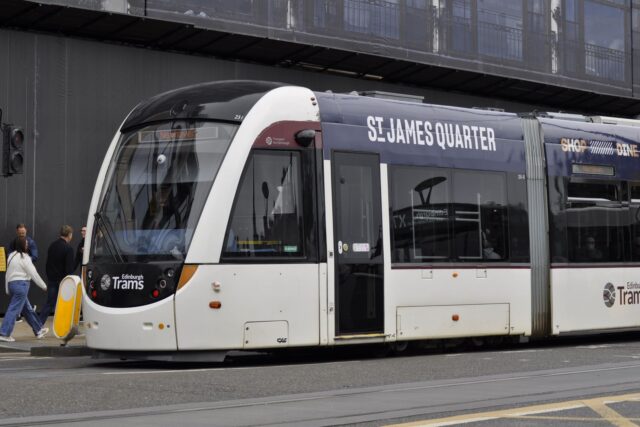
| High street brands under one roof | St James Quarter | 6 min |
| Independent boutiques and oddities | Victoria Street & Cockburn Street | 5–10 min |
| Grown-up independent fashion | Thistle Street & William Street | 10–15 min |
| Whisky | Victoria Street, the Royal Mile, Leith | 5–20 min |
| Cashmere, tweed and knitwear | Princes Street, the Royal Mile, Multrees Walk | 3–10 min |
| A kilt you will actually wear | Leith, the West End, Thistle Street | 10–25 min |
| Food and deli shopping | Leith Walk, Stockbridge, Bruntsfield | 10–25 min |
| Vintage and second-hand | Grassmarket, Southside, Stockbridge, Morningside | 12–35 min |
| Books | Victoria Street, Stockbridge, Southside | 8–20 min |
| Markets | Castle Terrace (Sat), Grassmarket (Sat), Stockbridge (Sun) | 12–20 min |
One Thing to Know Before You Spend
There is no tax-free shopping in Great Britain. The VAT Retail Export Scheme, which let overseas visitors reclaim the 20% VAT on goods carried home, was abolished in 2021. There is no refund desk at Edinburgh Airport, and the commercial services claiming otherwise are describing a scheme that no longer applies here.
The one remaining route is having the retailer ship your purchase directly to an address outside the UK, which is treated as an export and can be sold VAT-free. On a £600 kilt or a £900 cashmere order that is worth asking about; on a £40 scarf it is not, once you have paid postage and possibly import duty at the other end. Most Edinburgh kiltmakers and knitwear houses ship internationally as a matter of routine, so ask before you pay.
The New Town: Princes Street to St James Quarter
Princes Street
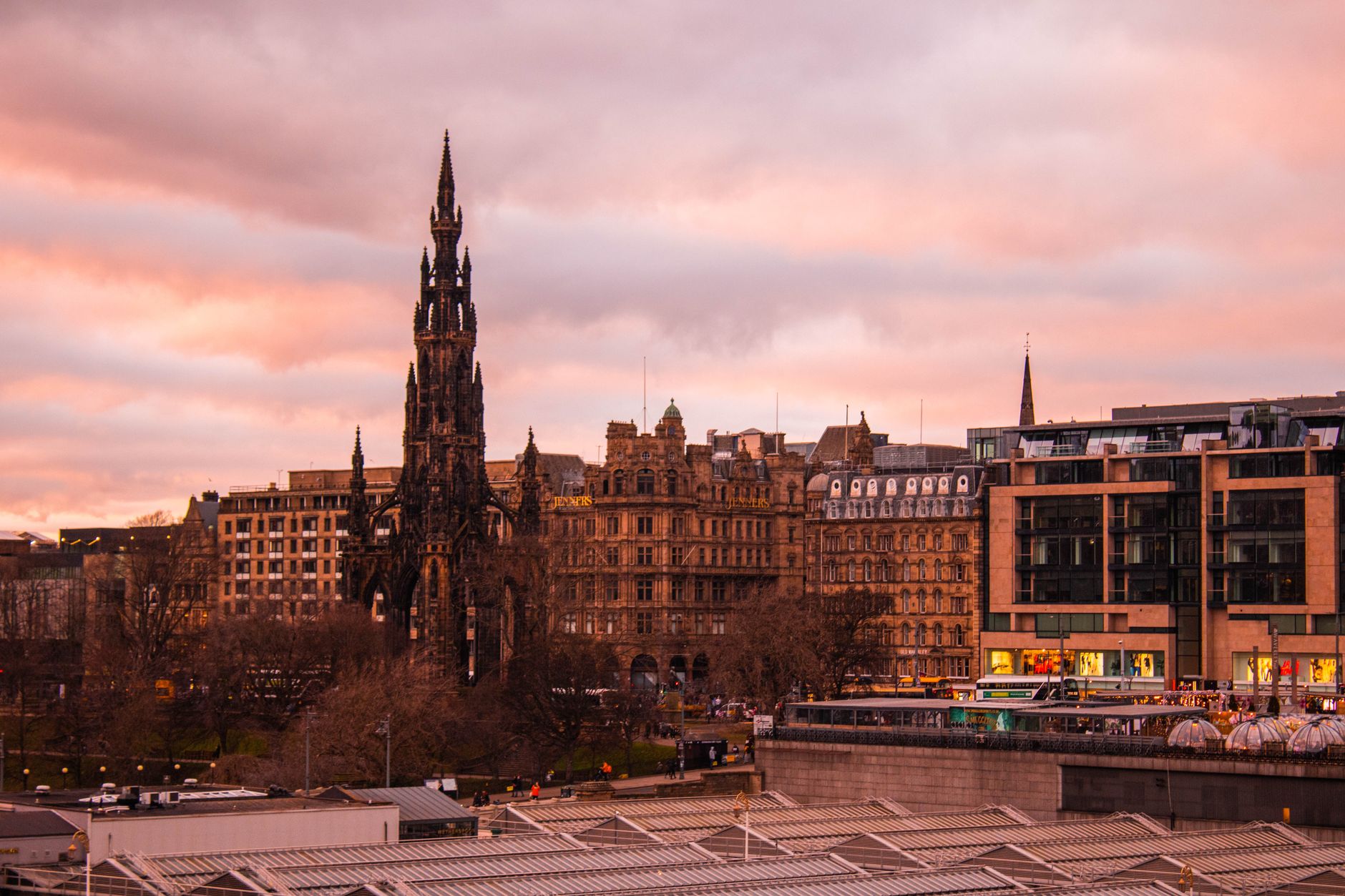
A mile of shops on one side and a gardens-and-castle view on the other, which is a spectacular thing to have and does not make the shops good. Princes Street is where you find the mainstream chains, the big sportswear stores, several branches of the same souvenir company, and the department-store anchor that everyone still asks about.
What about Jenners? Scotland’s grand old department store — the “Harrods of the North”, trading on Princes Street since the nineteenth century — closed in December 2020 and was fully vacated in 2021. The building was bought by AAA United, the property company of the Danish retailer Anders Holch Povlsen; planning consent came in 2022 and construction has been under way since 2024, converting it to a 90-bedroom hotel with restaurants, bars and restored retail floors. As of September 2026 there is no confirmed reopening date. If a guide tells you to shop at Jenners, it was written some time ago.
The honest verdict: walk the north pavement for the view, cross for the shops only if you need a specific chain. The good Princes Street shopping is the Scottish knitwear and cashmere retailers at the west end, near the Caledonian.
St James Quarter
The city’s newest and largest retail development, at the east end of Princes Street: 1.7 million square feet over four levels, with the full run of mid-market international fashion — & Other Stories, Bershka, Stradivarius, Pull&Bear and the rest — plus restaurants, bars, a food hall, a five-screen cinema and a hotel. It is the reason Edinburgh’s high street offer improved sharply after 2021.
The honest verdict: efficient rather than charming, and the right answer when it is raining sideways, which happens. It is also the most reliable place in the city to find a specific size in a specific brand.
Multrees Walk
A short pedestrian street linking St Andrew Square to St James Quarter, and the whole of Edinburgh’s luxury quarter in about 150 metres. Harvey Nichols anchors it — Scotland’s only branch — alongside Scotland’s only Louis Vuitton store, plus Mulberry, Burberry, Max Mara and a run of similar names.
The honest verdict: unusually concentrated and worth ten minutes even if you buy nothing. Harvey Nichols’ top-floor restaurant has one of the best free-to-enter views over the New Town rooftops to the Forth.
George Street
The New Town’s grand central axis, one street north of Princes Street and considerably better. Wide Georgian frontages, mid-to-upper high street brands, jewellers, a run of good cocktail bars in converted banking halls, and the best people-watching in the city on a bright afternoon.
The honest verdict: where to shop if you have one hour and want it to be pleasant. Combine with Multrees Walk at the east end.
Rose Street and Thistle Street
The two narrow lanes running parallel between Princes, George and Queen Streets, and they could not be less alike. Rose Street is a pedestrianised pub crawl with some retail attached — historically a challenge to drink its length, still busy, not a shopping destination. Thistle Street, one block north, is the grown-up one: a short, quiet run of independent designer boutiques and jewellers, including long-established names like Jane Davidson and the shoe specialist Pam Jenkins.
The honest verdict: Thistle Street is the single most overlooked shopping street in central Edinburgh. Five minutes off Princes Street and almost nobody finds it.
The Old Town: Where the Independents Are
Victoria Street and the West Bow
The curving, cobbled, painted terrace climbing from the Grassmarket to George IV Bridge — the most photographed street in Scotland and, unusually for a street with that problem, still full of real shops. In a two-minute walk you can pass a specialist whisky shop stocking several hundred bottles, a Harris Tweed and leather flagship, an art print and homeware gallery, a candle maker, an artisan cheesemonger and two secondhand booksellers.
The honest verdict: the best 200 metres of shopping in Edinburgh, and it knows it. Come before 10am if you want photographs without people in them, and expect the Harry Potter shops at the Grassmarket end to be busy all day. Our Victoria Street guide goes shop by shop.
Cockburn Street
A steep curve dropping from the Royal Mile down to Waverley, and the Old Town’s alternative strip: record shops, tattoo studios, streetwear, incense and crystals, and one of the city’s dedicated Harry Potter memorabilia shops. It has been the counter-cultural street since the 1970s and still mostly is.
The honest verdict: more fun than it is useful, and the fastest walk between the station and the Mile.
The Grassmarket and Candlemaker Row
The Grassmarket square itself is mostly pubs and restaurants now, but its edges hold a good cluster of independents, and Candlemaker Row, climbing towards Greyfriars, is a compact run of design shops, jewellers and makers. This is also vintage territory — W. Armstrong & Son, established in 1840 and one of the oldest vintage clothing businesses in the UK, has been an Edinburgh institution for generations and stocks everything from 1920s eveningwear to 1970s platforms.
The honest verdict: the best area in the city for browsing without a plan. See our Grassmarket guide.
The Royal Mile
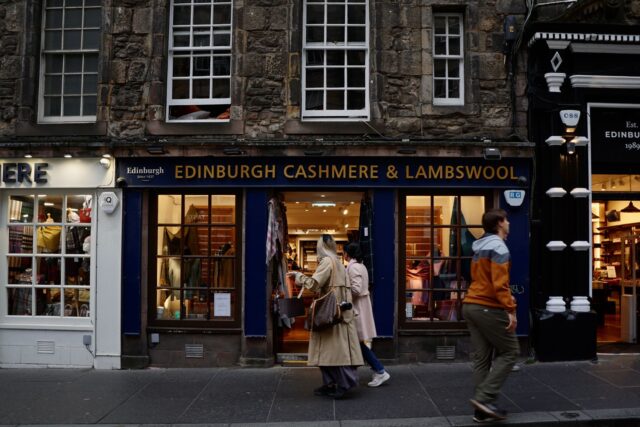
Let us be direct. The Royal Mile has perhaps a dozen genuinely good shops — a serious whisky retailer or two, a couple of long-established kiltmakers and woollen merchants, the museum shops, a few makers down the closes — distributed among a very large number of outlets selling the same mass-produced tartan scarves, novelty hip flasks, cashmere-blend wraps and fudge as the shop next door. Several of them are branches of the same company with different signage.
How to tell the difference: real Scottish woollen retailers name the mill, name the fibre and name the tartan. Shops that price everything at “3 for £10” and stack it in the doorway are selling imported goods with Scottish branding, which is legal and honest enough as long as you know that is what you are buying.
The honest verdict: buy your souvenirs anywhere else. The museum shops at the National Museum of Scotland and the Scottish National Gallery sell better things at similar prices, and the money goes somewhere useful.
Beyond the Centre
William Street and the West End
Two short blocks of Victorian shopfronts behind Shandwick Place, and the most civilised shopping in Edinburgh: independent womenswear, a shoe designer making her own, luxury Scottish knitwear, jewellery, lingerie, a florist, a photography gallery and several very good delis and small bars for when you stop.
The honest verdict: if you have half a day and want to shop the way locals with money do, come here. Fifteen minutes from Princes Street, and almost no visitors.
Stockbridge
Twenty minutes downhill from Princes Street: a village high street with an unusual density of good independents and, crucially, the best charity shops in Edinburgh — a function of the neighbourhood donating to them. Golden Hare Books, the UK Independent Bookshop of the Year in 2019, is here, alongside delis, homeware, a good cheesemonger and a run of small galleries.
The honest verdict: come on a Sunday for the market and stay for the shops. This is the answer to “where would a local go?”.
Leith Walk and Leith
The long descent from the New Town to the port, and the most interesting food shopping in the city: Italian delis, Polish and Middle Eastern grocers, bakeries, a famous wine and food emporium at the top of the walk, breweries and a distillery at the bottom. Leith is also where the serious kiltmaking is.
The honest verdict: not a browsing street — a destination-shopping one. Go with a list. Tram or bus down, since the walk back is entirely uphill.
Broughton Street, Bruntsfield and Morningside
Three residential high streets, each with a distinct character. Broughton Street, ten minutes from Waverley, has records, design, delis and a bookshop. Bruntsfield is the food street — bakeries, a cheesemonger, an excellent greengrocer, a whisky specialist. Morningside, further out, has the highest-quality charity shops in Scotland, which is exactly what you would expect from the neighbourhood, plus antiquarian books and tearooms.
The honest verdict: Broughton and Bruntsfield are worth the walk. Morningside is worth the bus only if second-hand shopping is your idea of a good afternoon — but if it is, it is the best in the city.
What to Actually Buy

Kilts and Highland dress
There are three routes, and they are genuinely different products.
- Made to measure, hand-sewn. Eight yards of heavy worsted wool, hand-stitched, made to your measurements over several weeks. Kinloch Anderson in Leith has been making them in Edinburgh since 1868; Nicolson Kiltmakers and a handful of others work at a similar level. This is a several-hundred-pound purchase minimum and a lifetime garment — kilts are routinely handed down.
- Designer and contemporary. 21st Century Kilts, Howie Nicholsby’s Thistle Street workshop, makes bespoke kilts in denim, leather, pinstripe and camouflage as well as wool, and has dressed a long list of people who wanted a kilt without the tradition attached. Named by The Guardian among Edinburgh’s ten best independent shops.
- Hire, or off the peg. Perfectly sensible for a wedding or a one-off. Full outfit hire is widely available; machine-made off-the-peg kilts start far lower than bespoke and are made from lighter cloth, usually abroad.
What to ask: how many yards of cloth, what weight, where it was woven, and whether it is hand-stitched or machine-made. Those four questions separate a £700 kilt from a £120 one, and a shop that will not answer them plainly is telling you something.
On “your” tartan: the clan-tartan system is largely a nineteenth-century invention, popularised after George IV’s 1822 visit to Edinburgh. Nobody polices it. If a surname tartan exists and you like it, wear it; if you prefer a district or a universal tartan, that is equally legitimate and often better looking.
Cashmere, tweed and knitwear

Scotland’s Borders mills have spun cashmere for two centuries and the good stuff is genuinely worth buying here. The problem is that “Scottish cashmere” on a shop sign is not a protected claim.
- Check the composition label, not the sign. 100% cashmere behaves very differently from a 5% cashmere blend, and both are sold on the same street.
- Ask which mill. Genuine Scottish knitwear retailers will name Hawick, Selkirk or Elgin without hesitating.
- Harris Tweed is the one guaranteed thing. It is protected by an Act of Parliament: it must be handwoven by islanders at their homes in the Outer Hebrides from pure virgin wool dyed and spun there. Look for the Orb mark. If it does not have the Orb, it is not Harris Tweed, whatever the label says.
- Expect roughly: £50–£90 for a lambswool scarf, £120–£250 for a decent cashmere scarf or a Harris Tweed cap and bag, £250 upwards for a full cashmere jumper.
Whisky
Edinburgh has several specialist retailers stocking hundreds of bottles each, including independent bottlings and single casks you will not find outside Scotland. That is the reason to buy here — not price. Standard supermarket blends and the mainstream single malts cost the same or less at your airport of departure, and duty-free is not the bargain it once was.
- Buy the thing you cannot get at home: an independent bottling, a distillery-exclusive, a small producer, a cask-strength release.
- Check your allowance before you buy three bottles. Most non-EU destinations allow one litre of spirits duty-free; the US allows one litre per adult without duty.
- Ask the shop to pack it properly if it is going in hold luggage. Most will, free.
- Alcohol cannot be sold in Scotland before 10am or after 10pm — a licensing rule that catches out late-evening shoppers.
Our guides to Edinburgh’s whisky bars and distillery tours cover the drinking side.
Food and drink to take home
- Cheese. Edinburgh’s artisan cheesemongers cut and wrap for travel, and Scottish cheddars, blues and soft cheeses travel better than people expect.
- Shortbread. Buy it from a baker rather than a souvenir shop. The difference is embarrassing.
- Smoked salmon and kippers. Vacuum-packed, and fine in hold luggage for a day.
- Scottish gin. Edinburgh and the surrounding country now produce a genuinely serious range, and small distillers sell direct.
- Oatcakes, marmalade, heather honey, Dundee cake. Cheap, light, unmistakably local.
- Do not buy haggis to take home if you are flying outside the UK — most countries, including the US, restrict meat imports.
Books, art and jewellery
Edinburgh was the world’s first UNESCO City of Literature and it has the bookshops to justify it: antiquarian dealers on Victoria Street and in the Southside, an award-winning independent in Stockbridge, and secondhand shops throughout Morningside and Bruntsfield. Prints and small original works are strong too — the Old Town galleries sell affordable work by living Scottish artists, which is a better souvenir than almost anything with a thistle on it. For silver and contemporary jewellery, look at Thistle Street, William Street and the maker studios around Candlemaker Row. See our bookshops guide.
Edinburgh’s Markets: Which Day, Which Market
| Market | When | Where | What for |
|---|---|---|---|
| Edinburgh Farmers Market | Saturday, 9am–2pm | Castle Terrace | Meat, game, cheese, bread, produce — under the Castle rock |
| Grassmarket Market | Saturday, 10am–5pm | Grassmarket | Street food, crafts, gifts, produce |
| Stockbridge Market | Sunday, 10am–4pm | Saunders Street | The best all-rounder: food, crafts, jewellery, dog treats |
| Leith Market | Saturday | Dock Place | Street food and makers, smaller and local |
| Christmas Market | Mid-Nov to early Jan | East Princes Street Gardens | Atmosphere; the goods are largely generic |
If you are only here for a weekend, the pairing to aim for is Castle Terrace on Saturday morning and Stockbridge on Sunday. More on the seasonal ones in our Christmas markets guide.
Vintage, Charity and Second-Hand
Edinburgh punches well above its weight here, largely because it is a wealthy city with a lot of students, which is the ideal combination for second-hand stock.
- Grassmarket and the Southside for proper curated vintage — W. Armstrong & Son, trading since 1840, is the anchor.
- Morningside and Bruntsfield for charity shops with genuinely good donations. Bring patience.
- Stockbridge for the same, in a smaller and more browsable strip.
- Nicolson Street and Clerk Street for student-priced everything, including books and records.
- Best time: weekday mornings, and the first week of September when students clear out flats.
Souvenirs: What to Skip
Nothing here is a scam. It is all legal, and some of it is charming. But if you want to bring back something that feels like Scotland rather than like an airport, this is the honest ranking.
| Skip | Buy instead |
|---|---|
| Royal Mile “3 for £10” tartan scarves | One lambswool scarf from a named mill |
| Souvenir-shop shortbread tins | Shortbread from a city bakery |
| Novelty hip flasks and Nessie plush | A print by a living Scottish artist |
| Supermarket blended whisky | An independent bottling from a specialist |
| Machine-made “kilts” from a gift shop | A hire outfit, or save for a real one |
| Mass-market “Celtic” silver | Contemporary work from a Candlemaker Row maker |
| Fridge magnets of the Castle | The Castle’s or the museum’s own shop |
Opening Hours and Practicalities
- Standard hours are roughly 09:00 or 10:00 to 18:00, Monday to Saturday. Thursday is late-night shopping in the centre, typically to 20:00.
- Sundays run shorter, usually 11:00 to 17:00 or 18:00. Scotland has no equivalent of England’s Sunday trading restrictions, so supermarkets and the big centres open normally.
- Small independents often close on Sundays or Mondays entirely. Check before crossing the city for one shop.
- Cards everywhere, including market stalls. Carry a little cash anyway.
- Ask about international shipping on anything substantial — it removes the VAT and the luggage problem in one move.
- August changes everything. Central shops stay open later during the Fringe, and are far busier.
- Left luggage at Waverley means you can shop on your last morning without dragging cases.
A Half-Day Shopping Route
If you have one afternoon and want the best of it, walk this: St Andrew Square → Multrees Walk → St James Quarter → George Street → Thistle Street → down the Mound → Victoria Street → the Grassmarket. It takes about three hours with stops, covers luxury, high street, independent and Old Town in one line, and finishes somewhere you can sit down with a drink.
Add Stockbridge on a Sunday morning and you have seen everything that matters.
Shopping in Edinburgh FAQs
What is the main shopping street in Edinburgh?
Princes Street is the largest and best known, but George Street one block north is more pleasant, St James Quarter has more brands under one roof, and Multrees Walk holds all the luxury. For independents, Victoria Street in the Old Town and Thistle Street in the New Town are the two to walk.
Can tourists claim VAT back in Edinburgh?
No. The UK abolished tax-free shopping for visitors in Great Britain in 2021, and there is no VAT refund desk at Edinburgh Airport. The only way to buy without VAT is to have the retailer ship your purchase directly to an address outside the UK, which is worth doing on large purchases.
Is Jenners still open on Princes Street?
No. Jenners closed as a department store in December 2020 and the building was vacated in 2021. It is being converted into a 90-bedroom hotel with restaurants, bars and restored retail floors, with construction under way since 2024. As of September 2026 no reopening date has been confirmed.
Where should I buy a kilt in Edinburgh?
For a traditional hand-sewn, made-to-measure kilt, Kinloch Anderson in Leith has been making them in Edinburgh since 1868, and Nicolson Kiltmakers works at a similar level. For a contemporary bespoke kilt in non-traditional fabrics, 21st Century Kilts on Thistle Street. For a wedding or one-off, hire is sensible and widely available.
Is cashmere cheaper in Scotland?
Not necessarily cheaper, but the quality and choice are better and you can buy directly from Borders mill brands. Check the composition label rather than the shop sign — 100% cashmere and a 5% cashmere blend are sold side by side on the same street, at very different prices.
What day is Stockbridge Market?
Sunday, 10am to 4pm, on Saunders Street in Stockbridge. The Edinburgh Farmers Market on Castle Terrace runs Saturday 9am to 2pm, and the Grassmarket Market runs Saturday 10am to 5pm, so a weekend can comfortably cover all three.
What should I buy as a souvenir from Edinburgh?
A lambswool or cashmere scarf from a named Scottish mill, Harris Tweed carrying the Orb mark, an independent whisky bottling you cannot get at home, cheese or shortbread from a real shop rather than a souvenir one, or a print by a living Scottish artist. Skip the Royal Mile multipack tartan.
Are shops open on Sundays in Edinburgh?
Yes. Scotland has no equivalent of England’s Sunday trading restrictions, so supermarkets and the big shopping centres keep normal hours. Smaller independents often open later, around 11am, close around 5pm, or shut entirely — check individual shops before making a journey.
Where to Go Next
Shopping in Edinburgh works best strung between other things, because the good streets sit in the middle of the good neighbourhoods. Our Edinburgh neighbourhoods guide tells you which district each street belongs to, the food guide covers where to stop, and Edinburgh travel tips handles the money, the levy and the practicalities. On a tight budget? Edinburgh on a budget and free things to do will stretch the trip further.
Shops, hours and prices on this page were checked in September 2026. Independent retailers change quickly — a quick look at a shop’s own page before you cross the city is always worth thirty seconds.