Duddingston Village: Loch Walk, Dr Neil’s Garden and the Sheep Heid (2026)
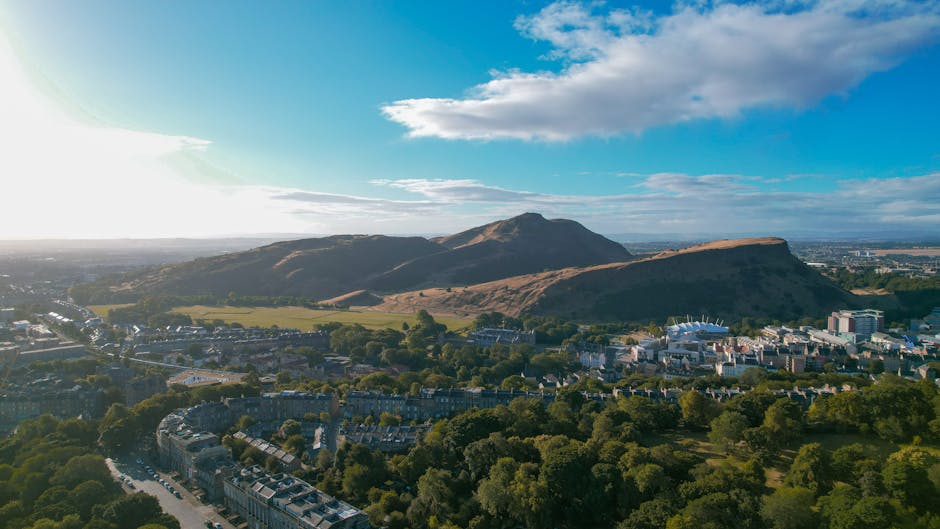
There is a village on the far side of Arthur’s Seat with a 12th-century kirk, a loch that has been a wildlife reserve since 1923, a walled garden you reach through the graveyard, and a pub that claims to be the oldest in Scotland. It is inside the Edinburgh city boundary. Most people who climb Arthur’s Seat never find out it is there, because they go up and down the same side of the hill.
Duddingston Village is the best-kept small secret in Edinburgh, and the reason it stays that way is that nobody has written a proper guide to it — the field is a handful of blog posts and a Wikipedia entry about a pub. This one covers the honest version: what is genuinely old and what is marketing, how to walk here down the back of Arthur’s Seat, the Victorian railway tunnel that gets you here from the city without touching a road, and why the garden through the kirkyard is the single most underrated free thing in Edinburgh.
At a Glance
- Where: the south-east corner of Holyrood Park, at the foot of Arthur’s Seat, about two and a half miles from the Royal Mile.
- Dr Neil’s Garden, 5 Old Church Lane, EH15 3PX — open daily 10:00 to dusk, free entry, donations welcomed. Reached through the kirkyard.
- Duddingston Kirk is largely 12th century, substantially rebuilt in 1631 and again in the 19th century.
- Duddingston Loch has been a wildlife reserve since 1923, managed by the Scottish Wildlife Trust, with the Bawsinch sanctuary alongside it since 1971.
- The Sheep Heid Inn advertises 1360 and has a skittle alley. The building is 18th century and the earliest written record of an inn here is 1516 — see the honest verdict below.
- The Innocent Railway tunnel — Scotland’s earliest public railway tunnel, 566 yards, built 1827–1830 — is now a lit cycle path running out here from the city.
- Raeburn’s The Skating Minister, painted in the 1790s, is set on this loch. The painting is in the Scottish National Gallery in town.
- Bonnie Prince Charlie held a council of war in the village in 1745, before the Battle of Prestonpans.
- Best approach: walk over Arthur’s Seat and come down the eastern side. It turns a hill climb into a destination.
The Back Way Down Arthur’s Seat
This is the framing that makes Duddingston worth a morning rather than a detour. Almost everyone who climbs Arthur’s Seat starts at Holyrood, goes up, comes down the way they went, and ends in the same car park. Going over the top and down the eastern flank puts you in a village at the bottom, with a garden, a loch and a pub — and it converts a two-hour hill walk into a genuinely satisfying half day.
The descent brings you down past Duddingston Loch to the village at the park’s south-east gate. From there you can walk back to the city along the loch and out through the park, or take the Innocent Railway path, or catch a bus. Our full Arthur’s Seat hiking guide covers the ascent routes and the timings in detail.
| Route in | Time | Verdict |
|---|---|---|
| Over Arthur’s Seat from Holyrood, down the east side | 1.5–2 hours | The best way. A climb with a village at the end of it. |
| Innocent Railway path from St Leonards | 35–45 minutes | Flat, traffic-free, through the tunnel. Best on a bike. |
| Round the base of the park from Holyrood | About 50 minutes | Flat, easy, and prettier than it sounds. Good in poor weather. |
| Bus from the city centre | 20–30 minutes | Fine, but you miss the point. Check the route on lothianbuses.com. |
The Innocent Railway Tunnel
This is a small piece of industrial history that most Edinburgh residents use as a commuter route without thinking about it. The Edinburgh and Dalkeith Railway opened in stages from 4 July 1831, built by coal owners with pits near Dalkeith — including the Duke of Buccleuch and the Marquis of Lothian — to move coal into Edinburgh’s markets more cheaply than by cart.
It was horse-drawn, and it acquired the nickname “the Innocent Railway” for what one contemporary called its old-fashioned unreality: in an age when steam locomotives seemed alarmingly fast, a line pulled by horses looked charmingly harmless. The nickname is not literally true — the line’s records include fatal accidents — and it is worth knowing that before you repeat the pleasant version. The North British Railway acquired it in 1845, and passenger services from the original St Leonards terminus ended on 1 November 1847.
The tunnel at St Leonards is Scotland’s earliest public railway tunnel: 566 yards — 518 metres — built between 1827 and 1830 at a cost of around £12,000, originally gas-lit and now electrically lit as part of the cycle route. Walking or riding through it and coming out into the green edge of Holyrood Park is one of the more quietly satisfying transitions in the city.
The honest verdict: as a piece of sightseeing, a lit tunnel is a lit tunnel — it takes six minutes and there is nothing to look at. As a route, it is excellent: flat, traffic-free, direct from the Southside to Duddingston, and much the best way to arrive here on a bike. Our guide to cycling and bike hire in Edinburgh covers where to pick up a bike for it.
Duddingston Kirk and the Kirkyard
Duddingston Kirk is the oldest thing here by a wide margin: largely 12th century, substantially rebuilt in 1631 and altered again in the 19th century, with crow-stepped gables and a bell-cot. It has stood above the loch for around eight hundred years, which in a city of Georgian set pieces is unusual.
At the gate are the survivals people come to see: the jougs, an iron neck-collar chained to the wall for the public punishment of offenders — photographed in place as early as 1885 — and a loupin’-on stane, the mounting block for getting onto a horse. Both are ordinary parish equipment that almost nowhere else has kept.
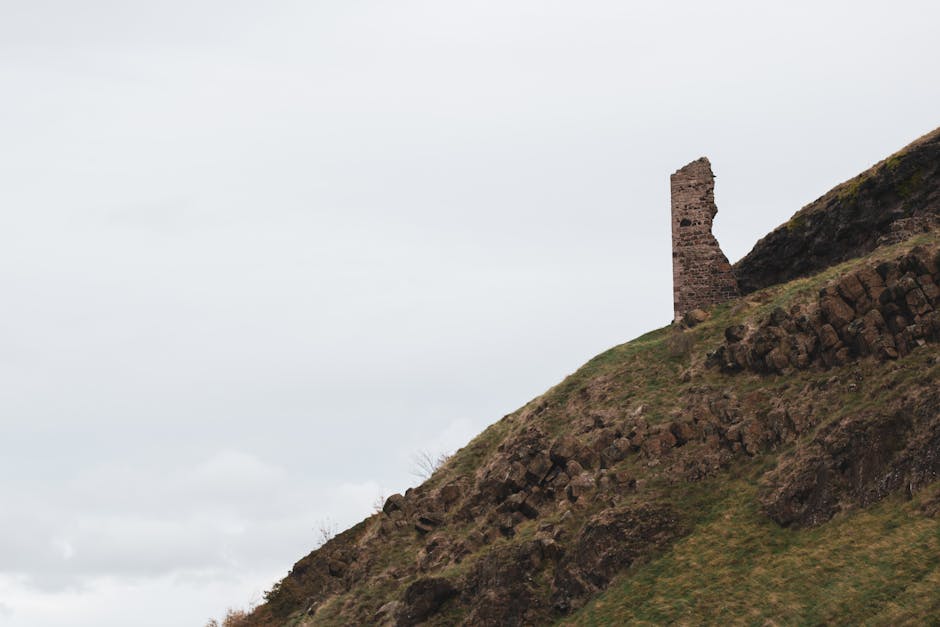
The honest verdict: it is a working parish church, not a visitor attraction, and it is not reliably open to look round. Treat the kirkyard as the destination — it is open, it is free, the setting above the loch is lovely, and it is also the way into the garden.
Dr Neil’s Garden
This is the reason to make the trip. Dr Neil’s Garden, 5 Old Church Lane, EH15 3PX, is a terraced garden running down from the kirkyard to the edge of Duddingston Loch, and it is open daily from 10:00 until dusk with free entry and donations welcomed.
It was created from 1963 by two Edinburgh doctors, Nancy and Andrew Neil, who worked the ground themselves and used it therapeutically with their patients. It is not a botanic collection and it is not manicured: it is a physic-garden-scaled space of trees, rock plantings, herbaceous beds and water, with the loch through the trees at the bottom, and it runs a programme of art exhibitions and workshops through the year.
You get to it through the kirkyard, which is the detail that keeps the visitor numbers down — there is no street frontage, no ticket desk and no sign to speak of, and people walk past the gate assuming it is private.
The honest verdict: for a free garden inside a capital city, this is remarkable, and it is the single best thing in Duddingston. It is also genuinely small — forty-five minutes covers it, and it does not fill an afternoon on its own. Combine it with the loch and the walk, go on a dry day, and put a note in your pocket about the donations box, because the place runs on them.
Duddingston Loch and Bawsinch
Duddingston Loch has been a wildlife reserve since 1923 and is managed by the Scottish Wildlife Trust, with wildfowl and extensive reedbeds; the adjoining Bawsinch sanctuary was expanded in 1971. It is the only substantial natural loch inside the city, sitting directly beneath the crags of Arthur’s Seat, and in winter it holds serious numbers of birds.
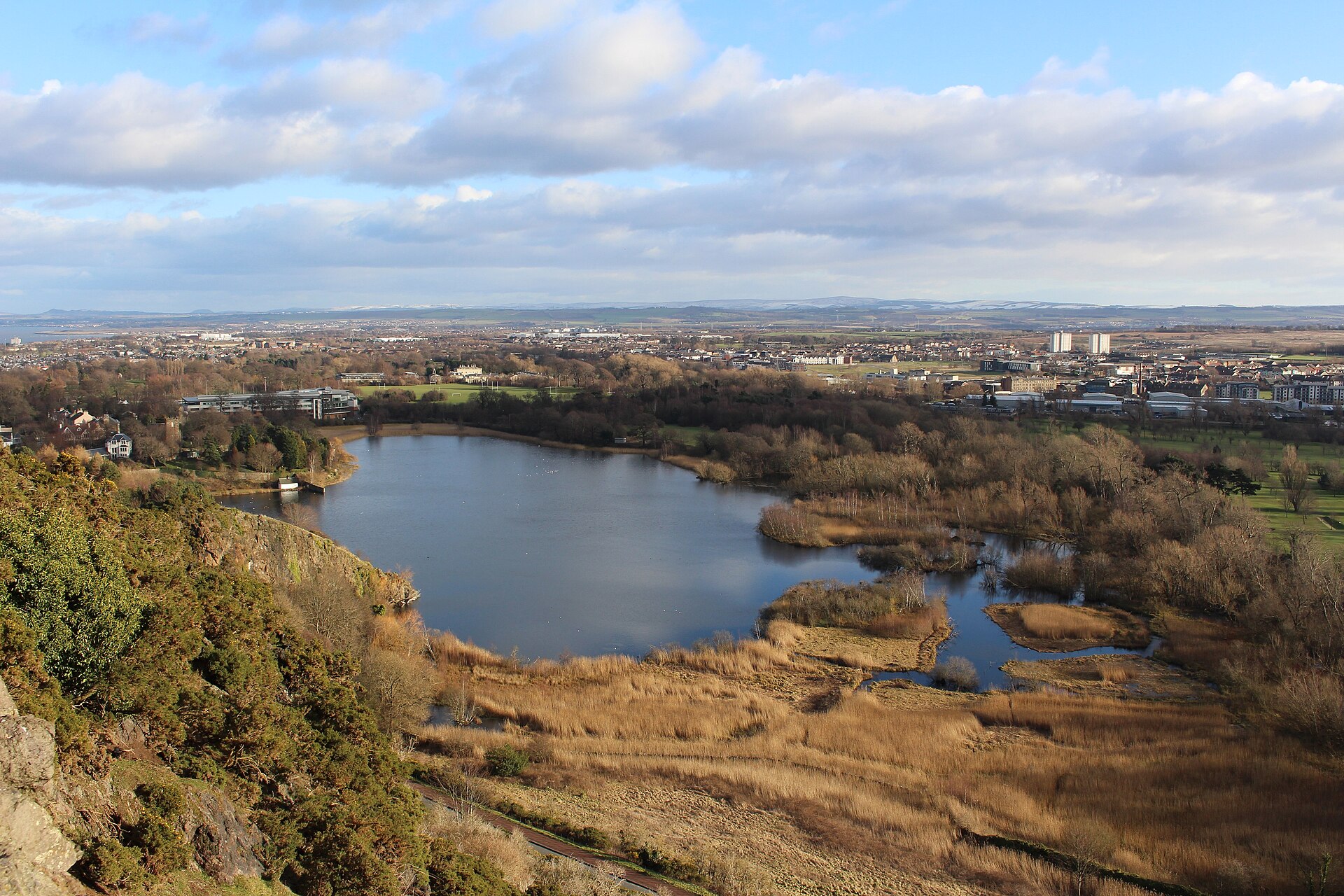
The loch is also a small piece of art history. The Skating Minister, painted in the 1790s and long attributed to Sir Henry Raeburn, shows the Reverend Robert Walker skating on this water with the crags behind him. It is among the best-known Scottish paintings in existence and it hangs in the Scottish National Gallery on the Mound, which is free to enter. Seeing the painting and then standing at the place is a genuinely good pairing, and it costs nothing at either end.
The honest verdict: the loch is a nature reserve rather than a park, and it is managed for birds, not for people. There is no circular path around the water, access to parts of the reserve is restricted, and you should not expect a lakeside promenade. What you get is a viewpoint or two, reeds, water birds and quiet — which is the point. Bring binoculars if you have them and do not bring expectations of a boating pond.
The Sheep Heid Inn: Sorting the Claim from the Record
The Sheep Heid Inn is the village’s famous name, and it advertises itself as dating from 1360 — a claim repeated by nearly every article about it, which usually adds that James VI gave the landlord an ornamental ram’s-head snuffbox in 1580, hence the name.
Here is the position as far as the documentary record goes. The earliest written record of an inn on this site is 1516, not 1360; the present building is 18th century with later additions; and the White Hart Inn in the Grassmarket has an equally early written record of 1516, so “Scotland’s oldest pub” is a contested title rather than a settled fact. We could find no documentary support for 1360.
| Claim | What can be shown |
|---|---|
| Founded 1360 | No documentary support found |
| Earliest written record | 1516 — the same year as the earliest record for the White Hart Inn |
| Present building | 18th century, with later additions |
| James VI’s ram’s-head snuffbox, 1580 | Traditional; repeated in the pub’s own history |
| Skittle alley | Real, and still in use — book it |
The honest verdict: none of this makes it a bad pub — it is a very good one, in a beautiful spot, with a real Victorian-style skittle alley in the back that you can book and that is the genuine novelty here. Just do not travel across a city for the 1360. Go for the setting at the end of a walk over the hill, and read our guide to Edinburgh’s oldest and most historic pubs for how the competing claims actually stack up.
The Rest of the Village
Duddingston is small — one main street, a lane, a kirk, a loch and a pub — and the remaining points of interest take twenty minutes between them.
- Bonnie Prince Charlie’s council of war. The Prince held a council in a house in the village in 1745, before the Jacobite army marched on the Battle of Prestonpans. The house is private; there is nothing to go into.
- Duddingston House, a Palladian mansion completed by 1768 to a design by Sir William Chambers for the 8th Earl of Abercorn, stands beyond the village. It is not a public attraction.
- The village street itself is a conservation-area terrace of small houses. As with Dean Village and Circus Lane, people live here — photograph the street, not the windows.
The honest verdict: the village is thirty minutes. Anyone telling you to spend a day in Duddingston is describing the walk, not the place. Its value is as the far end of something else — a hill crossing, a cycle route, a loch walk — and that is a compliment rather than a criticism.
A Half-Day That Works
- 09:30 — start at Holyrood and climb Arthur’s Seat. Allow an hour to the summit at a steady pace.
- 11:00 — descend the eastern side, dropping towards Duddingston Loch and the park’s south-east gate.
- 11:45 — the kirkyard, the jougs at the gate, and the view down to the water.
- 12:00 — Dr Neil’s Garden, through the kirkyard. Free, open daily to dusk, forty-five minutes.
- 13:00 — lunch at the Sheep Heid, and book the skittle alley in advance if you want it.
- 14:30 — walk back into town along the Innocent Railway path and through the tunnel to St Leonards, which puts you in Newington and the Southside in about forty minutes.
Duddingston Through the Year
Everything here is outdoors, so the season changes the trip more than it changes most Edinburgh plans.
- Spring is the garden’s season and the best overall: Dr Neil’s plantings come on through April and May, the hill is dry underfoot, and the light is long enough to do the walk and the pub without hurrying.
- Summer brings people, but far fewer than the Holyrood side — even in August, the eastern descent of Arthur’s Seat is quiet compared with the main path. Book the Sheep Heid.
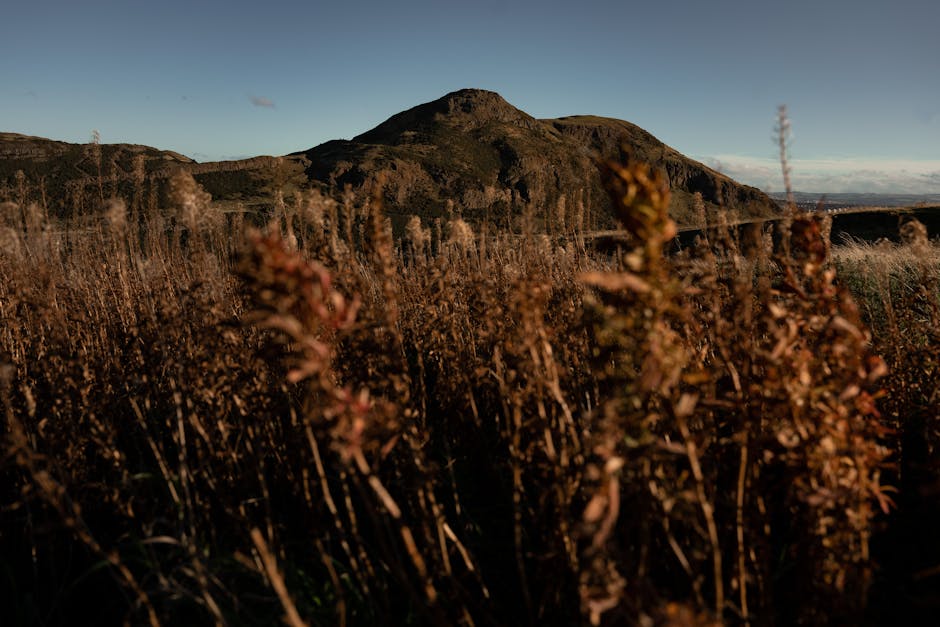
- Autumn is the photographer’s choice: colour on the eastern slopes, low light on the loch, and the reserve at its most active as the wintering wildfowl arrive.
- Winter is the one to think about. The loch is at its best for birds, and the association with skating gives the place its most famous image — but the garden closes at dusk, which in December can be mid-afternoon, and the descent from Arthur’s Seat is genuinely slippery in ice. Take the flat route in and out.
The honest verdict on weather: there is exactly one indoor option in Duddingston, and it is the pub. If the forecast is bad, either commit to a long lunch or move the trip — an exposed hill descent, an outdoor garden and a bird reserve add up to a poor wet afternoon. Our guide to indoor activities in Edinburgh is the better plan on those days.
Who Duddingston Is For
Be honest with yourself about which of these you are. If you have three days in Edinburgh and have not seen the castle, Duddingston is not for you this trip. If you are a returning visitor, a walker, a gardener, a birdwatcher, or someone who has already climbed Arthur’s Seat once and wants a better reason to do it again, this is one of the most rewarding half-days the city has — and almost all of it is free.
It is also an unusually good option for a rest day in a busy trip. There is no ticket to buy, nothing that must be booked except a table, and nothing that will be sold out. In a city where the good things increasingly require planning weeks ahead, that counts for a lot — see free things to do in Edinburgh for the rest of the no-booking list.
Practical Notes
- There are no visitor facilities beyond the pub. No shop, no public toilet block, no café strip. Bring water for the hill.
- The garden closes at dusk, which in December means mid-afternoon. Check what time that actually is before you plan a winter visit.
- Holyrood Park is exposed. The wind on the ridge is materially stronger than in the street, and the descent to Duddingston is loose and slippery in wet weather.
- Book the Sheep Heid for a weekend lunch. It is a village pub with a city’s worth of people who know about it.
- The reserve is for birds. Keep dogs on leads, stay on the paths, and do not expect access to the whole shoreline.
Garden opening, kirk dates, railway history and pub claims checked September 2026. Dr Neil’s Garden closes at dusk, which varies by month — confirm before a late visit.
Frequently Asked Questions
How do you get to Duddingston Village?
The best way is over Arthur’s Seat from Holyrood, descending the eastern side — about an hour and a half to two hours. Alternatives are the flat Innocent Railway cycle path from St Leonards (35–45 minutes), a walk round the base of Holyrood Park (about 50 minutes), or a bus from the city centre. Check the specific bus route on lothianbuses.com.
Is Dr Neil’s Garden free?
Yes. It is open daily from 10:00 until dusk at 5 Old Church Lane, EH15 3PX, with free entry and donations welcomed. You reach it through Duddingston kirkyard, which is why so many people walk past without realising it is there.
Is the Sheep Heid Inn really Scotland’s oldest pub?
It advertises 1360, but no documentary support for that date could be found. The earliest written record of an inn on the site is 1516 — the same year as the earliest record for the White Hart Inn in the Grassmarket — and the present building is 18th century. It is a very good pub with a real skittle alley; the founding date is marketing rather than record.
How old is Duddingston Kirk?
Largely 12th century, substantially rebuilt in 1631 and altered again in the 19th century. It has crow-stepped gables and a bell-cot, and at the gate are the jougs — an iron neck-collar used for public punishment, photographed in place as early as 1885 — and a loupin’-on stane for mounting a horse.
What is the Innocent Railway?
The Edinburgh and Dalkeith Railway, opened in stages from 4 July 1831 to carry coal into Edinburgh, worked by horses rather than steam — which is where the affectionate nickname came from, though the line was not in fact accident-free. Its St Leonards tunnel, 566 yards long and built between 1827 and 1830, is Scotland’s earliest public railway tunnel and is now a lit cycle path.
Can you walk around Duddingston Loch?
Not fully. It has been a wildlife reserve since 1923, managed by the Scottish Wildlife Trust with the Bawsinch sanctuary alongside since 1971, and it is managed for birds rather than for walkers — access to parts of it is restricted and there is no circular lakeside path. There are good viewpoints from the kirkyard and the garden.
Where is the painting of the skating minister?
In the Scottish National Gallery on the Mound, which is free to enter. Painted in the 1790s and long attributed to Sir Henry Raeburn, it shows the Reverend Robert Walker skating on Duddingston Loch with the crags of Arthur’s Seat behind.
How long do you need in Duddingston Village?
Thirty minutes for the village itself, forty-five for Dr Neil’s Garden, and a couple of hours more if you walk in over Arthur’s Seat and stop for lunch. Treat it as the far end of a walk rather than a destination in its own right.
Duddingston Village is one of the outlying districts in our complete area-by-area guide to Edinburgh’s neighbourhoods. On the other side of the park lie Newington and the Southside; on the coast, Portobello beach and Cramond and its island causeway. For more walking of this kind, see outdoor activities and adventures in Edinburgh.
More Edinburgh Neighbourhood Guides
Photo Credits
Duddingston Loch and its reedbeds: Duddingston Loch – geograph.org.uk – 6474378 by Graeme Yuill, CC BY-SA 2.0, via Wikimedia Commons.