Arthur’s Seat Edinburgh Hike: Routes, Time & Tips (2026)

An Arthur’s Seat Edinburgh hike is the city’s defining outdoor experience — an extinct volcano rising to 251 metres above sea level, with summit views stretching from the Firth of Forth to the Pentlands, and the top about an hour and a quarter from Princes Street: 20 minutes on foot to Holyrood Palace, then the climb. No other capital city in Europe offers anything quite like it. Most cities make you commute to a mountain. Edinburgh has its own — right there, mid-skyline, perfectly hikeable in trainers.
This guide covers everything you need for an Arthur’s Seat Edinburgh hike: every route (with difficulty ratings and time estimates), what to wear, summit photography, what you’ll see along the way, when to go, accessibility notes, and how to combine the hike with other Edinburgh activities. It draws on real trail conditions, recent visitor reports, and the kind of practical detail you can’t get from a tourist board page.
What Is Arthur’s Seat?
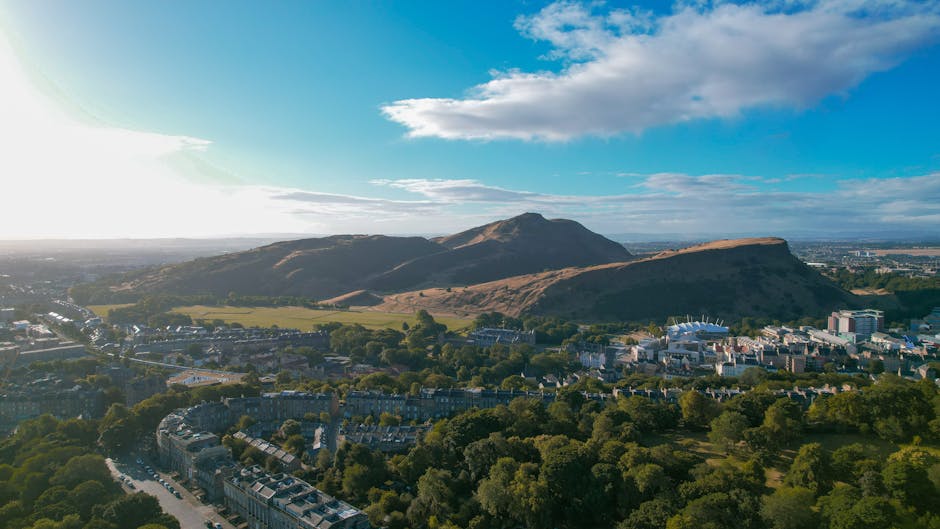
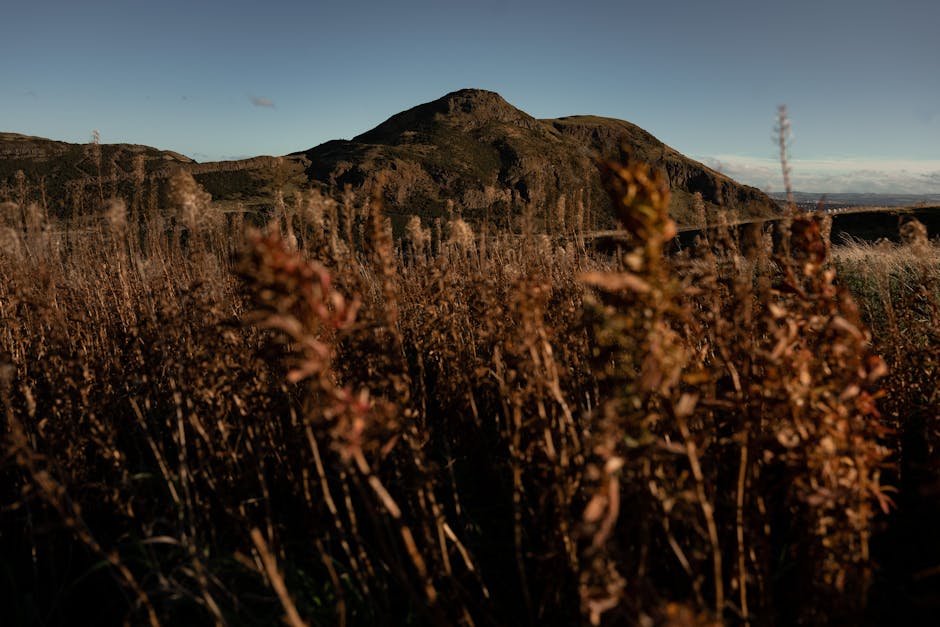
Arthur’s Seat is the central peak of a group of hills that form Holyrood Park, a 650-acre royal park on the eastern edge of Edinburgh’s city centre. The hill is the eroded remnant of a volcano that erupted about 340 million years ago — making it geologically related to Edinburgh Castle Rock and Calton Hill, all part of the same ancient Carboniferous volcanic system.
At 251 metres (823 feet) above sea level, Arthur’s Seat is far from a serious mountain — but its dramatic isolation from surrounding terrain means it punches well above its height for views and atmosphere. The hill has been used by humans for at least 5,000 years; archaeologists have identified Iron Age hill forts, medieval cultivation terraces, and the ruined chapel of St Anthony perched dramatically on a lower slope.
The name’s origin is unclear. Theories include connections to King Arthur (medieval romance), Gaelic “Àrd-na-Said” (height of arrows), or a corruption of “Archers’ Seat” (a military reference). No one knows for certain.
How Long Does the Arthur’s Seat Edinburgh Hike Take?
Allow about two hours for the standard route there and back. Other routes take more or less time, depending on fitness and how long you spend at the summit. Here’s a breakdown.
The fastest summit (the steep climb from Dunsapie Loch)
Park or arrive at Dunsapie Loch on the east side of Holyrood Park. The easiest way up is from this side, on the grassy slope above the loch: a short, steep trail up the back of the hill. Steep but doable for fit hikers, and worth a longer pause at the summit for the view.
The standard summit (about 2 hours round trip)
Start from Holyrood Palace at the bottom of the Royal Mile and take the gentler “Red Route” through Holyrood Park to the summit. Don’t plan on the Radical Road beneath Salisbury Crags as a way in: its northern section is closed and fenced off. Allow about 2 hours there and back, including time at the top.
The scenic loop (a little longer than the standard route)
From Holyrood Palace, walk up via Dunsapie Loch (avoiding the steepest sections), summit, then descend via Salisbury Crags for the spectacular ridge views.
The full park exploration (half a day)
Includes Arthur’s Seat summit plus St Margaret’s Loch, St Anthony’s Chapel, the open southern stretch of the Radical Road from the Hawse to the South Quarry (with Hutton’s Section), and a loop back through Duddingston Village. The road’s northern end, beneath Salisbury Crags, is fenced off, so you can’t walk it end to end. For people who want a proper half-day outdoor experience.
Best Routes for the Arthur’s Seat Edinburgh Hike
Holyrood Park has multiple trails up Arthur’s Seat. Here are the four main routes, with difficulty ratings and detailed descriptions.
Route 1: The Red Route (Easy-Moderate)
Start: Holyrood Palace car park or Queen’s Drive.
Distance: About 4 km (2.5 miles) round trip.
Time: 1.5-2 hours.
Elevation gain: About 230 metres.
Surface: Mostly gravel paths with some rocky sections near the summit.
This is the most popular route, with the gentlest gradients. From the palace, walk along Queen’s Drive past St Margaret’s Loch, then up the west slope via a well-graded path. The route winds around the back of the hill before reaching the summit. Suitable for most reasonably fit walkers and for families, though the path gets steep and rocky towards the top.
Route 2: The Direct Climb from Dunsapie Loch (Moderate-Strenuous)
Start: Dunsapie Loch car park (east side of park).
Distance: The shortest of the four routes: a short climb, steep and rocky near the top.
Time: The quickest round trip of the four, though no official source times it.
Elevation gain: Less than from the Palace, because the loch car park is already partway up the hill.
Surface: Rocky, steep, some loose footing near the top.
The shortest summit route, but unrelentingly steep. Calves burn within five minutes. Near the top the path turns rocky, and you may want a hand on the rock for balance. Not recommended in wet weather or for fearful walkers. Spectacular bang-for-buck if you’re fit.
Route 3: The Salisbury Crags Approach (Moderate)
Start: Holyrood Palace.
Time: About two hours.
Surface: Path + gravel + rocky summit.
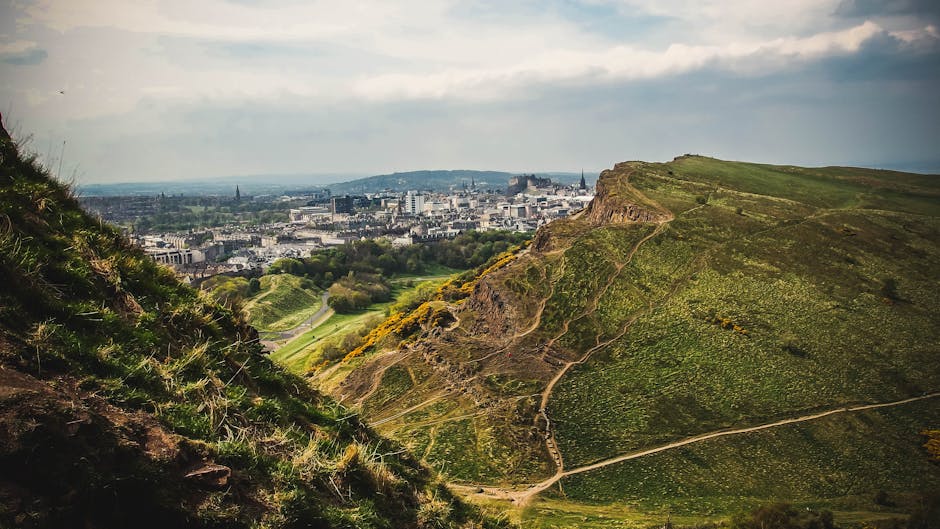
Climb from the Palace onto the path along the top of Salisbury Crags. Skip the Radical Road, the level path beneath them: only its southern stretch, from the Hawse to the South Quarry, is open, and the northern section is closed and fenced off with no reopening date. From the crags’ high point, follow the ridge inland to join the standard summit path. Descend via Dunsapie Loch or the Red Route. This is the most scenic route — Salisbury Crags themselves are arguably as good a viewpoint as the summit, plus you get the main peak.
Route 4: The Loop (Best Overall)
Start: Holyrood Palace.
Distance: About 5 km round trip by our estimate: the 4 km standard route plus the Dunsapie leg and the walk back along the top of Salisbury Crags.
Time: About two hours.
Elevation gain: A little more than the Red Route’s 200 to 230 metres, thanks to the extra climb onto the Crags.
Up via Dunsapie Loch (less crowded, easier gradient), down via Salisbury Crags (scenic ridge walk, dramatic views back over the city). The recommended route for first-time visitors who want the full Holyrood Park experience.
What You’ll See at the Summit
The Arthur’s Seat summit is a rocky outcrop with 360-degree views. Here’s what to look for in each direction.
North
Calton Hill (the smaller volcanic plug with the National Monument), Princes Street, the New Town’s Georgian grid, and the Firth of Forth in the distance. On clear days you can pick out the three Forth bridges about 10 miles away, off to the west-north-west.
West
Edinburgh Castle on its own volcanic rock, the Royal Mile cascading down toward you, Old Town spires (St Giles’, the Tron, the Hub on Castlehill).
South
Suburban Edinburgh, the Pentland Hills (the green ridge on the horizon), and on very clear days the Border hills.
East
Dunsapie Loch directly below, Duddingston Village, Portobello on the coast, and the Firth of Forth stretching toward North Berwick. The conical Bass Rock and Berwick Law are visible on exceptionally clear days.
Directly below
The Palace of Holyroodhouse (royal residence), the Scottish Parliament building, and Dynamic Earth science centre. From the summit you can plan your descent and pick out lunch spots.
When to Hike Arthur’s Seat
Best time of day
Sunrise hikes are spectacular. Summer sunrise is around 4:30am (yes, really); winter sunrise around 8:30am. Reach the summit 15 minutes before sunrise. Bring a head torch for early starts.
Mid-morning (9-11am) suits most visitors: light good for photography, café-and-shower-after option easier. For quieter paths, go early or late in the day.
Sunset hikes are also superb. Time arrival 30 minutes before sunset for golden hour, then enjoy the city lights as darkness falls. Carry a torch for descent.
Avoid: midday in summer (busy, harsh light), late evening solo (paths empty out after dark).
Best time of year
May-September: Long daylight, mild days (typically mid-teens to around 20°C), greenest landscape. Peak hiking season.
October-November: Autumn colour, crisp clear days, quieter trails. Often the best photography conditions of the year.
March-April: Spring grass, daffodils, fewer crowds. Cold mornings, warming afternoons.
December-February: Possibly icy. Snow occasional. Genuinely dangerous in freezing conditions; check forecasts and reconsider in ice or strong winds.
Weather to avoid
High winds (gusts over 40mph make the summit dangerous), heavy rain (paths slippery, visibility poor), fog or low cloud (no views, easy to lose the path), and icy conditions (the rocky summit becomes treacherous).
What to Wear and Bring
Footwear
Walking shoes with good grip, ideally above ankle height. Trail runners work in dry conditions. Avoid: smooth-soled trainers (slippery), flip-flops (genuinely dangerous), and brand-new boots (blisters within an hour).
Clothing
Layers. Edinburgh weather changes hourly. Standard kit: moisture-wicking base layer, light fleece, waterproof jacket. Add a hat in cold weather and sunglasses always — Scottish sun is surprisingly bright when it appears.
What to carry
Water (500ml-1L per person), small snack, phone with charge, basic first aid (plasters, ibuprofen), and a torch if hiking close to dusk. No need for serious hiking gear — this isn’t a mountain.
What to leave behind
Heavy backpack, multiple cameras, valuables you’d hate to lose if you dropped them on the summit rocks. Travel light.
Holyrood Park Highlights Beyond the Summit
The park is more than just Arthur’s Seat. Worthwhile detours:
St Anthony’s Chapel ruins
A roofless medieval chapel perched on the slope above St Margaret’s Loch. Dating to the 15th century, the chapel was likely a hermitage. Approachable from the loch by a short uphill walk. The ruins make spectacular photography subjects against the city skyline.
Salisbury Crags
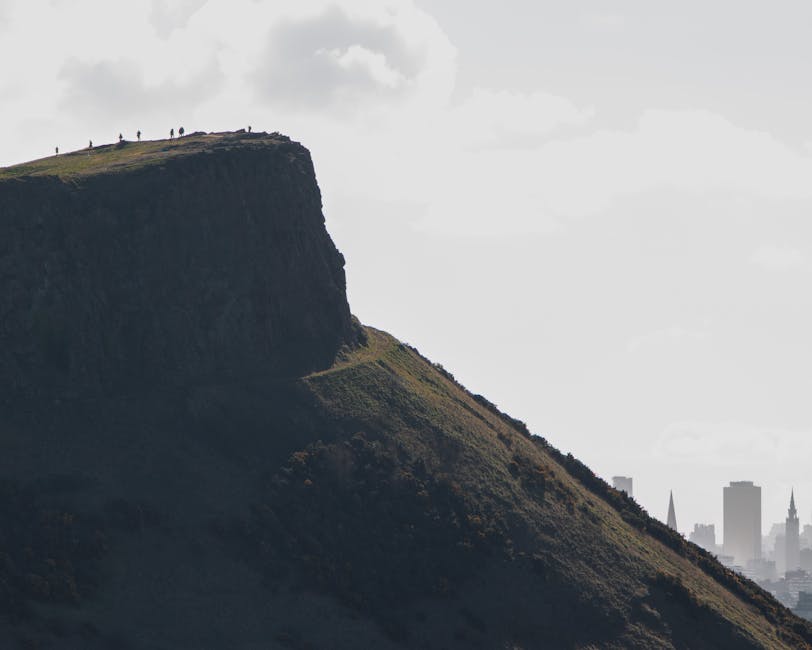
The dramatic cliff line below Arthur’s Seat, formed by a sill of intruded igneous rock. The “Radical Road” path runs beneath the crags (named for the unemployed weavers who built it in the 1820s under government scheme). The southern stretch, from the Hawse to the South Quarry, is worth walking even if you don’t summit Arthur’s Seat; the northern section is closed and fenced off. James Hutton, the father of modern geology, studied the rock formations here in the 1780s.
St Margaret’s Loch
The artificial loch at the foot of the hill, created in 1856 as part of Prince Albert’s improvements to the park. Home to swans, ducks, and gulls. Pleasant flat walking around the perimeter.
Dunsapie Loch
A second, smaller artificial loch on the eastern side. Quieter than St Margaret’s Loch, with car parking and a direct trail to the summit.
Duddingston Village
A preserved 18th-century village on the south side of the park, with the Sheep Heid Inn (one of Scotland’s oldest pubs, which claims to date from 1360 and is said to have hosted Mary Queen of Scots and Bonnie Prince Charlie). Excellent post-hike pub stop.
Hutton’s Section
A small rocky outcrop on Salisbury Crags where James Hutton first observed igneous rock cutting through sedimentary rock — evidence for what became the modern theory of geological time. A small plaque marks the spot.
The Innocent Railway Path
A converted Victorian railway tunnel and path running along the south side of Holyrood Park, useful for accessing Duddingston or Portobello on foot.
Accessibility and Safety
Mobility limitations
The summit is not wheelchair-accessible. Holyrood Park has accessible roads and some flat paths, but Arthur’s Seat itself involves rough ground, loose gravel, and rocky scrambling near the top. Visitors with mobility limitations can enjoy Queen’s Drive (a paved road circling the park, suitable for wheelchairs and pushchairs) and the southern stretch of the Radical Road, from the Hawse to the South Quarry. The northern part, under Salisbury Crags, is closed.
Children
Fine for children who can manage uneven ground over the standard route’s 2.5 miles (4 km) round trip, which turns steep and rocky near the top. Small children are better off in a backpack carrier for the steep sections. Pre-schoolers and toddlers: stick to flatter park paths.
Dogs
Welcome on leads. Many local dogs hike Arthur’s Seat regularly. Avoid the very rocky summit if your dog is small or has joint issues.
Weather safety
The summit is usually only 1-2°C cooler than central Edinburgh, but far windier, so wind chill can make it feel much colder. Always check Met Office forecast for Holyrood Park before setting off. In bad weather, abort and try again.
Mountain rescue
The Lothian and Borders Mountain Rescue team has rescued numerous Arthur’s Seat hikers over the years — typically twisted ankles, lost walkers in fog, and exhausted underprepared visitors. The hill is small but conditions can be serious. Take it seriously.
Emergency contacts
Call 999 in genuine emergencies (broken bones, serious injury). Ranger service: 0131 652 8150 (in park hours).
How to Get to Arthur’s Seat
Walking from city centre
From Princes Street, walk down the Royal Mile to its eastern end at Holyrood Palace (20 minutes). The park entrance is right there. This is the most popular approach.
By bus
Bus 35 (Britannia-Ocean Terminal route) stops at Holyrood Palace. For the south side of the park, check lothianbuses.com for services along Dalkeith Road.
By car
Parking in Holyrood Park is free at three car parks: Holyrood Palace, Dunsapie Loch, and the south entrance at Duddingston. Spaces fill quickly on sunny weekends.
From Edinburgh Waverley station
About an 18-minute walk (1.4 km) via Calton Road to Holyrood Palace, where the park path starts, or a 5-minute taxi.
Arthur’s Seat Photography Guide
Equipment
Phone cameras work fine. For more dramatic results: wide-angle lens (capture the sweep), small tripod (especially for sunrise/sunset and low light). Skip the heavy DSLR if you’d rather hike comfortably.
Best summit compositions
Edinburgh Castle from the summit (with the Old Town spires); the Forth Bridges to the north; sunrise over the Forth; sunset behind the castle.
Best en-route compositions
Salisbury Crags ridge with the city below; St Anthony’s Chapel ruins framed against Holyrood Palace; reflections on St Margaret’s Loch; hikers silhouetted against summit sky.
Drone restrictions
Holyrood Park is within Edinburgh Airport’s controlled airspace. Drone flights require CAA authorisation. Many published Arthur’s Seat aerials were taken under specific permits — don’t assume you can fly recreationally.
Combining the Hike with Other Edinburgh Activities
Arthur’s Seat + Royal Mile (full day)
Morning: hike Arthur’s Seat starting from Holyrood Palace (2-2.5 hours including summit time). Lunch at the foot of the Royal Mile. Afternoon: walk up the Royal Mile, visit Edinburgh Castle (see our Edinburgh Castle guide), explore Old Town closes. Evening: dinner in Grassmarket or on Victoria Street.
Arthur’s Seat + Holyroodhouse Palace (half day)
Morning: hike up from Holyrood Palace and back (about 2 hours on the standard route). Lunch. Afternoon: tour Palace of Holyroodhouse (the multimedia guide lasts about an hour, so allow longer for the Abbey ruins and garden — see our Palace of Holyroodhouse guide). Tea at the palace café.
Arthur’s Seat + Dean Village (full day)
Morning: Arthur’s Seat hike. Lunch in central Edinburgh. Afternoon: Dean Village walk (see our Dean Village guide) for a complete picture of Edinburgh’s outdoor possibilities. The hike itself is 2.5 miles (4 km) round trip from the Palace; on top of that come the walks between the city centre and the park and whichever Dean Village loop you pick.
Arthur’s Seat + Calton Hill (sunrise + sunset)
Sunrise: hike Arthur’s Seat for dramatic golden light. Spend the day exploring. Sunset: ascend Calton Hill (much easier — see our Calton Hill guide) for second-best Edinburgh viewpoint with the day’s last light.
Arthur’s Seat Edinburgh Hike FAQ
How difficult is the Arthur’s Seat Edinburgh hike?
Easy to moderate, depending on route. The Red Route is suitable for most fit walkers; the direct climb from Dunsapie is steep but short.
How long does the Arthur’s Seat hike take?
Allow about two hours for the standard Red Route from Holyrood Palace, there and back. The Dunsapie direct climb from the east is shorter, and the recommended loop via Salisbury Crags takes a little longer.
Do I need hiking boots for Arthur’s Seat?
No, but walking shoes with grip are essential. Avoid smooth-soled trainers, flip-flops, or heels.
Can I hike Arthur’s Seat in the winter?
Yes, in clear weather. Avoid icy days — the rocky summit becomes dangerous. Check forecasts and consider conditions carefully.
Can I hike Arthur’s Seat with kids?
Yes. Holyrood Park is good family walking, but the path to the summit gets steep and rocky towards the top, so go by how well your children cope on rough ground. Start with the easier Red Route, not the steep Dunsapie direct climb.
Is Arthur’s Seat free to climb?
Yes. Holyrood Park is free public open space, open 24/7.
How tall is Arthur’s Seat?
251 metres (823 feet) above sea level. From the Palace end of the park you climb about 200 to 230 metres; less if you start higher up, at the Dunsapie Loch car park.
Is Arthur’s Seat dangerous?
It’s a small hill, not a mountain — but accidents happen. The most common injuries are twisted ankles and slips on wet rock. Don’t underestimate weather conditions on the summit.
Can I take dogs up Arthur’s Seat?
Yes, on leads. Most local dogs love it.
Are there toilets on Arthur’s Seat?
None on the hill itself. Public toilets are at Holyrood Palace car park and Dynamic Earth visitor centre.
When does Holyrood Park close?
The park is open 24/7. Queen’s Drive (the road) may close to vehicles overnight or in bad weather. Pedestrians have access at all times.
What’s the best route up Arthur’s Seat?
The loop: up via Dunsapie Loch (less crowded, easier gradient), down along the top of Salisbury Crags (spectacular ridge views). Allow about two hours, a little more if you linger on the Crags.
Can I see Arthur’s Seat from Edinburgh Castle?
Yes, dramatically. Arthur’s Seat dominates the eastern view from the castle ramparts. The two volcanic plugs face each other across the city.
Is there a café on Arthur’s Seat?
No. Bring water and snacks. Nearest cafés: Holyrood Palace café, Dynamic Earth café, or Duddingston’s Sheep Heid Inn after descent.
The Bottom Line
An Arthur’s Seat Edinburgh hike is the city’s signature outdoor experience — accessible, free, dramatic, and uniquely urban. Allow about 2 hours round trip for the standard route from Holyrood Palace; the longer loop over Salisbury Crags takes a little more and repays it. Time it for sunrise or sunset if you possibly can — Edinburgh’s light at golden hour is among Europe’s most beautiful, and the view from Arthur’s Seat at that moment is once-in-a-lifetime.
For more Edinburgh outdoor experiences, our Calton Hill guide covers the easier second-best viewpoint, and our self-guided walking tour Edinburgh guide includes Arthur’s Seat as one of five complete routes.
The Rest of Holyrood Park
- Holyrood Park beyond Arthur’s Seat: every route