Edinburgh vs Glasgow: Which Scottish City Should You Visit? (2026)
Almost every article comparing Edinburgh and Glasgow ends with the same non-answer: they are different, both are wonderful, visit both. That is true, useless, and available for free from anyone who has been to Scotland once. If you have four days and one hotel booking to make, “visit both” does not help you make it.
So this piece scores them. Nine dimensions that actually differ — cost, food, nightlife, museums, walkability, weather, day trips, families and what to do when it rains — each with a winner and a reason, using 2026 prices and rules. Then an explicit verdict on which should be your base, by traveller type. We publish an Edinburgh site, which is a bias worth declaring, and we have tried to mark the card honestly anyway: Glasgow wins five of the nine.
At a Glance: The Scorecard
| Dimension | Winner | Why |
|---|---|---|
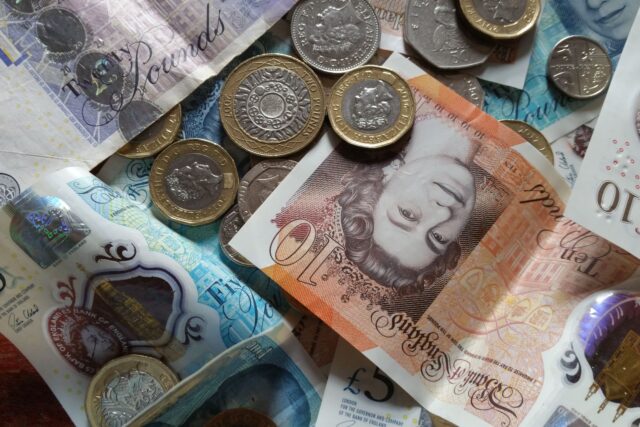
| Cost | Glasgow | Cheaper beds and cheaper food — and no visitor levy until 25 January 2027. |
| Food | Glasgow | Better value at every level. Edinburgh has the higher ceiling; Glasgow has the better middle. |
| Nightlife and live music | Glasgow | A deeper live-music culture and venues Edinburgh does not have an equivalent of. |
| Museums and galleries | Draw | Both have world-class free national collections. Genuinely too close to call. |
| Walkability and looks | Edinburgh | Not close. One of the most walkable and dramatic city centres in Europe. |
| Weather | Edinburgh | Drier. Windier and colder, but noticeably less rain than the west coast. |
| Day trips | Draw | Different directions. Glasgow for Loch Lomond and the west; Edinburgh for St Andrews, Fife and the Borders. |
| Families | Glasgow | Flatter, cheaper, and the free museums are more child-friendly. |
| Rainy days | Glasgow | More indoor space per pound, and shopping under cover. |
And yet most first-time visitors should still base themselves in Edinburgh. The reason for that apparent contradiction is at the end.
1. Cost: Glasgow, and by more than you think in 2026
Glasgow is the cheaper city on every line item that matters — accommodation most of all. Edinburgh has one of the most expensive hotel markets in the UK, and in August it becomes one of the most expensive in Europe. Glasgow’s rates are consistently lower and far less seasonal.
In 2026 there is a second, structural difference that is easy to miss. Edinburgh’s visitor levy has been in force since 24 July 2026 — 5% of the accommodation cost, before VAT, on the first five consecutive nights. Glasgow has no levy yet. Glasgow City Council approved its own scheme in June 2025, but it does not commence until 25 January 2027, applying to stays from that date booked on or after 1 April 2026.
The honest verdict: for a trip taken before late January 2027, staying in Glasgow avoids the levy entirely — worth roughly £27 on a three-night stay at £180 a night. After that date the gap narrows, though it may not close: Glasgow’s published scheme charges 5% for each night of the stay, and the council’s summary does not state the five-night cap that Edinburgh applies. If you are booking a long stay in Glasgow for 2027 or beyond, check that detail directly with the council rather than assuming the two schemes match. Our guide to the UK ETA and Edinburgh visitor levy covers the Edinburgh rules in full.
2. Food: Glasgow, on value
This is the one Edinburgh people quietly concede. Both cities eat well, but they do it differently.
Edinburgh has the higher ceiling: a concentration of tasting-menu restaurants, a serious seafood scene out at the Shore in Leith, and the kind of dining rooms people plan a trip around. It also has a much larger volume of tourist-facing restaurants on and around the Royal Mile that charge central-Edinburgh prices for ordinary food.
Glasgow has the better middle. Finnieston — the strip running west along Argyle Street — is the clearest single example: a dense run of independent restaurants at prices that would be considered good value in any UK city and are conspicuously good value next to Edinburgh’s. The same is true of the Southside and the West End.
The honest verdict: if you want one extraordinary meal, book it in Edinburgh. If you want to eat well five nights in a row without thinking hard about the bill, Glasgow is the better city. Our Edinburgh food guide covers where the Edinburgh exceptions are, and cheap eats in Edinburgh covers the ones that do not cost a fortune.
3. Nightlife: Glasgow, not close

Glasgow is a live-music city in a way Edinburgh is not, and everybody in Scotland knows it. The venue ecology runs from small rooms upwards, the touring circuit treats it as the Scottish stop, and the audience culture is different — people go out to see bands on a Tuesday.
Edinburgh’s nightlife is strong in a different register: an exceptional density of historic pubs, a good cocktail scene, and in August a month of after-dark performance that nowhere in Britain can match. Outside August, the ordinary Tuesday in Edinburgh is quieter.
Worth knowing: Scottish licensing law applies identically in both cities. Ordinary pubs close at 1am; venues with a restaurant or entertainment licence run to 3am, and hours do not extend at weekends. If you are expecting a city that goes until five, neither is it.
The honest verdict: Glasgow for gigs and for a big night. Edinburgh for a long evening in a very old pub, and for August. Our things to do in Edinburgh at night covers what the Edinburgh version looks like.
4. Museums and Galleries: a genuine draw
Both cities have free national-standard collections, which is a Scottish policy rather than a civic virtue, and both use them well.
| Edinburgh | Glasgow |
|---|---|
| National Museum of Scotland — free, enormous, genuinely excellent, and the best rainy-day building in Scotland | Kelvingrove Art Gallery and Museum — free, in a red sandstone palace in the West End, and the single best reason to visit Glasgow |
| Scottish National Gallery — free, on the Mound, compact and strong | Riverside Museum — free, transport history in a Zaha Hadid building with the tall ship Glenlee alongside |
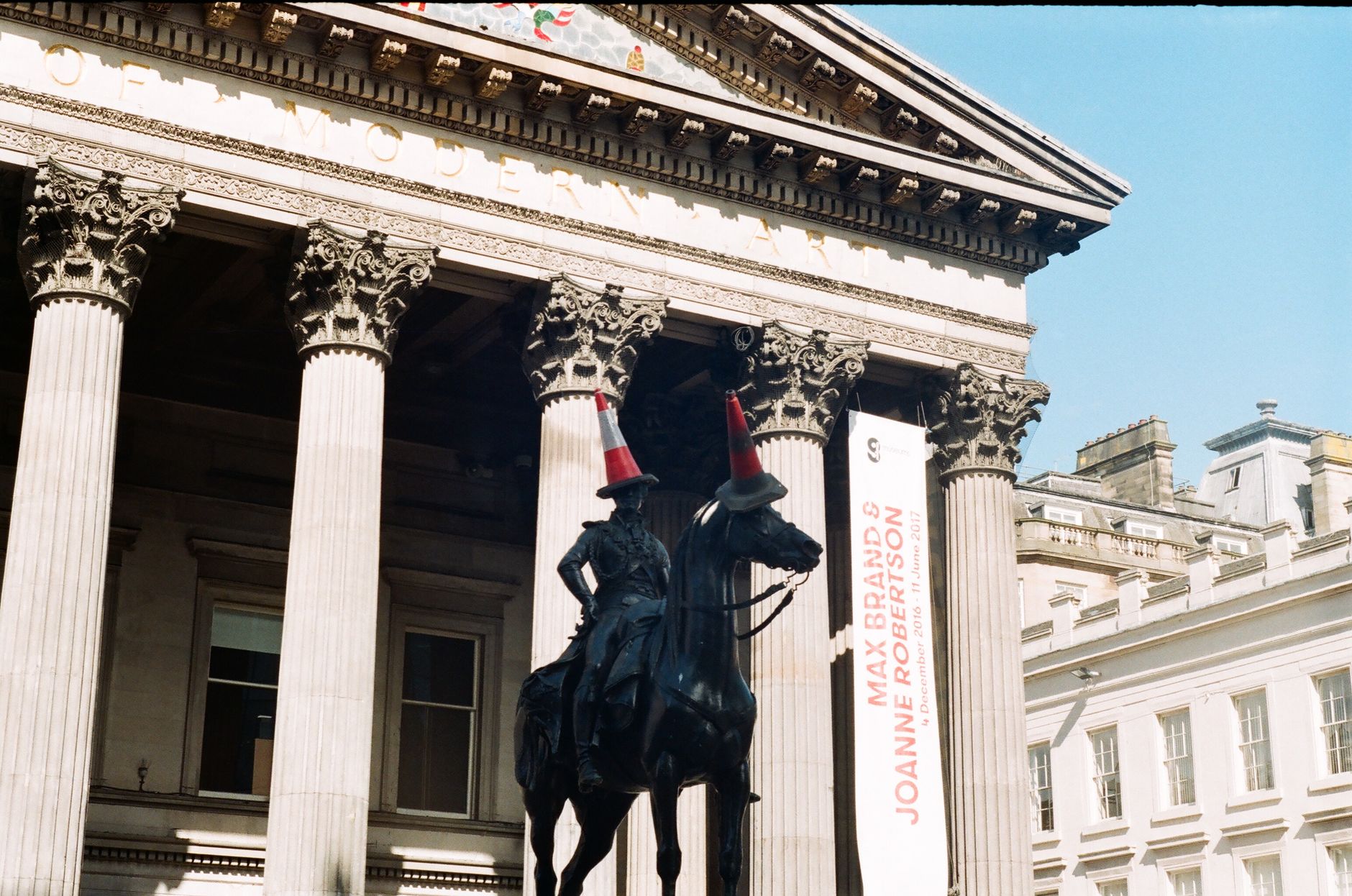
| Scottish National Portrait Gallery and Modern One and Two — free | Gallery of Modern Art — free, in Royal Exchange Square, small and quick |
| Museum of Edinburgh, the Writers’ Museum, the People’s Story — free, small, local | Glasgow Cathedral and the Necropolis — free, medieval, and the best city-centre view |
| Edinburgh Castle and Holyroodhouse — ticketed, expensive, and unmissable | Glasgow Science Centre — ticketed, and the best in Scotland for children |
The honest verdict: a draw, and not a lazy one. Kelvingrove is better than anything Edinburgh has as a single building-and-collection experience. The National Museum of Scotland is better as a place to spend an entire wet day. If museums are the reason you are coming to Scotland, you need both cities, and the forty-two minute train makes that trivial.
One caution for architecture pilgrims: Charles Rennie Mackintosh’s Glasgow School of Art was severely damaged by fire in 2014 and again in 2018. Do not build a Glasgow itinerary around seeing it — check what is actually accessible before you go.
5. Walkability and Looks: Edinburgh, by a mile
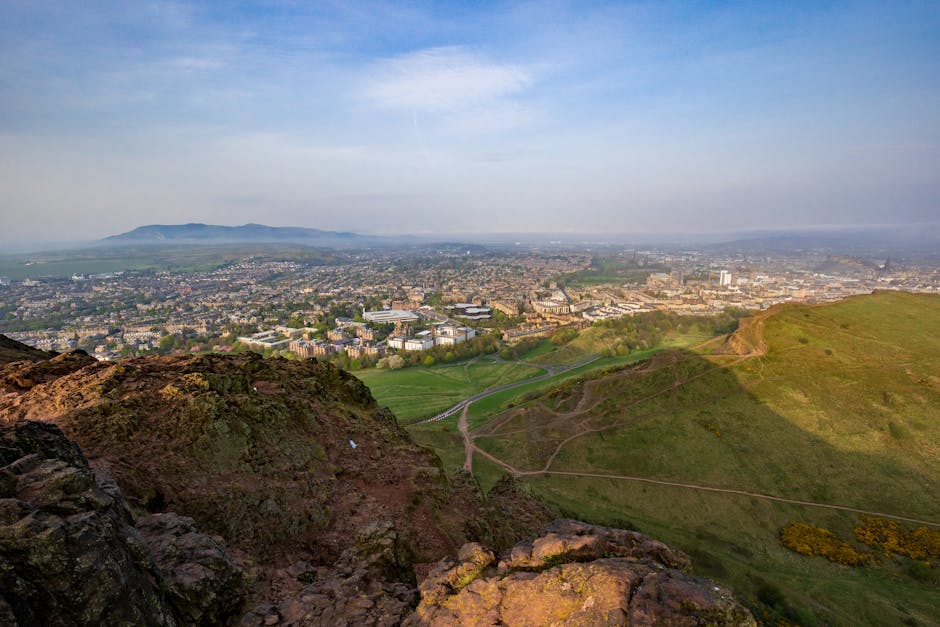
This is the dimension where the contest stops being close. Edinburgh’s centre is roughly a mile across, contains a castle on a volcanic crag, a medieval Old Town, a UNESCO-listed Georgian New Town and a hill you can climb to see all of it — and you can walk between every one of those things.
Glasgow is a bigger, flatter, more spread-out city built on a grid. Its best assets are further apart: Kelvingrove and the Riverside are both a Subway ride or a long walk from the centre, and the Cathedral is fifteen minutes the other way. It is a fine city to walk in — the Victorian commercial centre is superb — but it does not deliver the compressed, constant visual payoff that Edinburgh does.
The honest verdict: Edinburgh, decisively. This is why it gets the tourists, and it is a real advantage rather than a shallow one — a compact city means less transit, more hours in the day, and no need to plan around getting anywhere. The one cost is the gradient: Edinburgh’s walking is uphill, on wet stone, and it is more tiring than the distances suggest.
6. Weather: Edinburgh, marginally
Both are Scottish cities and neither is warm. But they sit on opposite coasts and the difference is real: Glasgow is on the west, in the path of Atlantic weather, and gets meaningfully more rain. Edinburgh is on the east, drier, and correspondingly windier and colder in the same conditions.
Both are at nearly 56 degrees north, so both lose the same enormous amount of daylight in winter — the sun sets before four in the afternoon in late December in either city.
The honest verdict: Edinburgh wins on rainfall and loses on wind chill. Neither difference should decide your trip. Pack for rain in both, and read our Edinburgh weather by month guide and what to pack — the advice applies to Glasgow with slightly more waterproofing.
7. Day Trips: a draw, in different directions
| From Edinburgh | From Glasgow |
|---|---|
| St Andrews and the East Neuk of Fife | Loch Lomond and the Trossachs — genuinely close |
| Stirling Castle and the Kelpies | Stirling — equally close from both |
| The Borders abbeys and Rosslyn Chapel | The Ayrshire coast and Culzean |
| North Berwick and the coast | Arran, via the Ardrossan ferry |
| Highlands and Loch Ness — long coach day | The West Highlands, Oban and Glencoe — closer than from Edinburgh |
| Glasgow itself, 42 minutes | Edinburgh itself, 42 minutes |
The honest verdict: a draw with a caveat. Glasgow is genuinely better positioned for the west — Loch Lomond is close enough for a half day rather than a full one, and the road north to Glencoe and Fort William starts here. Edinburgh is better for the east coast, Fife and the Borders. Because the two cities are forty-two minutes apart, this rarely determines where you stay. Our day trips from Edinburgh guide covers the eastern list in detail.
8. Families: Glasgow
Edinburgh is a wonderful city for adults and a slightly punishing one for small children. It is built on a hill, half its charm is stairs and cobbles, the pram-friendly routes are limited, and the two headline attractions are a castle and a palace — both of which involve a lot of standing and reading.
Glasgow is flatter, cheaper, and its free museums are more actively child-friendly: Kelvingrove has a genuinely engaging layout, the Riverside Museum is full of things children want to climb into, and the Science Centre is the best hands-on attraction in Scotland. The Subway is a novelty in itself.
The honest verdict: Glasgow, particularly for children under about eight. Edinburgh catches up sharply for older children who will engage with the castle, the vaults, the ghost tours and Arthur’s Seat — and our indoor activities for children in Edinburgh covers the wet-day version.
9. Rainy Days: Glasgow
It will rain. The question is what each city gives you when it does.
Edinburgh’s answer is the National Museum of Scotland, which is a genuinely great answer, plus the galleries, plus an unusually high density of pubs with fires in them. Its weakness is that the city’s principal pleasure — walking around looking at it — is exactly the thing rain removes, and its shopping is spread along open streets.
Glasgow’s answer is more indoor square footage: two enormous free museums, a covered shopping centre network in the middle of the city, and a culture that has organised itself around bad weather because it gets more of it.
The honest verdict: Glasgow, narrowly, on volume. If it is raining and you are in Edinburgh, the answer is the National Museum, and it is a good enough answer that you will not feel short-changed.
Which Should Be Your Base?
Here is the apparent contradiction resolved. Glasgow takes five of nine dimensions, and most first-time visitors should still base themselves in Edinburgh — because the dimension Edinburgh wins is the one that compounds.
A compact, dramatic, walkable centre is not just a nicer backdrop. It means you cover more ground per day, spend nothing on transport, stumble across things by accident, and never have to plan a journey. Over three or four days that advantage accumulates into a materially fuller trip. Glasgow’s wins — cheaper beds, better mid-range dinners, more indoor space — are real but they are individually small, and every one of them is available to an Edinburgh-based visitor for a £17 return ticket and forty-two minutes.
| You are | Base yourself in | Why |
|---|---|---|
| A first-time visitor with 2–4 days | Edinburgh | Density and walkability. Day-trip to Glasgow if you have the fourth day. |
| On a tight budget | Glasgow | Cheaper accommodation, no visitor levy until 25 January 2027, cheaper food. |
| Coming for live music | Glasgow | Not a close call. Edinburgh cannot match the venue circuit. |
| Coming in August | Edinburgh — or Glasgow, deliberately | The festivals are the reason to come. If you want to attend but not pay festival room rates, staying in Glasgow and commuting is a genuine and underused strategy. |
| Travelling with young children | Glasgow | Flatter, cheaper, more hands-on attractions. |
| Heading for Loch Lomond, Oban or Glencoe | Glasgow | Materially closer to the west and the road north. |
| Heading for St Andrews, Fife or the Borders | Edinburgh | The eastern day trips all start here. |
| Here for one extraordinary dinner | Edinburgh | Higher ceiling at the top end. |
| Returning to Scotland, having done Edinburgh | Glasgow | It rewards a second visit more than Edinburgh does, because less of it is obvious. |
The honest verdict, stated plainly: Edinburgh is the better city to visit; Glasgow is the better city to be in. If you have three days, spend them in Edinburgh. If you have five, spend four in Edinburgh and one in Glasgow. If you have a week and you are the sort of traveller who prefers a city that is not performing for you, invert that. And if the two of you disagree about which, the forty-two minute train means neither of you has to be wrong for long.
Frequently Asked Questions
Is Edinburgh or Glasgow better to visit?
Edinburgh, for most first-time visitors. It is far more compact, walkable and dramatic, which means a fuller trip per day. Glasgow is cheaper, eats better in the mid range and has much stronger live music — but its advantages are individually small and reachable in a forty-two minute train ride.
Is Glasgow cheaper than Edinburgh?
Yes, consistently — on accommodation especially. In 2026 there is an extra gap: Edinburgh has charged a 5% visitor levy since 24 July 2026, and Glasgow’s own levy does not start until 25 January 2027.
Can I do both Edinburgh and Glasgow in one trip?
Easily. The fast train takes 42 minutes between Edinburgh Waverley and Glasgow Queen Street, runs several times an hour, costs around £17 return and is valid for a month. A day trip in either direction is straightforward.
Which has better museums, Edinburgh or Glasgow?
It is a genuine draw. Kelvingrove in Glasgow is the finest single museum experience in Scotland; the National Museum of Scotland in Edinburgh is the best place to spend a whole wet day. Both cities’ national collections are free.
Which is better for nightlife?
Glasgow, clearly, especially for live music. Edinburgh’s strength is its historic pubs and, in August, an entire month of after-dark performance. Licensing is identical in both: ordinary pubs close at 1am, venues with an entertainment or restaurant licence at 3am, with no weekend extension.
Which city is better with children?
Glasgow, particularly for younger children. It is flatter, cheaper, and its free museums — Kelvingrove and the Riverside — plus the Science Centre are more hands-on. Edinburgh’s hills, stairs and cobbles are hard work with a pram.
Does Glasgow have a tourist tax?
Not yet. Glasgow City Council approved a 5% visitor levy in June 2025, commencing 25 January 2027 for stays on or after that date booked from 1 April 2026. Edinburgh’s equivalent has already been in force since 24 July 2026.
Should I stay in Glasgow during the Edinburgh Festival?
It is a genuinely good strategy and an underused one. Edinburgh room rates in August are punishing, Glasgow’s are not, and the 42-minute train runs frequently. The cost is late-night travel — check the last services before you build an evening around it.
Which city has better weather?
Edinburgh, marginally. It sits on the drier east coast while Glasgow takes Atlantic weather from the west. Edinburgh pays for that in wind. Both are at nearly 56 degrees north and both lose daylight dramatically in winter.
Visitor levy dates, rail journey times and licensing hours checked September 2026 against the City of Edinburgh Council, Glasgow City Council, Transport Scotland and ScotRail. Both cities’ levy schemes are live policy and subject to change.
If Edinburgh is your answer, our Edinburgh travel tips guide covers the practical layer, where to stay in Edinburgh works through the neighbourhoods, and the best time to visit Edinburgh covers the seasons. If you want to see both, our Edinburgh to Glasgow guide covers the train, the coach and why not to drive.