Is Edinburgh Safe for Tourists? Areas, Scams & Night Safety (2026)
Edinburgh is a safe city, and most of what has been written about whether it is a safe city is useless. Search the question and you will find pages built by luggage brands and security-camera companies, recycling the same crowdsourced index scores and telling you to “stay aware of your surroundings”. None of it tells you the thing you actually want to know: what genuinely happens to visitors here, where and when, and what to do about it.
So here is the honest version. Violent crime is not a realistic concern for a tourist in Edinburgh. Theft in crowds is — particularly on the Royal Mile, particularly in August. A handful of streets get genuinely unpleasant between one and three in the morning, and they are not the ones the internet warns you about. The reputation that still clings to Leith is thirty years out of date. And the most common way visitors come to harm here is not crime at all: it is falling down wet stone stairs in unsuitable shoes.
At a Glance: Safety in Edinburgh
- Yes, Edinburgh is safe for tourists, including solo travellers and women travelling alone.
- The real risk is theft in crowds, not violence. The Royal Mile, the Castle esplanade and Waverley are the recognised hotspots.
- August multiplies the risk. Undercover police operations run against pickpockets during the festival for a reason.
- The “avoid Leith” advice is obsolete. The Shore is one of the most pleasant parts of the city and has a Michelin-starred restaurant scene.
- The Cowgate and lower Grassmarket after 1am are where drink-related trouble actually concentrates. Not dangerous, but not pleasant.
- Pubs close at 1am; venues with an entertainment or restaurant licence run to 3am. Hours do not extend at weekends, so everyone leaves at once.
- Only black cabs can be hailed or taken from a rank. Uber and Bolt in Edinburgh are private hire and must be pre-booked.
- NightBus fares are £3.50 and the network runs after the trams have stopped.
- 999 for emergencies, 101 for non-emergency police, 111 for NHS 24, 0800 555 111 for Crimestoppers.
- The most likely thing to hurt you is the pavement. Wet setts, worn stone stairs and steep closes. Bring shoes with grip.
What the Crime Numbers Actually Say
Scotland records national crime statistics annually, and they are worth looking at once — with the caveat that they measure a resident population’s experience over a whole year and tell you almost nothing about a three-day visit.
Police in Scotland recorded 315,357 crimes in 2025–26, 5% up on the previous year and the highest total since 2014–15 — but still down 49% from the peak in 1991. The national rate was 569 crimes per 10,000 people. Crimes of dishonesty, which is the category that includes theft and pickpocketing, made up 37% of the total; non-sexual violence 24%.
Two honest observations about that. First, an upward trend of 5% in a year sounds alarming and represents a country that is, on any longer view, roughly half as criminal as it was three decades ago. Second, the crimes driving those totals — housebreaking, domestic violence, drug offences, road traffic offences — are overwhelmingly not crimes committed against short-stay visitors. A tourist’s actual exposure is to one narrow slice of the dishonesty category: opportunistic theft in crowds.
The honest verdict: do not choose a destination on a crime index. Edinburgh sits comfortably in the safe half of Western European capitals for a visitor, and the difference between it and any comparable city is smaller than the difference between a careful traveller and a careless one in either.
The Thing That Actually Happens: Theft in Crowds

If something goes wrong on your trip, this is what it will be. Pickpocketing in Edinburgh is concentrated with almost boring predictability in a handful of places:
- The Royal Mile, especially where crowds gather around street performers. A stationary, distracted, tightly packed audience is the ideal working environment.
- The Castle esplanade and the queue for it — undercover officers have made arrests here during festival season specifically.
- Waverley station, particularly the concourse at arrival and departure peaks.
- The Royal Edinburgh Military Tattoo and other large ticketed events, in the crush at entry and exit.
- Princes Street Gardens and the Christmas market, where the same crowd dynamics apply in December.
- Busy pubs and bars, where a phone left on a table beside a pint disappears more often than anything is taken from a pocket.
What works against it is unglamorous and effective: carry your phone and wallet in a front pocket or a zipped bag worn across the body and in front of you, not in a back pocket and not in an open tote. Do not put your phone on the table. Do not hang your bag on the back of a chair. Take the bare minimum out with you — one card, some cash, your phone — and leave the rest in the hotel safe.
If you are robbed, report it to Police Scotland on 101, or 999 if it is happening now. You will need the report reference for any insurance claim. Crimestoppers takes anonymous information on 0800 555 111.
Scams to Recognise
Edinburgh is not a scam-heavy city by European standards. There is no organised gauntlet of friendship-bracelet sellers or fake petition signers. But a few things do come up, and most of them cluster around the festival and the Royal Mile.
| Scam | How it works | What to do |
|---|---|---|
| Fake or resold tour tickets | Street sellers offering discounted tickets to ghost tours, the Tattoo or Castle entry that are invalid or already used. | Book direct with the operator or venue. Historic Environment Scotland warns specifically about lookalike Castle ticket sites. |
| Unlicensed “guides” | Someone offering an impromptu tour of a close or vault for cash, with no operator behind them. | Use a named company. Our tour comparisons list the established ones. |
| The photograph distraction | A stranger asks you to take their picture; while you are holding their phone and looking at a screen, your own bag is unattended. | Take the photo if you like — but put your own bag on and in front of you first. |
| Charity clipboard pressure | Aggressive sign-ups on Princes Street asking for bank details rather than a one-off donation. | Never give bank details on the street. Donate through the charity’s own website if you want to. |
| Unbooked “taxis” | A car offering a lift outside a late venue that is neither a black cab nor a booked private hire. | Only black cabs may be hailed or taken from a rank. Anything else must be pre-booked through an app or by phone. |
| Overpriced ETA and ticket sites | Official-looking websites charging £60–£90 to submit the £20 UK ETA application. | Only gov.uk and the official UK ETA app. Check the address bar. |
Neighbourhood by Neighbourhood: The Honest Read
Most safety guides to Edinburgh either say “everywhere is fine” or repeat a warning about Leith they copied from something written in 1996. Neither is useful. Here is the actual texture of the city.
Old Town — safe, crowded, and steep
Busy until late and well populated, which is itself a safety feature. The risks here are theft in crowds by day and the physical geography by night: the closes running off the Royal Mile are narrow, steep, poorly lit and often wet. They are not dangerous places to be — they are dangerous places to hurry down in smooth-soled shoes.
Cowgate and the lower Grassmarket after 1am — the real hotspot
This is where Edinburgh’s night-time trouble genuinely concentrates, and almost no guide mentions it. The Cowgate runs beneath the Old Town in a canyon of late-licence venues. Scottish licensing means ordinary pubs shut at 1am and venues with a restaurant or entertainment licence run to 3am, with no extension at weekends — so at 1am a large number of people leave one set of premises simultaneously and move to another set in the same few hundred metres.
The honest verdict: it is a drunk street, not a dangerous one. You are unlikely to be a target, but you may find yourself walking through shouting, broken glass and the occasional fight between people who are not interested in you at all. If that is not the end you want to your evening, be out of the Cowgate before one, or take a different route home. The same applies to the Lothian Road strip on the other side of the centre.
Leith — the reputation is a generation out of date
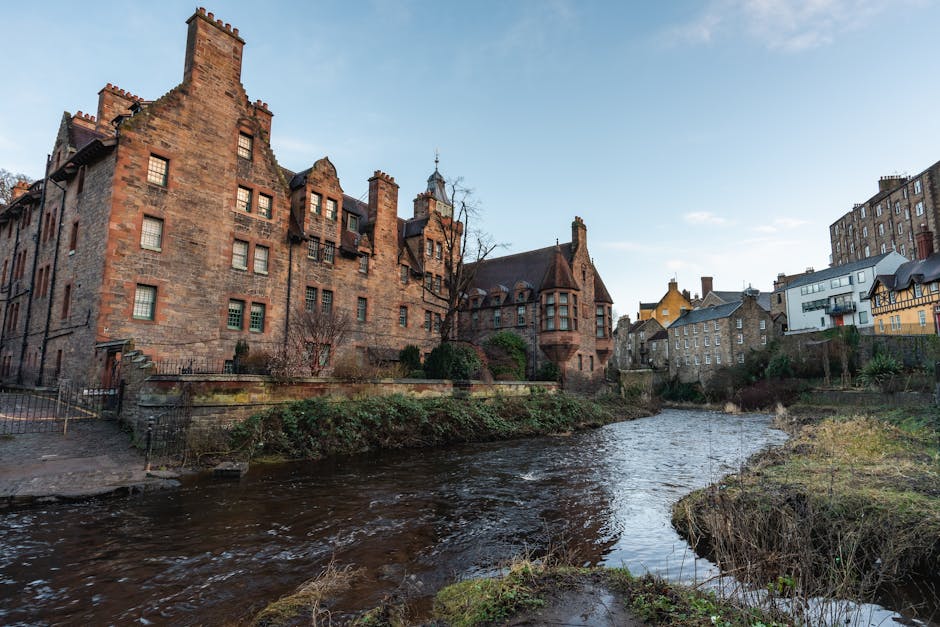
Leith was an independent burgh until 1920 and a working port long after that. Its reputation for danger comes from a specific and now historical period — the heroin and HIV crisis of the 1980s and early 1990s, fixed permanently in the public mind by Trainspotting. That was thirty years ago.
Today the Shore, the old harbour frontage, is one of the most pleasant places in Edinburgh to spend an evening, with a concentration of serious restaurants including Michelin-starred kitchens, a whisky distillery with a viewing deck, and a tram that gets you back to the centre in about fifteen minutes. It is not a rough area and it has not been one for a long time.
The honest verdict: the Shore and the waterfront are entirely comfortable. The top end of Leith Walk and the streets around Great Junction Street are scruffier and can feel less pleasant late at night — that is a fair observation about a working part of a city, not a warning. Stay in Leith without hesitation; walk the well-lit main routes rather than cutting through back streets at 2am, exactly as you would anywhere. Our Edinburgh neighbourhoods guide covers what is actually there.
New Town, Stockbridge, Bruntsfield, Marchmont, Morningside
Residential, prosperous and quiet. The New Town empties after the shops shut, so Princes Street and George Street at eleven on a Tuesday feel deserted in a way that unnerves some visitors — but empty and dangerous are different things. Stockbridge and the southern suburbs are family neighbourhoods where the main hazard is that nothing is open.
Parks and hills after dark
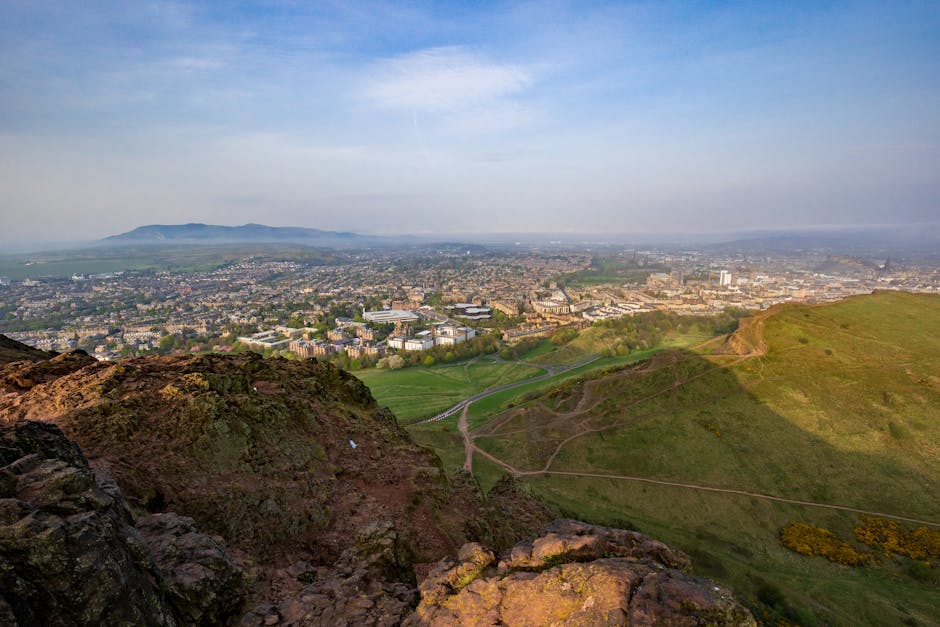
Holyrood Park, Arthur’s Seat, Calton Hill, the Water of Leith walkway and Princes Street Gardens are all fine by day and all effectively unlit at night. Calton Hill in particular attracts people going up for the view after sunset — which in December means half past three, and in June means eleven at night. Go if you like, but take a torch and expect uneven ground. The concern here is a twisted ankle in the dark, a long way from a road, rather than crime.
Areas with genuine problems
Like every British city, Edinburgh has peripheral housing estates with real deprivation and real crime. They are several miles from the centre, they contain nothing a visitor would travel to see, and you will not end up in one by accident — no tourist route, bus to an attraction or walk between neighbourhoods passes through them. This is why we are not going to list them: naming them stigmatises the people who live there and gives visitors no usable information.
Getting Home at Night
Edinburgh’s night transport is decent, but it has one rule that catches visitors out constantly.
| Option | Cost | Notes |
|---|---|---|
| Walking | Free | The centre is small and well lit on the main routes. Usually the right answer. |
| NightBus | £3.50 single | Runs through the small hours on core routes across the city. |
| Black cab | Metered | The only vehicle you can legally hail or take from a rank. Ranks at Waverley Bridge and on the main streets. |
| Uber or Bolt | App-priced | All private hire in Edinburgh. Must be pre-booked through the app — they cannot pick you up off the street. |
| Tram | £2.40 city single | Does not run all night. Do not plan a late return around it. |
| Airlink 100 | £6.00 single | Runs 24/7 between the airport and Waverley Bridge, roughly every 20 minutes overnight. |
The honest verdict: for most central accommodation, walking home is both safe and faster than waiting. Where a taxi genuinely earns its money is Leith or the southern suburbs at two in the morning, and on a wet night when the setts are lethal. Full detail on costs and how the licensing works is in our Edinburgh taxi guide, and the fare structure across the network is in buses and trams.
Solo Travellers, Women, and Drink Safety
Edinburgh is a good city for solo travel. It is compact, walkable, English-speaking, densely populated in the areas visitors use, and has an unusually high proportion of pubs where drinking alone with a book is completely unremarkable. Women travelling alone report it as comfortable, and the practical advice differs very little from what applies to anyone.
- Drink spiking is the risk worth taking seriously. Keep your drink with you, do not accept an open drink from a stranger, and if you feel far drunker than the amount you have had explains, tell bar staff immediately — Scottish venues are trained for this and will help.
- Scottish measures are larger than many visitors expect and craft beer here runs strong. A “couple of pints” is not the same quantity of alcohol as it is in some countries.
- Tell someone your plan if you are hiking Arthur’s Seat alone, particularly outside daylight hours or in bad weather.
- Ghost tours and vault tours run late and are entirely legitimate — you will be walking back through the Old Town at eleven with a group, which is a perfectly normal thing to be doing here.
- Hostels and small hotels are used heavily by solo travellers, and staff are used to the questions. Ask them which way to walk home; they will know.
The Underrated Risk: The Pavement
More visitors are hurt in Edinburgh by the ground than by other people. The Old Town is built of worn stone and granite setts on a steep ridge, it rains often, and wet polished stone with a smooth sole on it behaves like ice. Add stairs — the Waverley Steps, the closes, the Vennel, the route up to the Castle — and a moment of inattention costs you a wrist.
- Bring shoes with actual grip. This is the single most useful safety measure for an Edinburgh trip and it is never on anybody’s list.
- Hold the handrail on the closes. They are there because people fall.
- Cramond’s tidal causeway is crossable only for roughly two hours either side of low tide, there is a safe-crossing board at the start, and the coastguard is called out to people who ignore it regularly. Read the board.
- Arthur’s Seat is a real hill with real crags. The paths are obvious in daylight and much less so in fog. People are rescued from it every year.
Numbers and What to Do If Something Happens
| Situation | Number |
|---|---|
| Emergency — police, ambulance, fire, coastguard | 999 (112 also works) |
| Non-emergency police, including reporting a theft after the event | 101 |
| Medical advice when it is not an emergency | 111 (NHS 24) |
| Anonymous crime information | 0800 555 111 (Crimestoppers) |
| A pharmacy | Ask for a “chemist” — that is the local word |
If your phone or wallet is stolen: report it on 101 and get the reference number, cancel the cards, and use your accommodation’s wifi and reception desk — they deal with this several times a season and will help. If you lose your passport, contact your embassy or consulate; several countries maintain consular representation in Edinburgh as well as London.
Frequently Asked Questions
Is Edinburgh safe for tourists?
Yes. Violent crime is not a realistic concern for visitors. The genuine risk is opportunistic theft in crowds — the Royal Mile, the Castle esplanade, Waverley station and large events — and it rises sharply during the August festivals.
Is Leith safe to stay in?
Yes. Leith’s rough reputation dates from the heroin crisis of the 1980s and early 1990s and was fixed in public memory by Trainspotting. The Shore is now one of the most pleasant parts of Edinburgh, with a serious restaurant scene and a fifteen-minute tram ride to the centre.
Which areas of Edinburgh should I avoid at night?
No tourist area is unsafe, but the Cowgate and lower Grassmarket after 1am, and the Lothian Road strip, get loud and messy when the pubs empty. It is unpleasantness rather than danger. Unlit parks and hills — Holyrood Park, Calton Hill, the Water of Leith walkway — are best avoided after dark for practical reasons rather than criminal ones.
Are there pickpockets in Edinburgh?
Yes, concentrated on the Royal Mile — particularly in crowds around street performers — plus the Castle esplanade, Waverley station, the Tattoo and the Christmas market. Police run undercover operations against them during the festival. Keep valuables in a front pocket or a zipped cross-body bag.
Is Edinburgh safe for solo female travellers?
Yes, and it is a popular solo destination. The city is compact, walkable and busy in the areas visitors use. The standard precautions apply — keep your drink with you, stick to lit main routes late at night, and pre-book a private hire car rather than accepting an unbooked lift.
What is the non-emergency police number in Scotland?
101. Use 999 (or 112) for an emergency, 111 for NHS 24 medical advice, and 0800 555 111 for Crimestoppers if you want to pass on information anonymously.
Can I hail a taxi in the street in Edinburgh?
Only a black cab. Every Uber and Bolt vehicle in Edinburgh is licensed as private hire, which legally cannot pick up without a pre-booking. If a car offers you a lift outside a venue and it is not a black cab and you did not book it, do not get in.
Is Edinburgh safe during the Fringe?
Safe, but this is the highest-risk period for theft. The city holds far more people than usual, crowds are dense and stationary, and pickpockets travel for it. Carry less, carry it in front of you, and be deliberate about where your phone is.
Is the water safe to drink and are there other health risks?
Tap water is safe and good throughout Scotland. There are no vaccinations required and no dangerous wildlife. Midges are a Highland problem in summer rather than an Edinburgh one. The most common visitor injury is a slip on wet stone.
Crime statistics from the Scottish Government’s Recorded Crime in Scotland 2025–26 release; licensing hours, fares and emergency numbers checked September 2026. Statistics are updated annually and fares at least annually.
For the wider practical picture, our Edinburgh travel tips guide covers entry rules, costs and transport, first time in Edinburgh covers the mistakes that cost people time rather than money, and the best areas to stay in Edinburgh works through each neighbourhood on its own merits.