Edinburgh to Glasgow: Train, Bus and Driving Compared (2026)
Scotland’s two big cities sit about forty-seven miles apart, which in most countries would make them a comfortable day trip from each other. Here it is closer than that: the fastest train covers the distance in forty-two minutes, coaches run around the clock, and the whole thing costs less than dinner. Glasgow is genuinely doable from Edinburgh in a day, and vice versa, in a way that most city pairs are not.
What the booking engines will not tell you is that there are four different rail routes with wildly different journey times, that the two Glasgow stations serve completely different halves of the city, that ScotRail abolished peak fares outright in 2025 so the time-of-day rules you may have read about no longer apply, and that driving into Glasgow now carries a real risk of a £60 penalty if your car does not meet the emission standard. This guide covers all of it.
At a Glance: Edinburgh to Glasgow
- Fastest train: 42 minutes, Edinburgh Waverley to Glasgow Queen Street via Falkirk High.
- Four rail routes exist. Only one is fast. Check the journey time before you buy, not just the price.
- ScotRail scrapped peak fares permanently on 1 September 2025. There is now one price and it applies all day.
- The Edinburgh–Glasgow return dropped from £32.60 to £16.80 when that change came in — the biggest cut on the network. Fares have been revised since, so check the current figure.
- Return tickets are valid for a month, so a return does not tie you to a particular train home.
- Queen Street or Central? Queen Street for George Square, Buchanan Street and the Cathedral. Central for the Clyde and Argyle Street.
- Citylink’s 900 coach runs 24 hours a day, up to every 12 minutes at peak, 1h19 at best, day return from £10.
- Do not drive. The M8 is one of Britain’s most congested motorways and Glasgow’s city centre is a Low Emission Zone with a £60 penalty that doubles on repeat.
- Glasgow’s best museums are free — Kelvingrove, the Riverside Museum and the Gallery of Modern Art all cost nothing.
- A day trip works easily. Leave at 09:00, be in Glasgow by 09:45, and you still have a full day.
The Four Rail Routes, and Why It Matters
This is the single most useful thing to know about the journey. Booking sites will happily sell you a ticket on a train that takes an hour and a quarter when a forty-two minute service leaves ten minutes later, because the fare is the same and the algorithm sorted by departure time.
| Route | Glasgow station | Typical time | Use it when |
|---|---|---|---|
| Via Falkirk High | Queen Street (high level) | 42 minutes | Always, unless you specifically want Central. |
| Via Shotts | Central | c. 1 hour | You want Glasgow Central and the timing suits. |
| Via Carstairs | Central | c. 1 hour | Rarely — usually a longer-distance service calling en route. |
| Via Airdrie and Bathgate | Queen Street (low level) | c. 1h15 | You are starting or stopping at a station on that line, such as Haymarket or Edinburgh Park. |
The practical rule: when the journey planner shows you a list, sort by duration rather than departure. If a result says 42 or 43 minutes, that is the express via Falkirk High. Anything approaching or exceeding an hour is one of the other three, and unless you need Glasgow Central specifically, it is thirty wasted minutes in each direction.
Trains on the fast route run frequently through the day — often several an hour — which means you rarely need to plan around a specific departure. Turn up at Waverley, look at the board, take the next Queen Street service. Sunday services are thinner than weekday ones, so if you are relying on a late train home on a Sunday, check the timetable rather than assuming.
Which Glasgow Station Do You Want?
Glasgow has two main stations about a ten-minute walk apart, and they open onto different parts of the city. Arriving at the wrong one is not a disaster, but it costs you fifteen minutes and a walk you did not plan.
| You want to see | Best station | From the station |
|---|---|---|
| George Square and the City Chambers | Queen Street | The station opens directly onto it. |
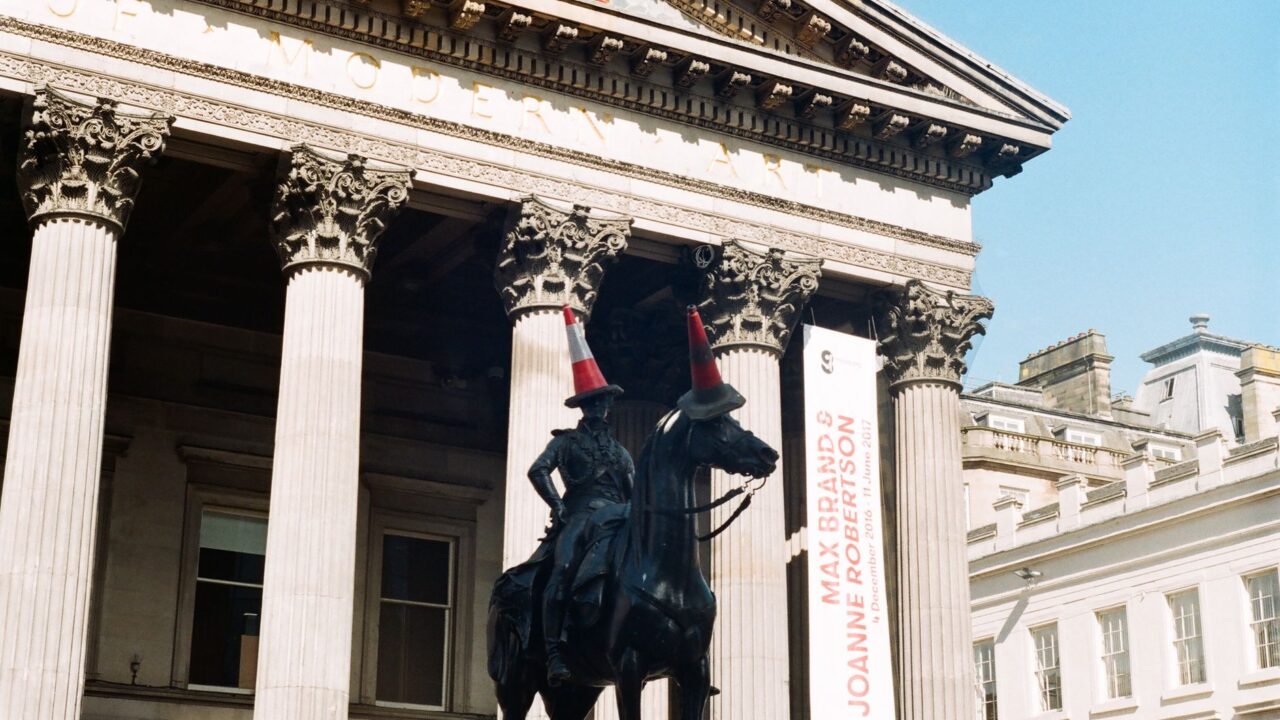
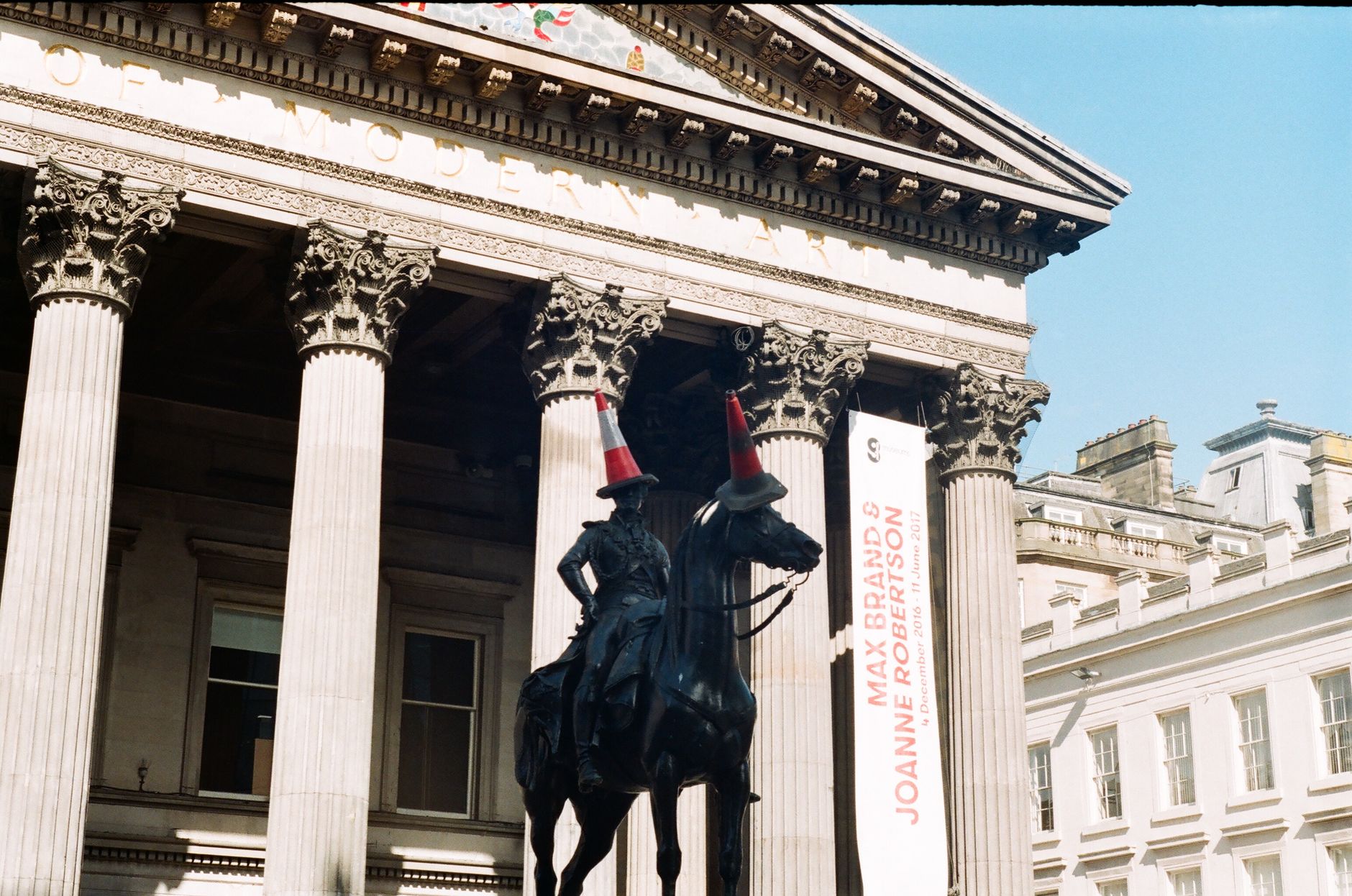
| Gallery of Modern Art (and the coned Duke of Wellington) | Queen Street | Two minutes’ walk. |
| Buchanan Street shopping | Queen Street | Three minutes. |
| Glasgow Cathedral, the Necropolis and Provand’s Lordship | Queen Street | About 15 minutes on foot, uphill at the end. |
| Merchant City | Either | Roughly equidistant, 5–10 minutes. |
| Argyle Street and St Enoch | Central | The station exits onto it. |
| The Clyde waterfront | Central | About 10 minutes south. |
| Kelvingrove Art Gallery and the West End | Either — then the Subway | Buchanan Street subway is by Queen Street; St Enoch is by Central. |
| The Riverside Museum | Either — then bus or Subway plus a walk | It is out at Pointhouse Quay; allow 25–30 minutes. |
Glasgow also has the only underground railway in Scotland — the Subway, a single circular line that has been running since the nineteenth century. It is small, orange, and genuinely useful for reaching the West End, which is otherwise a long walk from either mainline station.
Fares: The Peak-Fare Story Nobody Updated
If you have read an older guide telling you to travel after 09:15 to get the off-peak fare, throw it away. On Monday 1 September 2025 ScotRail removed peak fares permanently, following a trial. Every ticket is now sold at what used to be the off-peak rate and is valid at any time of day.
Edinburgh to Glasgow was the biggest single beneficiary of that change anywhere on the Scottish network. The return fare fell from £32.60 at the peak rate to £16.80 — a cut of just under 48%. That was the figure at the moment of the change; fares have been revised since, so treat £16.80 as the shape of the price rather than today’s exact number and check ScotRail before you travel.
Three consequences worth acting on:
- Travel whenever suits you. There is no longer a financial reason to wait until mid-morning, which makes an early start on a day trip free.
- Buy a return, not two singles. Unlike the London route, a return here is genuinely cheaper and is valid for a month, so you are not committed to a particular train back.
- Separate Off-Peak ticket types have been withdrawn on ScotRail. If a third-party site is still showing you Off-Peak and Anytime options at different prices for this journey, it is showing you stale data.
Railcards still apply. A 16–25, 26–30, Senior, Two Together or Family & Friends railcard costs £35 a year and takes a third off, which on a route this cheap means the discount is small in absolute terms but the card still pays for itself elsewhere.
The Coach: Citylink 900
Scottish Citylink’s service 900 is a serious alternative rather than a fallback, and it does one thing the train cannot: it runs all night.
| Feature | Citylink 900 |
|---|---|
| Frequency | Up to every 12 minutes at peak, 15 minutes daytime, 30 minutes evening, hourly overnight |
| Operating hours | 24 hours a day, 7 days a week |
| Fastest journey | 1 hour 19 minutes |
| Fare | Day return from £10 |
| Onboard | Reclining seats with three-point belts, footrests, USB and USB-C charging, fold-down tables |
The honest verdict: the coach is roughly twice the journey time for roughly half the fare, and on a route this short that trade is genuinely finely balanced. Take the coach if you are on a tight budget, if you are travelling in the middle of the night, or if the timing happens to suit — a departure every twelve minutes means you never wait. Take the train if the thirty-five minutes matter, or if the M8 is having one of its afternoons, because the coach sits in the same traffic as everyone else and the 1h19 is a best case rather than a promise.
Driving: Why Not To
The M8 links the two city centres almost directly and the drive is about forty-seven miles. On paper it is under an hour. In practice this is one of the busiest stretches of motorway in Britain, running straight through the middle of Glasgow, and the difference between a clear run and a bad one is thirty or forty minutes.
But the traffic is not the main argument. Glasgow city centre is a Low Emission Zone, in force since 1 June 2023 and fully enforced since June 2024. It covers the area bounded by the M8 to the north and west, the River Clyde to the south, and Saltmarket and High Street to the east — which is to say, everything you would actually want to visit.
- All vehicles entering the zone must meet the emission standard unless exempt. Motorcycles and mopeds are unaffected.
- The penalty charge starts at £60 and doubles with each subsequent breach, capped at £480 for cars and light goods vehicles.
- Penalties are reduced by 50% if paid within 14 days.
- If you are in a hire car, check the vehicle against the official LEZ checker before you set off. “I did not know” is not a defence, and the charge follows the hire agreement back to you.
The honest verdict: driving between Edinburgh and Glasgow costs more than the train once you count fuel and parking, takes longer than the train in real conditions, and carries a penalty risk the train does not. There is exactly one case for it — you are going on somewhere else afterwards and Glasgow is a stop rather than a destination. Otherwise, leave the car. The same logic applies at the Edinburgh end, which is why we say the same thing in our Edinburgh travel tips guide.
All Four Options, Compared
| Mode | Time | Cost | Frequency | Verdict |
|---|---|---|---|---|
| Train via Falkirk High | 42 min | c. £17 return | Several per hour | The default. Fast, cheap, frequent. |
| Train via Shotts or Carstairs | c. 1 hour | Same | Hourly-ish | Only if you want Glasgow Central. |
| Citylink 900 coach | 1h19 at best | From £10 day return | Every 12–15 min, 24/7 | Cheapest, and the only overnight option. |
| Driving | 50–90 min | Fuel, parking, LEZ risk | — | Avoid unless Glasgow is a stop on a longer drive. |
Doing Glasgow as a Day Trip from Edinburgh
Because the train is so quick and the fare no longer depends on the time of day, this is one of the easiest day trips in Scotland. A realistic shape:
- 09:00 from Waverley, arriving Queen Street around 09:45.
- Morning in the centre: George Square, the Gallery of Modern Art, the Victorian commercial architecture along Buchanan Street and the Merchant City.
- Or head straight out to the West End on the Subway for Kelvingrove Art Gallery and Museum, which is free, genuinely world-class and needs two hours.
- Lunch in Finnieston or the Merchant City, both of which do food better than most of central Edinburgh at the same price.
- Afternoon: the Cathedral and Necropolis if you stayed central, or the Riverside Museum if you went west.
- Back whenever you like — your return is valid for a month, and trains run frequently into the evening.
The honest verdict: one day is enough to enjoy Glasgow and nowhere near enough to know it. If you find yourself liking it — and a lot of visitors do, sharply and unexpectedly — the right response is a separate trip rather than a longer day. Our day trips from Edinburgh guide puts Glasgow alongside the other realistic options by how much of the day they consume.
What Is Actually Worth Your Day in Glasgow
Edinburgh visitors often arrive in Glasgow expecting a smaller, rougher version of what they have just left, and are then surprised. It is a bigger city, built on Victorian shipping and industrial money rather than on law and enlightenment, and its best assets are its museums, its architecture and its food — not its skyline.
- Kelvingrove Art Gallery and Museum — free, in the West End, and the single strongest reason to make the trip. A genuinely serious collection in a red sandstone building that is worth the visit on its own. Allow two hours.
- The Riverside Museum — free, on the Clyde at Pointhouse Quay, in a Zaha Hadid building with the tall ship Glenlee moored alongside. Transport history done properly. Allow ninety minutes plus travel.
- Gallery of Modern Art — free, in Royal Exchange Square, two minutes from Queen Street. Small, quick, and the coned Duke of Wellington outside is the city’s unofficial emblem.
- Glasgow Cathedral and the Necropolis — a medieval cathedral that survived the Reformation largely intact, with a Victorian hill cemetery behind it that gives you the best view in the city centre. About fifteen minutes’ walk from Queen Street.
- The Victorian commercial centre — Buchanan Street, Royal Exchange Square, the Merchant City. Glasgow’s grid of nineteenth-century warehouses and banks is the best in Britain outside London and it is free to walk through.
- Finnieston — the strip along Argyle Street west of the centre that is the reason Glaswegians are smug about their food. Better value than the equivalent in Edinburgh.
One caveat worth stating plainly: Charles Rennie Mackintosh is Glasgow’s most famous architect, and his Glasgow School of Art building was severely damaged by fire twice, in 2014 and again in 2018. Do not plan a day around seeing it. Other Mackintosh work around the city remains accessible, but check what is actually open before you build an itinerary on it.
The honest verdict: if you have one day, pick one half of the city rather than trying to do both. Either the centre — George Square, the Merchant City, the Cathedral and the Necropolis — or the West End, which means Kelvingrove, the Botanic Gardens and lunch on Ashton Lane. Attempting to combine them means an hour of your day spent on the Subway and neither half seen properly.
Five Mistakes on This Journey
- Booking the first train shown rather than the fastest. The difference between routes is thirty minutes each way — an hour of your day, for the same money.
- Waiting until mid-morning to avoid a peak fare. There has been no peak fare on ScotRail since September 2025. Travelling at 08:00 costs the same as travelling at 11:00, and buys you three more hours in Glasgow.
- Buying two singles. Unlike the London route, a ScotRail return is cheaper than two singles here and is valid for a month.
- Driving a hire car into the city centre without checking it. Glasgow’s Low Emission Zone is camera-enforced and the penalty escalates. Check the registration against the official LEZ vehicle checker first.
- Treating Glasgow as an afternoon. Forty-two minutes each way makes it tempting to go after lunch. You will arrive as the museums start thinking about closing.
Practical Details Worth Knowing
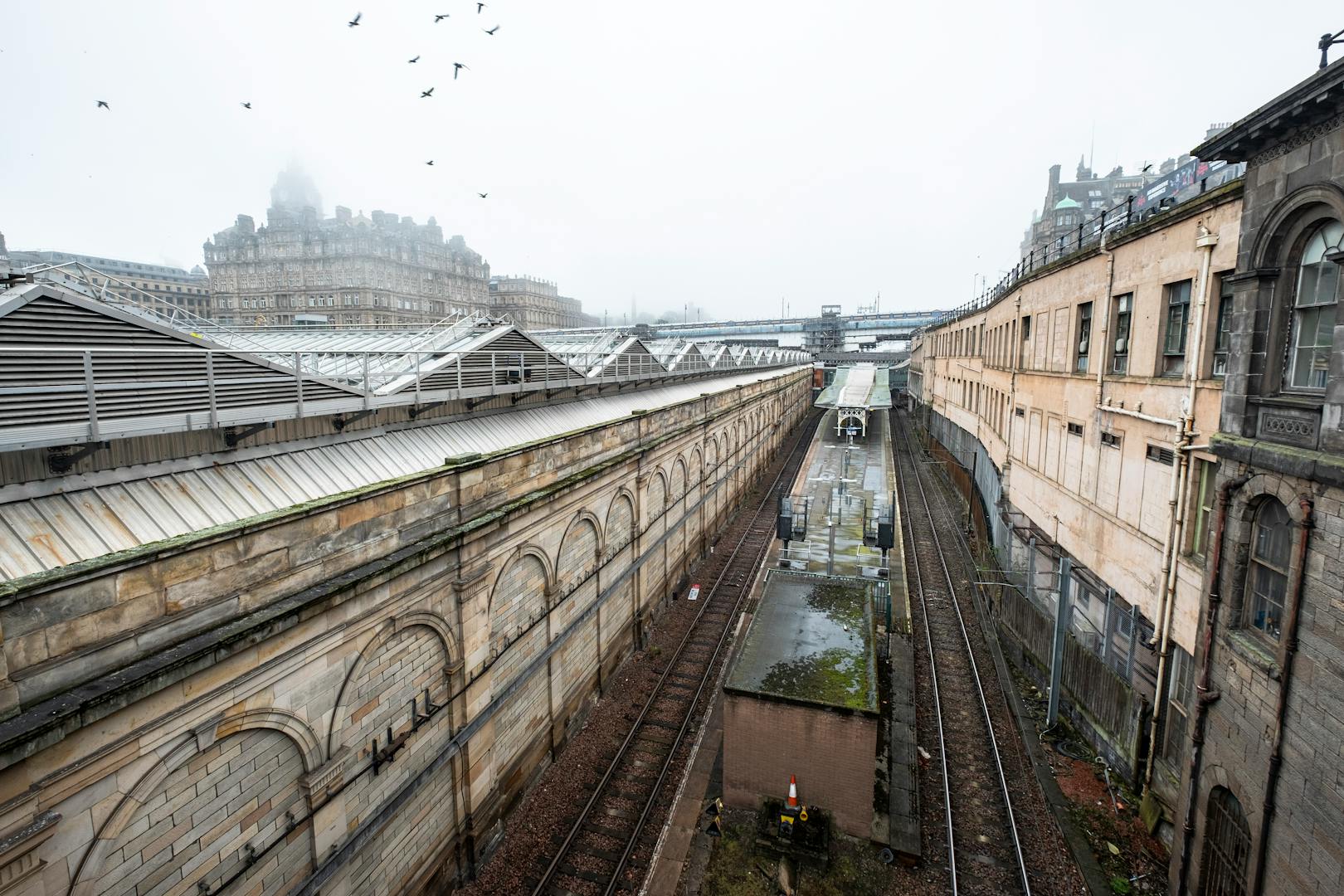
- Departing from Haymarket instead of Waverley is fine and saves a walk if you are staying in the West End, but check the route — Haymarket is served by the slower Bathgate line as well as the fast one. See our guide to Edinburgh’s train stations for the layout of both.
- There is no seat reservation on this route. It is a turn-up-and-go railway, which is why frequency matters more than timing.
- Luggage is free and unlimited, as on any British train, but the fast Queen Street services get busy at commuting times and there is no dedicated luggage van.
- Buy on the ScotRail app to avoid the ticket-machine queue at Waverley, which is genuinely long at peak times.
- Glasgow’s big museums are free, so a day trip can cost you nothing beyond the fare and lunch — a point worth remembering if you are working to the numbers in our Edinburgh on a budget guide.
Frequently Asked Questions
How long is the Edinburgh to Glasgow train?
Forty-two minutes on the fast service from Edinburgh Waverley to Glasgow Queen Street via Falkirk High. Other routes — via Shotts, via Carstairs, or via Airdrie and Bathgate — take an hour or more, so check the journey time as well as the departure time.
How much does the train from Edinburgh to Glasgow cost?
Around £17 for a return at the time of writing. When ScotRail abolished peak fares in September 2025 the return fell from £32.60 to £16.80, the largest cut on the Scottish network. Fares have been revised since, so check ScotRail for the current figure.
Are there still peak fares on ScotRail?
No. Peak fares were removed permanently on 1 September 2025. All tickets are sold at the former off-peak rate and are valid at any time of day, and separate Off-Peak ticket types have been withdrawn.
Should I go to Glasgow Queen Street or Glasgow Central?
Queen Street for George Square, Buchanan Street, the Gallery of Modern Art and the Cathedral, and because the fast train goes there. Central for Argyle Street and the Clyde waterfront. The two stations are about ten minutes apart on foot.
Is the coach or the train better from Edinburgh to Glasgow?
The train for speed, the coach for price and for overnight travel. Citylink’s 900 runs 24 hours a day, up to every 12 minutes at peak, takes 1 hour 19 minutes at best and starts at £10 for a day return. The train does it in 42 minutes for around £17 return.
Can I drive from Edinburgh to Glasgow?
You can, on the M8, about forty-seven miles. We would not. The motorway is heavily congested, parking is expensive, and Glasgow city centre is a Low Emission Zone — non-compliant vehicles face a £60 penalty that doubles with each subsequent breach, capped at £480 for a car.
Do I need to book Edinburgh to Glasgow trains in advance?
No. This is a turn-up-and-go route with no seat reservations and no advance-purchase discount to chase. Buy on the ScotRail app to skip the ticket-machine queue at Waverley, and take the next fast departure.
Is Glasgow worth a day trip from Edinburgh?
Yes, and it is one of the easiest day trips in Scotland — forty-two minutes each way, a fare that does not vary by time of day, and free major museums including Kelvingrove and the Riverside. One day shows you the city; it does not let you know it.
How long is a return ticket valid for?
ScotRail return tickets are valid for up to one month, so a return does not commit you to a specific train home — or even a specific day.
Journey times, fares, coach frequencies and Low Emission Zone penalties checked September 2026 against ScotRail, Transport Scotland, Scottish Citylink and Glasgow City Council. Rail fares are revised at least annually — confirm the current price before you travel.
If Glasgow is one stop on a longer plan, the rest of the practical layer is covered in our Edinburgh travel tips guide. For getting around once you are back, see Edinburgh buses and trams, and for fitting a day out into a wider trip, our Edinburgh itineraries show where a Glasgow day sits best.