Edinburgh Castle: The Complete Visitor’s Guide (2026)
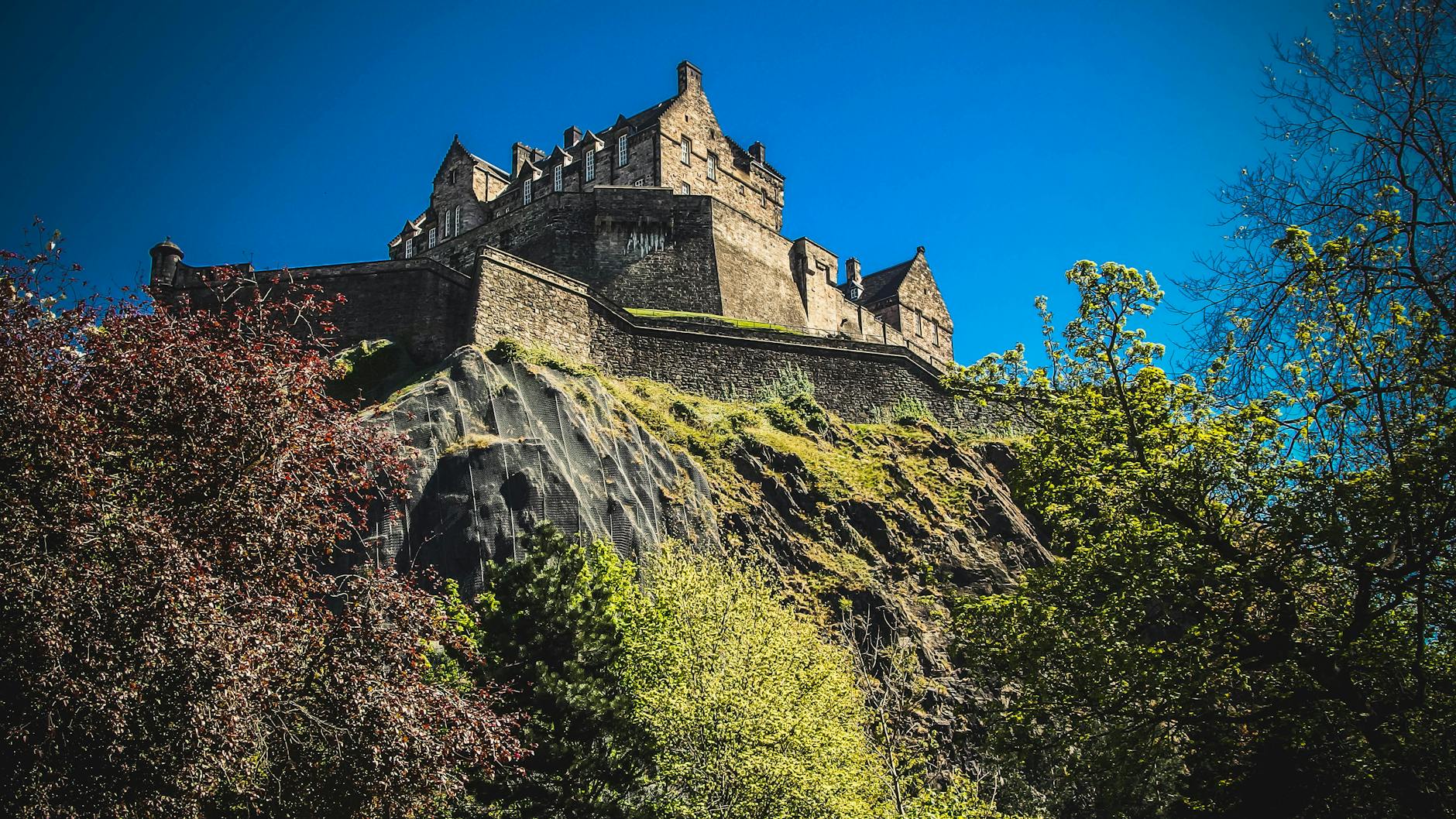
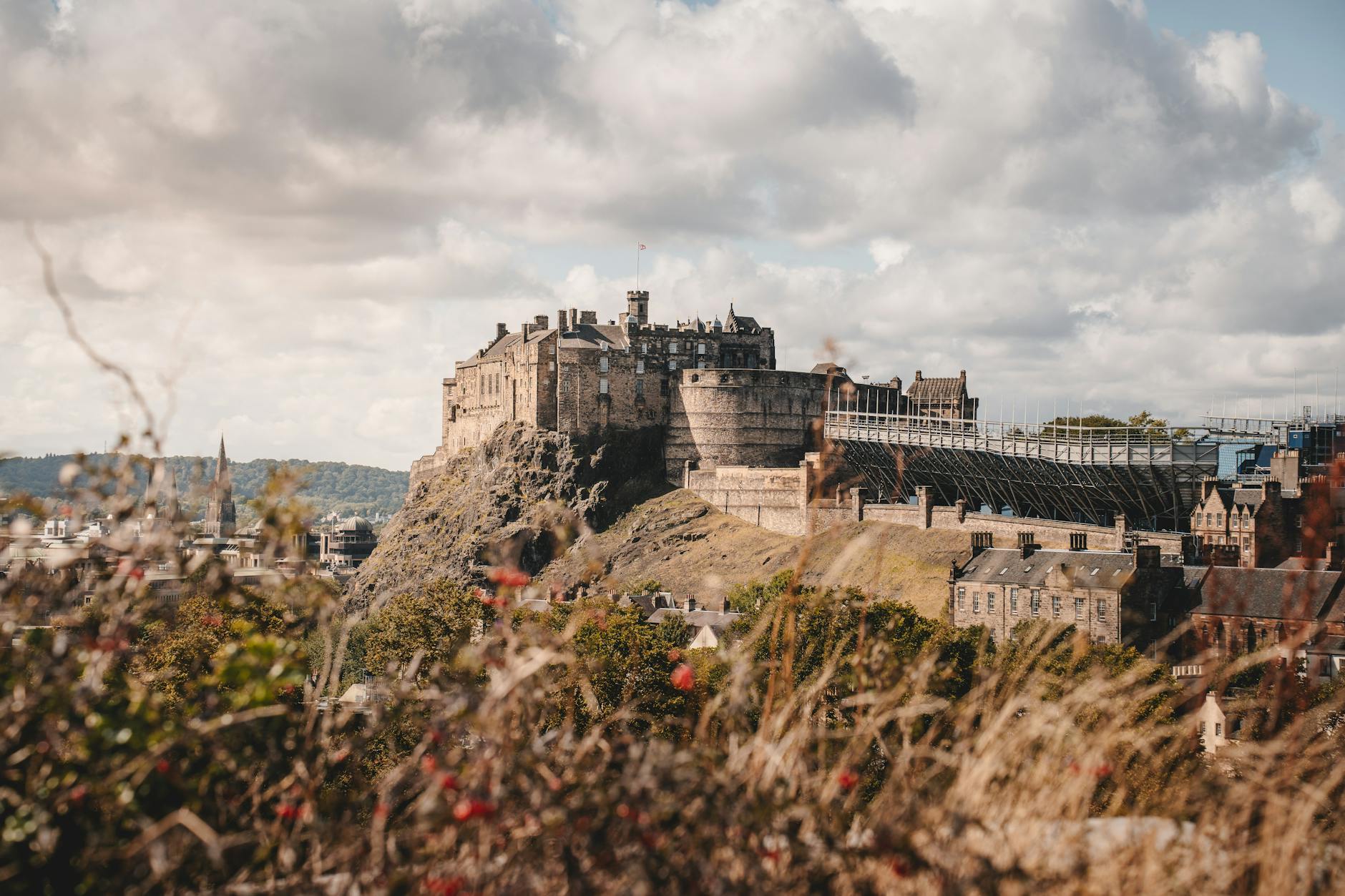
Edinburgh Castle is not merely Scotland’s most visited paid attraction — it is the very symbol of the nation itself, a fortress that has dominated Edinburgh’s skyline for over nine centuries and witnessed more sieges, royal ceremonies, imprisonments, and pivotal moments of Scottish history than any other building in the country. Rising dramatically from an ancient volcanic plug known as Castle Rock, 130 metres above the city, Edinburgh Castle commands views that stretch from the Pentland Hills to the Firth of Forth and beyond — and commands the attention of nearly two million visitors every year.
This comprehensive guide covers everything you need to know before visiting Edinburgh Castle in 2026: the castle’s extraordinary thousand-year history, every major building and attraction within its walls, practical visitor information including tickets and opening hours, insider tips for making the most of your visit, and answers to the questions travellers ask most often. Whether you’re a first-time visitor planning your day or a history enthusiast seeking deeper understanding, this is the most complete Edinburgh Castle guide available anywhere online.
The History of Edinburgh Castle: Over 1,000 Years of Drama
Edinburgh Castle’s history stretches back far longer than the medieval fortress visitors see today. Archaeological evidence shows that Castle Rock has been a site of human habitation since at least the Bronze Age — around 900 BC — making it one of the longest continuously occupied sites in Scotland. The volcanic plug on which the castle sits was formed by an extinct volcano that last erupted some 340 million years ago, and the glaciers of the last Ice Age carved the distinctive “crag and tail” formation that created both the defensive advantages of Castle Rock and the ridge that would become Edinburgh’s Royal Mile.
The Earliest Fortress: From Din Eidyn to Castle of the Maidens
The first recorded mention of a fortress on Castle Rock comes from a 7th-century Welsh poem, Y Gododdin, which describes a war band feasting at “Din Eidyn” (the fortress of Eidyn) before marching to a catastrophic battle against the Angles around AD 600. The Angles of Northumbria captured the fortress in AD 638, and it remained under English control until the Scots reclaimed it in AD 954. During the early medieval period, the fortress was sometimes called the “Castle of the Maidens” — a name whose origins remain debated, though it may relate to the Pictish practice of housing royal women and princesses in fortified hilltop strongholds.
The Royal Castle: Malcolm III to the Wars of Independence
Edinburgh Castle’s recorded history as a royal fortress begins with King Malcolm III (Canmore) and his queen, Margaret, in the late 11th century. Margaret, a devout Saxon princess, established a chapel on Castle Rock that survives to this day as St Margaret’s Chapel — the oldest building in Edinburgh, dating to approximately 1130. When Margaret died in the castle in 1093, legend holds that her body was smuggled out through the western gate during a siege, shrouded in mist sent by divine providence.
The castle became increasingly important as a royal residence and military stronghold through the 12th and 13th centuries. King David I (Margaret’s son) held his court here and developed Edinburgh as Scotland’s capital. The castle saw its first great crisis during the Wars of Scottish Independence (1296–1357), when it changed hands between Scottish and English forces repeatedly. Edward I of England captured it in 1296, and it remained under English control for nearly 18 years until Thomas Randolph, Earl of Moray, led a daring night-time climbing assault of the castle’s north face in 1314 — one of the most audacious military actions in Scottish history. Following Robert the Bruce’s orders, the castle was then deliberately destroyed to prevent the English from using it again.
The Most Besieged Place in Britain
Edinburgh Castle holds the unenviable distinction of being the most besieged place in Great Britain, enduring at least 26 documented sieges throughout its history — more than any other fortification in the British Isles. The castle’s strategic importance meant that whoever controlled it effectively controlled Scotland, and this made it a constant target during periods of civil war, English invasion, and dynastic struggle.
Among the most dramatic sieges was the Lang Siege of 1571–1573, the longest siege in the castle’s history, during which supporters of the exiled Mary, Queen of Scots held the fortress against the forces of her infant son James VI for nearly two years. English artillery was eventually brought north to bombard the castle into submission, destroying David’s Tower (the great medieval tower that had stood since the 14th century) in the process. The rubble of David’s Tower was later incorporated into the Half Moon Battery that visitors see today — a dramatic archaeological palimpsest visible on the castle’s eastern face.
The last siege of Edinburgh Castle came in 1689, during the Jacobite rising, when the Duke of Gordon held the castle for the deposed James VII against the forces of William of Orange. After three months, the garrison surrendered. The final military action at the castle occurred in 1745, when Bonnie Prince Charlie’s Jacobite forces besieged it unsuccessfully during the ’45 Rising — the Highland army occupied Edinburgh but could never take the castle, which remained in government hands throughout the rebellion.
What to See Inside Edinburgh Castle: A Complete Guide to Every Attraction
Edinburgh Castle is far more than a single building — it is a complex of fortifications, palaces, barracks, chapels, prisons, and museums that have been built, destroyed, and rebuilt over many centuries. A thorough visit requires two to three hours. Here is a guide to every major attraction within the castle walls, arranged roughly in the order you’ll encounter them as you walk from the entrance gate to the highest point of Castle Rock.
The Esplanade
Before you even enter the castle, the Esplanade sets the scene. This broad, sloping parade ground was created in the 1750s as a military drilling area and today serves as the venue for the world-famous Royal Edinburgh Military Tattoo each August. The Esplanade offers superb views north towards the New Town, Calton Hill, and the Firth of Forth. On either side stand statues of Robert the Bruce and William Wallace — Scotland’s two greatest independence heroes — flanking the castle entrance. The Esplanade is freely accessible at all times, even without a castle ticket.
The Gatehouse and Portcullis Gate
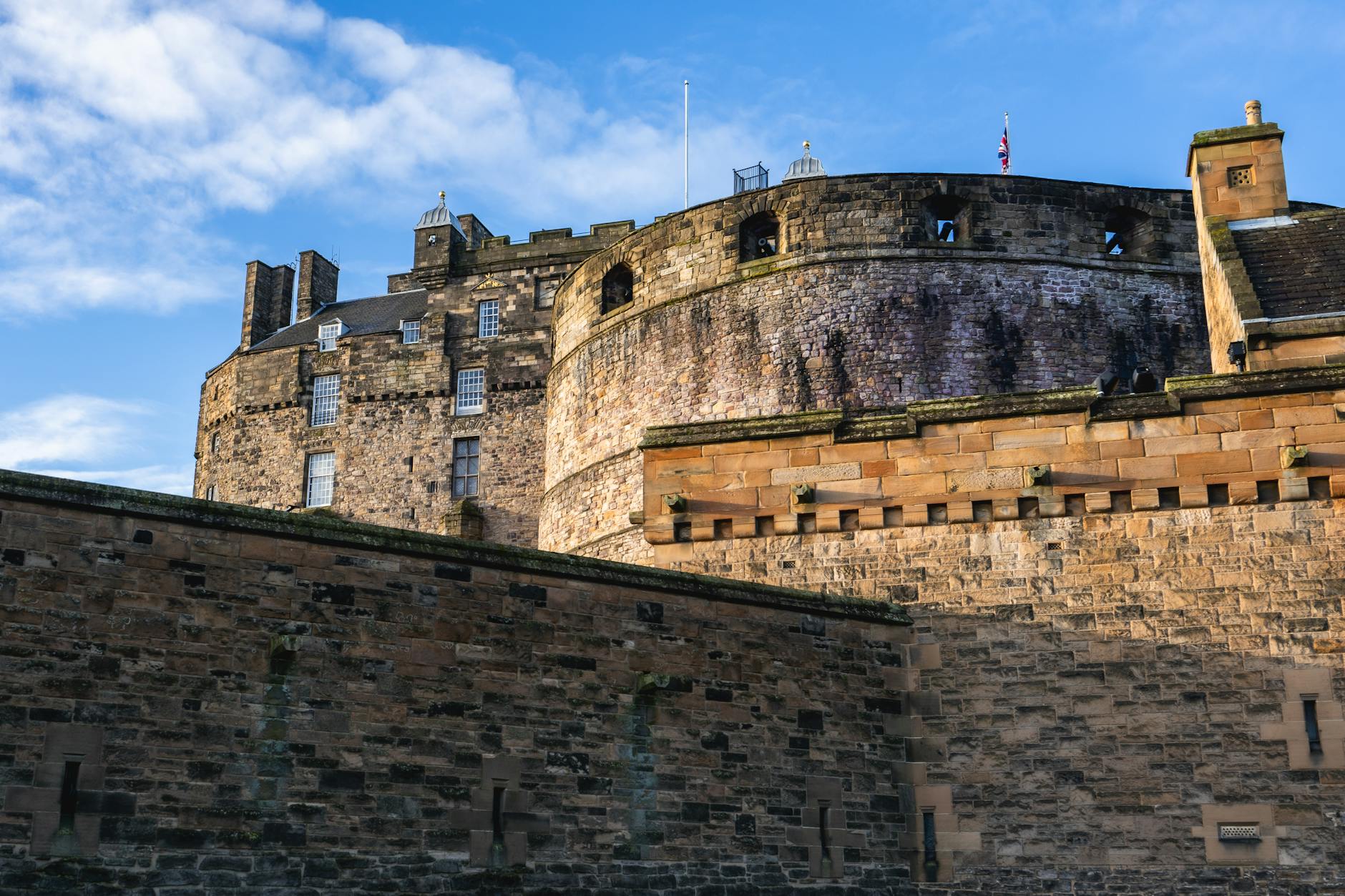
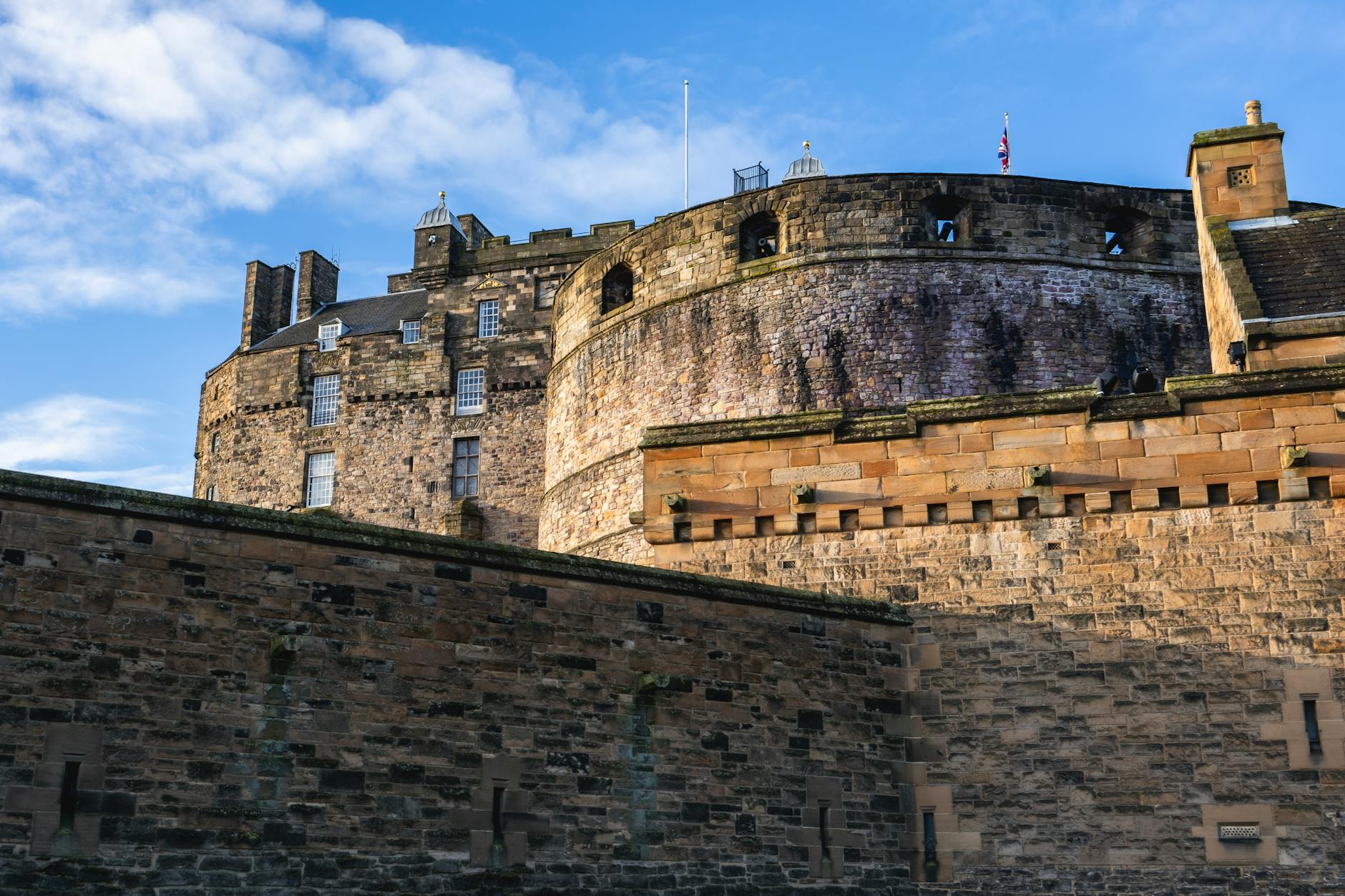
The imposing Gatehouse at the entrance was built in 1886–1888 and is actually one of the castle’s newest structures, designed to look suitably medieval despite its Victorian origins. Just beyond it, the Portcullis Gate (also called the Argyle Tower) dates to the late 16th century and was the castle’s principal defensive entrance, featuring a working portcullis and murder holes in the ceiling through which defenders could drop projectiles on attackers. The Portcullis Gate sits on the foundations of the medieval Constable’s Tower, destroyed during the Lang Siege of 1573.
Argyle Battery and the One O’Clock Gun
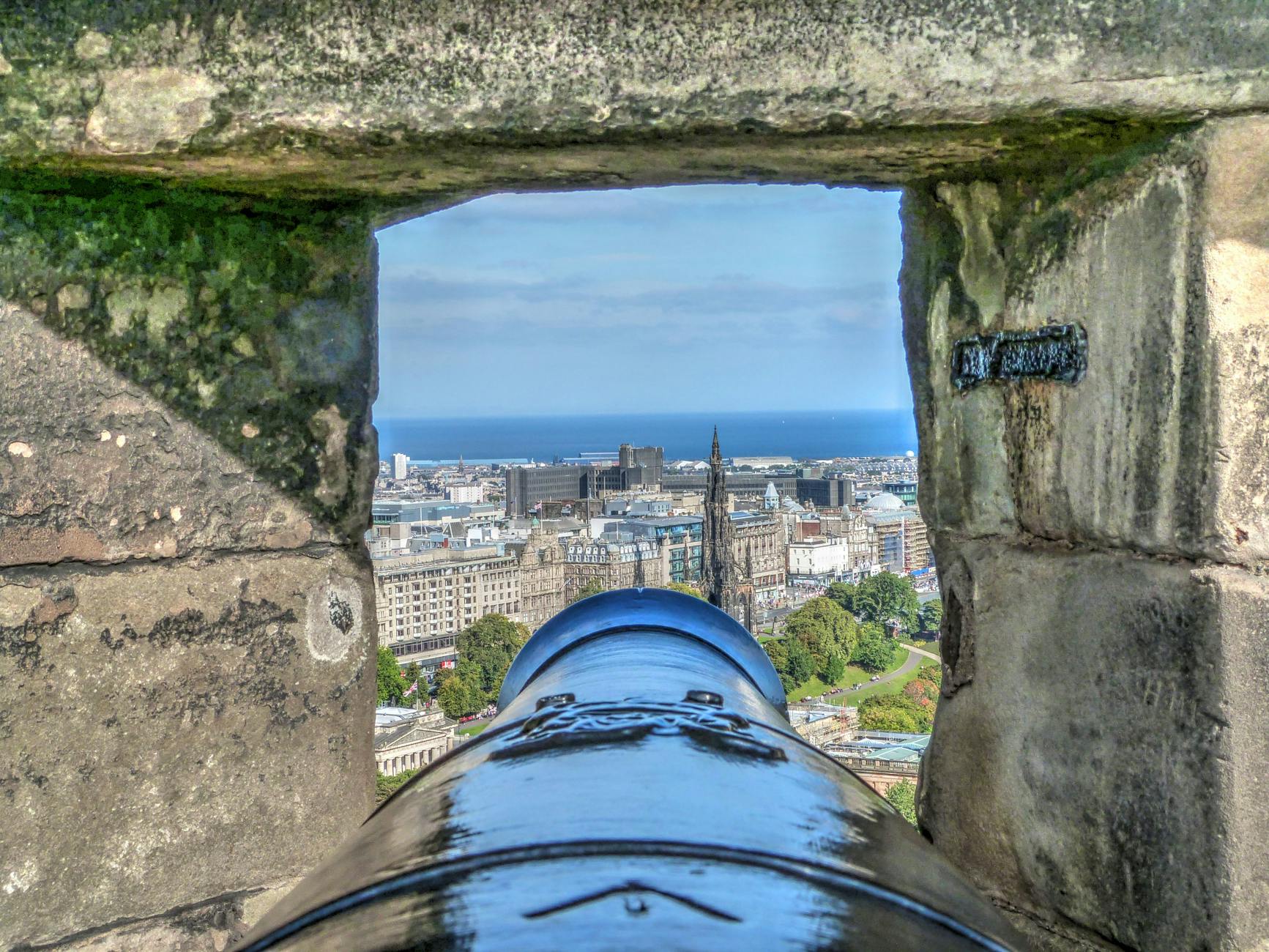
The Argyle Battery is a line of cannons along the castle’s northern ramparts, offering some of the finest views in Scotland. From here, you look out across Princes Street Gardens, the New Town, and the Firth of Forth to the hills of Fife. This is also where you’ll find the famous One O’Clock Gun — a tradition dating back to 1861, when a time gun was fired daily at precisely 1pm to allow ships in the Firth of Forth to set their maritime clocks. The gun has been fired every day since (except Sundays, Good Friday, and Christmas Day) and remains one of Edinburgh’s most distinctive rituals. If you’re visiting around 1pm, find a spot on the ramparts a few minutes early — the boom is startlingly loud and the moment is unforgettable.
St Margaret’s Chapel
St Margaret’s Chapel is the oldest surviving building in Edinburgh, dating to around 1130. This tiny Romanesque chapel — just 5.5 metres long — was built by King David I in memory of his mother, Queen Margaret, who died in the castle in 1093 and was later canonised as a saint. Despite the destruction and rebuilding that has engulfed the castle over nine centuries, this diminutive chapel has survived every siege and assault — partly because its small size and plain exterior meant it was often overlooked, and partly because it was repurposed as a gunpowder store for several centuries (which ironically preserved it). Inside, the chapel retains its original Romanesque arch and is still used for weddings and christenings — it can seat just 26 people, making it one of the most intimate and historically significant wedding venues in Britain.
Mons Meg
Near St Margaret’s Chapel stands Mons Meg, one of the largest medieval cannons ever made and one of Edinburgh Castle’s most famous artefacts. This enormous bombard was forged in Mons, Belgium, in 1449 and gifted to King James II of Scotland by Philip the Good, Duke of Burgundy. Weighing over six tonnes and capable of firing 150-kilogram granite cannonballs over two miles, Mons Meg was the cutting-edge military technology of its day. The cannon saw active service in several sieges before being retired to ceremonial duties — it was last fired in 1681 to celebrate the birthday of the future James VII, and the firing cracked its barrel. After spending over a century in the Tower of London, Mons Meg was returned to Edinburgh Castle in 1829 following a campaign led by Sir Walter Scott.
The Royal Palace
The Royal Palace occupies the eastern side of Crown Square, the castle’s central courtyard at the summit of Castle Rock. This is where Scotland’s monarchs lived when in residence at the castle, and it contains the rooms most charged with historical significance. The most important room is the Crown Room, which houses the Honours of Scotland — the Scottish Crown Jewels. Consisting of the Crown, the Sceptre, and the Sword of State, the Honours of Scotland are the oldest surviving set of crown jewels in the British Isles, predating the English Crown Jewels by over a century. The Crown dates to 1540, the Sceptre to 1494, and the Sword of State was a gift from Pope Julius II in 1507.
Alongside the Honours sits the Stone of Destiny (the Stone of Scone) — the ancient coronation stone on which Scottish kings were crowned for centuries. Taken to Westminster Abbey by Edward I in 1296, the Stone was famously stolen back by four Scottish students on Christmas Day 1950, recovered, and finally returned to Scotland permanently in 1996. It now rests alongside the Honours in a powerful display of Scottish national identity.
Also within the Royal Palace is the small, panelled room where Mary, Queen of Scots gave birth to the future King James VI of Scotland (and I of England) on 19 June 1566 — the child who would eventually unite the crowns of Scotland and England. The room is remarkably small and intimate, and the painted royal cipher of Mary and her husband Lord Darnley can still be seen on the ceiling.

The Great Hall
The Great Hall is Edinburgh Castle’s most impressive interior space and one of the finest medieval halls in Scotland. Built for King James IV in 1511, the hall was intended as a ceremonial and banqueting space befitting a Renaissance monarch. Its most remarkable feature is the spectacular hammerbeam roof — an intricate timber ceiling supported by carved stone corbels and decorated with carved projections, creating an effect of soaring, cathedral-like grandeur. The hall measures roughly 29 metres long and 12.5 metres wide, and for centuries it served as the meeting place of the Scottish Parliament. After centuries of use as a barracks (during which the magnificent roof was hidden behind a false ceiling), the hall was restored to its medieval glory in the late 19th century. Today the walls are lined with an extensive collection of arms and armour.
The Scottish National War Memorial
Occupying the north side of Crown Square, the Scottish National War Memorial is one of the most moving spaces in Edinburgh. Designed by Sir Robert Lorimer and opened in 1927, the memorial honours the Scottish servicemen and women who have died in conflicts from the First World War to the present day. The building’s exterior is relatively austere, but the interior is extraordinarily rich — every surface is decorated with symbolic carvings, stained glass, bronze sculptures, and regimental memorials created by Scotland’s finest craftsmen and artists. At the heart of the building, a steel casket rests on a natural outcrop of Castle Rock that protrudes through the floor — a deliberate and powerful connection between the memorial and the ancient bedrock of Scotland itself. Photography is not permitted inside.
Prisons of War Exhibition
In the vaults beneath the Great Hall, the Prisons of War exhibition recreates the conditions experienced by the prisoners who were held in Edinburgh Castle over the centuries. The castle served as a military prison during the American War of Independence, the Napoleonic Wars, and both World Wars. The vaulted chambers have been restored to show the cramped, dark conditions prisoners endured, complete with hammocks, graffiti carved by real inmates, and displays of the remarkable objects prisoners made during their captivity — including intricately carved bone models of ships. The original heavy wooden doors, scarred and studded with iron nails, are particularly evocative. This is one of the castle’s most atmospheric and often overlooked exhibitions.
The Half Moon Battery and David’s Tower
The curved Half Moon Battery is Edinburgh Castle’s most recognisable architectural feature when viewed from the city below. Built in the 1570s after the devastating Lang Siege, the battery was constructed over the ruins of the great medieval David’s Tower, which had stood since the 1370s. Remarkably, the remains of David’s Tower survived within the structure of the Half Moon Battery and were rediscovered during archaeological excavations in the early 20th century. Today, visitors can descend into the excavated foundations of the medieval tower — a remarkable experience that brings the castle’s layered history vividly to life.
Edinburgh Castle Tickets, Prices & Opening Hours (2026)
Getting the best value and experience from your Edinburgh Castle visit requires a little advance planning. Here is everything you need to know about tickets, prices, and opening hours for 2026.
Ticket Prices
Edinburgh Castle operates a tiered pricing system that rewards advance booking. Standard adult admission in 2026 is £21.50 when booked online in advance (compared to £24.00 on the day). Children aged 5–15 cost £13.00 online (£14.50 on the day), and under-5s enter free. Concession tickets for over-60s are £17.50 online. Family tickets are not offered, but Historic Scotland members receive unlimited free entry — membership starts at £57.50 per year for adults and is excellent value if you plan to visit two or more Historic Scotland properties during your trip. Young Scot cardholders can visit for just £1.
Guided tours cost an additional £3.50 per person and run approximately every 30 minutes throughout the day. Audio guides are available in 12 languages at no extra charge and are included with your entry ticket — they feature narration from well-known voices and are an excellent way to bring the castle’s history to life as you explore.
Opening Hours
Edinburgh Castle’s opening hours vary by season. From 1 April to 30 September (summer), the castle is open daily from 9:30am to 6:00pm (last entry 5:00pm). From 1 October to 31 March (winter), hours are 9:30am to 5:00pm (last entry 4:00pm). The castle is closed on 25 and 26 December. During the Edinburgh Festival Fringe in August, extended evening opening may apply — check the official website for current details. Special late-night openings sometimes occur around Hogmanay and other significant events.
Booking Tips
Booking online in advance is strongly recommended for several reasons: you’ll save money on the walk-up price, you’ll guarantee entry at your preferred time (the castle does occasionally reach capacity during peak periods), and you’ll be able to walk straight through to the entrance without queuing at the ticket office. Tickets are issued for timed entry slots, typically at 15 or 30-minute intervals. For the best experience, book the earliest morning slot (9:30am) or a slot after 3:00pm — these are the quietest times, and the castle’s atmosphere is most magical when it’s not crowded. Avoid midday slots during July and August, when visitor numbers are at their peak.
Insider Tips for Visiting Edinburgh Castle
After extensive research and consultation with regular visitors, here are the practical tips that will transform a good castle visit into a great one.
How Long to Spend
Plan to spend at least two to three hours inside Edinburgh Castle. Most visitors underestimate the size and depth of the castle complex — there are multiple buildings, exhibitions, and viewpoints spread across different levels. Rushing through in under 90 minutes means missing some of the most rewarding experiences, including the Prisons of War exhibition, the Scottish National War Memorial, and the atmospheric passages of David’s Tower. If you’re a history enthusiast, you could easily spend half a day here.
The Best Route Through the Castle
The castle is laid out on a steep slope, and the natural route takes you uphill from the entrance towards the summit. Most visitors follow this route, which means the upper areas (Crown Square, the Honours, the Great Hall) become crowded by mid-morning while the lower sections remain quieter. A useful strategy is to head straight to Crown Square when you arrive — see the Honours of Scotland, the Great Hall, and the War Memorial first, then work your way back down through the Prisons of War, the batteries, and the less-visited areas as the crowds flow upward.
What to Wear and Bring
Edinburgh Castle involves a significant amount of uphill walking on cobblestoned paths, including some steep sections. Comfortable, sturdy shoes with good grip are essential — avoid heels, smooth soles, or brand-new shoes. Even in summer, the castle’s elevated and exposed position means it can be noticeably colder and windier than the city streets below, so bring a warm layer and a waterproof jacket regardless of the forecast. The castle has several indoor exhibitions but much of the visit is outdoors.
Accessibility
Edinburgh Castle sits on a steep volcanic rock, and accessibility is limited by the site’s geography and historic fabric. The route from the entrance to the upper sections involves significant slopes and uneven cobblestoned surfaces. A courtesy vehicle is available to transport visitors with mobility difficulties from the entrance to the top of the castle (Crown Square area), and level access is available to the Great Hall, the Royal Palace (including the Honours of Scotland), and the Scottish National War Memorial. However, the Prisons of War exhibition, St Margaret’s Chapel, and some other areas involve steps and are not wheelchair accessible. Manual and powered wheelchairs can navigate the main courtyard areas. Contact the castle in advance to discuss your specific needs and arrange the courtesy vehicle.
Photography
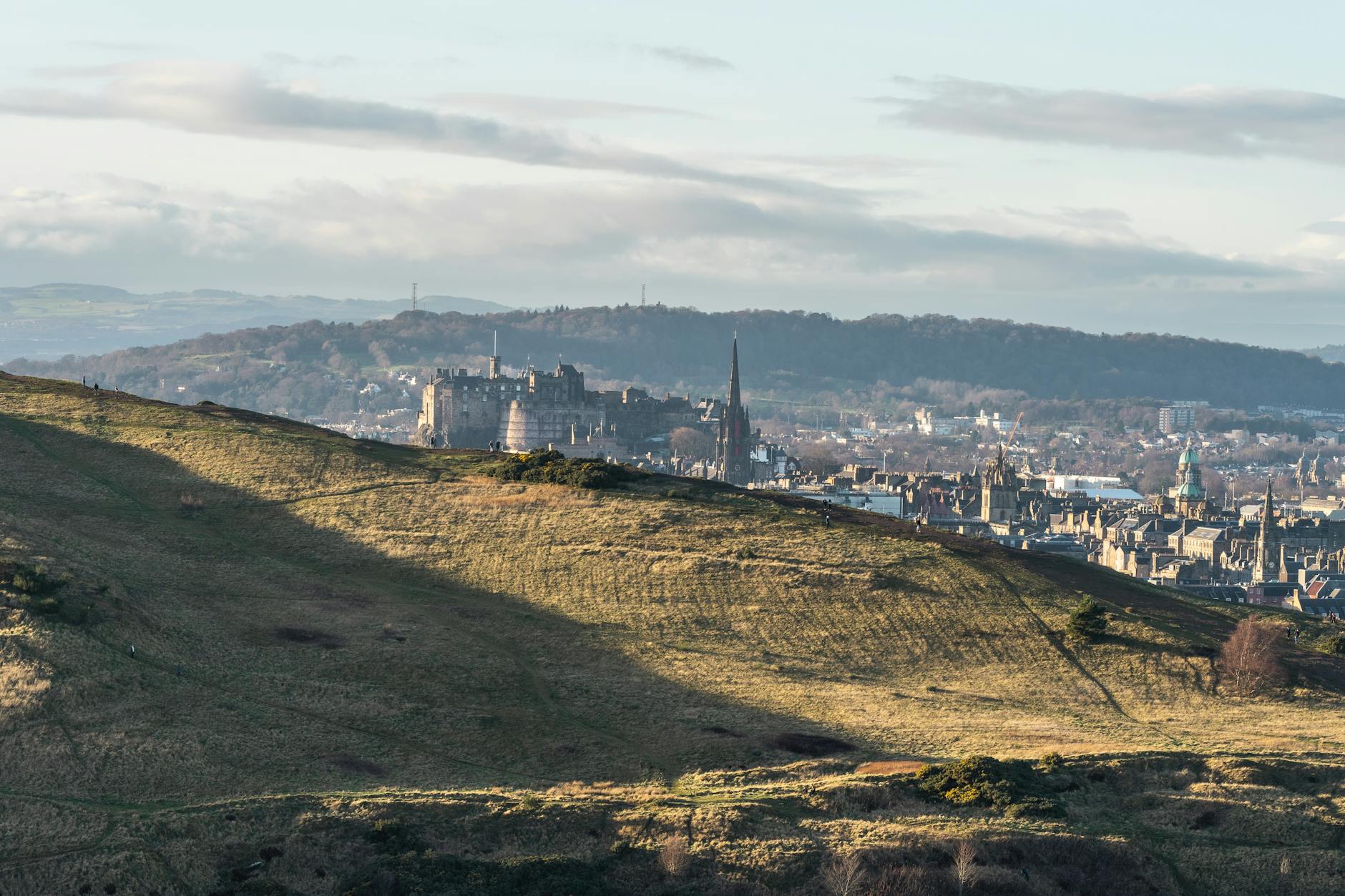
Photography is permitted throughout most of Edinburgh Castle, and the photographic opportunities are exceptional. The best viewpoints for landscape photography include the Argyle Battery (north-facing views of the New Town and Firth of Forth), the Half Moon Battery (east-facing views towards Arthur’s Seat and Holyrood), and the area near Mons Meg (west-facing views towards the Pentland Hills). For the most dramatic light, morning visits offer golden light from the east illuminating the castle’s southern and eastern faces, while late afternoon brings warm light from the west. Photography is not permitted inside the Scottish National War Memorial. The Honours of Scotland can be photographed (without flash).
Edinburgh Castle After Dark
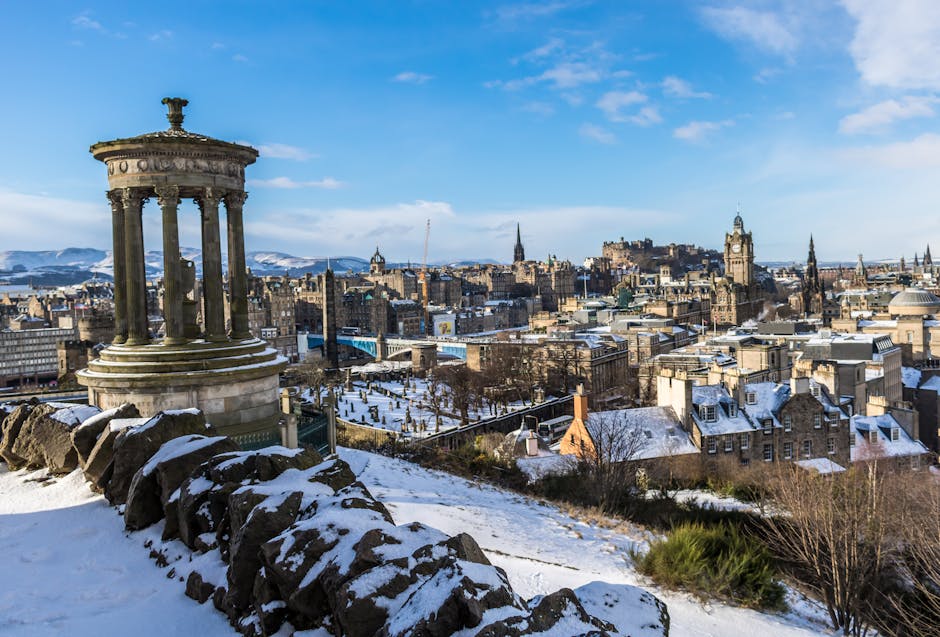
Edinburgh Castle is spectacular during the day, but it takes on an entirely different character after dark. Every evening, the castle is illuminated by a dramatic floodlighting scheme that picks out the walls, towers, and battlements against the night sky, creating one of the most photographed nightscapes in Europe. The best vantage points for seeing the castle illuminated include Princes Street Gardens (particularly near the Ross Fountain), the Grassmarket (where the castle looms directly overhead), Calton Hill (for a panoramic view across the entire Edinburgh skyline), and the top of the Mound.

The Royal Edinburgh Military Tattoo
The Royal Edinburgh Military Tattoo is one of the world’s most spectacular live performances, staged every August on the castle Esplanade. Since 1950, the Tattoo has brought together military bands, display teams, dancers, and performers from around the world for a show that combines precision military performance with music, pageantry, and fireworks — all set against the floodlit backdrop of Edinburgh Castle. The Tattoo runs for approximately three weeks during the Edinburgh Festival Fringe, with performances most evenings and some matinees. Tickets typically sell out months in advance and range from approximately £30 to £100 depending on seating position. The show runs in all weather conditions, so bring warm, waterproof clothing. The finale, in which a lone piper plays from the castle battlements, is one of the most emotionally powerful moments in live entertainment.
Getting to Edinburgh Castle
Edinburgh Castle sits at the top of the Royal Mile in the heart of Edinburgh’s Old Town. It is exceptionally well-connected and easy to reach from anywhere in the city centre.
On Foot
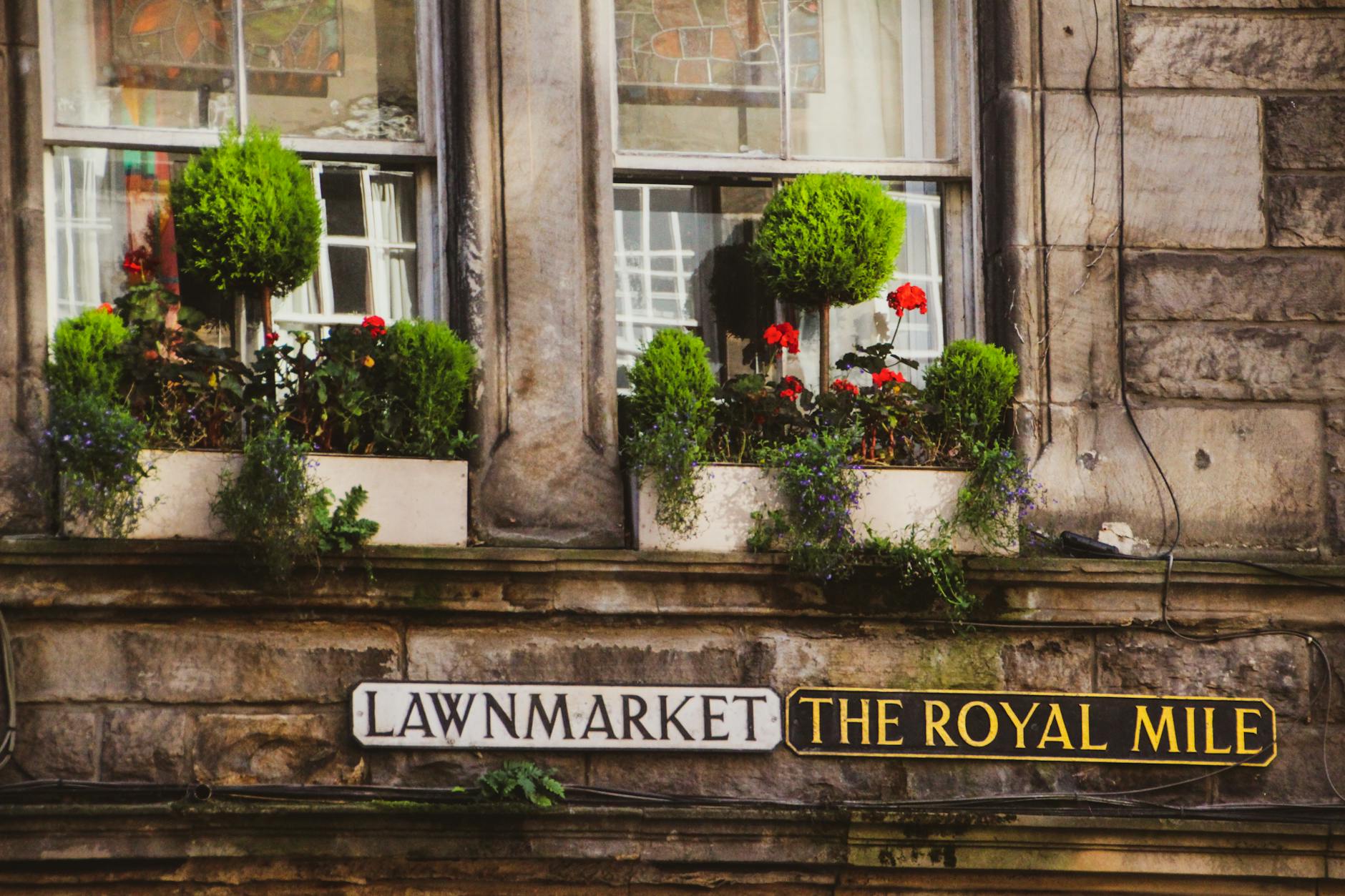
Walking is the best way to reach Edinburgh Castle. From Princes Street (Edinburgh’s main shopping thoroughfare), the castle is about a 10–15 minute uphill walk via the Mound or Playfair Steps. From the Grassmarket, you can climb the steep Vennel steps or take the more gradual route via Victoria Street and the Lawnmarket. From Waverley Station, walk up Cockburn Street or the Playfair Steps to the Royal Mile, then follow the Royal Mile uphill — the castle is at the top. The walk from Waverley takes about 15–20 minutes. Be prepared for a steady uphill climb regardless of your approach — Edinburgh Castle was designed to be difficult to reach, and it still is.
By Bus and Tram
Lothian Buses routes 2, 23, 27, 41, 42, and 67 all stop within easy walking distance of the castle on George IV Bridge, the Mound, or Johnston Terrace. The Edinburgh Tram stops at Princes Street, from where the castle is a 10–15 minute uphill walk. A Lothian Buses City DAY ticket (£6.00) gives unlimited travel on all buses and city-zone trams for the day, though tapping a contactless card caps you at £5.70 for the same travel.
By Car
Driving to Edinburgh Castle is not recommended. There is no parking at the castle itself, and the surrounding Old Town streets are largely pedestrianised or restricted. The nearest public car parks are Castle Terrace NCP (a 5–10 minute walk) and the Grassmarket. Both charge approximately £3–5 per hour. If you’re staying outside the city centre, park-and-ride services operate from several locations on Edinburgh’s outskirts with bus connections to the city centre.
Edinburgh Castle and the Royal Mile: Exploring the Surroundings
Edinburgh Castle sits at one end of Edinburgh’s most famous street, the Royal Mile, and a visit to the castle can easily be combined with exploration of the surrounding Old Town. Immediately below the castle, the Grassmarket is an atmospheric historic square with excellent pubs, restaurants, and independent shops — the view of the castle from here, looming dramatically overhead, is one of the most photographed in Edinburgh. The colourful, curving Victoria Street connects the Grassmarket to the Royal Mile and is lined with boutiques and vintage shops.
A short walk down the Royal Mile from the castle leads to St Giles’ Cathedral, the historic heart of Edinburgh’s religious life, with its distinctive crown steeple and magnificent Thistle Chapel. Further down, the Scottish Parliament building and the Palace of Holyroodhouse await at the foot of the Mile. The entire Royal Mile can be walked in about 20 minutes without stops, but allow at least two hours to explore the hidden closes, duck into churches, and browse the independent shops that line this extraordinary street.
Plan Your Edinburgh Castle Visit: Detailed Guides
Everything below expands on a section of this guide. If you are booking a visit, start with tickets and opening hours.
- Edinburgh Castle tickets, prices and opening hours — Current pricing, booking windows and the cheapest legitimate ways in.
- what to see inside Edinburgh Castle — A room-by-room walkthrough so you don’t miss the Honours or St Margaret’s Chapel.
- the history of Edinburgh Castle — A thousand years of sieges, monarchs and rebuilding, told in order.
- visiting Edinburgh Castle with kids — Which parts hold children’s attention, and the terrain to plan around.
- the best time to visit Edinburgh Castle — Hour-by-hour crowd patterns and the quietest months.
- Edinburgh Castle photography spots — Where to stand for the shot, and the light that makes it work.
- the Palace of Holyroodhouse — The other end of the Royal Mile — the King’s official Scottish residence.
- Calton Hill — The classic view back towards the castle, ten minutes from Princes Street.
Related Edinburgh guides: Royal Mile and Old Town guide, hotels near Edinburgh Castle, Edinburgh walking tours, things to do in Edinburgh.
Frequently Asked Questions About Edinburgh Castle
How long does it take to visit Edinburgh Castle?
A thorough visit to Edinburgh Castle takes two to three hours. This allows time to see all the major attractions including the Honours of Scotland, the Great Hall, St Margaret’s Chapel, Mons Meg, the Prisons of War exhibition, and the Scottish National War Memorial, as well as time to appreciate the views from the ramparts. If you’re a history enthusiast or want to join a guided tour and visit every exhibition, allow up to four hours. A rushed visit covering only the highlights can be done in 90 minutes, though this means missing many of the castle’s most rewarding experiences.
Is Edinburgh Castle worth the money?
Edinburgh Castle is widely considered one of Scotland’s best-value major attractions, especially when tickets are booked online at £21.50. The entry price includes access to all exhibitions, the audio guide (available in 12 languages), and the remarkable collection of artefacts including the Honours of Scotland, Mons Meg, and the Stone of Destiny. The views alone are worth the entry fee, and the depth of history and quality of the exhibitions compare favourably to similar attractions across Europe. Historic Scotland members receive unlimited free entry, which is excellent value if visiting multiple Scottish heritage sites.
When is the best time to visit Edinburgh Castle?
The best time to visit Edinburgh Castle is first thing in the morning (9:30am opening) or in the late afternoon (after 3pm). Midday is the busiest period, particularly during summer and August festival season. For the quietest experience overall, visit in the shoulder seasons — April to May or September to October — when the weather is often pleasant but visitor numbers are significantly lower than the peak summer months. Winter visits offer the shortest queues but limited daylight hours and potentially cold, windy conditions on the exposed ramparts.
Can you see Edinburgh Castle without paying?
You can access the Esplanade (the parade ground in front of the castle entrance) for free at any time, and the views from here are spectacular. The exterior of the castle and its position on Castle Rock can be admired from many vantage points around the city — Princes Street Gardens, the Grassmarket, Calton Hill, and the Vennel steps all offer excellent free views. However, entry to the castle’s interior, exhibitions, and attractions (including the Honours of Scotland, the Great Hall, and the War Memorial) requires a paid ticket. There is currently no free admission day at Edinburgh Castle.
Is Edinburgh Castle suitable for children?
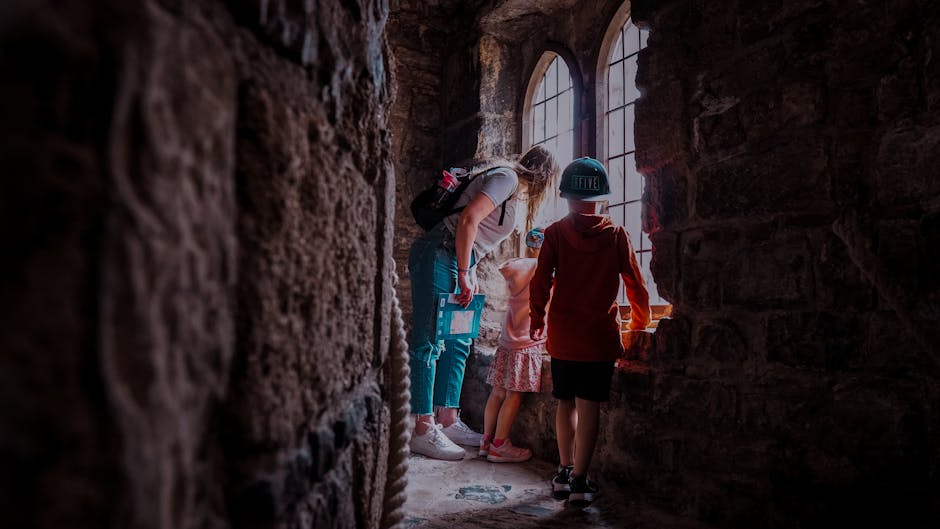
Edinburgh Castle is an excellent destination for children and families. The castle’s dramatic setting, military history, cannons, dungeons, and crown jewels capture children’s imaginations in a way few other historic sites can match. The Prisons of War exhibition is particularly popular with children, as is Mons Meg and the One O’Clock Gun. Audio guides are available for younger visitors, and the castle regularly runs family-friendly events and activities during school holidays. Children under 5 enter free. The main consideration for families is the physical terrain — the steep, cobblestoned paths require sturdy shoes and the site is not pushchair-friendly in many areas.
Is Edinburgh Castle wheelchair accessible?
Accessibility at Edinburgh Castle is limited by the site’s historic and geographic constraints. A free courtesy vehicle can transport visitors with mobility difficulties from the entrance to the Crown Square area at the summit. Level access is available to the Great Hall, Royal Palace (including the Honours of Scotland), and the Scottish National War Memorial. However, many areas — including St Margaret’s Chapel, the Prisons of War exhibition, and some viewpoints — involve steps and uneven surfaces that are not wheelchair accessible. The castle recommends contacting them in advance to discuss specific requirements and arrange the courtesy vehicle.
What is the One O’Clock Gun?
The One O’Clock Gun is a time-keeping tradition that has been observed at Edinburgh Castle since 1861. Every day at precisely 1:00pm (except Sundays, Good Friday, and Christmas Day), a gun is fired from the castle ramparts. The tradition originated as a way for ships in the Firth of Forth to set their maritime clocks — the sound of the gun could be heard clearly at the port of Leith, several miles away. Today the gun is fired using a 105mm field gun. If you’re visiting the castle around this time, the boom of the gun is startlingly loud and provides one of Edinburgh’s most distinctive experiential moments. You can also hear it clearly from Princes Street and much of the city centre.