Scott Monument: 287 Steps, Tickets and the Best Views in Edinburgh (2026)
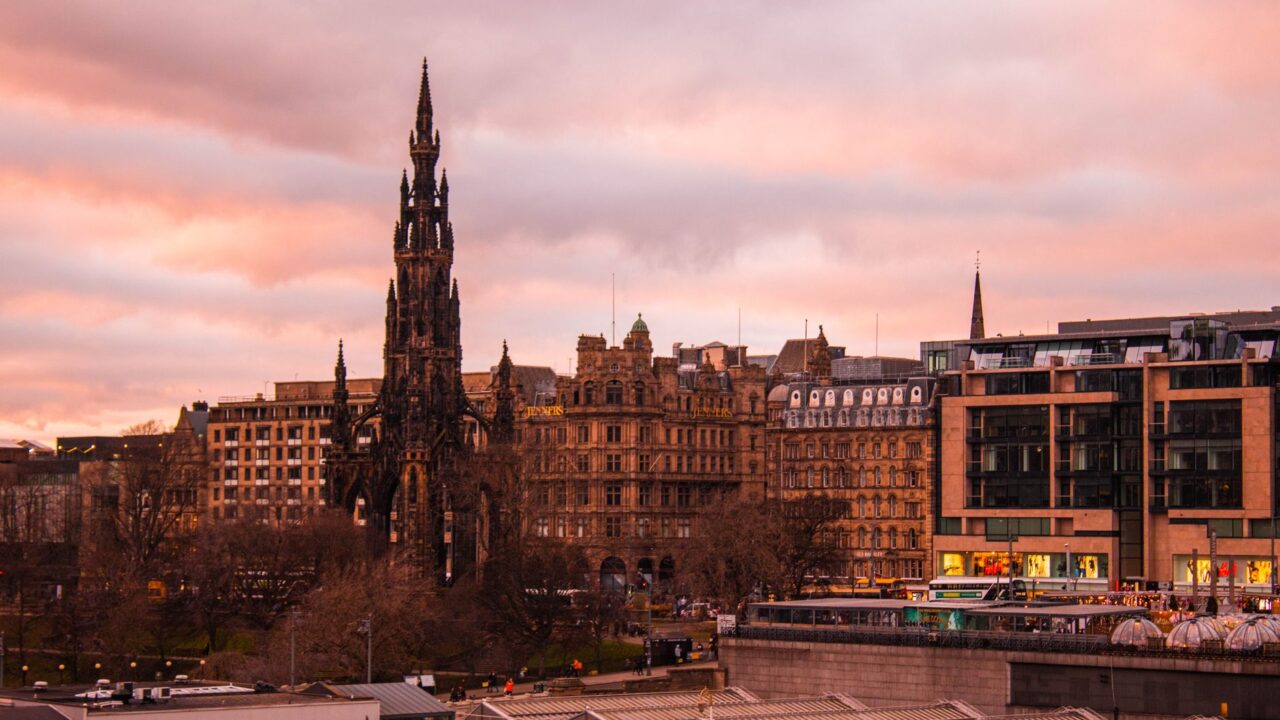
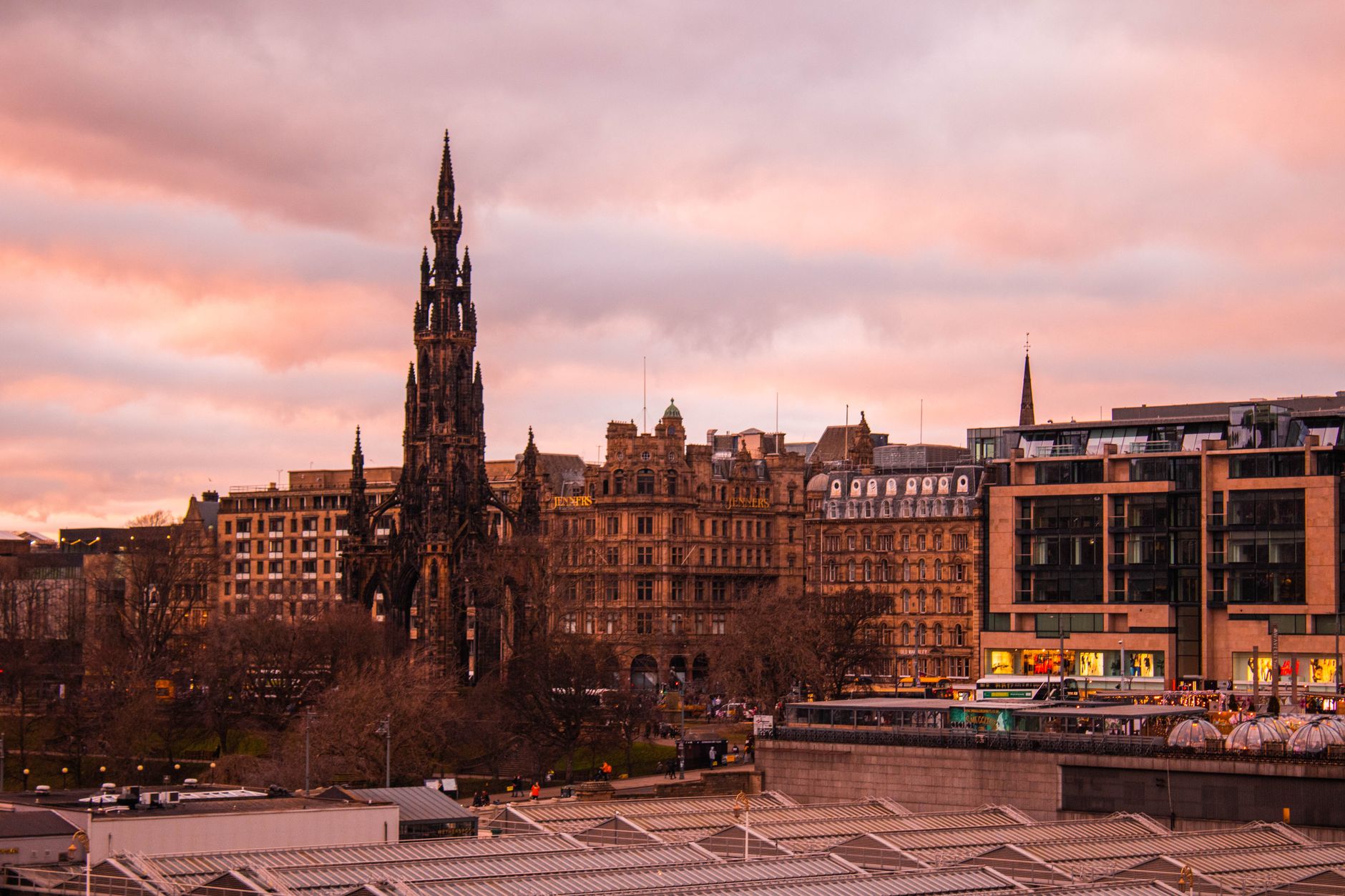
The Scott Monument is one of the largest memorials to a writer anywhere in the world, it is 61 metres of blackened Victorian Gothic sitting in the middle of Princes Street, and roughly nine out of ten people who photograph it do not go up it. That is partly because the ticket arrangements are opaque, and partly because nothing published anywhere addresses the question that actually decides the visit: whether a person who does not love confined spaces or narrow stairs should attempt the climb at all.
The honest answer is that the step count is not the problem, whether that means the 221 steps a guided tour climbs to the third level or the 287 that reach the highest platform. The problem is the last stage, where the spiral narrows to roughly shoulder width and there is no way past anyone coming down. This guide breaks the climb into its four galleries, tells you where the pinch points are, sets out the current ticketing — which is not what most listings say it is — and compares the view honestly against Calton Hill and Camera Obscura, both of which get you above the city for less effort.
At a Glance
- 221 steps to the third level on the guided tour, nearly to the top, and 287 to the highest platform, all up a spiral staircase that narrows as you climb.
- 61.11 m / 200.5 ft tall. One of the largest monuments to a writer in the world.
- Current arrangements, per Culture Edinburgh: open seven days, 10:00–17:00, guided tours every 30 minutes from 10:30, last tour 16:30, and closed daily for lunch 12:30–13:45.
- Tickets from the kiosk on arrival only. No pre-booking. Card payment only.
- Children under 5 are not permitted. This is a hard rule, not a recommendation.
- Four viewing levels. You do not have to reach the top — the first two are the ones most people should stop at.
- Foundation stone laid 15 August 1840, built 1841–44 and inaugurated on 15 August 1846, to a design by George Meikle Kemp, a self-taught joiner who entered the competition under a pseudonym.
- 68 statuettes of Scott’s characters, 64 of them visible from the ground, plus Scott himself in white Carrara marble with his dog Maida.
- No lift, no accessible route. Stairs are the only way up, from the ground.
- Free alternatives with a comparable view: Calton Hill (ten minutes’ walk, no stairs to speak of) and Princes Street Gardens for the monument itself.
Tickets, Times and the Thing Every Other Page Gets Wrong
This needs stating plainly, because the internet is confidently split on it and you can waste a morning on the wrong version.
Culture Edinburgh, the operator, describes a guided-tour model: open seven days a week from 10:00 to 17:00, tours every 30 minutes from 10:30, last tour 16:30, and a daily lunchtime closure from 12:30 to 13:45. Tickets are bought at the Scott Monument kiosk on arrival, pre-booking is not available, payment is by card only, and children under 5 are not admitted.
There are no separate summer and winter hours. The monument keeps the same 10:00–17:00 day all year, with the first tour at 10:30 and the last at 16:30, so a July visit runs to the same clock as a January one.
The honest verdict: plan around the lunch break and the last tour. Arrive between 10:00 and 12:00, or between 13:45 and 16:00, and look at the operator’s listing on the morning if the climb is the reason you are on Princes Street. Missing the 16:30 last tour by five minutes is a wasted trip. Turning up at 12:45 in the belief that it is open all day is the specific failure mode this section exists to prevent.
| What | Detail | Source |
|---|---|---|
| Days open | Seven days a week | Culture Edinburgh |
| Tours | Every 30 minutes from 10:30, last tour 16:30 | Culture Edinburgh |
| Daily closure | 12:30–13:45 for lunch | Culture Edinburgh |
| Booking | Kiosk on arrival only, no advance booking | Culture Edinburgh |
| Payment | Card only | Culture Edinburgh |
| Minimum age | Under 5s not permitted | Culture Edinburgh |
| Opening hours | 10:00–17:00 all year, no seasonal change | Culture Edinburgh |
| Price | £9 adult, £7 concession and child, £26 family | Culture Edinburgh |
Admission is £9 for an adult, £7 for a child or concession and £26 for a family ticket. Bring a card, since that is the only way to pay at the kiosk.
The Climb: Up to 287 Steps, Four Galleries, and Where It Gets Tight
The staircase is a single spiral running up inside the tower, with four levels where you can step out onto an open gallery, catch your breath and decide whether to continue. This is the most important structural fact about the monument and almost nobody explains it: you are not committing to 287 steps when you buy a ticket. You are committing to as many as you want.
First gallery — roughly a quarter of the way
A short climb on the widest section of stair. You come out at the level of the tallest Princes Street rooflines with a good view along the street, down into the gardens and across to the Old Town skyline. Plenty of visitors go no further and get most of the value. The staircase to here is comfortable for anyone who can manage two flights at home.
Second gallery — the sweet spot
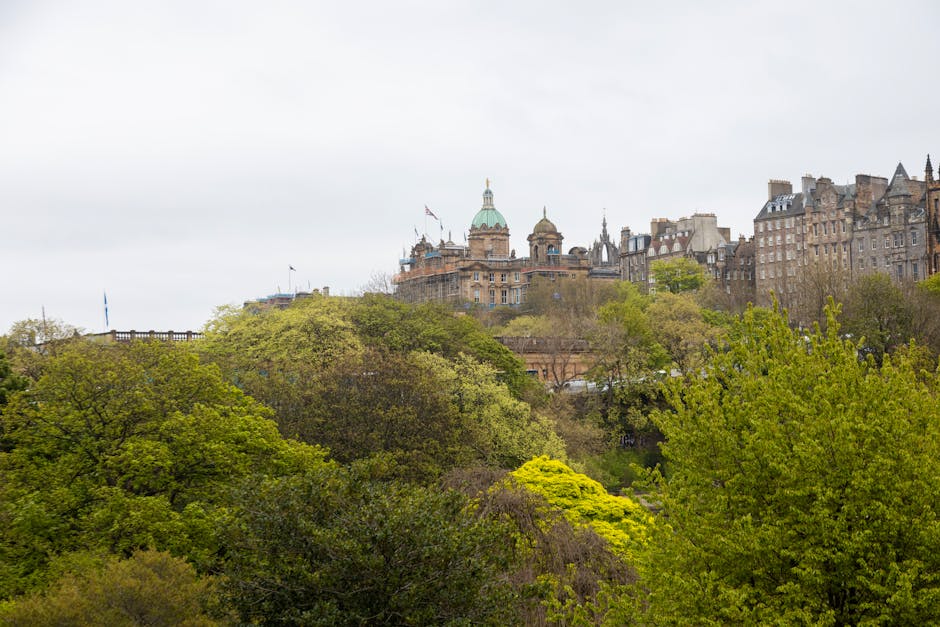
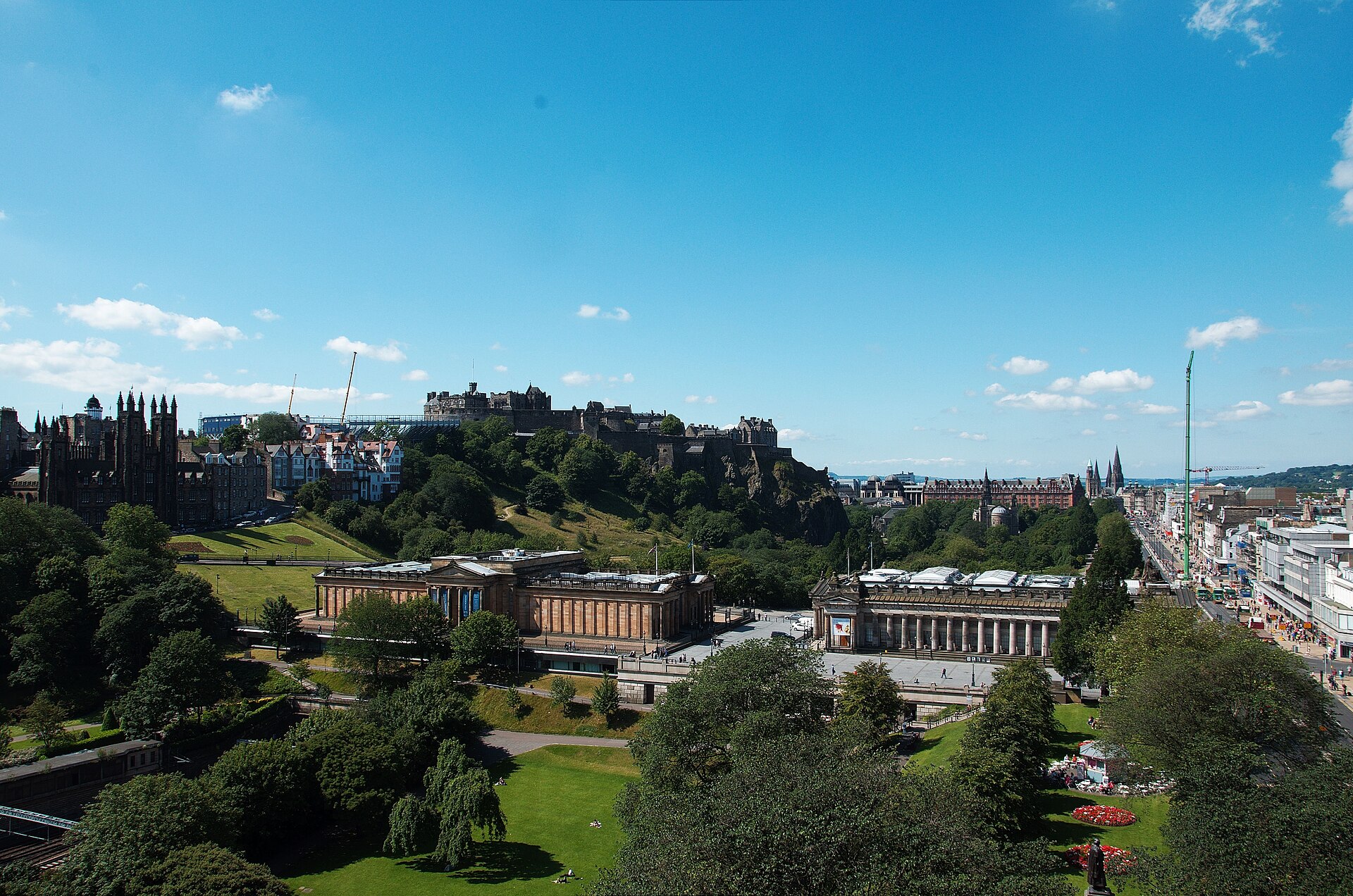
Higher, above the buildings on the north side of Princes Street, with a clean view over the gardens to the castle rock and along the ridge of the Old Town. If you only climb to one level, make it this one. The stair is narrower than the first section but still comfortable for two people passing with care. The view above this point gets higher but not materially better — you gain distance and lose the sense of being among the city rather than above it.
Third gallery — where the stair changes character
From here the spiral tightens noticeably. The treads become shallower, the central newel is closer to your shoulder, and the sense of enclosure increases. This is the stage at which people who are going to turn back tend to turn back, and there is no shame in it — the descent from here is easy.
Fourth gallery — the top, and the shoulder-width stage
The final flight is the reason the Scott Monument has the reputation it has. The spiral narrows to roughly the width of a broad-shouldered adult. There is no passing place. If someone is coming down, one of you retreats to the gallery. The stone is worn, the light is low, and there is a stretch of perhaps twenty steps where a person prone to claustrophobia will have a genuinely unpleasant time.
What you get at the top is a 360-degree view from a small open platform: the castle, the Old Town ridge, Calton Hill, Arthur’s Seat, the New Town grid running north, and on a clear day the Firth of Forth and Fife beyond it. It is a genuinely excellent view and the sense of achievement is real.
The honest verdict on the final stage: do not attempt it if narrow spaces distress you, if you have significant mobility limits, if you are carrying a large bag or a bulky coat, or if you are broad across the shoulders and easily made anxious by the thought of not being able to turn around. The second gallery gives you eighty per cent of the view for twenty per cent of the discomfort. The top is for people who want the top.
Who Should Not Climb It
Setting this out directly, because the monument’s own signage is brief and the listings pages say nothing at all.
- Anyone with a wheelchair, walking frame or significant mobility impairment. There is no lift and no accessible route. This is a 1840s tower and the stairs start at the ground.
- Children under 5 — not permitted, so do not build a family morning around it without checking who is coming.
- Anyone with serious claustrophobia. The first two galleries are fine; the top two are not, and the descent from the top is worse than the ascent because you are looking down into the spiral.
- Anyone with a heart or breathing condition that makes a 221-step climb a medical question. There is no lift down either.
- Anyone carrying a large rucksack or a pushchair. There is nowhere to leave them and nowhere to put them on the stair.
If any of those apply, the good news is that Edinburgh gives away better views than this one for free. See below.
Scott Monument vs Calton Hill vs Camera Obscura
These are the three paid-or-free elevated viewpoints in the centre of Edinburgh that visitors actually choose between, and they are good at completely different things.
| Scott Monument | Calton Hill | Camera Obscura | |
|---|---|---|---|
| Cost | £9 adult | Free | Paid, and the priciest of the three |
| Effort | 221 narrowing spiral steps on the tour, 287 to the very top | A short uphill path and some steps | Lift and gentle stairs to the rooftop terrace |
| The view | Central, tight, straight down Princes Street | The classic postcard: Old Town ridge, Arthur’s Seat, the Forth | Rooftop over the Old Town and along to the castle |
| Weather | Exposed, and pointless in low cloud | Exposed | Mostly indoors — the wet-day answer |
| Suits | People who want the climb as much as the view | Everyone, especially at sunset | Families and rainy afternoons |
| Time needed | 45–60 min | 30–60 min | 90 min or more |
The honest verdict: if what you want is a view of Edinburgh, walk ten minutes east and go up Calton Hill, which is free, easier, better and open at sunset. If what you want is to have climbed the Scott Monument — and that is a legitimate thing to want, because it is a strange and magnificent object and being inside it is unlike anything else in the city — then climb the Scott Monument. Do not climb it expecting the best view in Edinburgh, because it is not, and our guide to the best views and photo spots in Edinburgh ranks several free ones above it.
Camera Obscura is the wet-weather answer and the family answer, and it is a different sort of visit entirely.
The Monument Itself: What You Are Looking At
Walter Scott died in 1832. He was, at that point, one of the most famous living writers in Europe, the man who had substantially invented the modern historical novel and — with the stage-managed pageantry of George IV’s 1822 visit — a good deal of what the world now thinks Scotland looks like. Edinburgh held a competition for a memorial.
It was won by George Meikle Kemp, a 45-year-old joiner and self-taught architect who entered under the pseudonym John Morvo — the name of the medieval master mason of Melrose Abbey. He got the contract in 1838. The foundation stone went down on 15 August 1840, building ran from 1841 to the autumn of 1844, and the monument was inaugurated on 15 August 1846. Kemp did not see it finished: he drowned in the Union Canal in 1844.
Under the arch sits Scott himself, carved by John Steell in white Carrara marble, seated with a quill, his deerhound Maida at his side. The tower carries 68 statuettes of characters from Scott’s novels and poems, of which 64 can be picked out from the ground. Walking a slow circuit at pavement level and finding them is a genuinely good ten minutes, and it is free.
Why it is black
People assume the stone was chosen dark. It was not. The monument is built of Binny sandstone, quarried near Ecclesmachan in West Lothian, and it went up pale. The blackness is a century and a half of coal smoke bonded into an oil-bearing stone that took soot particularly well — the same soot that gave Edinburgh the nickname Auld Reekie.
A £2.36 million restoration replaced the worst-damaged sections with new Binny stone from the reopened quarry, which is why parts of the monument are visibly paler than the rest. Cleaning the whole thing has been rejected repeatedly: the soot has chemically bonded into the surface, and removing it would take the carved detail with it. The black is now part of the object.
Why Does a Novelist Get a 61-Metre Monument?
It is a fair question, and the scale of the thing only makes sense once you understand what Scott was to nineteenth-century Edinburgh. He was not simply a popular writer. He effectively invented the historical novel as a form, he was read across Europe in translation within months of publication, and he did more than any other individual to construct the idea of Scotland that the rest of the world still carries around.
The clearest example is the visit of George IV to Edinburgh in 1822, which Scott personally stage-managed. Highland dress — until then regional, and within living memory proscribed after the 1745 rising — was reissued as the national costume of the whole country, clan tartans were assigned and sold, and a kingdom that had spent a century suppressing Highland culture spent a fortnight dressed in it. The tartan shops on the Royal Mile are downstream of that fortnight. So, in a sense, is the tourism industry.
He was also, less romantically, a bankrupt. The 1825 banking crisis brought down the Ballantyne printing business, and by 1826 he was personally liable for its debts of about £130,000. Rather than declare bankruptcy he wrote his way out of it, producing novel after novel at a pace that broke his health. He died in 1832 with the debt substantially cleared by his own output. Edinburgh built him one of the largest monuments to a writer in the world, and on the evidence of the biography it is not obviously disproportionate.
The honest verdict: almost nobody reads Scott now. Waverley, Rob Roy and Ivanhoe sit unread on the shelves of people who have climbed his monument, and the 68 statuettes on the tower depict characters that essentially no visitor can name. That does not make the monument less interesting; it arguably makes it more so. It is a 61-metre Gothic spire built for a reputation that has almost entirely evaporated, standing in the middle of the busiest street in Scotland. Very few objects tell you that much about how fame works.
Practical Notes
- Where: East Princes Street Gardens, on the Princes Street side, directly opposite Jenners and a two-minute walk from Waverley station.
- Best time: first thing at 10:00 or straight after the 13:45 reopening. The middle of a summer afternoon is when the stair backs up and passing becomes a negotiation.
- Weather: in low cloud there is nothing to see from the top. Check before you pay; Edinburgh’s ridge lines vanish quickly.
- What to carry: as little as possible. A camera round your neck and nothing on your back.
- Photographs of the monument are better taken from the gardens below or from Calton Hill than from inside it. Our Edinburgh photography guide covers the angles.
- Contact: current times, prices and access details are on Culture Edinburgh’s Scott Monument page.
Opening arrangements checked against cultureedinburgh.com and edinburgh.gov.uk in September 2026, where the two sources disagree — see the table above. No official admission price is published by either. Ring ahead if the climb is the reason for your visit.
Frequently Asked Questions
How many steps are in the Scott Monument?
Guided tours climb 221 steps to the third level, nearly to the top, and the highest viewing platform is 287 steps up, all on a single spiral staircase. There are four galleries on the way where you can step out and stop, so you do not have to climb all 287 to get a view. The second gallery gives most of the benefit for a fraction of the effort.
Can you book Scott Monument tickets online?
No. Culture Edinburgh states that tickets are bought at the Scott Monument kiosk on arrival, that pre-booking is not currently available, and that payment is by card only. Any site offering you an advance Scott Monument ticket is a reseller of something the monument does not sell.
Is the Scott Monument climb claustrophobic?
The final stage is, genuinely. Above the third gallery the spiral narrows to roughly shoulder width with no passing place, worn treads and low light, for around twenty steps. Anyone who dislikes confined spaces should stop at the second gallery, which has an excellent view over the gardens to the castle and a comfortable stair.
Is the Scott Monument wheelchair accessible?
No. There is no lift beyond ground level, so the galleries can only be reached on foot; Culture Edinburgh lists the current access arrangements. The base of the monument, the Scott and Maida statue and the statuettes are all viewable for free from the surrounding gardens, which are level and accessible.
Can children climb the Scott Monument?
Children under 5 are not permitted at all. Above that age it depends entirely on the child: confident older children usually enjoy it, and the galleries give natural stopping points, but the top flight is narrow and dark and there is nowhere to leave a pushchair. Do not plan a family morning around it without checking the ages first.
How much does the Scott Monument cost?
£9 for an adult, £7 for children and concessions, and £26 for a family ticket, all bought at the kiosk on arrival. Bring a card — cash is not accepted.
Why is the Scott Monument black?
Soot. It is built of Binny sandstone from near Ecclesmachan, which was pale when it went up between 1841 and 1844, and the black is a century and a half of coal smoke bonded chemically into an oil-bearing stone. It has not been cleaned because cleaning would take the carved detail with it. A £2.36m restoration replaced the worst stone with new Binny, which is why some sections are visibly paler.
Is the Scott Monument worth it compared with Calton Hill?
For the view alone, no — Calton Hill is free, a ten-minute walk away, much easier, and gives you the classic Edinburgh panorama including Arthur’s Seat and the Firth of Forth. Climb the Scott Monument if you want the experience of being inside a very strange Victorian object, which is a good reason. Do not climb it believing it is the best viewpoint in the city.
Where to Go Next
Pair the monument with the free viewpoints in our guide to the best views in Edinburgh, and with Calton Hill ten minutes east. For the literary side, the Writers’ Museum off the Lawnmarket covers Scott alongside Burns and Stevenson and is free, and literary Edinburgh traces the whole thread. For the other great climb in the centre of town, see the complete Edinburgh Castle visitor guide, and free attractions in Edinburgh for everything the city gives away.
More Edinburgh Attractions Worth the Ticket
- St Giles’ Cathedral and the Thistle Chapel
- The Royal Yacht Britannia: tickets, decks and the verdict
- St James Quarter and Princes Street
Photo Credits
The view from the Scott Monument: Castle and Mound (5898469305) by Magnus Hagdorn, CC BY-SA 2.0, via Wikimedia Commons.