Palace of Holyroodhouse: Complete Visitor Guide (2026)
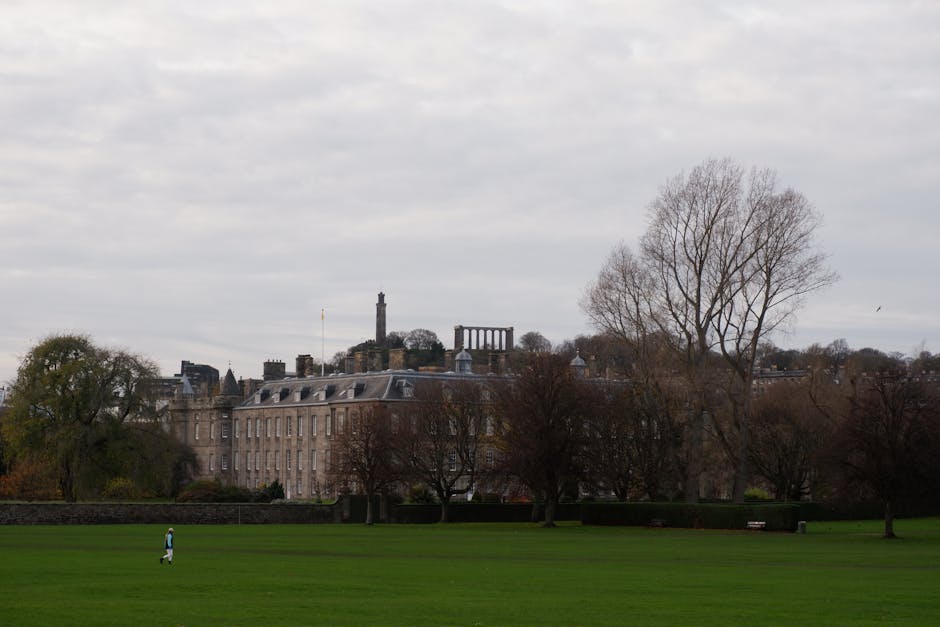
The Palace of Holyroodhouse stands at the eastern end of the Royal Mile — King Charles III’s official residence in Scotland and the most royally significant single building in the city. Where Edinburgh Castle is the medieval military stronghold, Holyroodhouse is the modern royal home: still in active use, still hosting state banquets, and still the place where the British monarch carries out official Scottish duties each summer in “Holyrood Week.” It is also the only place in Scotland where you can stand inside the bedchambers of Mary, Queen of Scots — and walk the spot where her secretary David Rizzio was murdered in 1566.
This guide is the complete visitor manual for the Palace of Holyroodhouse: tickets and prices for 2026, opening hours, what to see (chamber by chamber), the dramatic history of the building, accessibility advice, the haunting Holyrood Abbey ruins, the gardens, special tour options, and how to combine a Holyroodhouse visit with the rest of your Edinburgh trip. Information is checked against the Royal Collection Trust (which manages the palace) and Historic Environment Scotland.
What Is the Palace of Holyroodhouse?
The Palace of Holyroodhouse — sometimes called Holyrood Palace, though “Holyroodhouse” is the correct formal name — is the official residence of the British monarch in Scotland. It dates to 1128, when King David I founded the adjacent Augustinian abbey of the Holy Rood (a fragment of the True Cross supposedly held there). A royal residence developed alongside the abbey from the 15th century, and the palace as it largely stands today was rebuilt by King Charles II between 1671 and 1679 to designs by Sir William Bruce.
The palace remains in active royal use. King Charles III spends a week each summer there for “Holyrood Week” — usually the last week of June or first week of July — during which he hosts garden parties, investitures, and state functions for several thousand guests. The palace is closed to the public during these periods.
Holyroodhouse is owned by the Crown but managed for tourism by the Royal Collection Trust, which also runs Buckingham Palace, Windsor Castle, and other royal residences. Admission revenue is reinvested in conservation of the Royal Collection.
For broader context on Edinburgh’s Old Town and the Royal Mile that connects Holyroodhouse to Edinburgh Castle, see our pillar guide on the Edinburgh Royal Mile and Old Town.
Palace of Holyroodhouse Tickets & Prices 2026
Royal Collection Trust’s 2026 standard admission prices for the Palace of Holyroodhouse, booked in advance or on the day:
Adult: £22.00 in advance, £26.00 on the day.
Young person (18-24): £14.00 in advance, £17.00 on the day.
Child (5-17): £11.00 in advance, £13.00 on the day.
Disabled visitor: £11.00 in advance, £13.00 on the day, with a free access companion.
Under 5: Free.
1-Year Pass: convert your ticket for unlimited re-admission for a year; a £2 transaction fee applies when you pre-book a return visit — almost always worth doing.
There is no senior, student or family ticket. £1 tickets are available for people on Universal Credit and other named UK benefits.
Tickets include a self-guided audio tour in English, French, German, Italian, Spanish, Mandarin, Japanese, and several other languages. The audio guide is excellent and pitched well for both adults and older children.
Holyrood Abbey ruins behind the palace are included in the same admission ticket. The Holyroodhouse Garden is included in summer (April-September only).
Combined “Royal Edinburgh Ticket”: a multi-site pass covering Holyroodhouse, the Royal Yacht Britannia, and the hop-on/hop-off Royal Edinburgh bus. Worth doing if you’d visit all three anyway.
Palace of Holyroodhouse Opening Hours
Hours vary by season:
Summer (1 April – 31 October): 9:30am to 6:00pm, last admission 4:30pm.
Winter (1 November – 31 March): 9:30am to 4:30pm, last admission 3:15pm.
Closures: Christmas Day, Boxing Day, and during Royal Week (variable, typically late June/early July) when the King is in residence. Check the official Royal Collection Trust website for any unscheduled closures, particularly during state visits or for official events.
Allow 90 minutes to 2 hours for the full palace and abbey visit. Add 30 minutes for the gardens in summer.
What to See at the Palace of Holyroodhouse
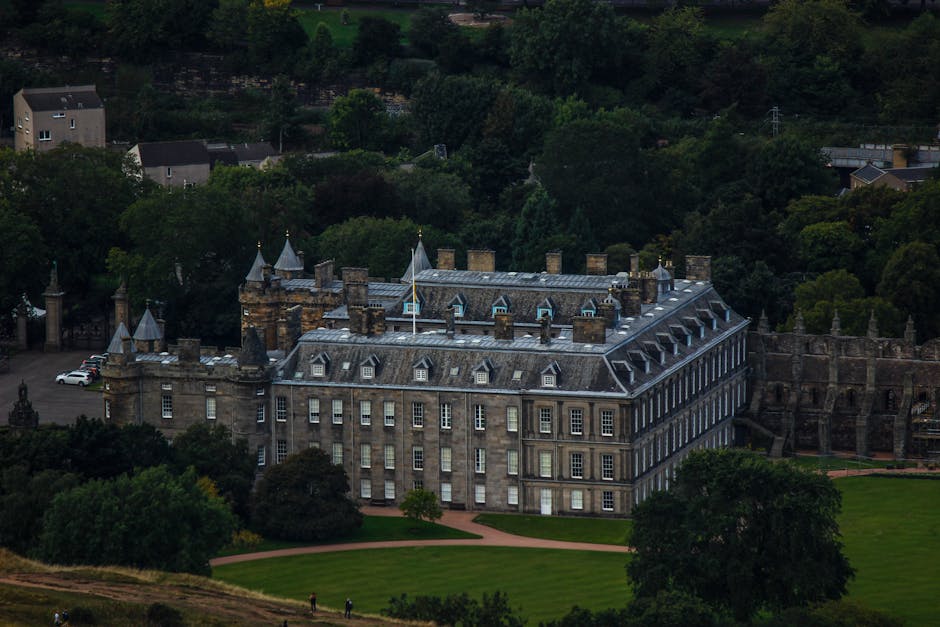
The audio-guided route takes you through the palace’s State Apartments, then up the narrow medieval staircase into Mary Queen of Scots’ chambers, then back down via the Great Stair, into Holyrood Abbey ruins, and finally to the gardens (in summer). Highlights chamber by chamber:
The Quadrangle
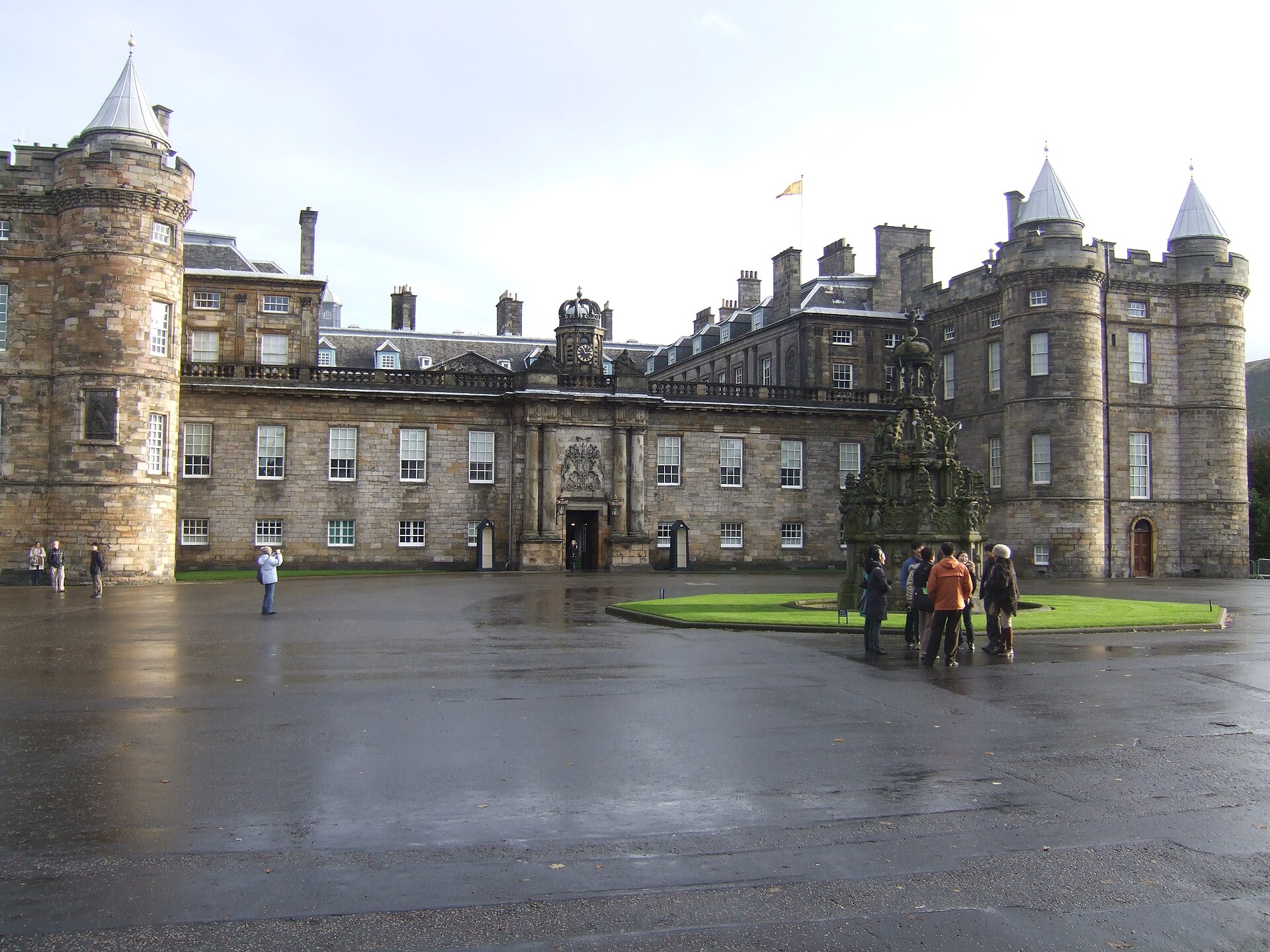
Your visit begins in the central courtyard, designed by Sir William Bruce in the 1670s in classical proportions. The bell tower above the gate originally carried Holyrood Abbey’s bell.
The Great Stair
A handsome wide staircase decorated with classical figures, leading up to the State Apartments. The climb gives a sense of arrival.
The Royal Dining Room
The room used by the King and Queen Consort for state and private dinners during Royal Week. The 18th-century portraits of monarchs and family members along the walls include George IV (whose 1822 visit to Edinburgh was the first by a reigning monarch since 1633) and Queen Victoria (whose Highland enthusiasm is hard to overstate).
The Throne Room
Set up for state ceremonies, the Throne Room contains thrones used by King George V and Queen Mary in 1911. The room is still used for investitures during Royal Week — when the King personally invests Scottish citizens with knighthoods, MBEs, and other honours.
The Evening Drawing Room
The most ornate of the state rooms, featuring 17th-century plasterwork, a portrait of Queen Anne, and a 19th-century French chandelier hanging above a Brussels tapestry.
The Morning Drawing Room
Smaller and more intimate, with a striking late-17th-century plasterwork ceiling. The carved overdoor includes the cyphers of Charles II and Catherine of Braganza.
The King’s Bedchamber
Despite the name, this is a state bedchamber rather than a private one — historically used for the formal “lever” ceremony in which the king received courtiers while dressing. The bed itself is a magnificent 17th-century four-poster with elaborate hangings.
The Great Gallery
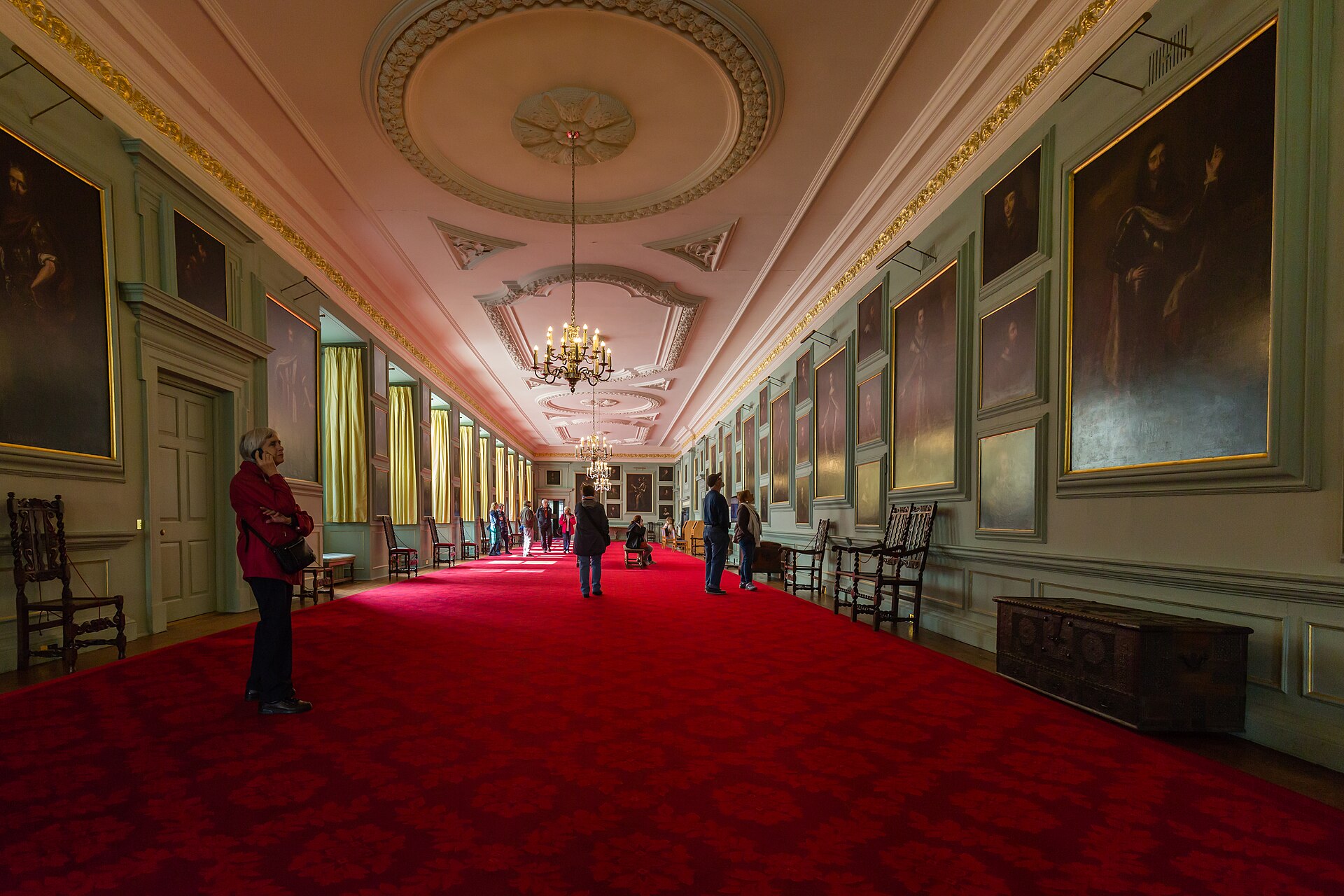
The single most arresting room in the palace. The Great Gallery runs the full length of the north range — over 50 metres long — and is hung with 96 royal portraits commissioned in 1684 by Charles II from the Dutch artist Jacob de Wet II. The portraits depict every Scottish monarch from the legendary Fergus I (the supposed first king of Scotland in 330 BC) to Charles II himself. Many are imaginary, since pre-medieval kings have no surviving portraiture — but the visual impact of the row is extraordinary.
Mary Queen of Scots’ Chambers
The single most historically powerful part of the palace is Mary Queen of Scots’ private apartments, accessed via a narrow, steep, winding staircase up into the medieval north-west tower. These are the oldest rooms in the palace — originally built for King James V in the 1530s, then occupied by his daughter Mary from her return from France in 1561 to her forced abdication in 1567.
The Outer Chamber
The first room you enter, used as Mary’s audience room. The famous floor stains here are said to be the bloodstains of David Rizzio — Mary’s Italian-born private secretary — who was murdered in front of her on 9 March 1566.
The Bedchamber
Mary’s private bedchamber, with original 17th-century ceiling and a 19th-century four-poster bed. Among the most interesting objects: the Darnley Jewel, a richly enamelled gold heart-shaped locket commissioned by Lady Margaret Douglas as a memorial to her son, Lord Darnley.
The Supper Room
The tiny chamber where Mary was dining with friends including David Rizzio on the evening of 9 March 1566 when her husband Lord Darnley led a group of conspirators into the room and stabbed Rizzio to death — 56 wounds, in front of the pregnant Mary. The supper room is preserved at near-original size; standing in it, reading the audio guide, is one of the most chilling experiences available in Edinburgh tourism.
The Stair
The narrow concealed staircase by which the assassins entered Mary’s apartments. Still climbable today, still claustrophobic, still atmospheric.
Holyrood Abbey
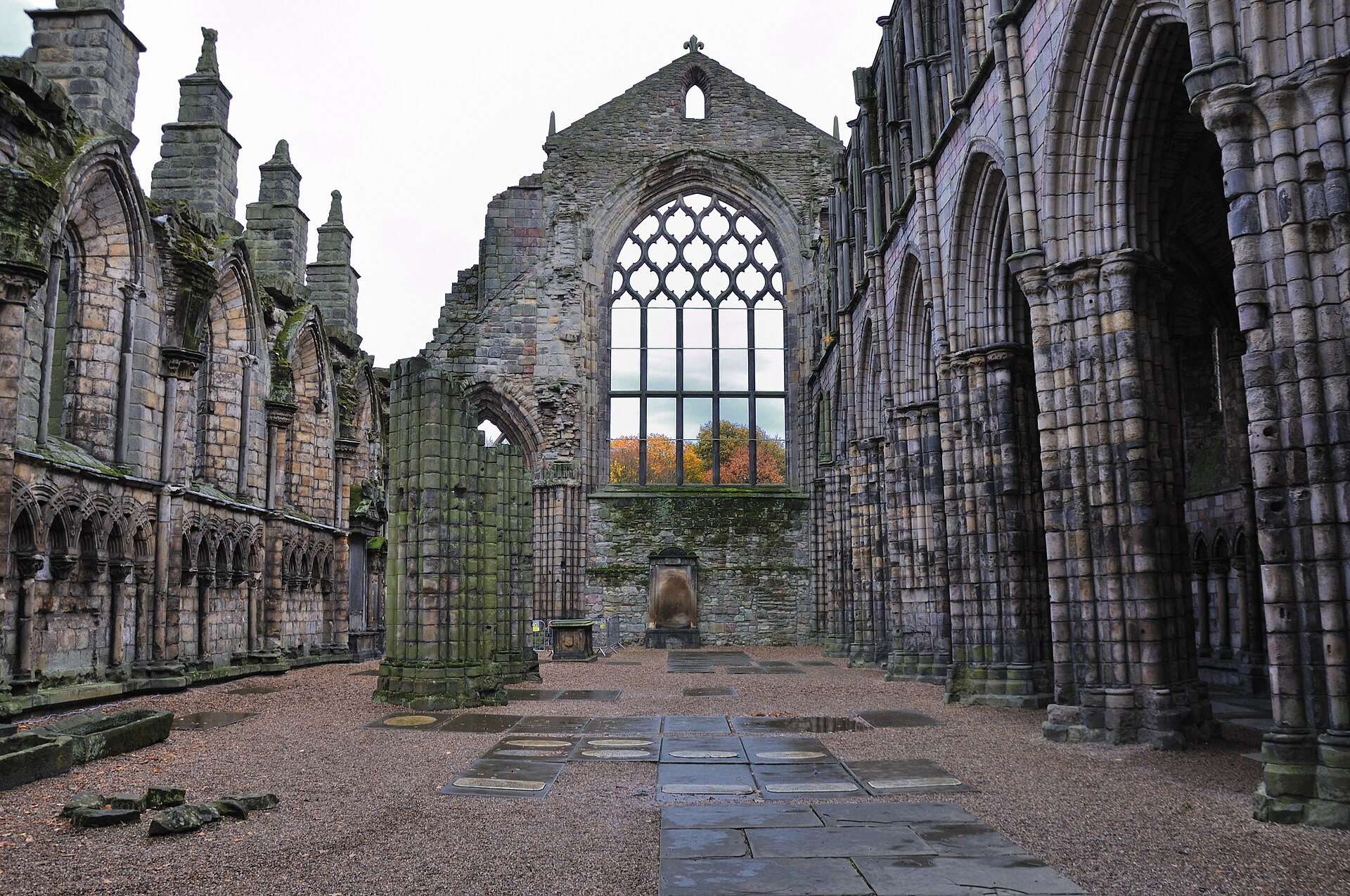
Behind the palace stand the ruins of Holyrood Abbey, founded by King David I in 1128 as an Augustinian house. The abbey was the original royal centre at the site — the palace developed alongside as guest accommodation for visiting monarchs. The abbey hosted the 1370 royal wedding of King Robert II, the 1503 wedding of King James IV to Margaret Tudor (a marriage that united the Stewart and Tudor lines and made the Union of the Crowns inevitable a century later), and the 1565 coronation of Mary Queen of Scots’ second husband, Lord Darnley.
The abbey was systematically damaged during the Reformation and the Wars of the Three Kingdoms. The roof finally collapsed in 1768. Today the roofless nave is a hauntingly beautiful Gothic ruin, especially on a still grey afternoon. Several Scottish monarchs are buried here including David II, James II, and James V.
Allow 20-30 minutes for the abbey alone.
The Palace Gardens
Open in summer (April through September), the palace gardens cover about 10 acres of formal lawns, ancient yew trees, and Holyrood Park’s edge. Highlights include:
The Garden Front: A clean classical Bruce facade looking out across the lawns to Salisbury Crags.
The King’s Garden: A small private garden traditionally used by the King during Royal Week.
Queen Mary’s Bath House: A small two-storey Tudor garden building on the abbey side, supposedly used by Mary Queen of Scots for bathing in white wine. The story is largely apocryphal but the building is genuine.
Sundial: An elaborate 17th-century sundial in the centre of the lawn.
The History of Holyroodhouse
The palace’s history is densely entwined with Scottish monarchy:
1128: King David I founds Holyrood Abbey on the site, inspired (according to legend) by a vision of a stag with a cross between its antlers.
1503: Royal wedding of James IV to Margaret Tudor at Holyrood Abbey.
1530s: James V builds the medieval north-west tower as part of the existing royal residence beside the abbey.
1561: Mary Queen of Scots returns from France and takes up residence at Holyroodhouse.
9 March 1566: David Rizzio is murdered in Mary’s supper room.
1567: Mary forced to abdicate; her son James VI grows up at various Scottish residences.
1603: James VI of Scotland becomes James I of England, uniting the crowns. The court moves largely to London.
1671-1679: Charles II rebuilds the palace to designs by Sir William Bruce in the form it largely retains today.
1745: Bonnie Prince Charlie occupies Holyroodhouse during the Jacobite Rising, holding court there for several weeks.
1822: King George IV stays at Holyroodhouse during his state visit — the first visit by a reigning monarch since 1633.
1850s: Queen Victoria refurbishes Mary Queen of Scots’ chambers, adding much of the Victorian interpretation that survives today.
1920: The annual Royal Week (originally the Garden Party) begins.
2023: King Charles III holds his first Royal Week as monarch at Holyroodhouse.
Holyroodhouse vs Edinburgh Castle: Should You Visit Both?
Most first-time Edinburgh visitors come for the castle and miss Holyroodhouse. This is a mistake. The two royal sites complement each other beautifully and represent different chapters of Scottish history.
Edinburgh Castle is the medieval military stronghold — siege history, crown jewels, Scottish national identity, panoramic views.
Holyroodhouse is the early-modern and modern royal residence — Mary Queen of Scots, the Stewart court, the active monarchy. It is a working palace; the castle is a fortress turned museum.
Together they bookend the Royal Mile and tell the full story of Scottish royal power. Allow a full day for both: castle in the morning, lunch and walk down the Royal Mile, Holyroodhouse in the afternoon. For the castle, see our companion guides on Edinburgh Castle tickets, prices and opening hours and what to see inside Edinburgh Castle.
Tips for Visiting Holyroodhouse
Book online direct. The Royal Collection Trust website (rct.uk) has the cheapest tickets and live timed-entry availability.
Convert to a 1-Year Pass. Converting your ticket gives you unlimited re-admission for a year; Royal Collection Trust charges a £2 transaction fee only when you pre-book a return visit. Always do this — even if you’re only in Edinburgh for a few days, it’s the better value purchase.
Avoid Royal Week. Check the Royal Collection Trust website’s calendar before booking — the palace closes for Royal Week (usually last week of June or first week of July) and several smaller royal events.
Allow 90 minutes to 2 hours. Most visitors complete the audio tour in this time. Add 30 minutes for the abbey, plus 30 minutes for summer gardens.
Wheelchair access: The palace is largely accessible via lifts and step-free routes, but Mary Queen of Scots’ chambers are accessed only by the narrow, steep, winding original 16th-century staircase — not wheelchair accessible. Concessionary rates apply for visitors with disabilities; one essential carer enters free.
Photography: Photography is permitted in most areas without flash. Tripods are not allowed. Photography of the State Apartments is generally permitted (rules occasionally change for specific exhibits).
Toilets: Available in the gift shop area; no facilities inside the palace itself once you start the tour route.
Café: The Cafe at the Palace serves morning coffee, lunch, and afternoon tea. Located in the entrance area, accessible without admission ticket.
Holyrood Park: After the Palace
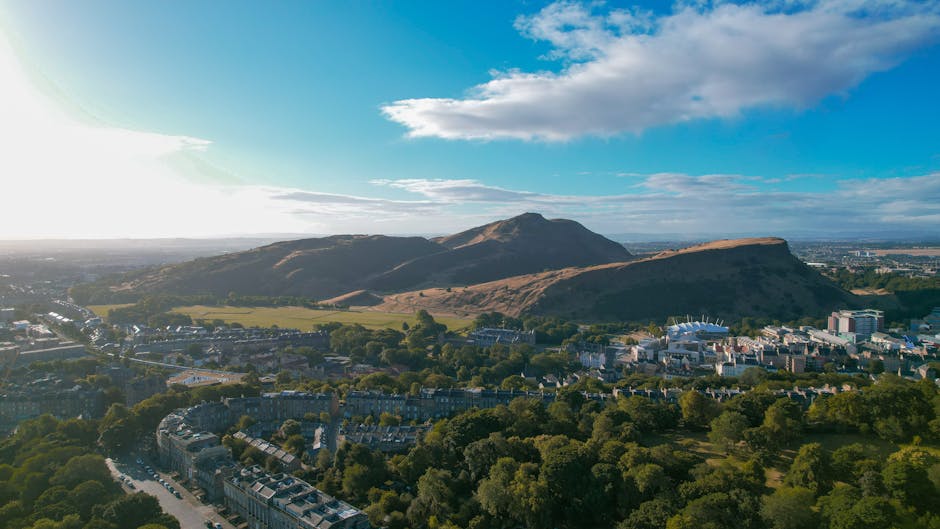
The palace sits at the edge of Holyrood Park, the 650-acre royal park that contains Arthur’s Seat, Salisbury Crags, and several lochs. Don’t leave Holyroodhouse without at least walking 10-15 minutes into the park — the views back at the abbey ruins from the lower slopes are extraordinary.
For the energetic, climbing Arthur’s Seat (60 minutes round trip) immediately after a Holyroodhouse visit makes for one of the best half-day plans in Edinburgh tourism. For more on Holyrood Park and views, see our guide to best views in Edinburgh.
Frequently Asked Questions
What is the Palace of Holyroodhouse?
The Palace of Holyroodhouse is the official residence of King Charles III in Scotland. It dates to 1128 in its earliest form (Holyrood Abbey) and was largely rebuilt by Charles II in the 1670s. It remains in active royal use for state functions, particularly during the annual Royal Week each summer.
Where is the Palace of Holyroodhouse?
The palace stands at the eastern end of Edinburgh’s Royal Mile, opposite the modern Scottish Parliament Building, immediately adjacent to Holyrood Park and Arthur’s Seat. It is approximately a 20-minute walk from Edinburgh Castle along the Royal Mile.
How much are tickets to the Palace of Holyroodhouse?
Adult tickets cost £22.00 in advance or £26.00 on the day. Children aged 5-17 pay £11.00 in advance (£13.00 on the day), young people aged 18-24 pay £14.00 (£17.00), and under-5s go free. There is no family ticket. Book in advance and convert your ticket to a 1-Year Pass for a year of re-admission.
Is the Palace of Holyroodhouse worth visiting?
Yes, particularly for visitors interested in Mary Queen of Scots, Stewart royal history, or the active modern monarchy. The chambers where Mary lived and where David Rizzio was murdered are unique to Edinburgh; the Great Gallery’s 96 royal portraits are extraordinary; the abbey ruins are atmospheric. Most first-time Edinburgh visitors who skip Holyroodhouse later regret it.
How long does it take to visit the Palace of Holyroodhouse?
Allow 90 minutes to 2 hours for the palace and abbey. Add 30 minutes for the gardens in summer. The audio tour is paced for 90-120 minute visits and gives a thorough but not exhausting walk-through.
What is Holyrood Abbey?
Holyrood Abbey was founded in 1128 by King David I as an Augustinian monastic house. Several Scottish monarchs were married, crowned, or buried there. The roof collapsed in 1768 and the abbey survives as a roofless Gothic ruin behind the palace, included in standard admission.
Did Mary Queen of Scots live at Holyroodhouse?
Yes. Mary Queen of Scots lived at Holyroodhouse from 1561 to 1567. Her chambers in the medieval north-west tower are preserved largely as they were and are open to visitors. The murder of her secretary David Rizzio occurred in her supper room on 9 March 1566.
Can you see the Crown Jewels at Holyroodhouse?
No. The Honours of Scotland (the Scottish Crown Jewels) are displayed at Edinburgh Castle, not Holyroodhouse. The Stone of Destiny was moved to Perth Museum in 2024.
When does the King stay at Holyroodhouse?
King Charles III stays at Holyroodhouse during Royal Week each summer — typically the last week of June or first week of July. During this period the palace is closed to the public. Specific dates vary year-to-year and are published on the Royal Collection Trust website.
Is the Palace of Holyroodhouse haunted?
The palace features in many lists of haunted Scottish sites, particularly the room where David Rizzio was murdered. Multiple ghost-tour operators include Holyroodhouse stories. The Royal Collection Trust does not promote the palace as haunted, but the supper room is genuinely atmospheric.
Can you visit the Palace of Holyroodhouse with kids?
Yes. The palace is suitable for children aged 6+; younger children may find the audio tour pace slow. The murder of Rizzio story is genuinely gripping for older children. Audio guide includes a children’s track. Children aged 5-17 pay £11.00 in advance, and under-5s go free.
Final Thoughts
The Palace of Holyroodhouse is the missing half of Edinburgh’s royal story. Without it, you have only the medieval military fortress at the top of the Royal Mile; with it, you have the full arc of Scottish kingship, from David I’s 1128 abbey to Charles III’s modern Royal Week. Allow 2 hours, take the audio guide, climb the narrow stair to Mary’s chambers, stand in the supper room, walk through the abbey ruins, and finish on the lawns looking up at Arthur’s Seat. The combination is genuinely one of the best two hours in British heritage tourism.
For more, see our pillar guide on the Edinburgh Royal Mile and Old Town, our piece on Edinburgh Castle, and our companion guide on best views in Edinburgh. Plan a full royal day, and you’ll see the heart of Scotland’s royal history in a single walk.
The Rest of Holyrood
- The Scottish Parliament: free tours and the debating chamber
- Holyrood Park beyond Arthur’s Seat: every route
Photo Credits
The roofless nave of Holyrood Abbey: 2010-11-05 14-14-20 United Kingdom Scotland Newington by Hansueli Krapf, CC BY-SA 3.0, via Wikimedia Commons.
The Great Gallery at Holyroodhouse: Holyrood Palace – Galerie by Otto Domes, CC BY-SA 4.0, via Wikimedia Commons.
Holyroodhouse from the forecourt: Edinburgh DSCF2952 (4126428136) by Simon Whittaker, CC BY-SA 2.0, via Wikimedia Commons.