Edinburgh Castle Photography Guide: Best Angles & Spots (2026)
Edinburgh Castle is one of the most photographed buildings in Britain — and one of the easiest to photograph badly. Stand in the wrong spot and you’ll come away with the same flat snapshot millions of tourists carry home each year. Stand in the right spot at the right hour, and the castle delivers some of the most dramatic urban-architecture images you’ll ever shoot. The difference is knowing exactly where to set up, what time to arrive, and how to frame the rock that’s been photographed for nearly two centuries.
This guide covers everything you need to plan an Edinburgh Castle photography session: the 15 best photo spots in and around the castle, sunrise and sunset times by month, golden-hour and blue-hour timing, lens recommendations, tripod and drone rules, the best photo locations inside the castle walls, weather strategies, and the lesser-known angles locals know but tourists rarely find. Whether you’re a serious landscape photographer with a full kit or a phone-only traveller wanting one stunning shot, the playbook below will get you a portfolio-worthy Edinburgh Castle image.
Why Edinburgh Castle Is So Photogenic
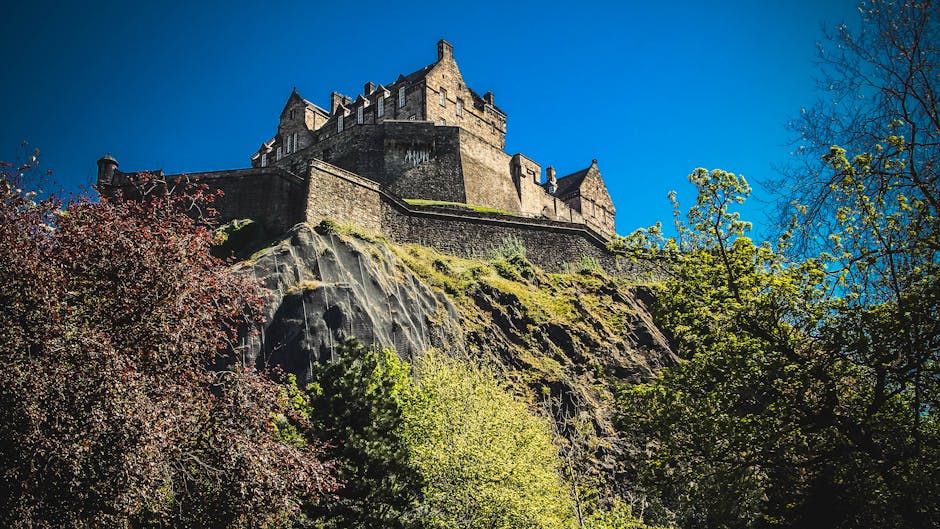
The castle’s photographic appeal is built into its geology. It sits atop a 130-metre volcanic plug, surrounded on three sides by sheer cliffs, with a clean foreground (Princes Street Gardens) on its north flank that gives photographers an unobstructed elevated subject. The medieval skyline of spires and tenements unchanged since the 17th century gives natural human-scale context. The sandstone glows almost orange at golden hour. And the whole site is walkable — every major external photo location is within 15 minutes of every other location.
Few cities in the world combine this density of icons (castle, gardens, monument, hills, sea) within such a small geographic area. For a comprehensive view of all Edinburgh photography spots, see our companion guide on best views in Edinburgh.
The 15 Best Edinburgh Castle Photo Spots
Listed in roughly order of dramatic impact, with timing notes for each.
1. Calton Hill (the iconic skyline)
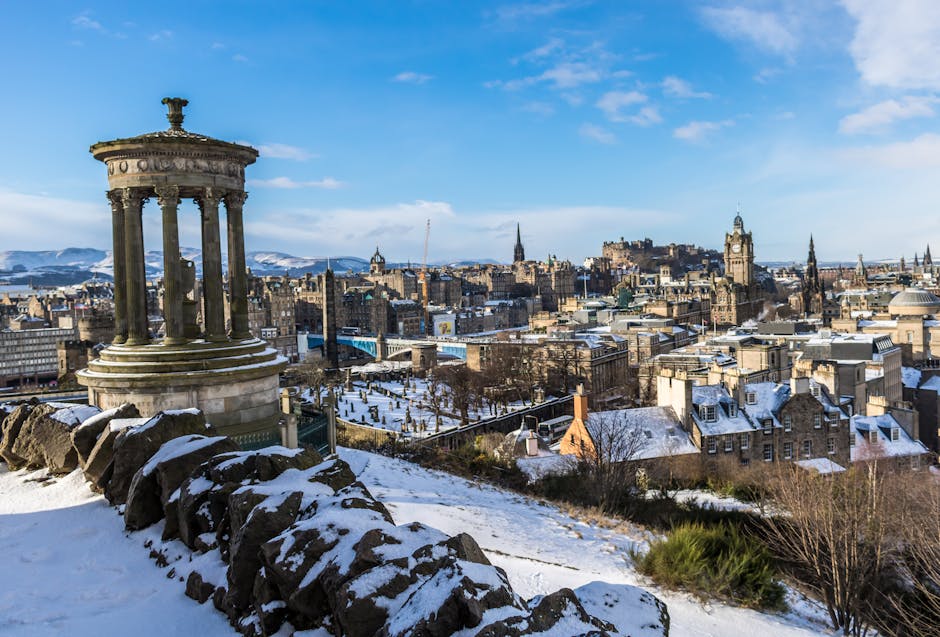
Calton Hill, 15 minutes’ walk east of Princes Street, is where every postcard image of Edinburgh’s skyline is shot. The Dugald Stewart Monument framed against the castle and the Old Town is the canonical Edinburgh composition. Best at 30 minutes before sunset; alternatively dramatic at sunrise. Arrive 90 minutes before sunset in summer to claim a spot. Sunset times: 3:40pm in late December, 10pm in late June.
2. Princes Street Gardens (West End, classic foreground)
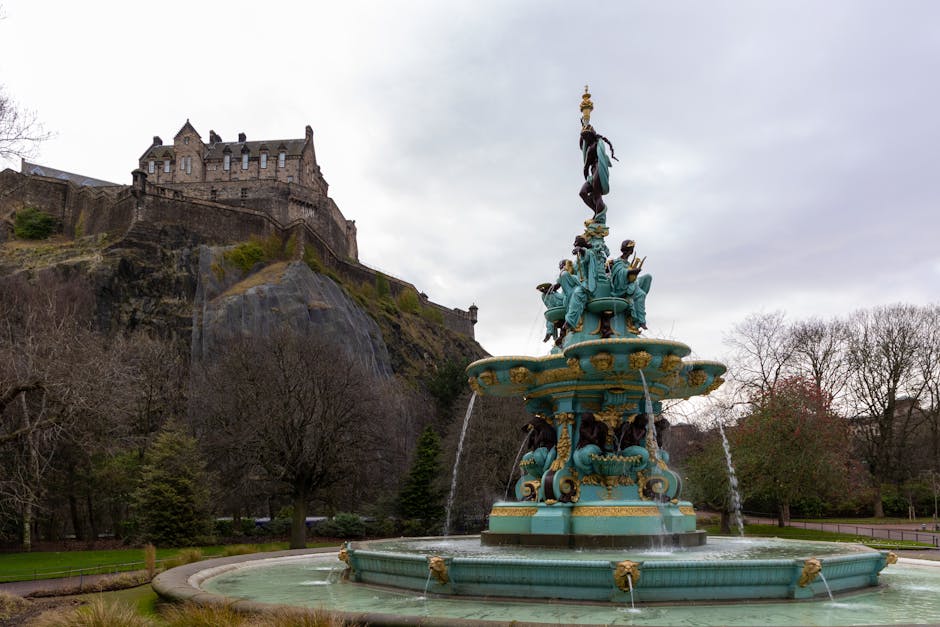
The classic “castle towering above lush gardens” shot is best from the western end of Princes Street Gardens, near the Ross Fountain. In summer, foreground flowers fill the frame; in winter, the Edinburgh’s Christmas Wheel or ice rink at the eastern end provides foreground interest.
3. Ross Fountain (gold and castle)
The recently-restored Ross Fountain in West Princes Street Gardens is teal and gold, and from a low angle the castle slots perfectly into the upper third of the composition. Best in late afternoon when the sun catches the gilded fountain top.
4. The Vennel (the secret framed castle)
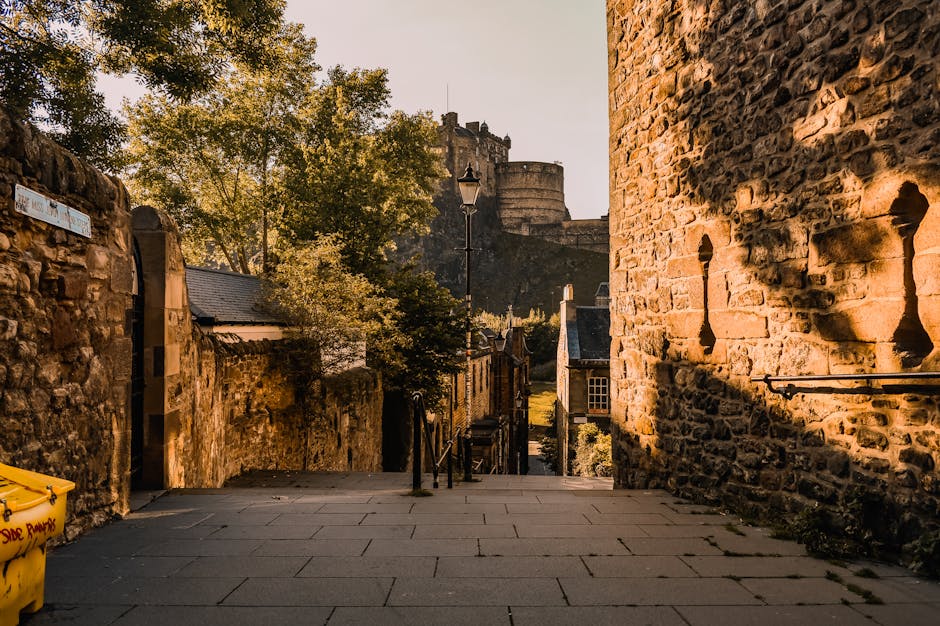
The Vennel is a tiny stone staircase off Heriot Place near the University, frequently overlooked by tourists. From the bottom of the steps, the castle appears framed perfectly inside an arch in the medieval Flodden Wall. Best at blue hour or in haar mist. Crowds are minimal — though the spot has been increasingly Instagrammed in recent years.
5. Grassmarket (looking up)
The Grassmarket — the historic market square below Castle Rock — gives a dramatic upward view of the castle’s south wall. Highest impact in low evening light or after rain when the cobbles glisten. Stand near the Last Drop pub and frame the castle past the lamp posts.
6. Camera Obscura Rooftop Terrace
The Camera Obscura at the top of Castlehill includes a free rooftop terrace as part of its admission. Views are at near-castle elevation, looking south down to the Grassmarket and east along the Royal Mile. A useful alternative angle on the castle walls themselves.
7. Castle Esplanade (in front of the gates)
The castle’s open paved forecourt is free to walk on at any time. Looking back east, you have a panoramic Princes Street view; looking towards the gates, you have the dramatic medieval portcullis architecture. Best at golden hour. Note: the Esplanade closes nightly during the August Tattoo to set up tiered seating.
8. National Museum of Scotland Roof Terrace
Free, open during museum hours, accessed by lift on level 7. The wide rooftop terrace offers a 360° city view including a clean look at Edinburgh Castle from the south-east. Almost no other photographers ever find this spot.
9. Heriot’s School from Greyfriars Kirkyard
Greyfriars Kirkyard’s eastern boundary frames the towers of George Heriot’s School (said to have inspired Hogwarts) with the castle visible above. A different and quieter composition than the typical castle-only shots. Best in autumn for atmosphere.
10. Salisbury Crags (Radical Road)
The Radical Road path along the foot of Salisbury Crags gives a dramatic side-profile of the castle from the south-east. The angle is unusual — most tourists shoot from the flat ground in front of the castle. Best at sunrise or in low autumn light.
11. Arthur’s Seat Summit
251 metres up, with a 360° city view including the castle in the middle distance. Long-lens territory: a 70-200mm or 100-400mm captures clear castle compositions. Allow 60 minutes’ uphill walk to reach the summit.
12. Blackford Hill
Blackford Hill, 25 minutes’ walk south of the city centre, gives a long-distance skyline shot of the castle from the south. The composition is the cleanest “wide skyline” angle — almost nobody else ever shoots from here. Pair with the Hermitage of Braid for a half-day session.
13. The Mound
Looking up from the foot of the Mound (where the National Galleries of Scotland sit), you get an unusual angle on the castle and the Royal Mile rising together. Best at blue hour with traffic light trails on the Mound itself.
14. Inside the Castle: Half Moon Battery
The east-facing curving stone gun emplacement gives a dramatic outward view down across Princes Street and the New Town. Best at golden hour. Tripods are not permitted inside castle buildings but can be used on external ramparts and the Esplanade.
15. Inside the Castle: St Margaret’s Chapel
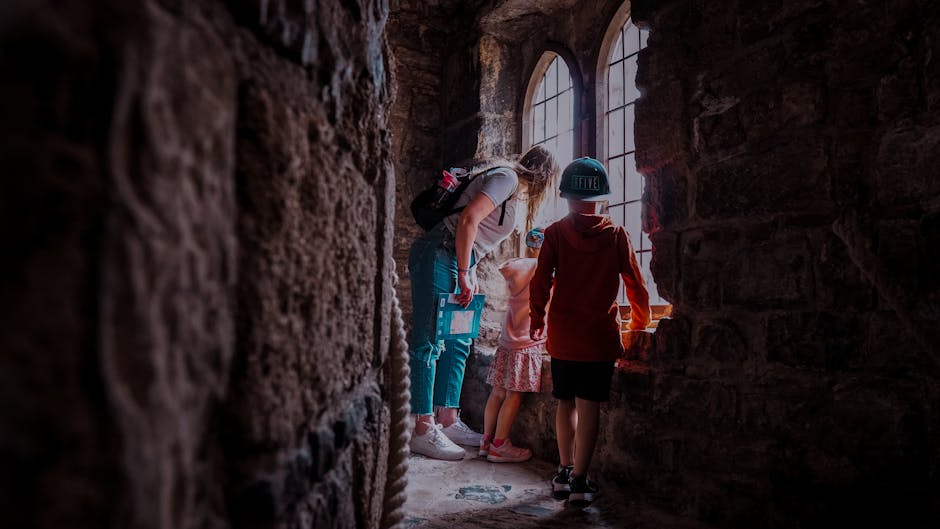
The smallest interior space in the castle, with a single chevron-arched chancel and stained-glass windows. The compact Romanesque interior responds beautifully to morning light through the east window. No flash, no tripods inside.
Best Time of Day for Edinburgh Castle Photography
Sunrise (best for empty city compositions)
Edinburgh sees an unusually quiet sunrise — even in summer, almost no tourists. Calton Hill, Arthur’s Seat, Dean Village, and the Castle Esplanade are all most beautiful and most empty at first light. Sunrise times in Edinburgh: 8:35am in late December, 4:30am in late June.
Golden Hour (warm sandstone tones)
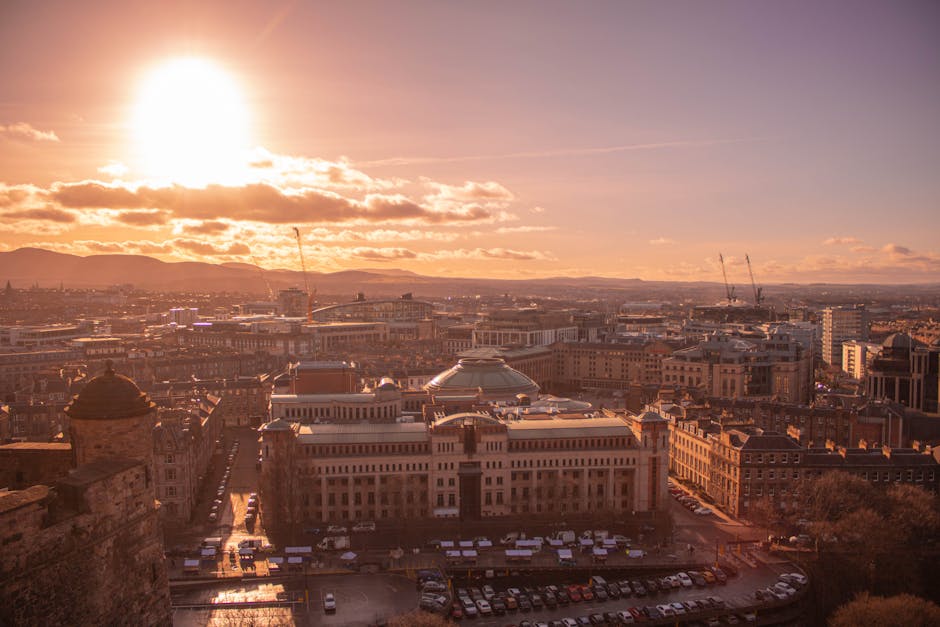
The hour before sunset is the prime time for warm, low-angle light on Edinburgh’s sandstone. The castle glows almost orange. Plan your viewpoint in advance — some are blocked by buildings during specific months due to the sun’s position.
Blue Hour (most dramatic mood)
The 30 minutes after sunset, when the sky retains a deep blue while artificial lights take over. Edinburgh’s gas-lit closes and the floodlit castle make this the best time for the moodiest images. The Vennel and the Grassmarket especially benefit.
Mid-Day (avoid in summer)
Harsh overhead light, deep shadows, and high tourist density make midday the least photogenic time at most external viewpoints — especially in clear summer weather. If midday is your only option, look for compositions that hide the harsh light: closes, narrow streets, north-facing walls.
Mist and Haar (rare but spectacular)
Edinburgh occasionally gets a “haar” — a sea mist rolling in from the North Sea — particularly in spring and autumn. The castle in haar, with the rock floating above a sea of cloud, is one of the most surreal photographic conditions in Britain. Watch local weather alerts in October-November.
Snow (most years, briefly)
Edinburgh gets significant snowfall on average 2-5 days a year. If forecast, plan to be on Calton Hill or Salisbury Crags at sunrise the next morning before the snow melts.
Best Camera Equipment for Edinburgh Castle
Lenses
Wide-angle (14-35mm): Essential for The Vennel arch, the Esplanade, narrow closes, and dramatic foreground compositions. Allows you to fit the castle and a closer foreground in one frame.
Standard zoom (24-70mm or 24-105mm): The most useful single lens for Edinburgh Castle photography. Covers most viewpoints and most subjects.
Telephoto (70-200mm or 70-300mm): Critical for shots from Calton Hill, Arthur’s Seat, Salisbury Crags, and Blackford Hill, where the castle is in the middle distance. Compresses the perspective for that classic “huge castle behind small foreground” feel.
Long telephoto (100-400mm): Useful for very long-distance compositional shots from Arthur’s Seat or Blackford Hill, and for isolating specific castle architectural details.
Tripods
Tripods are permitted at all public outdoor viewpoints — Calton Hill, Princes Street Gardens, the Esplanade, the Vennel. They are not permitted inside castle buildings (Crown Room, Royal Palace, Great Hall, etc.) due to safety and crowd flow. A travel tripod (carbon fibre) is the best compromise for a Edinburgh photography trip.
Filters
Polarising filter: Useful for cutting glare on wet sandstone and saturating the sky.
Neutral density (ND) filter: Essential for long-exposure shots of traffic on Princes Street at blue hour, water in the Ross Fountain, or the Water of Leith.
Graduated ND filter: Useful for balancing the bright Edinburgh sky against a darker foreground at sunrise/sunset.
Accessories
A weather-resistant camera bag (Edinburgh weather is unpredictable). Spare batteries (cold drops battery life). Lens cloth (Edinburgh drizzle is a thing). A small umbrella that can keep your camera dry between shots. Comfortable walking shoes for the cobbled streets.
Mobile Phone Photography
For phone-only photographers, modern iPhone Pro and Pixel Pro cameras handle Edinburgh’s scenes excellently. Use the wide and telephoto lenses where appropriate. Lock exposure on the castle to prevent the dynamic-range stretch from blowing out the highlights. Use Live Photo for blue-hour scenes; long-exposure compositing apps work well in low light.
Photography Rules at Edinburgh Castle
Personal photography is permitted throughout almost all of the castle interior and exterior. Specific rules:
Crown Room: Photography permitted but flash is prohibited.
Scottish National War Memorial: Photography is restricted out of respect.
Royal Palace: Photography permitted, no flash.
Tripods and selfie sticks: Not permitted inside any castle buildings; allowed outdoors on the Esplanade and external batteries.
Drones: Strictly prohibited everywhere on castle grounds. There are no exceptions, even for licensed commercial drone operators. Holyrood Park, the broader city centre, and most of central Edinburgh have additional drone restrictions; check the Civil Aviation Authority’s flight restriction maps before flying anywhere in the area.
Commercial photography: Requires advance permission from Historic Environment Scotland. Apply at least 4 weeks ahead via their website.
Wedding photography: Permitted at certain locations on the Esplanade and inside St Margaret’s Chapel (with separate booking and fees).
Edinburgh Castle Photography Strategy by Month
Each month offers different photographic opportunities:
January & February: Snow possible, atmospheric haar mist, low golden-hour light from 8:30am to 4pm. Lighting is short but excellent.
March: Spring crocuses in Princes Street Gardens, lengthening daylight, occasional snow. Good shoulder month.
April: Cherry blossom in Princes Street Gardens and the Meadows. Sunset 8pm. Great month overall.
May: Bluebells in Holyrood Park. Long days. Late evening blue hour (9-9:30pm).
June: Longest days, sunset after 10pm. Quiet sunrise (4:30am). Best month for late-evening blue hour.
July: Flowers at peak. Tattoo seating begins to appear on Esplanade from late July.
August: Tattoo on the Esplanade nightly — extraordinary photography but the Esplanade is closed/restricted to spectators. Festival crowds make tourist-free shots difficult.
September: Golden autumn light begins. Crowds drop after Festival ends. Excellent month.
October: Russet leaves around Castle Rock. Possibly the best autumn month. Haar mist common.
November: Atmospheric, often misty. Sunset around 4:30pm. Christmas Markets begin late month.
December: Christmas lights everywhere. Wheel and ice rink in Princes Street Gardens. Very short daylight (sunset 3:40pm). Hogmanay fireworks 31st.
Edinburgh Castle Night Photography
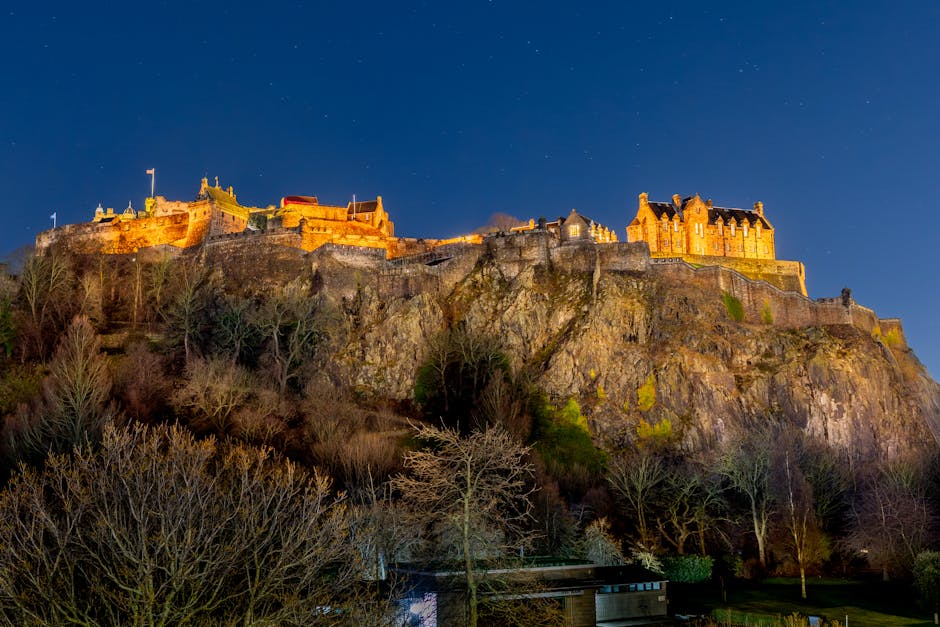
The floodlit castle against a dark sky is one of Edinburgh’s most dramatic photographic subjects. Best locations for night photography:
The Vennel: The Flodden Wall arch + floodlit castle is the city’s most-shot blue-hour composition.
Calton Hill: The Dugald Stewart Monument with the floodlit castle visible across the city. Long exposures reveal traffic trails on Princes Street below.
The Mound: Long-exposure traffic trails on the Mound itself with the castle floodlit above. Use a 10-stop ND filter.
Princes Street Gardens: Closed at night, but excellent compositions through the railings from the Mound or the West End.
Camera settings for night: ISO 100-400, aperture f/8-f/11, exposure 10-30 seconds (with tripod), bulb mode for star trails. Use a remote shutter release or 2-second timer to avoid camera shake.
Photography Workshops in Edinburgh
Several professional photographers run small-group photography workshops in Edinburgh, with itineraries that include all the major castle viewpoints plus tuition. Search “Edinburgh photography workshop” on operators like Aurora Photo Tours, Edinburgh Photography Workshop, and Ed Smith Photography. Expect £80-£200 per person for half-day sessions.
For independent photographers, our companion guides on best views in Edinburgh provide additional location ideas.
Edinburgh Castle Photography Mistakes to Avoid
Shooting only at midday. Midday flat light is the worst time. Always plan around golden hour or blue hour.
Standing too close. The castle’s drama comes from its scale against the sky and the surrounding city. Step back. Use Calton Hill or Princes Street Gardens, not the Esplanade.
Forgetting blue hour. Many photographers leave when the sun sets — but blue hour starts 20 minutes later and is often more dramatic.
Ignoring the foreground. The Ross Fountain, the Vennel arch, Princes Street’s flower beds, the Scott Monument — all give context and depth.
Trying to fit everything in one frame. Sometimes the best castle shots crop tight to architectural detail rather than the whole rock.
Skipping the weather forecast. Edinburgh weather changes by the hour. Watch the forecast obsessively in the days before your visit, and be flexible.
Sample Photography Day Itinerary
06:00am: Sunrise on Calton Hill (winter) or Arthur’s Seat (summer). Capture the sandstone glow.
08:00am: Coffee at a New Town café. Review images, plan the day.
09:30am: Inside the castle (book online direct). Half Moon Battery for outward views, St Margaret’s Chapel interior, Crown Room (when open).
11:30am: Walk down the Royal Mile, photographing closes (Advocate’s, Anchor, Lady Stair’s, the Vennel by approach).
13:00pm: Lunch at a Grassmarket pub.
14:00pm: Princes Street Gardens — Ross Fountain, the Mound, foreground compositions.
15:30pm: Climb Blackford Hill for the long-distance wide shot.
17:00pm: Return to the city centre. Coffee.
18:30pm: Sunset on Calton Hill (the canonical Dugald Stewart shot).
19:30pm: Blue hour at the Vennel.
20:30pm: Long exposure traffic trails on the Mound or Princes Street.
21:30pm: Dinner.
Frequently Asked Questions
Where is the best place to photograph Edinburgh Castle?
Calton Hill at sunset gives the canonical skyline image of Edinburgh Castle. The Vennel near Heriot Place delivers the most artistically framed close-up composition. Princes Street Gardens (West End, near the Ross Fountain) gives the classic gardens-and-castle postcard view. Together these three cover most photographers’ needs.
Are tripods allowed at Edinburgh Castle?
Tripods are permitted at all outdoor public viewpoints (Calton Hill, Princes Street Gardens, the Castle Esplanade, the Vennel). They are not permitted inside castle buildings (Crown Room, Royal Palace, Great Hall, St Margaret’s Chapel, etc.) due to safety and crowd flow.
Can you use drones near Edinburgh Castle?
No. Drone use is strictly prohibited on castle grounds and across most of central Edinburgh. There are no exceptions for visitors. Holyrood Park, Calton Hill, Arthur’s Seat, and most public spaces in the city centre have additional drone restrictions. Check the Civil Aviation Authority’s flight maps before flying anywhere in the Edinburgh area.
What time is golden hour at Edinburgh Castle?
Golden hour starts approximately one hour before sunset. Sunset times vary dramatically: 3:40pm in late December, 8pm in April, 10pm in late June, 7pm in September. Plan your viewpoint at least 60 minutes before the sun touches the horizon.
Is there a fee to photograph Edinburgh Castle?
No, for personal photography from public spaces (Calton Hill, Princes Street Gardens, the Esplanade, the Vennel, etc.). Castle interior photography requires standard admission. Commercial photography (paid commissions, advertising shoots, weddings) requires advance permission from Historic Environment Scotland.
What lens is best for Edinburgh Castle photography?
A 24-105mm or 24-70mm zoom covers most situations. A wide-angle (14-35mm) is essential for narrow closes and dramatic foreground compositions. A telephoto (70-200mm or longer) is critical for distant viewpoints like Calton Hill, Arthur’s Seat, and Blackford Hill.
Can you photograph the Crown Jewels at Edinburgh Castle?
Yes, photography is permitted in the Crown Room without flash. Tripods and selfie sticks are not allowed. The Crown Room is undergoing refurbishment in 2026 — check the official website for current display status.
What is the best month for Edinburgh Castle photography?
October is the best single month: golden autumn light, manageable crowds, frequent atmospheric mist, full daylight hours, and lower tourist density than summer. May and September are also excellent. February and March are best for snow and dramatic winter light.
How do you avoid tourists in Edinburgh Castle photos?
Shoot at sunrise (4:30am-7am in summer), use long exposures with ND filters to blur moving people into ghosts, choose less-touristed viewpoints (Vennel, Blackford Hill, Cammo Estate), or visit in the off-season (November-March).
Can you photograph Edinburgh Castle at night?
Yes — and night photography of Edinburgh Castle is among the most dramatic in the city. The floodlit castle against the dark sky is the canonical blue-hour subject. Best locations for night photography are Calton Hill, the Vennel, and the Mound.
Final Thoughts
Edinburgh Castle photography rewards research and planning. The difference between a tourist snapshot and a portfolio image is rarely about gear — it’s about being in the right place at the right time, knowing the composition, and waiting for the light. Start with the canonical Calton Hill sunset shot. Then build in two or three less-known angles (the Vennel, Blackford Hill, the Mound). Then come back at blue hour. The castle has been making photographers look good for nearly two centuries; you only need to know where to point the camera.
For more photography location ideas, see our companion guide on best views in Edinburgh, our pillar on Edinburgh Castle, and our piece on the best time to visit Edinburgh Castle for crowd and seasonal planning. Then book the slot, pack the kit, and go.