Scottish Parliament: Free Tours, the Debating Chamber and Holyrood Architecture (2026)
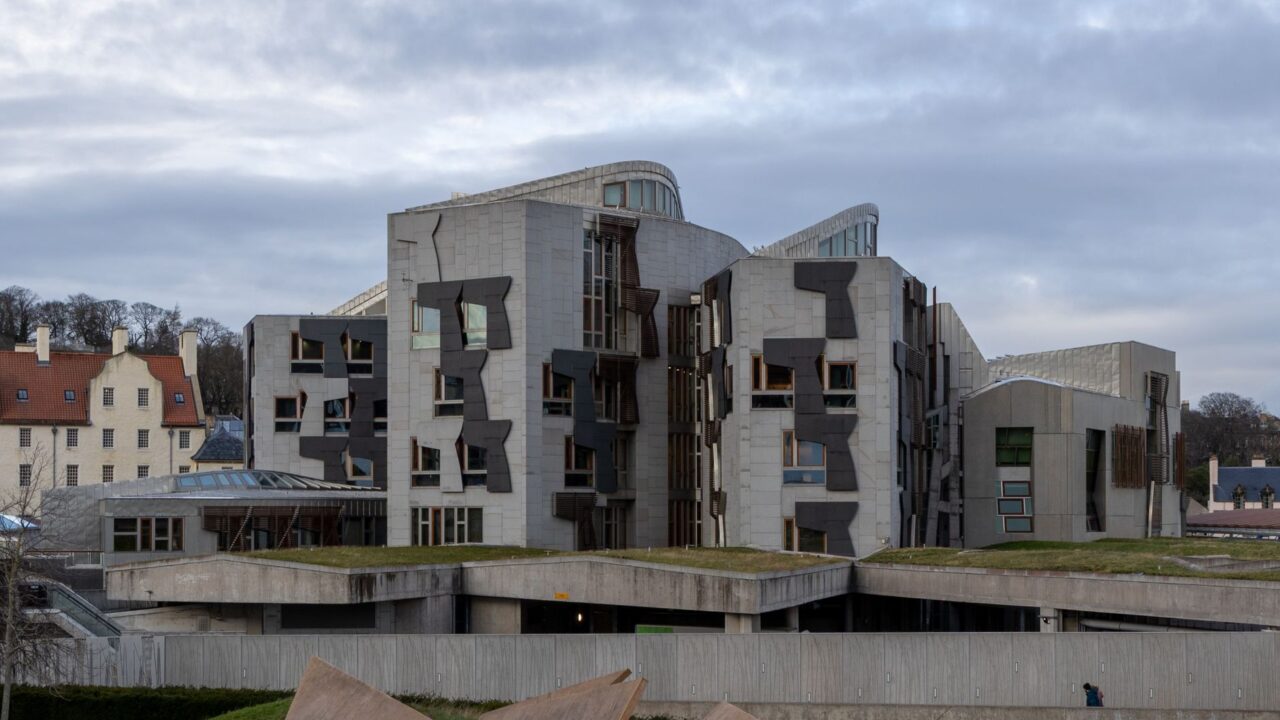
At the foot of the Royal Mile, opposite the Palace of Holyroodhouse, stands the most argued-about building in Scotland. It cost £414.4 million against an initial estimate of somewhere between £10 million and £40 million, it opened three years late, its architect died before it was finished, and a year after it opened it won the Stirling Prize. It is also completely free to go into, and most visitors to Edinburgh walk past it on their way to Arthur’s Seat without ever going in.
The Parliament’s own website spreads the practical information across several pages and never quite explains the building to somebody who is not Scottish. This guide puts the visit in one place — the four different ways in, the security timings that actually matter, and a decoder for the architecture so that the strangest details make sense while you are standing in front of them. Hours, tour arrangements and security guidance below were taken from parliament.scot in September 2026.
At a Glance
- Where: Horse Wynd, Holyrood, Edinburgh EH99 1SP — the foot of the Royal Mile, directly opposite the Palace of Holyroodhouse.
- Everything is free. Entry, the guided tour, the exhibition, the talks and sitting in on a debate all cost nothing.
- Hours: Tuesday–Thursday 09:00–18:30 (last entry 18:00) when Parliament is in business; Monday, Friday and Saturday 10:00–17:00 (last entry 16:30). Closed on Sundays.
- The guided tour lasts 45 minutes, runs Monday to Saturday, is free, and usually includes the Debating Chamber, the Garden Lobby and a committee room. Book in advance — it fills.
- Short on time? There are free 10-minute talks, drop-in, running through the day Monday to Saturday. Nobody tells visitors these exist.
- Security is airport-style. Arrive 20 minutes before a booked event — and a full hour for First Minister’s Questions.
- No banners, flags or political slogans. One small discreet badge is permitted. Electronic devices must be switched off during parliamentary business.
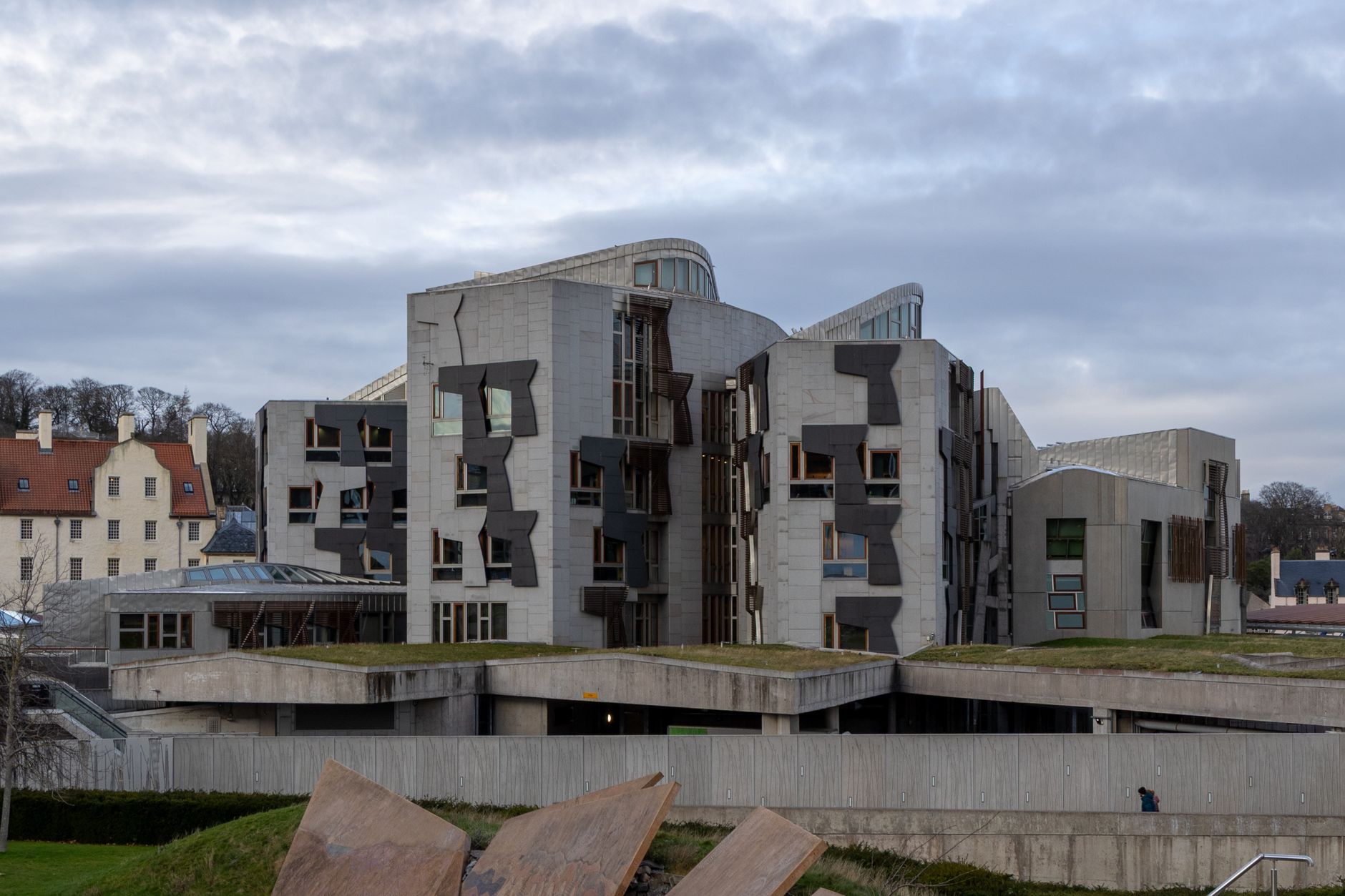
- The architecture: Enric Miralles won the competition in July 1998 and died in July 2000. First debate held 7 September 2004; formal opening 9 October 2004. Final cost £414.4 million.
- The Canongate Wall is outside and always accessible — 24 quotations carved into Scottish rock, free, no security, no booking.
- Café hours: Tuesday–Thursday 10:30–17:30, Monday/Friday/Saturday 10:30–16:30. The shop keeps the building’s hours.
The Four Ways to Visit
This is where the official site fragments and visitors get confused. There are four distinct things you can do here, they suit very different amounts of time, and only one of them needs booking.
| Option | Time | Booking | When | Best for |
|---|---|---|---|---|
| Guided tour | 45 min | Advance booking recommended | Mon–Sat | The Debating Chamber, the Garden Lobby, a committee room |
| 10-minute talk | 10 min | Drop-in | Mon–Sat, through the day | Anyone with half an hour to spare |
| Self-guided visit | 1–2 hours | None | Mon–Sat | The exhibition, the public areas, the art collection |
| Watch a debate or FMQs | Allow an hour or more | Free ticket required | Business days, usually Tue–Thu | Seeing the Parliament actually work |
The free Scottish Parliament tour
Forty-five minutes, free, Monday to Saturday, led by a Parliament guide. It normally takes in the Debating Chamber, the Garden Lobby and a committee room — the three spaces you cannot reach on your own — and covers both the politics and the architecture. Booking is handled through the Parliament’s ticketing partner and you can generally book for the current month or the next one only, which is worth knowing if you are planning a trip far ahead.
The honest verdict: this is one of the two or three best free things in Edinburgh, and it is better than several paid attractions on the Royal Mile. It is also genuinely popular and does sell out, so book it the moment you know your dates rather than turning up hopefully. If you cannot get a slot, the 10-minute talk plus a self-guided wander gets you perhaps 70% of the value.
The 10-minute talks — the best-kept secret here
Free, drop-in, running throughout the day Monday to Saturday, ten minutes long. No booking, no commitment. If you are walking past on your way to Arthur’s Seat, this is the version of the visit that costs you nothing but the security queue. Very few guidebooks mention it exists.
Self-guided
One to two hours, no booking. You get the public areas, a free permanent exhibition on how the Parliament works and how devolution came about, and the Parliament’s art collection. What you do not get on your own is the Debating Chamber, which is the room people come to see — so if the Chamber is the point, either book a tour or come on a sitting day and go into the public gallery.
Watching a debate, and First Minister’s Questions
All meetings of the Debating Chamber are open to the public and tickets are free. Business days are usually Tuesday to Thursday, and the building stays open later on those days — until 18:30 rather than 17:00 — precisely because of it. Committee meetings are also public and are considerably quieter than the Chamber.
First Minister’s Questions is the exception to everything. It is one of the most popular half-hours in the building’s week, and the Parliament’s own guidance is to arrive a full hour early for security rather than the usual twenty minutes. You must stay seated for the entire session. Sitting days and times change with parliamentary business and can be altered at short notice, so check the current business bulletin on parliament.scot rather than trusting any third-party page, including this one, for a specific day and time.
Security: What Actually Happens
This is a working legislature, and the entrance process reflects that. Screening is airport-style: bags through a scanner, you through an arch. The Parliament says it usually takes only a few minutes, but builds in buffer time for a reason.
- Arrive 20 minutes before a booked tour or event.
- Arrive one hour before First Minister’s Questions. This is the Parliament’s own figure, not a cautious estimate.
- No banners, flags or political slogans anywhere in the building. You may wear one small, discreet badge.
- Switch electronic devices off during parliamentary business, and get prior permission before recording anything.
- No eating, drinking or smoking outside the designated areas.
- Accessibility is good: gender-neutral and accessible toilets, a Changing Places facility and baby-changing, with a published accessibility guide.
- The building closes to the public for short periods around recesses and events. Check before travelling.
An Architecture Decoder: What You Are Actually Looking At
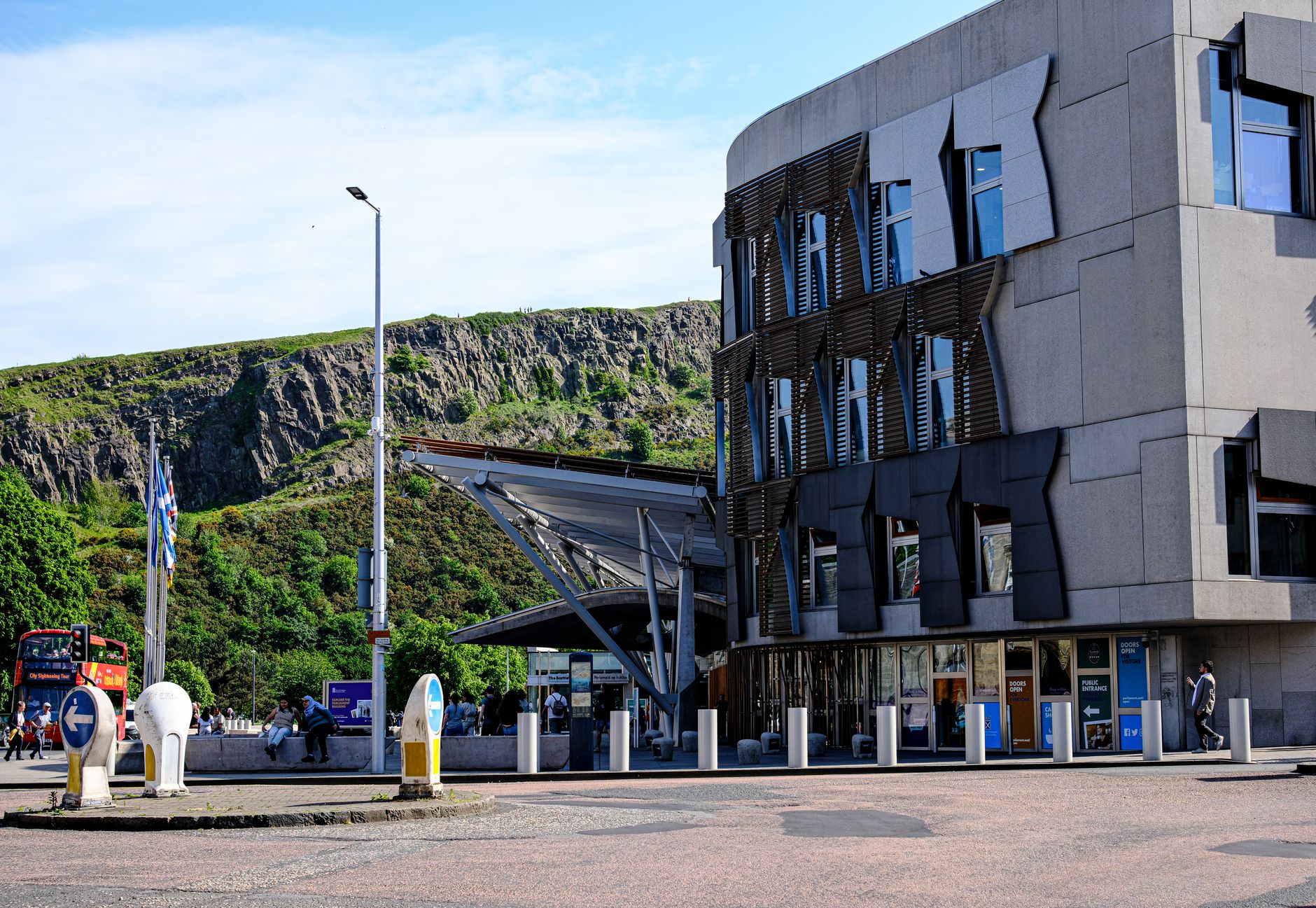
Almost nobody explains this building to visitors, which is a shame, because every strange thing about it is deliberate and most of it becomes obvious once somebody tells you the idea. Here is the short version, to read standing outside.
Upturned boats
The most-repeated image in the whole design. Several of the roofs are shaped like boats pulled up on a shoreline and turned over — a reference to Scotland’s coastal and fishing life, and the reason the roofline reads as a collection of separate objects rather than one continuous building.
The think-pods
The strangest and most photographed feature: the projecting bay windows on the western elevation of the MSP block, in stainless steel, oak lattice and leaf motifs. Each gives a Member a small alcove to sit and work in, and they control glare and solar gain as well. Their silhouette is a deliberate reference to Henry Raeburn’s Skating Minister, the painting in the Scottish National Gallery that everybody in Scotland recognises. Once you have been told this, you cannot unsee it.
The Debating Chamber
Seating is a hemicycle — a horseshoe — rather than the two opposing benches of Westminster, a deliberate design argument for consensus over confrontation. Above it is the detail worth looking up for: a laminated oak roof spanning more than 30 metres without a single supporting column, held by 112 stainless steel connectors, every one of them unique. Set into the Chamber is the Arniston Stone lintel, taken from the pre-1707 Parliament House, tying this building to the parliament that was dissolved by the Union.
The Garden Lobby
The circulation hub that connects every part of the complex, and the space architects rate most highly. Its rooflights are shaped like leaves — or, in the design’s own reference, the early Christian vesica — in stainless steel and oak lattice. The critic Charles Jencks called the building “a tour de force of arts and crafts”, and this is the room he meant.
The Canongate Wall
The single best thing here that costs nothing and needs no security check. Along the Canongate side, 24 quotations are carved into slabs of indigenous Scottish rock — Lewisian gneiss, Torridonian sandstone and others, some of the oldest stone in Europe. Below them runs an etched drawing of Edinburgh’s Old Town, taken from a sketch Miralles made in his hotel room. Walk the length of it on your way past: it is a short stop, outdoors and free.
The Cost Row, Honestly
You will hear about the money, so here are the actual figures rather than the pub version.
| Date | What happened |
|---|---|
| July 1998 | Enric Miralles wins the international design competition, from five finalists |
| 1998 | The Holyrood site — a former brewery — is added late to the shortlist and chosen over the Old Royal High School on Calton Hill |
| June 1999 | Construction begins. Original completion target: 2001 |
| July 2000 | Miralles dies, four years before the building opens |
| 2003–2004 | The Fraser Inquiry examines the overruns; it identifies more than 2,000 design changes, poor management and unrealistic initial budgets |
| 7 September 2004 | The first debate is held in the new Chamber |
| 9 October 2004 | Formal opening — three years behind schedule |
| 2005 | Wins the Stirling Prize and the RIAS Andrew Doolan Award |
| February 2007 | Final cost confirmed at £414.4 million, against an initial estimate of £10–40 million |
The honest verdict: the cost overrun was real, enormous and badly handled, and the Fraser Inquiry’s findings about the procurement method are not a matter of opinion. It is also true that Scotland got a genuinely significant building out of it, one that won the country’s leading architectural prize the year after it opened and that architects travel to see. Both things are true, and Scottish opinion is still comfortably divided. If you want to make up your own mind, the free 45-minute tour is the way to do it.
One Morning at Holyrood: Parliament and Palace Together
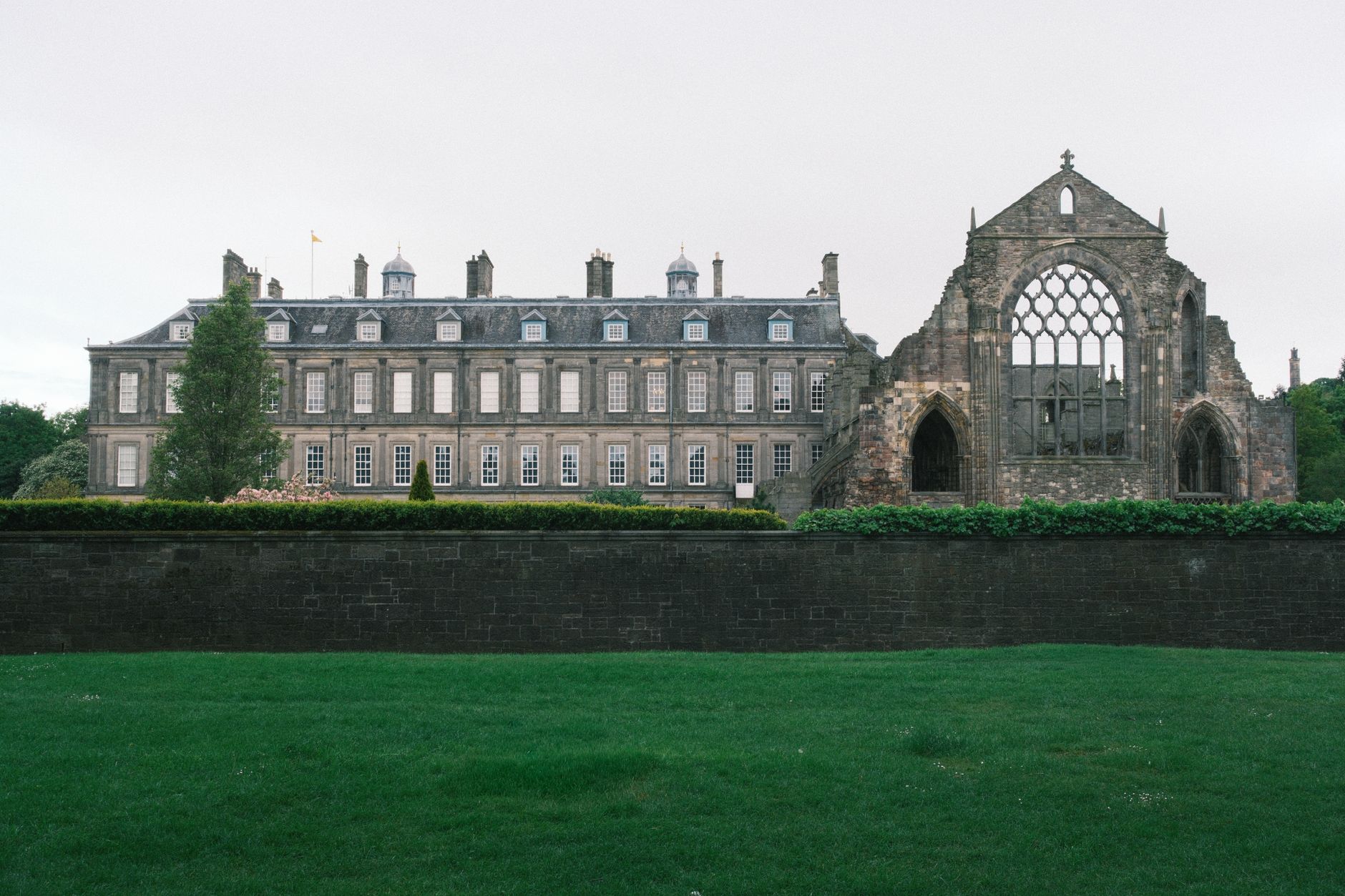
The single most useful planning tip for this end of the Royal Mile: the Parliament and the Palace of Holyroodhouse face each other across one road. Almost every itinerary treats them as separate outings. They are a hundred metres apart.
A workable morning:
- 09:00 (Tue–Thu) or 10:00 (Mon/Fri/Sat): arrive at the Parliament. Do the Canongate Wall outside first, then security.
- Booked 45-minute tour, or a 10-minute talk plus the exhibition.
- Cross the road to the Palace of Holyroodhouse — the royal residence, the ruined abbey and the Mary, Queen of Scots chambers where David Rizzio was murdered. This one is ticketed.
- Then either walk up into Holyrood Park for Arthur’s Seat, which starts from the same roundabout, or visit Dynamic Earth next door if the weather has turned.
The honest verdict on the pairing: the Parliament is free and a visit runs from 45 minutes to two hours; the Palace is ticketed. Doing both in one morning is comfortable and it is how locals would send you. If you only have time for one and you are interested in buildings rather than monarchy, take the Parliament — it is the more unusual object and it does not cost anything.
Practical Notes
- Closed Sundays. This catches out weekend visitors more than anything else.
- The building keeps two different timetables. On business days (usually Tuesday to Thursday) it opens at 09:00 and runs to 18:30; otherwise 10:00 to 17:00. Both have a last entry half an hour before closing.
- Getting there: it is at the very bottom of the Royal Mile — about a 20-minute downhill walk from the Castle, and the last stop before Holyrood Park. Numerous Lothian services run along Holyrood Road and the Canongate; a single is £2.40.
- There is a café and a shop, café hours Tuesday–Thursday 10:30–17:30 and Monday/Friday/Saturday 10:30–16:30.
- Look up in the Chamber. The oak roof is the thing most visitors miss because they are watching the politicians.
- Book the tour early. Booking generally only opens for the current and following month.
Opening hours, tour arrangements, security guidance and café hours checked against parliament.scot in September 2026. Sitting days, chamber business and short public closures change at short notice — confirm on the Parliament’s own site before you travel.
Frequently Asked Questions
Is the Scottish Parliament free to visit?
Yes, entirely. Entry to the building, the 45-minute guided tour, the 10-minute talks, the permanent exhibition and tickets for the public gallery to watch debates are all free of charge. There is no paid element anywhere in a visit, which makes it one of the best-value attractions in Edinburgh.
How do I book a Scottish Parliament tour?
Through the tours section of parliament.scot, which uses an external ticketing partner. The tour is free, lasts 45 minutes and runs Monday to Saturday. Booking generally opens only for the current month and the following month, so you cannot reserve a place a year ahead — put a note in your calendar rather than trying to book at the time you plan the trip.
What are the Scottish Parliament’s opening hours?
On business days, usually Tuesday to Thursday, it opens 09:00 to 18:30 with last entry at 18:00. On non-business days — Monday, Friday and Saturday — it opens 10:00 to 17:00 with last entry at 16:30. It is closed on Sundays, and it closes to the public for short periods around recesses and events, so check before travelling.
Can I watch First Minister’s Questions?
Yes, and it is free, but it is one of the most popular sessions of the week. The Parliament advises arriving a full hour before the session for security rather than the usual 20 minutes, and you are asked to remain seated for the whole thing. Sitting days and times can change at short notice, so check the current business bulletin on parliament.scot rather than any third-party listing.
How long does a visit to the Scottish Parliament take?
Ten minutes if you only take a drop-in talk, 45 minutes for the guided tour, one to two hours for a self-guided visit including the exhibition, and longer again if you sit in on a debate. Add 20 minutes for security, or an hour if you are going to First Minister’s Questions.
What can you see inside the Scottish Parliament?
On a guided tour: the Debating Chamber with its column-free laminated oak roof, the Garden Lobby with its leaf-shaped rooflights, and a committee room. On your own: the public areas, the free permanent exhibition on devolution and how the Parliament works, and the art collection. Outside and free at any time is the Canongate Wall, with 24 quotations carved into Scottish rock.
Why did the Scottish Parliament building cost so much?
The final cost was £414.4 million against an initial estimate of £10 to £40 million. The Fraser Inquiry of 2003–04 identified more than 2,000 design changes, weak project management, poor coordination and unrealistic starting budgets, and criticised the construction-management procurement route. The building nonetheless won the Stirling Prize in 2005.
Who designed the Scottish Parliament?
The Catalan architect Enric Miralles, who won the international competition in July 1998 from a shortlist of five. He died in July 2000, four years before the building opened, and his widow and design partner Benedetta Tagliabue carried the work through. The first debate was held on 7 September 2004 and the formal opening was on 9 October 2004.
Can you visit the Scottish Parliament and Holyrood Palace on the same day?
Easily — they face each other across one road at the foot of the Royal Mile. The Parliament is free and a visit runs from 45 minutes to two hours; the Palace of Holyroodhouse is ticketed. Doing both is a comfortable morning, with Arthur’s Seat or Dynamic Earth available from the same spot afterwards.
Where to Go Next
This guide belongs alongside our Edinburgh Castle guide at the other end of the Royal Mile — and, if you want the castle nobody queues for, Craigmillar Castle. For the walk between the two ends of the Old Town, see our Royal Mile and Old Town guide and the self-guided walking routes. Since everything here costs nothing, our lists of free things to do in Edinburgh and free attractions are the natural next stop.
More Edinburgh Landmarks Off the Royal Mile
- Holyrood Park beyond Arthur’s Seat: every route