Best Scottish Souvenirs to Buy in Edinburgh (and What to Skip) (2026)
Every souvenir guide to Edinburgh recommends everything. Shortbread, tartan, whisky, a Nessie, a cashmere scarf, a Harry Potter wand, a bottle of Irn-Bru — all of it presented as equally valid, because the pages are affiliate listicles and there is no commercial reason to tell you that half the shops on the Royal Mile are selling the same six products from the same three wholesalers.
So this guide does the opposite. It starts with what to skip and why, then tells you where the good version of each thing actually is, with addresses and the two legal quirks that catch visitors out — the alcohol licensing hours that make an evening whisky purchase impossible, and the fact that there is no VAT refund for visitors anywhere in Great Britain any more. Everything here was checked in October 2026.
At a Glance
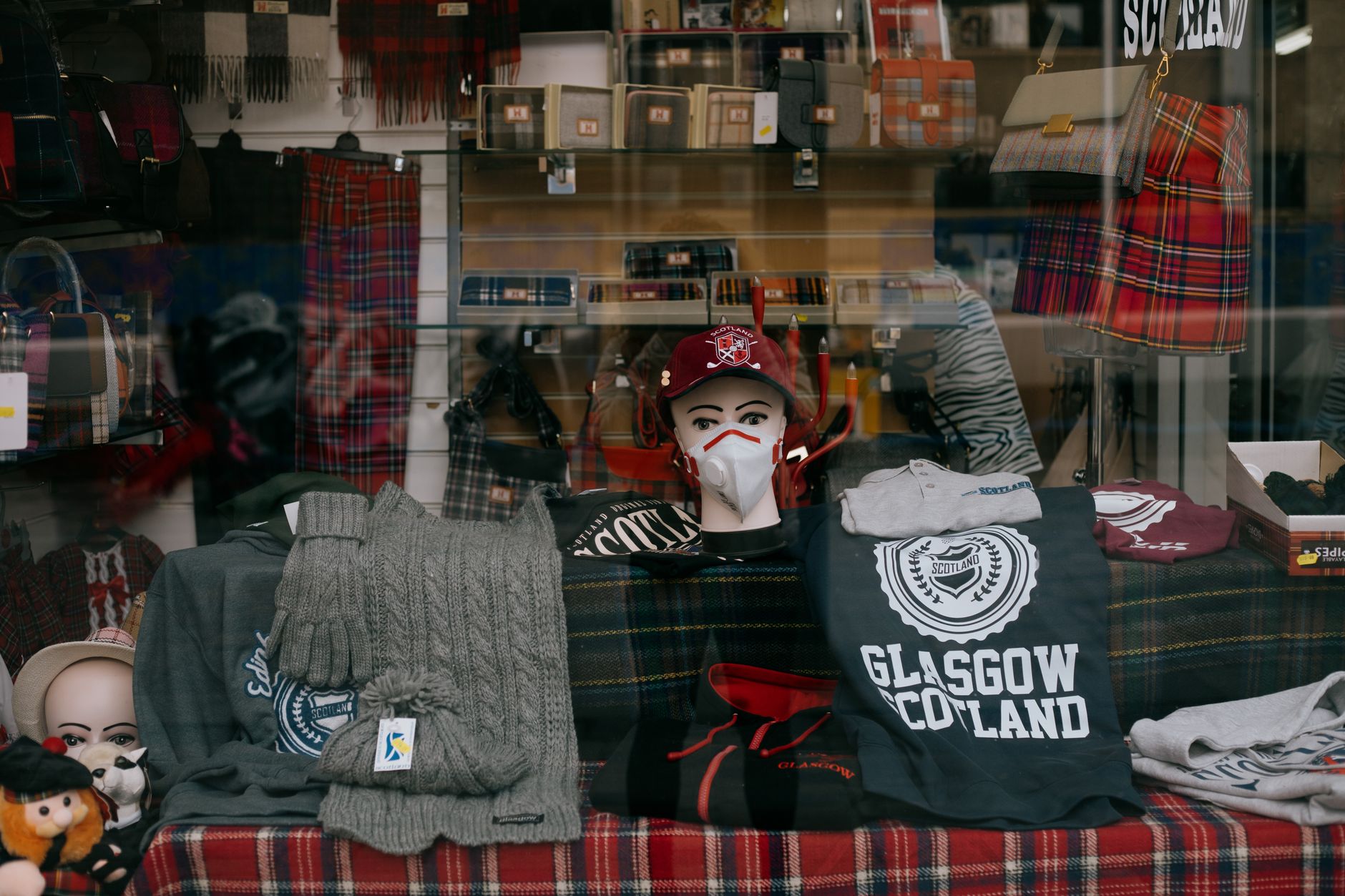
- Skip: Royal Mile tartan by the metre, “clan crest” plaques, mass-market kilted teddy bears, machine-made “Celtic” jewellery, anything printed with a slogan and a saltire.
- Buy: Harris Tweed with the Orb mark, single malt from a specialist, real Scottish cheese, tablet, museum-shop reproductions, a good sgian-dubh or quaich, and cashmere from a named mill.
- Alcohol cannot be sold in shops in Scotland before 10:00 or after 22:00. This applies to whisky in every shop, supermarket and specialist. Plan the purchase for daytime.
- There is no VAT refund for visitors. The Retail Export Scheme was abolished in 2021 and there is no refund desk at Edinburgh Airport.
- Harris Tweed is protected by an Act of Parliament. It must be handwoven by islanders at their homes in the Outer Hebrides from pure virgin wool dyed and spun there. Look for the Orb mark.
- Cadenhead’s, 172 Canongate — Scotland’s oldest independent bottler’s shop. Mon–Sat 10:30–17:30, closed Sunday.
- Museum shops are consistently the best value in the city and almost nobody tells visitors this.
- Victoria Street is a good place to find independents within five minutes of the Royal Mile.
- The clan tartan system is largely a nineteenth-century invention, popularised after George IV’s 1822 visit. That does not make it worthless — it makes it Victorian rather than ancient.
First, the Tat: What Not to Buy on the Royal Mile
Being direct about this is the point of the article, so here it is without hedging. The following are sold in volume in Edinburgh and are, with rare exceptions, not worth the money.
Clan crest plaques and “your family tartan” merchandise
The shop will look up your surname, produce a crest and a sett, and sell you a wall plaque, a mug, a keyring and a scarf carrying it. It is a nice moment and there is nothing dishonest about it, but understand what you are buying: the association of one specific pattern with one specific family name was substantially systematised in the nineteenth century, commercialised after George IV’s 1822 visit to Edinburgh, and printed in pattern books by weavers with an obvious interest in there being one tartan per family. It is Victorian heritage marketing that has since become tradition.
The honest verdict: if the plaque means something to you, buy it and enjoy it. Just do not pay ancestral prices for a Victorian invention, and be aware that the identical plaque is on sale in eleven other shops on the same street.
Tartan by the metre from a general souvenir shop
Almost always acrylic or poly-viscose rather than wool. It photographs fine and feels wrong. If you want tartan cloth, buy it from a kiltmaker who will tell you the weight and the mill — see our guide to where to buy a kilt in Edinburgh, which covers the same quality ladder in detail.
“Celtic” silver and pewter jewellery
The mass-produced kind, cast from the same moulds, sold from a spinning rack. Scotland has genuinely excellent contemporary silversmiths and a strong tradition in pewter, and neither is represented by the rack. The distinction is easy: if the shop also sells fridge magnets, the jewellery came from a catalogue.
Cashmere at implausible prices
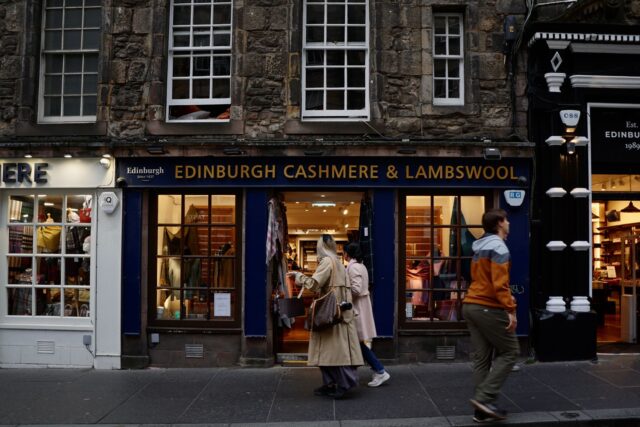
A “100% cashmere” scarf at a bargain price should make you suspicious, and the label is not the guarantee people think it is. Real Scottish cashmere from a named mill costs far more. The tell is the shop: a mill brand with an address in Scotland, or a shop that can name where the yarn was spun. We cover this in detail in our complete guide to shopping in Edinburgh.
Whisky miniatures in gift tubes
Presentation packs of miniatures are usually worse value than one properly chosen 70cl bottle, and the miniatures are usually the entry expressions you can buy anywhere in the world. If whisky is the gift, buy one good bottle from someone who will talk to you about it.
The honest verdict on the Royal Mile generally: it is not that the street is a scam. It is that roughly forty shops between the castle and Holyrood are selling largely interchangeable stock, and the good independents are mostly one street off it. Walk down Victoria Street, up Cockburn Street or across to the Grassmarket and the quality changes immediately.

What to Buy Instead: the Good Version of Each Thing
| Instead of | Buy | Where |
|---|---|---|
| Souvenir-shop tartan | Harris Tweed with the Orb mark | Islander on Victoria Street; Stewart Christie, 63 Queen Street |
| Cheap “cashmere” | Named-mill Scottish cashmere | Johnstons of Elgin, 11 Multrees Walk |
| Miniature gift packs | One bottle chosen with advice | Cadenhead’s, 172 Canongate; The Whisky Shop, Victoria Street |
| Shortbread from a chain | Bakery shortbread and tablet | Edinburgh Farmers’ Market, Castle Terrace, Saturdays 09:00–14:00 |
| Rack “Celtic” jewellery | Contemporary Scottish silver, or good pewter | Red Door Gallery, Victoria Street; museum shops |
| Generic gift-shop prints | Museum reproductions and books | National Museum of Scotland; Scottish National Gallery |
| Airport chocolate | Scottish cheese, vacuum-packed to travel | I.J. Mellis, Victoria Street |
Harris Tweed: the One Souvenir With a Law Behind It
Harris Tweed is the only fabric in the world protected by its own Act of Parliament. To carry the name it must be handwoven by islanders at their own homes in the Outer Hebrides, from pure virgin wool that has been dyed and spun in the Outer Hebrides. Not “made in Scotland”. Not “Harris Tweed style”. Woven at home, in the Hebrides, by hand.
The proof is the Orb mark — a stamped orb-and-cross trademark applied to the cloth by the Harris Tweed Authority after inspection. On a finished garment it appears on a label. If a shop cannot show you the Orb, the cloth is not Harris Tweed, whatever the sign says.
Where to buy it: Islander on Victoria Street specialises in it. Stewart Christie & Co at 63 Queen Street, a tailor with a heritage dating to about 1720, carries Harris Tweed alongside its own estate tweeds, and is the place to go if you want a jacket rather than a cap. Both are a short walk from the Royal Mile and neither is a souvenir shop.
The honest verdict: a Harris Tweed cap or bag is the best value souvenir in Edinburgh, full stop. Prices vary by shop, so check the price tag, but it is genuinely handmade, genuinely local to Scotland, legally protected against imitation, and you will still be using it in fifteen years. Nothing else in this article combines all four.
Whisky: and the Licensing Rule That Ruins Evenings
This is the single most useful practical fact in the article. Alcohol cannot be sold in shops in Scotland before 10:00 or after 22:00. It applies to every off-licence, supermarket, specialist and gift shop in the country. Every year, a large number of visitors decide at 22:30 on their last night to buy a bottle of whisky to take home and discover they cannot.
Buy the whisky during the day. Ideally buy it from somewhere that will talk to you.
- Cadenhead’s, 172 Canongate — Scotland’s oldest independent bottler’s shop, on the lower Royal Mile. Mon–Sat 10:30–17:30, closed Sunday. Independent bottlings mean single casks you cannot buy anywhere else, which is exactly what makes a good gift.
- The Whisky Shop, Victoria Street — a large range of whiskies, and staff who will narrow it down if you tell them what the recipient drinks.
- Distillery shops — Holyrood, Port of Leith and Johnnie Walker Princes Street all sell bottlings you cannot get elsewhere. See our guide to whisky distillery tours in Edinburgh.
- Duty free at the airport is convenient and rarely the best price for anything interesting, though it does solve the hand-luggage problem.
A note on flying: a 70cl bottle cannot go in hand luggage unless bought airside. If you are buying in town, you need hold luggage and some bubble wrap. If you have hand luggage only, buy at the airport after security or ship it.
Food: Shortbread, Tablet, Cheese and the Farmers’ Market
Edible souvenirs are the ones people actually use, and Edinburgh’s are unusually good if you buy them from a producer rather than a gift shop.
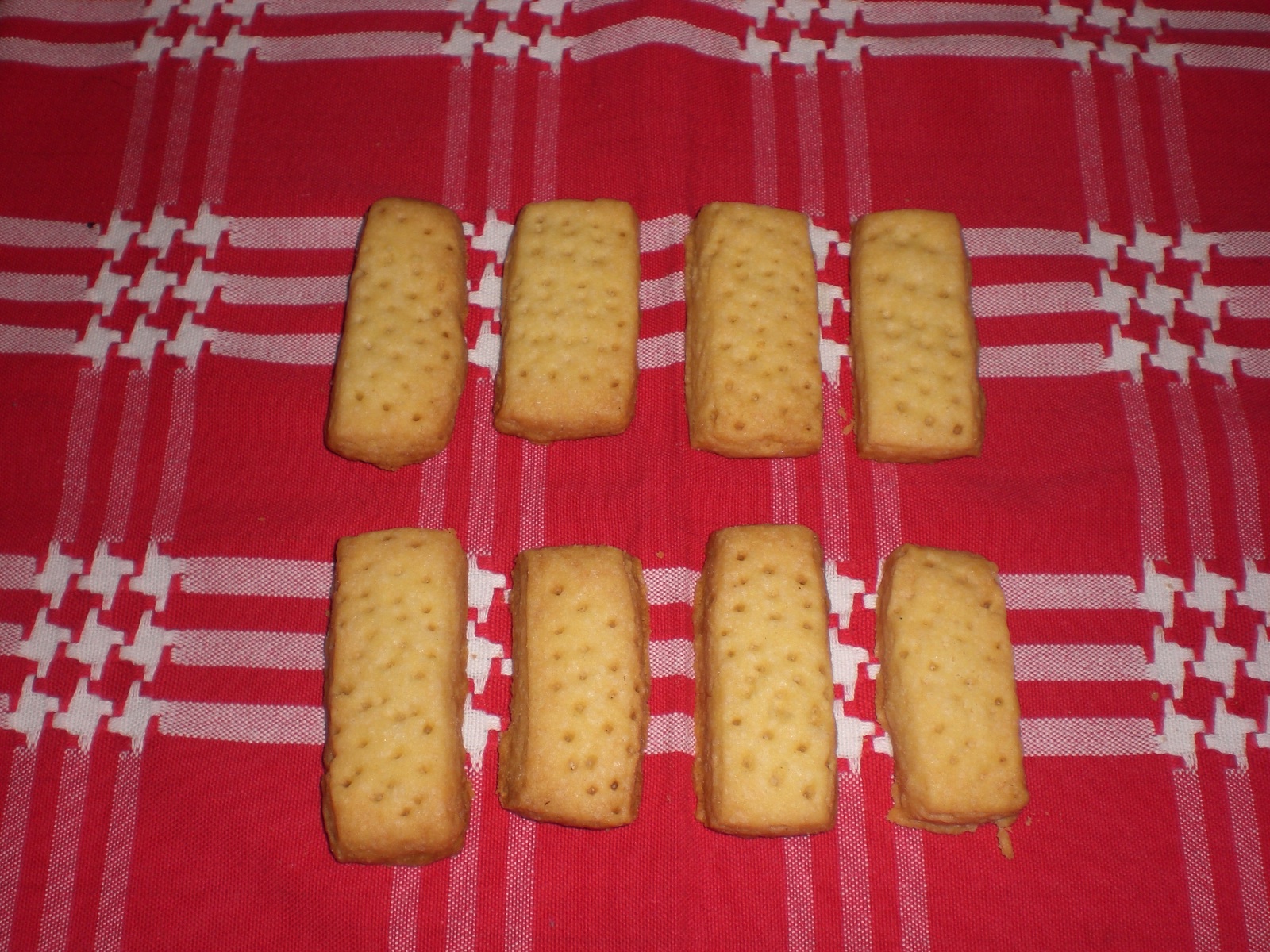
Shortbread. The tartan tin from the Royal Mile is fine and it is not the good version. Bakery shortbread, sold in a paper bag by the person who made it, is a completely different product — shorter, saltier, with actual butter flavour. The Edinburgh Farmers’ Market on Castle Terrace, every Saturday 09:00 to 14:00, is where to find it, in the shadow of the castle rock.
Tablet. Scotland’s crumbly, grainy, ferociously sweet sugar confection — not fudge, and Scots will correct you. It is genuinely difficult to find outside Scotland, which makes it a much better souvenir than shortbread, and it is almost never recommended. Farmers’ market, Stockbridge Market on a Sunday, or a good deli.
Cheese. I.J. Mellis on Victoria Street is a serious cheesemonger, not a tourist stop, and will vacuum-pack for travel if you ask. Scottish cheese is underrated abroad and travels better than people expect.
Our guide to Scottish food in Edinburgh covers what to eat while you are here, which is a related but different question.
The Museum Shops: Edinburgh’s Best-Kept Retail Secret
This is the recommendation that most consistently surprises people, so it gets its own section. The shops attached to Edinburgh’s national museums and galleries are better than almost anything on the Royal Mile at the same price, and the entry to the museums themselves is free.
- The National Museum of Scotland on Chambers Street — reproductions drawn from the collections, strong design and jewellery ranges, excellent books on Scottish history and material culture. See our National Museum of Scotland guide.
- The Scottish National Gallery on the Mound — prints, cards and art books, and the single best place to buy a reproduction of something you have actually just stood in front of.
- Surgeons’ Hall Museums on Nicolson Street — for the person in your life who would like something anatomical and slightly unsettling.
- The Writers’ Museum off the Lawnmarket — small, free, good on Burns, Scott and Stevenson.
The honest verdict: a £25 book or print from a national museum shop is a better object than a £25 anything from a souvenir shop, it was chosen by a curator rather than a buyer working to margin, and buying it supports a free museum. If you have half an hour and no idea what to buy, go to Chambers Street. Our guide to Edinburgh’s museums and galleries covers all of them.
Where the Good Shops Actually Are
- Victoria Street — the curved, coloured terrace below the Lawnmarket. Islander for Harris Tweed, The Whisky Shop for 400-plus bottles, I.J. Mellis for cheese, Red Door Gallery for prints and contemporary makers, Isle of Skye Candle Co. Two minutes from the Royal Mile and a completely different quality of shop. See our Victoria Street guide.
- The lower Canongate — Cadenhead’s at 172, and genuine kiltmakers rather than kilt shops.
- Thistle Street and William Street — New Town independents. Jane Davidson and Pam Jenkins have both been named by Vogue among Britain’s best boutiques.
- Multrees Walk — Johnstons of Elgin at number 11, plus Scotland’s only Harvey Nichols and only Louis Vuitton.
- Stockbridge — St Stephen Street and the Sunday market, 10:00–16:00 on Saunders Street. Golden Hare Books at 68 St Stephen Street was UK Independent Bookshop of the Year in 2019. See our Stockbridge guide.
- The Grassmarket — vintage and independents, and the Saturday market from 10:00 to 17:00.
Two Rules That Catch Visitors Out
1. There is no VAT refund. The VAT Retail Export Scheme was abolished in 2021. There is no visitor VAT refund anywhere in Great Britain and no refund desk at Edinburgh Airport, regardless of what a shop assistant or an old guidebook tells you. The only remaining route is to have the retailer ship your purchase directly to a non-UK address, which is treated as an export and can be zero-rated. Several of the better shops will do this. Northern Ireland has separate rules.
2. VAT is already in the displayed price. Unlike the United States, UK prices include tax. Nothing is added at the till. The number on the label is the number you pay.
One more, which is a Scottish quirk rather than a trap: Scotland has no equivalent of England’s Sunday trading restrictions, so large shops can open all day on a Sunday. The 10:00–22:00 alcohol rule, however, applies every day of the week.

Souvenirs by Budget
| Budget | Buy this | Why |
|---|---|---|
| Budget | Tablet from a market stall; a museum postcard set; a bar of Scottish soap | Inexpensive and made locally |
| Mid-range | A book from the National Museum shop; good cheese; a bakery hamper | Curated rather than wholesaled |
| Varies by shop | A Harris Tweed cap or bag with the Orb mark | Handmade, legally protected and built to last; check the price tag |
| Treat yourself | A bottle of independently bottled single malt; a lambswool scarf | Worth paying more for |
| Splurge | Named-mill cashmere; a Harris Tweed jacket; contemporary Scottish silver | A thing you keep, not a thing you display |
Shop addresses, opening hours and market times checked October 2026. Licensing hours and the VAT position confirmed against Scottish licensing rules and current UK guidance. Prices are indicative ranges rather than quotes and will move.
Frequently Asked Questions
What is the best souvenir to buy in Edinburgh?
Harris Tweed with the Orb mark, as a cap or a bag. Prices vary by shop, so check the price tag. It is handwoven by islanders in the Outer Hebrides, legally protected by an Act of Parliament, genuinely useful, and it will last fifteen years. Nothing else in Edinburgh combines authenticity, usefulness and a reasonable price as well.
What Edinburgh souvenirs should I avoid?
Clan crest plaques and family tartan merchandise sold from general souvenir shops, acrylic tartan by the metre, rack-cast “Celtic” jewellery, cashmere priced at £15, and whisky miniature gift tubes. None of it is a scam; all of it is interchangeable stock from the same wholesalers, sold at a premium for being on the Royal Mile.
Can I buy whisky in Edinburgh at night?
No. Alcohol cannot be sold in shops anywhere in Scotland before 10:00 or after 22:00, seven days a week. This applies to supermarkets, off-licences and specialist whisky shops alike. Buy your bottle during the day, and remember that 70cl cannot go in hand luggage unless you buy it airside at the airport.
Can visitors claim VAT back on shopping in Edinburgh?
No. The VAT Retail Export Scheme was abolished in 2021, there is no visitor VAT refund anywhere in Great Britain, and there is no refund desk at Edinburgh Airport. The only remaining route is having the retailer ship the goods directly to a non-UK address, which counts as an export. VAT is already included in every displayed price.
How do I know if Harris Tweed is genuine?
Look for the Orb mark, the trademark applied by the Harris Tweed Authority after inspection. Genuine Harris Tweed must by law be handwoven by islanders at their homes in the Outer Hebrides from pure virgin wool dyed and spun there. “Made in Scotland” and “tweed style” mean nothing. No Orb, no Harris Tweed.
What is tablet, and where do I buy it?
A Scottish sugar confection — crumbly and grainy rather than smooth, and much sweeter and firmer than fudge, which it is regularly and wrongly compared to. It is genuinely hard to buy outside Scotland, which makes it a better souvenir than shortbread. Find it at the Edinburgh Farmers’ Market on Castle Terrace on Saturdays, Stockbridge Market on Sundays, or a good deli.
Are museum shops in Edinburgh worth visiting?
They are the best-value shops in the city and almost nobody tells visitors so. The National Museum of Scotland on Chambers Street and the Scottish National Gallery on the Mound both have excellent book, print and design ranges chosen by curators rather than buyers working to margin — and entry to both museums is free.
Do I need a clan connection to buy tartan?
No, and the system is younger than it sounds. Assigning one specific sett to one named family was largely a nineteenth-century project, systematised and commercialised after George IV’s 1822 visit to Edinburgh. Nobody will challenge your choice. If you want something without a family claim, Black Watch, Flower of Scotland and Isle of Skye are all universal.
Where to Go Next
Read our complete guide to shopping in Edinburgh for the streets and centres in full, then Victoria Street and the Grassmarket for the Old Town independents. For the biggest single purchase most visitors consider, see where to buy a kilt in Edinburgh. If you would rather spend the money on experiences, whisky tasting experiences and free things to do in Edinburgh are the two lists to start with.
More Edinburgh Shopping Guides
- Cashmere, tweed and knitwear in Edinburgh
- Edinburgh markets: which market is on which day
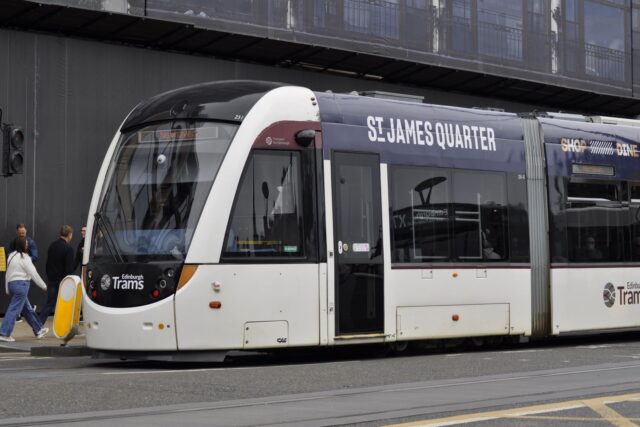
- St James Quarter and Princes Street
Photo Credits
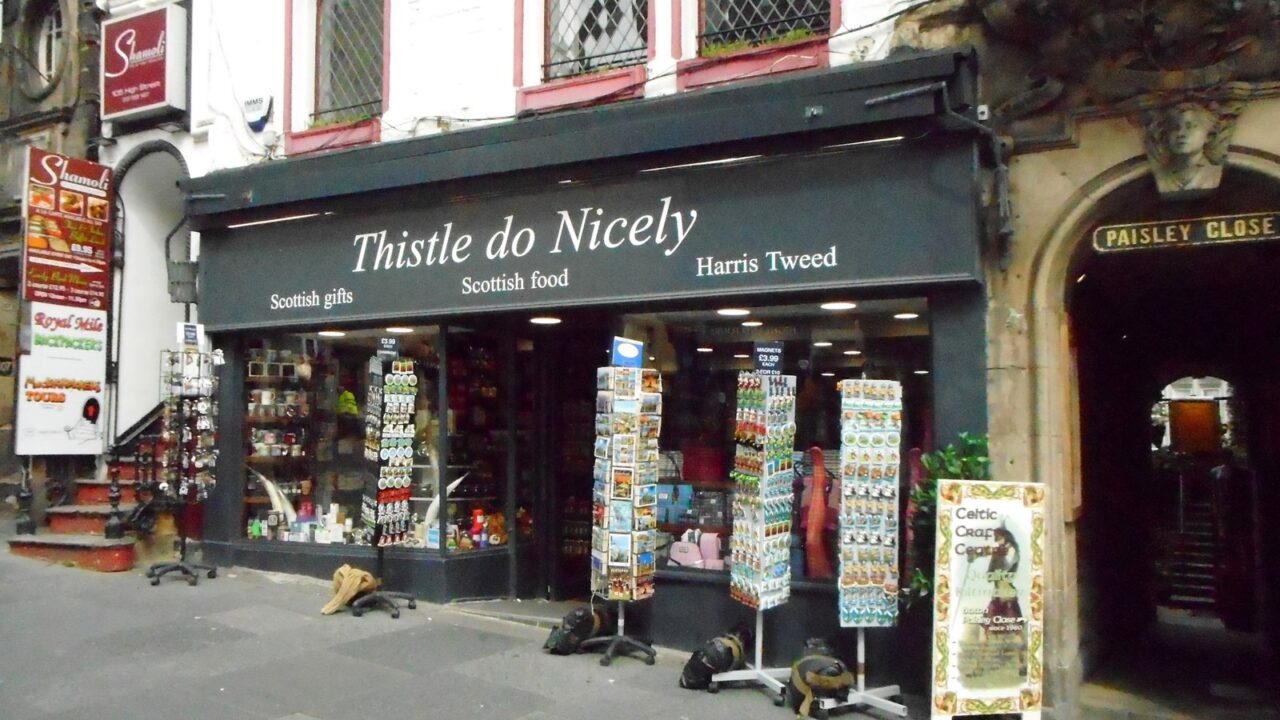
Thistle do Nicely on the Royal Mile: Thistle Do Nicely – geograph.org.uk – 6580482 by Richard Sutcliffe, CC BY-SA 2.0, via Wikimedia Commons.
Homemade Scottish shortbread fingers: Scottisch Shortbread by Thorsten Alge, Public domain, via Wikimedia Commons.