Edinburgh Fringe Festival: The Complete Survival Guide (2026)
The Edinburgh Fringe Festival is the world’s largest performing arts festival — a three-and-a-half-week explosion of more than 3,500 shows across 250+ venues every August. For 2026, Fringe runs from 7–31 August, with shows in every genre imaginable: stand-up comedy, theatre, cabaret, circus, dance, musicals, spoken word, children’s shows, magic, opera and experimental performance. Millions of audience members descend on Edinburgh; the city’s population doubles. Whether you’re a comedy fan, a theatre enthusiast, an industry professional or a curious first-timer, the Edinburgh Fringe Festival is one of the most extraordinary live cultural experiences on Earth.
This complete 2026 survival guide covers everything you need to plan a Fringe trip: dates, ticket strategy, top venues, must-see show categories, free shows, accommodation tactics, transport, food and drink, daily schedule planning, and the insider tips that turn a chaotic festival visit into a memorable one. If you’ve never been to the Edinburgh Fringe Festival, this guide will get you up to speed; if you’re a returning fringe-goer, you’ll still find the practical 2026 details you need.
Edinburgh Fringe Festival 2026 at a glance
| Detail | Information |
|---|---|
| Dates | 7 – 31 August 2026 (most shows; previews from Aug 5) |
| Number of shows | 3,500+ |
| Number of venues | 250+ |
| Box office | edfringe.com or +44 131 226 0000 |
| Typical ticket price | £8–£18 (free shows available) |
| Big-name comedy | £20–£30+ |
| Half-Price Hut | The Mound; same-day shows at 50% off |
| Free Fringe shows | 1,000+ across the festival |
| Festival type | Open access — anyone can register a show |
| Founded | 1947 |
What is the Edinburgh Festival Fringe?
The Edinburgh Festival Fringe (officially the Edinburgh Festival Fringe Society) is an “open access” arts festival — there’s no selection committee deciding which shows can perform. Anyone can register a show: established comedians, university theatre companies, international circus troupes, debut playwrights, established West End actors trying new material. The result is a chaotic, sprawling, unfiltered explosion of work that defies easy summary.
Founded in 1947 as a renegade alternative to the Edinburgh International Festival (which had a curated programme), the “fringe” began with just eight uninvited companies turning up. Today it’s the world’s largest performing arts festival, generating over 3 million ticket sales annually and serving as the launchpad for thousands of careers in comedy, theatre and the arts.
Edinburgh Fringe Festival dates and structure
2026 dates: Friday 7 – Sunday 31 August. Most shows preview from Wednesday 5 August, with full programming from Friday 7. The middle weekend (15–17 August) is traditionally the busiest.
The Fringe overlaps with the Edinburgh International Festival (curated arts), the Royal Edinburgh Military Tattoo (August at the Castle Esplanade), and the Edinburgh International Book Festival. Together these are known as “the festivals” — Edinburgh’s August explosion.
How to read the Edinburgh Fringe programme
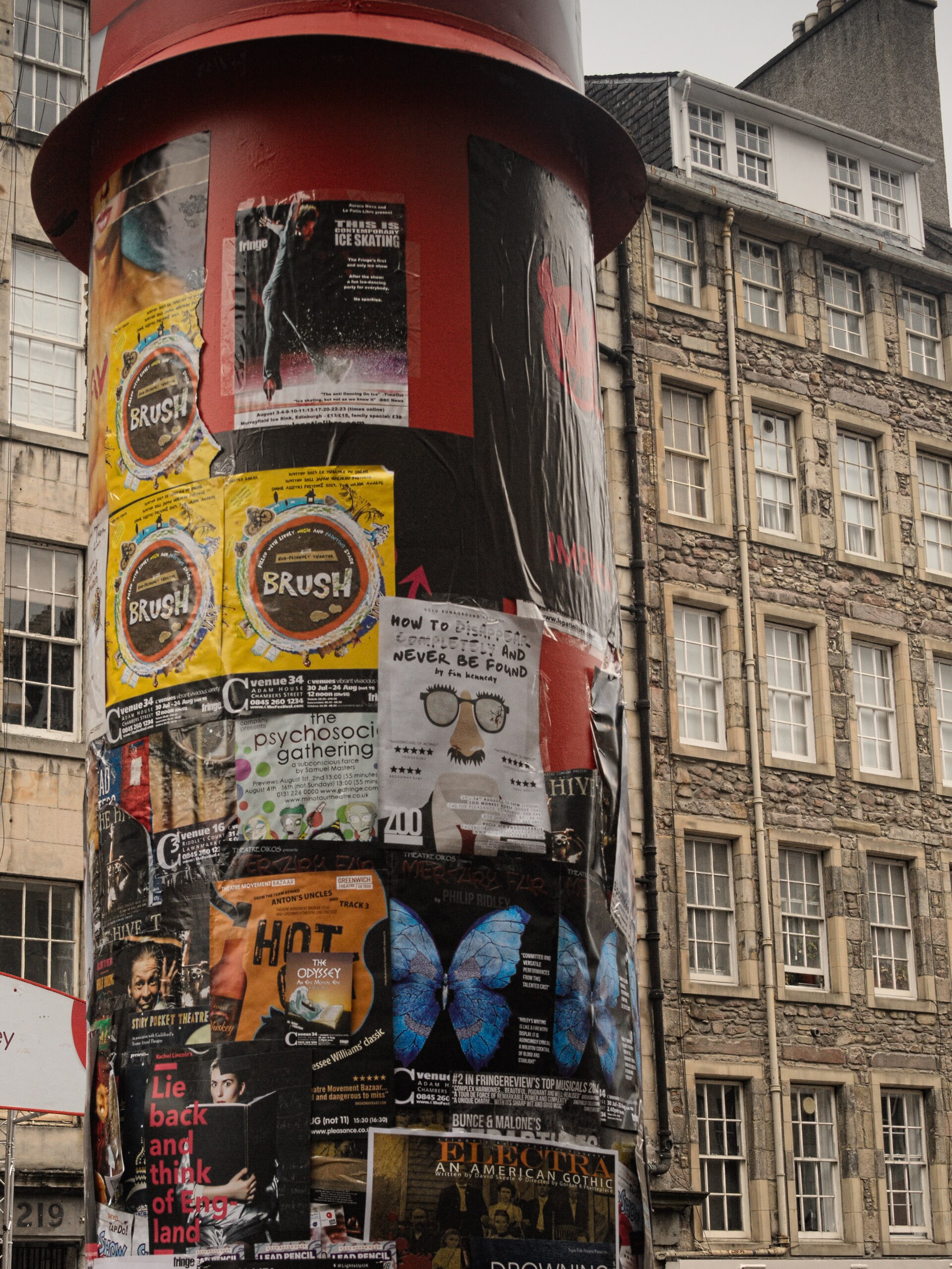
The programme is overwhelming. Use these strategies:
- Pick 2–3 genres maximum — comedy + theatre + cabaret is a good mix; don’t try to sample everything
- Browse the official Fringe app for filters (free shows, kid-friendly, late shows, near venue)
- Read reviews — The List, The Skinny, Three Weeks and Broadway World offer reliable Fringe reviews
- Watch for “tipped” shows — Fringe Society’s First Word programme highlights emerging acts
- Follow performers on social media — many post discount codes
- Plan venues, not individual shows — Pleasance Courtyard, Underbelly, Summerhall and Assembly each have 30+ shows you can drop into
Best Edinburgh Fringe venues
“Big Four” venue groups
- Pleasance Theatre Trust (Pleasance Courtyard, Pleasance Dome) — strong comedy and theatre
- Underbelly (Cowgate, Bristo Square, McEwan Hall) — variety, late-night, comedy
- Assembly (George Square, Roxy, Checkpoint) — major comedy headliners and theatre
- Gilded Balloon (Teviot, Patter Hoose) — comedy and cabaret
Other essential venues
- Summerhall — experimental theatre, dance, international work
- Traverse Theatre — Edinburgh’s new-writing flagship
- Monkey Barrel — Edinburgh’s leading comedy club, big-name comedy
- Just the Tonic — free and pay-what-you-can comedy
- The Stand — Edinburgh’s home of stand-up
- The Caves — atmospheric underground venue, cabaret and comedy
- Spiegeltent — beautiful mirrored Belgian dance hall, popular for cabaret
Edinburgh Fringe ticket strategy
Pricing tiers
- Free Fringe / Free Festival: hundreds of free shows, donation-based
- Pay-What-You-Can: many small venues; pay £5–10 fair
- Mid-range ticketed: £8–18 for most theatre, comedy and music
- Big-name comedy: £20–30+ for headliners (Daniel Sloss, Joe Lycett, Ahir Shah, Ruby Wax 2026)
- Premium theatre / major productions: £25–40
How to save money on Fringe tickets
- Half-Price Hut on the Mound — same-day tickets at 50% off (open daily during festival)
- Two-for-one offers — many shows offer 2-for-1 on opening preview days
- Festival apps and email lists — venue mailing lists send discount codes
- Free Fringe and Free Festival apps — list 1,000+ free shows
- Industry pass — actors, journalists, producers, agents can apply for industry tickets
- Pleasance / Underbelly / Assembly subscriptions — multi-show passes from venues
How to book Edinburgh Fringe tickets
- edfringe.com — official central box office
- Individual venue websites — Pleasance, Underbelly, etc. sell direct, often with venue discounts
- Half-Price Hut (the Mound) — physical box office for same-day half-price tickets
- Edinburgh Fringe app — buy on phone, walk to venue
Free Edinburgh Fringe shows
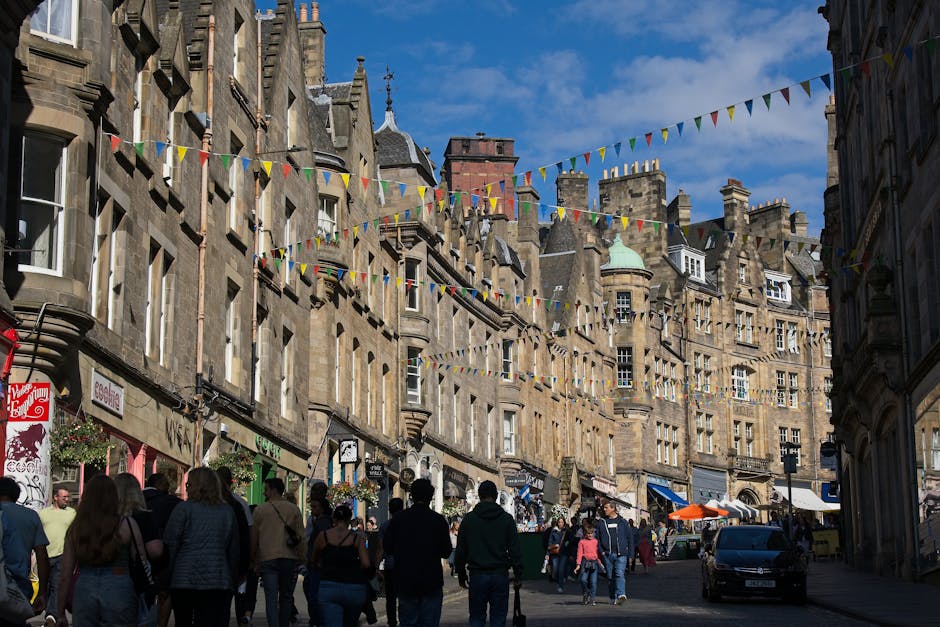
The Edinburgh Fringe has a robust free-show ecosystem:
PBH’s Free Fringe
Founded by Peter Buckley Hill (PBH) as a protest against ticket prices, the Free Fringe lists hundreds of shows operating on a donate-what-you-can basis. Look for the distinctive yellow signage. Quality varies from terrible to brilliant — read reviews.
Free Festival
A rival free-show network, also donation-based. The Voodoo Rooms and Royal Mile venues host many Free Festival shows.
The Royal Mile
The Royal Mile’s free street performance is the Fringe’s iconic free entertainment — magicians, jugglers, fire-eaters, bagpipers, acrobats, comedy previews. Performances run throughout daylight hours. Tip £2–5 per act enjoyed.
Free Royal Edinburgh Tattoo fireworks
The Tattoo fireworks (visible most nights from Princes Street Gardens, Calton Hill) are free to watch — paid only if you have a Tattoo ticket.
Edinburgh Fringe accommodation: book early
Festival accommodation is the #1 challenge. Hostel beds that cost £18 in May rise to £35–55 in August. Hotels that charge £80/night cost £200+ during Fringe. Airbnbs hit £200/night for basic rooms.
When to book
- January: Earliest cheapest rates
- March–May: Most listings still affordable
- June–July: Prices climbing fast
- August: Limited last-minute availability at premium prices
Where to stay during Fringe
- Hostels (book 4–6 months ahead): Castle Rock, High Street, Safestay Cowgate
- University halls (open in summer): Pollock Halls (University of Edinburgh), Salisbury Court
- Hotels: Premier Inn and Travelodge are most affordable chains
- Airbnb: Book January for best rates; expect £150–250/night for basic listings
- Alternative: Stay in Glasgow (£60 hotel) and train in (1 hour each way)
See our Edinburgh Festival accommodation guide for more.
Edinburgh Fringe show categories explained
Comedy (the largest section)
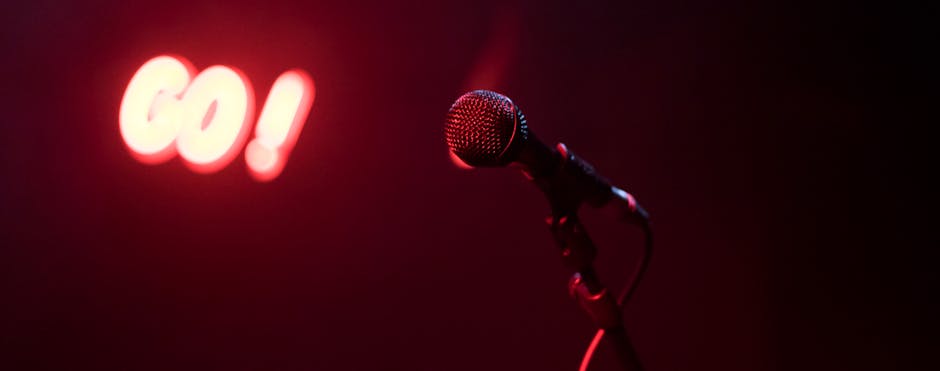
One-third of the Fringe is comedy. Major 2026 headliners include Daniel Sloss with Bitter at the Playhouse, Grace Campbell with The Lady is a Tramp, Jack Docherty with Butterfly, Ahir Shah’s Golden, and Ruby Wax with Absolutely Famous.
Comedy comes in many forms: stand-up, character comedy, improv, sketch, musical comedy, satirical, dramatic stand-up. Mid-range Fringe comedy tickets are £10–15 — see 3 shows in an evening for under £40.
Theatre
From small experimental work at Summerhall to West End-bound productions at the Traverse, theatre is the Fringe’s serious second-act. Tickets £10–20. Watch for “Scotsman Fringe First” winners — the festival’s prestigious new-writing award.
Cabaret and variety
The Gilded Balloon and Underbelly are cabaret hubs. Burlesque, drag, magic, mentalism, circus and variety acts run from 9pm onwards.
Children’s shows
Edinburgh has a strong children’s Fringe — bouncy theatre, puppetry, science shows. Many at Summerhall’s Children’s Festival and Imaginate venues. Tickets typically £6–10.
Music and musicals
Hundreds of music shows — jazz, folk, classical, pop, rock. Edinburgh Jazz Festival overlaps in July, but Fringe music continues into August.
Dance and physical theatre
Heavily concentrated at Summerhall. International companies and Scottish artists. Tickets £10–20.
Spoken word and poetry
Slam poetry, spoken word, storytelling — many free shows at Free Fringe and the Scottish Storytelling Centre.
Insider tips for the Edinburgh Fringe
- Book one major show per day in advance — your “spine” — then fill around it with free and Half-Price Hut shows
- Visit the Half-Price Hut on the Mound at 11am for best same-day deals
- Plan venues geographically — moving between Cowgate, Pleasance and Summerhall takes 15–25 minutes; cluster shows in one area
- Build in food breaks — shows back-to-back leave no time to eat; book 90-minute gaps
- Try one show per day in a genre you wouldn’t normally watch — the joy of the Fringe is discovery
- Watch the previews (Aug 5–7) — shows are still tweaking, often discounted, sometimes more honest
- Read reviews after the first weekend — middle and final weeks have more reliable critical consensus
- Get to free shows 15 minutes early — small venues fill fast
- Take a flyer if you’re given one — but research before booking based on flyer alone
- The Royal Mile is busiest 12–4pm — visit mornings or evenings for less crowded street performance
- Use the City DAY ticket — £6 for unlimited buses + trams beats any taxi
- Drink less than you think — Fringe days are long and exhausting
- Buy a Fringe rain poncho — Edinburgh weather is unpredictable
Sample Edinburgh Fringe day
| Time | Activity |
|---|---|
| 10:00am | Coffee + plan day with Fringe app |
| 11:00am | Visit Half-Price Hut on the Mound for same-day deals |
| 11:30am | Theatre show (£12 — booked in advance) |
| 1:00pm | Quick lunch — Mosque Kitchen or supermarket meal deal |
| 2:00pm | Free Royal Mile street performance + flyer browsing |
| 3:30pm | Children’s / family show OR Free Fringe comedy |
| 5:00pm | Pub break — Sandy Bell’s or Auld Hundred |
| 7:00pm | Main comedy show (£15) |
| 9:00pm | Late-night cabaret or burlesque at Underbelly |
| 11:00pm | Late-night free comedy or Sandy Bell’s session |
That’s 4–5 shows + free street performance for £30–45 a day in tickets. Add £20 food + £6 transport = £56/day. Multiply by your stay length.
How long should I go to the Edinburgh Fringe?
- 1 day: Tasting visit. See 3–4 shows; get a flavour. Limited.
- 2–3 days: Solid first-timer trip. 8–12 shows. Good genre sampling.
- 4–7 days: Comfortable Fringe trip. 15–25 shows. Time for non-Fringe Edinburgh too.
- 10+ days: Industry / hardcore visit. 40+ shows possible. Burn-out risk.
Most first-timers find 3–5 days is the sweet spot — enough to immerse, not enough to burn out.
Edinburgh Fringe food and drink
Quick eats between shows
- Mosque Kitchen — £6 curries, near Pleasance and Summerhall
- Oink — hog roast rolls, near Royal Mile
- Greggs and supermarket meal deals — fast and £4–5
- Food trucks at major venues — Pleasance Courtyard, Underbelly Cowgate, Bristo Square all have food stalls
- Late-night food — Mosque Kitchen open late, plus Cowgate kebab shops
Festival drinks
All venue courtyards (Pleasance, Bristo Square, Underbelly Cow) have outdoor bars. Pints £5–6.50. Drink at Wetherspoons (£4 pints) for budget options.
Edinburgh Fringe accessibility
Many Fringe venues are step-free, but accessibility varies:
- Pleasance Courtyard / Dome: Step-free access to most venues
- Underbelly Cowgate: Older building, some venues stepped
- Summerhall: Mostly accessible
- Traverse Theatre: Fully accessible
The Fringe Society offers a free accessibility hotline. Tickets can be reserved with companion or BSL interpretation. Captioned and audio-described performances are bookable through the Fringe app.
What’s the difference between Fringe and other festivals?
- Edinburgh Festival Fringe: Open-access, 3,500+ shows, £8–30 tickets
- Edinburgh International Festival (EIF): Curated, classical music + opera + theatre, £20–80 tickets
- Royal Edinburgh Military Tattoo: Military music spectacle at Castle Esplanade, tickets from £47 and up to £975 for the dearest seats
- Edinburgh International Book Festival: Literary discussions at Charlotte Square, £15–25 tickets
All four overlap in August. Some Edinburgh visitors buy tickets for all four; most pick one or two.
Frequently asked questions about the Edinburgh Fringe Festival
When is the Edinburgh Fringe Festival 2026?
Friday 7 – Sunday 31 August 2026. Most shows preview from Wednesday 5 August.
How many shows are at the Edinburgh Fringe?
The 2026 programme has over 3,500 shows across 250+ venues — the largest open-access arts festival in the world.
How much do Edinburgh Fringe tickets cost?
Most paid shows are £8–18. Big-name comedy ranges £20–30+. The Half-Price Hut on the Mound sells same-day tickets at 50% off. Hundreds of free shows are also available.
Where do I buy Edinburgh Fringe tickets?
Via edfringe.com, the Fringe app, the Half-Price Hut on the Mound, or directly from venue websites (Pleasance, Underbelly, Assembly).
How do I find free Edinburgh Fringe shows?
Use the official Fringe app’s “free” filter, plus PBH’s Free Fringe and Free Festival apps. The Royal Mile is the biggest free venue with all-day street performance.
Where should I stay during the Edinburgh Fringe?
Book 4–6 months ahead. Best value options are hostels (£35–55/night in August), Pollock Halls and other university halls, and Premier Inn / Travelodge. Glasgow stays (£60/night) + 1-hour train commute is an alternative.
What is the Edinburgh Fringe Half-Price Hut?
The Half-Price Hut on the Mound sells same-day tickets at 50% off for shows that haven’t sold out. Open daily during the festival, queues build mid-afternoon.
What’s the best venue at the Edinburgh Fringe?
Pleasance, Underbelly, Assembly and Gilded Balloon are the “Big Four” with most comedy and major shows. Summerhall is the best for experimental theatre. The Traverse Theatre is best for new writing.
How long should I stay at the Edinburgh Fringe?
3–5 days is the sweet spot for first-timers — enough to immerse without burnout. Industry attendees stay 10+ days.
What time of August is best for the Edinburgh Fringe?
The middle weekend (15–17 August) is busiest. The first week is freshest (shows are settling in). The final week sees award winners and is most popular for industry. Late August can be slightly quieter on weeknights.
Can children go to the Edinburgh Fringe?
Yes — there’s a strong children’s Fringe with hundreds of family-friendly shows. Many at Summerhall’s Children’s Festival. Tickets £6–10. The Royal Mile street performance is also free and family-friendly.
Is the Edinburgh Fringe worth visiting?
Yes — it’s the world’s largest performing arts festival and one of the most extraordinary live cultural experiences anywhere. A 3-5 day visit is genuinely memorable for any culture lover.
Plan your Edinburgh Fringe trip
The Edinburgh Fringe Festival is a once-in-a-lifetime cultural experience — and a recurring one for many. The keys to enjoying it are: book accommodation 4–6 months ahead, pick 2–3 genres to focus on, use the Half-Price Hut and free shows for budget tickets, plan venues geographically, and build food and rest breaks into your day. Get a City DAY ticket for transport, pack rain gear, and bring stamina.
For more festival planning, see our Edinburgh festivals pillar guide, our Edinburgh International Festival guide, our Royal Edinburgh Military Tattoo guide, and our Festival accommodation guide.
The Fringe is not the only game in town: see our guide to the Edinburgh Science Festival and the year-round events calendar.
Photo Credits
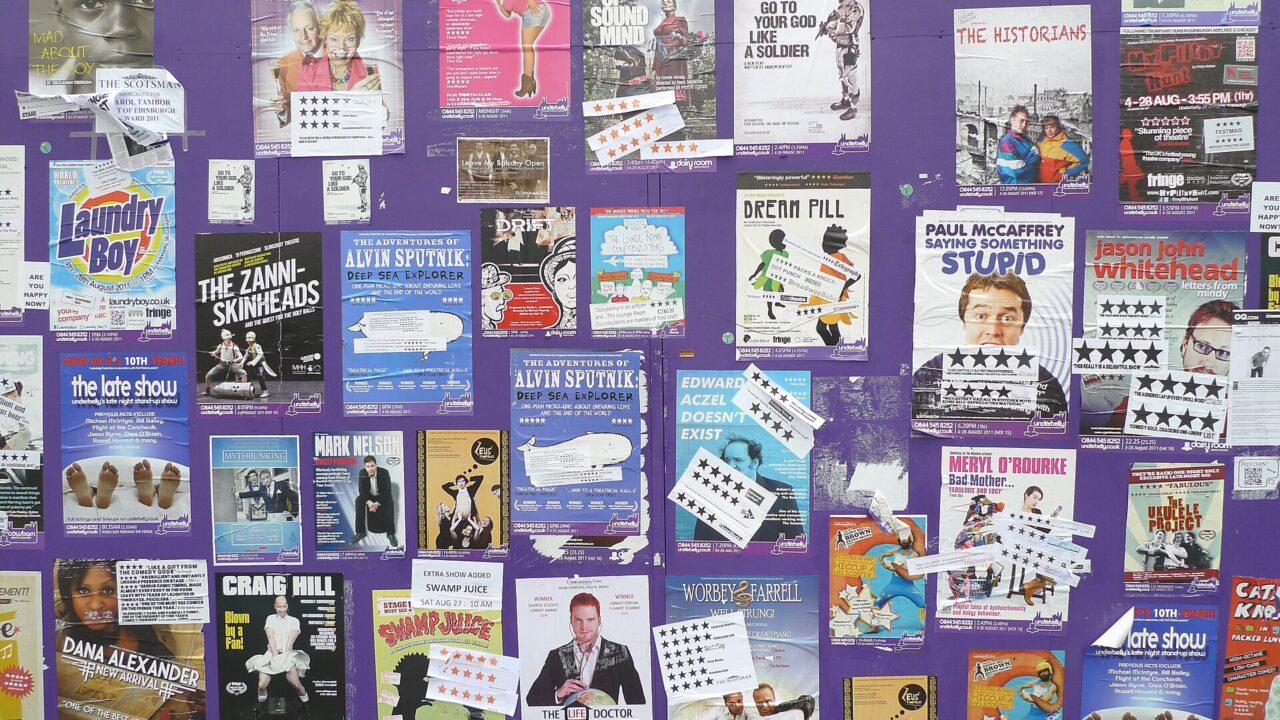
Fringe flyers in Edinburgh: Flyers at the Fringe (6097237593) by benjgibbs (Flickr), CC BY 2.0, via Wikimedia Commons.
Fringe posters on the High Street: Fringe 2014 High Street-Posters and fliers MG 0067-001 by Brian McNeil, CC BY 3.0, via Wikimedia Commons.