London to Edinburgh by Train: Times, Fares & How to Book Cheap (2026)
The London to Edinburgh train is the rare long journey where the sensible choice and the pleasant choice are the same one. Four hours from King’s Cross to Waverley, city centre to city centre, no airport, no bag drop, no 90-minute buffer at either end. Fly and you will spend the same time getting to Heathrow, queuing, sitting, waiting for a bag and riding a tram into town — and you will see nothing but cloud. The train gives you Durham Cathedral from the viaduct, the North Sea at Alnmouth, and a walk up a ramp into the middle of Edinburgh.
The catch is the fare. The same seat on the same train can cost £19.90 or £204.80 depending entirely on when you buy it and which operator you buy it from. Nothing about the booking sites makes this obvious, and most guides to the route stop at “book in advance”. This one goes further: who runs the route, what the timings really are, when tickets are released, how split ticketing works and when it does not, which side of the train to sit on, and what to do in the first five minutes after you step off at Waverley.
At a Glance: London to Edinburgh by Train
- Fastest journey: about 4 hours. A typical LNER service takes around 4 hours 20 minutes. Lumo runs closer to 4 hours 30.
- Two daytime operators, one route. LNER and Lumo both run King’s Cross to Edinburgh Waverley on the East Coast Main Line. They are separate companies with separate fares.
- Cheapest realistic fare: around £19.90 on Lumo, around £41.40 on LNER, both as Advance singles booked weeks ahead.
- Most expensive: £204.80 for an LNER Anytime single bought on the day. This is the number that ruins trips.
- Advance tickets go on sale roughly 8 to 12 weeks before travel. Lumo sometimes opens its booking horizon much earlier.
- Split ticketing is legal and routinely saves £30 to £70 on this route. Your train simply has to stop at the stations where the tickets change over.
- Sit on the right going north. Between Alnmouth and Berwick-upon-Tweed the line runs along the cliff edge. It is the best forty minutes of the journey.
- There is no direct Avanti West Coast service from London Euston to Edinburgh. Avanti’s Scottish route runs to Glasgow Central. Book East Coast.
- Waverley is in the city centre, in the valley between the Old Town and the New Town. Almost every central hotel is a walk, not a taxi.
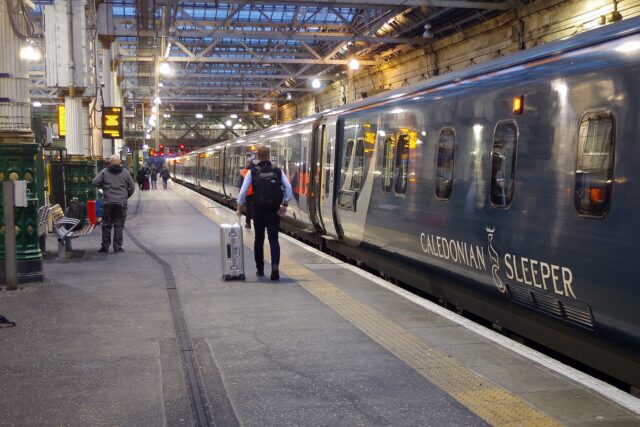
- The overnight Caledonian Sleeper leaves from Euston, not King’s Cross. Different station, different route, different proposition entirely.
Who Actually Runs the Route
Britain’s rail network is a confusing patchwork of operators, but for this particular journey the picture is simpler than it looks. Two companies run daytime trains between London and Edinburgh, and they share the same tracks.
| Operator | From | Typical time | Advance fares from | What it is |
|---|---|---|---|---|
| LNER | King’s Cross | 4h00 fastest, c. 4h20 typical | £41.40 | The main operator. Roughly half-hourly through the day, Standard and First Class, seat reservations, trolley and buffet. |
| Lumo | King’s Cross | c. 4h32 | £19.90 | Open-access budget operator. Up to five services a day each way, one class only, everything ordered from your seat. |
| Caledonian Sleeper | Euston | Overnight, c. 7h30 | Seated from c. £50 | Overnight train with berths and a seated coach. Arrives Edinburgh early morning. |
| Avanti West Coast | Euston | Not direct to Edinburgh | — | Runs the West Coast route to Glasgow Central. Reaching Edinburgh means a change; there is no reason to do it. |
LNER: the default choice
LNER — London North Eastern Railway — is publicly owned and runs the bulk of the service. Trains leave King’s Cross roughly every half hour between about 07:00 and 19:00, so if you miss one the next is rarely more than thirty minutes away. That frequency is worth money in itself: it means a delayed Tube or a slow taxi is an inconvenience rather than a disaster.
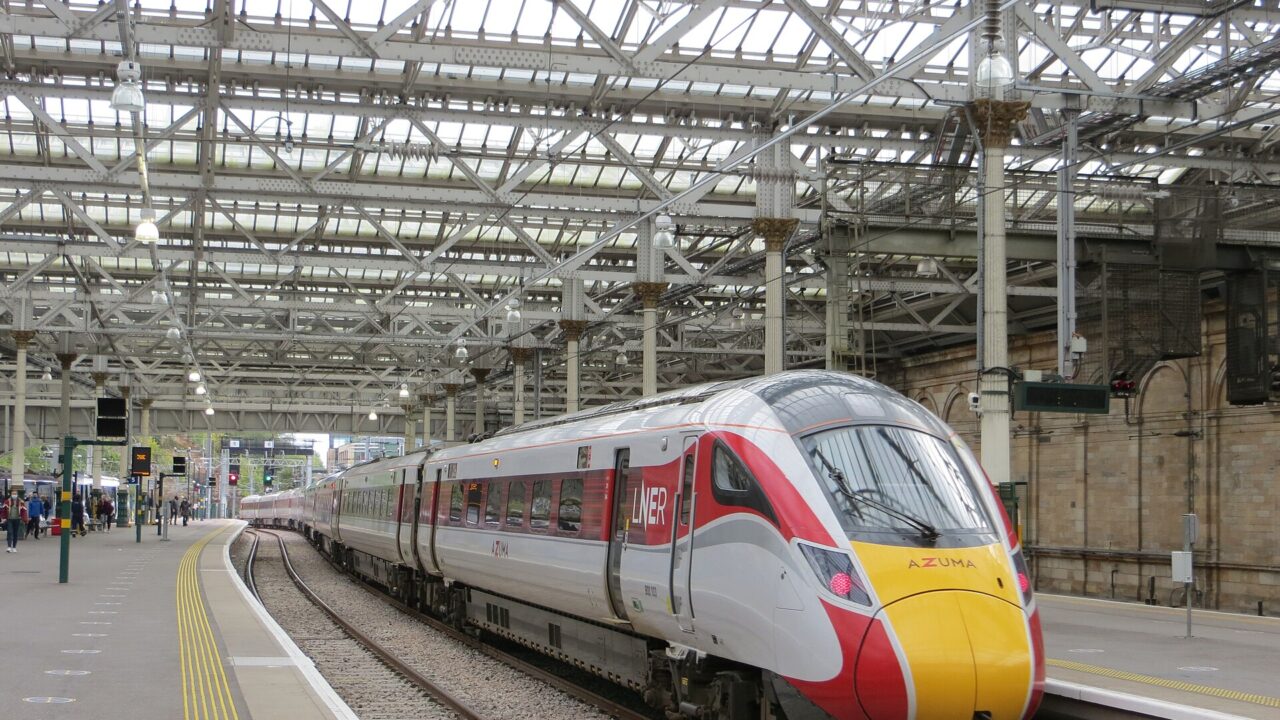
Trains are the Azuma fleet — bi-mode units that run on electricity for this whole route. Every seat can be reserved, there is a proper buffet counter as well as a trolley, and First Class includes a served meal on most weekday departures. Standard Class has power sockets at every seat and tables in the bays.
Lumo: the cheap one, with conditions
Lumo is an open-access operator, which means it does not hold a government franchise — it bought the right to run trains on the line and competes directly with LNER. It runs up to five services a day in each direction, all-electric, single class, with everything ordered by app from your seat. Advance singles start around £19.90, and for a booked-ahead traveller with a fixed date it is usually the cheapest way north that does not involve a coach.
The honest verdict: Lumo is genuinely good value and the trains are pleasant, but the low frequency is the trade-off nobody mentions. Five departures a day means that if something goes wrong — you miss it, or it is cancelled — your options collapse. Your Lumo ticket is not valid on LNER, and buying a walk-up LNER replacement on the day can cost you more than the entire original booking. If your trip has a hard deadline at the Edinburgh end, the extra £20 for LNER buys you a train every thirty minutes as a safety net.

How Long It Really Takes
The headline number is four hours. That is the fastest LNER service, which makes very few intermediate stops. Most trains take around four hours and twenty minutes, and Lumo sits at roughly four and a half hours because it calls at more places for the same fare.
What matters more than the difference between 4h00 and 4h32 is what the four hours replace. Compare the door-to-door reality rather than the headline.
| Stage | Train | Plane |
|---|---|---|
| Getting to the departure point | King’s Cross is on six Tube lines. Arrive 10 minutes before. | Heathrow, Gatwick, Stansted or Luton: 45–90 minutes, plus fare. |
| Before departure | Walk to the platform. No security. | 2 hours recommended with a bag, 90 minutes without. |
| In transit | 4h00–4h32, seated, with a window and a table. | c. 1h20 in the air. |
| At the other end | Step off in the city centre. | Bag reclaim, then 25–45 minutes and £6–£7.90 into town. |
| Realistic total | c. 4.5 hours | c. 5.5–6 hours |
The honest verdict: unless you are starting your day next to an airport or flying on a fare under £25, the train wins on total time as well as on comfort. The one case where flying genuinely makes sense is a same-day return for a meeting, where an early flight from London City or Heathrow can get you into Edinburgh before 09:00.
What It Costs in 2026
British rail fares are not a price list so much as a yield-management system, and this route is one of the most aggressively managed in the country. The same physical seat has a range of more than £180.
| Ticket type | Typical price, one way | Flexibility |
|---|---|---|
| Lumo Advance | from £19.90 | Fixed train only. No refunds; changes for a fee. |
| LNER Advance | from £41.40 | Fixed train only. Changeable for an admin fee plus any fare difference. |
| LNER First Class Advance | from £84.40 | Fixed train. Includes a meal on most weekday services. |
| Off-Peak / Super Off-Peak | Varies; usually £90–£130 | Any train after the morning peak on the valid day. Genuinely useful if your plans might move. |
| Anytime Single | £204.80 | Any train, any day, fully flexible and refundable. |
Two things follow from that table. First, a return is simply two singles on this route — there is no meaningful discount for booking both directions together, so price each leg separately and mix operators freely if that is cheaper. Second, the gap between the cheapest and dearest ticket is larger than the cost of a night in an Edinburgh hotel. Booking well is not frugality; it is the single biggest line item you control.
How to Book Cheap: Seven Things That Actually Work
1. Book the day the tickets are released
Advance fares for this route generally go on sale between eight and twelve weeks before the travel date. Lumo sometimes opens its horizon considerably earlier. The cheapest allocation on each train is small — a few dozen seats — and on popular departures it can be gone within days.
The practical method: pick your date, work back twelve weeks, and set a reminder. If the fares are not loaded yet, check again every few days. National Rail’s own journey planner will tell you the furthest date currently bookable, which is the quickest way to see whether your date has opened.
2. Check Lumo and LNER separately
Some booking sites show both; some quietly favour one. Because Lumo’s fares are set independently, the cheapest overall option on a given day is often a Lumo outbound and an LNER return, or the reverse. It takes two minutes to check both operators’ own sites, and neither charges a booking fee for doing so.
3. Split the ticket
Split ticketing is the biggest single saving available on this route and it is entirely legal. The National Rail Conditions of Travel allow you to use a combination of two or more tickets for one journey, provided the train you are on calls at every station where one ticket ends and the next begins. You do not have to change trains. You do not have to move seats. You just have to be on a service that stops there.
On London to Edinburgh, the usual split points are Peterborough, York, Newcastle and Berwick-upon-Tweed. Splitting at York and Newcastle alone can take £30 to £70 off the through fare for the same seat on the same train. Sites like Trainsplit and Split My Fare do the arithmetic automatically; you can also do it manually by pricing each leg on a normal booking site.
The honest verdict: split ticketing works, but check the stopping pattern before you buy. The fastest LNER services skip several intermediate stations, and a split at a station your train does not call at makes the ticket invalid. If you are also reserving a seat, reserve it for the whole journey so you are not asked to move.
4. Buy a railcard if you qualify
A railcard costs £35 for a year and takes a third off most fares. On a route where a return can easily be £120, it pays for itself on the first trip.
| Railcard | Price | Discount | Notes |
|---|---|---|---|
| 16–25 | £35/year, £80 for three years | 1/3 off | Can be bought before your 24th birthday and used for three years. |
| 26–30 | £35/year | 1/3 off | Digital only. |
| Senior (60+) | £35/year, £80 for three years | 1/3 off | No time restrictions on Advance fares. |
| Two Together | £35/year | 1/3 off both people | Named pair, must travel together; weekday travel after 09:30. |
| Family & Friends | £35/year, £80 for three years | 1/3 adults, 60% children | Up to four adults and four children. |
| Network | £35/year | 1/3 off | London and the South East only — no use on this route. |
5. Avoid Friday afternoon and Sunday evening
Fares on this route are demand-priced, and demand is brutally predictable. Friday departures after 15:00 and Sunday returns after 15:00 are the most expensive slots of the week. Shifting a Friday 16:00 to a Friday 11:00, or a Sunday evening return to Monday morning, routinely halves the price. If you can, travel out on a Tuesday or Wednesday.
6. Consider First Class on the quiet days
This sounds like the opposite of saving money, but LNER First Class Advance fares start from around £84.40 and include a served meal on most weekday services. On a midweek departure booked early, the gap between a £60 Standard Advance and an £85 First Advance can be about the price of the lunch you would have bought anyway — for a much larger seat and a quieter carriage. It is not always available and it is never the cheapest option, but it is worth a glance before you assume it is out of reach.
7. Do not buy a flexible ticket you do not need
The £204.80 Anytime single exists for people whose plans genuinely cannot be fixed. Almost no leisure traveller is that person. If there is a real risk your date will move, an Off-Peak ticket gives you most of the flexibility for a fraction of the Anytime price. Buying full flex “just in case” is the most expensive form of insurance on the British railway.
Seats, Luggage and Which Side to Sit On
Seat reservations on LNER are free and included with Advance tickets. Take them. A reserved seat on a Friday out of King’s Cross is the difference between four hours in a table bay and four hours on the floor by the toilet. Lumo allocates a seat when you book.
Sit on the right-hand side travelling north. This matters more than it sounds. From roughly Alnmouth to Berwick-upon-Tweed the East Coast Main Line runs directly along the Northumberland coast — beach, cliff, castle ruins and open North Sea, for the better part of forty minutes. Southbound, sit on the left for the same view. Facing forwards is a preference; facing the sea is a genuine improvement to the journey.
Luggage: there is no weight limit, no size check and no charge. Racks sit at the carriage ends and above the seats, and the space between seat-backs in an unreserved bay takes a large case. This is the quiet, enormous advantage of the train over the plane for anyone travelling with more than a cabin bag.
Food: LNER has a buffet counter and a trolley; Lumo takes orders through its app for delivery to your seat. Both are fine and both are expensive. Marks & Spencer and several other shops sit inside King’s Cross before the barriers, and buying there costs about half as much.
What You Actually See Out of the Window
The first hour out of London is flat and unremarkable — Hertfordshire, then the fens around Peterborough. Things improve steadily.
- York (about 2 hours in). The Minster is visible to the left as you approach, and York’s own station is one of the finest Victorian train sheds in Britain — a great curved iron roof over the platforms.
- Durham (about 2h45). The best thirty seconds of the journey. The line crosses a high viaduct with the cathedral and castle on their rock directly ahead. Look left. It is over quickly.
- Newcastle (about 3 hours). The train crosses the Tyne on the King Edward VII Bridge with the whole run of bridges — including the Tyne Bridge and the Gateshead Millennium Bridge — lined up downstream to the right.
- Alnmouth to Berwick (about 3h15–3h45). The coastal stretch. Estuary, dunes, and long views out to the North Sea on the right.
- Berwick-upon-Tweed. The train crosses the Royal Border Bridge high above the river on a run of stone arches, with the walled town below.
- The last twenty minutes. Farmland, then the coast again around Dunbar, then the sudden appearance of Arthur’s Seat and Salisbury Crags on the right as the train runs into Edinburgh.
Arriving at Waverley: The First Five Minutes
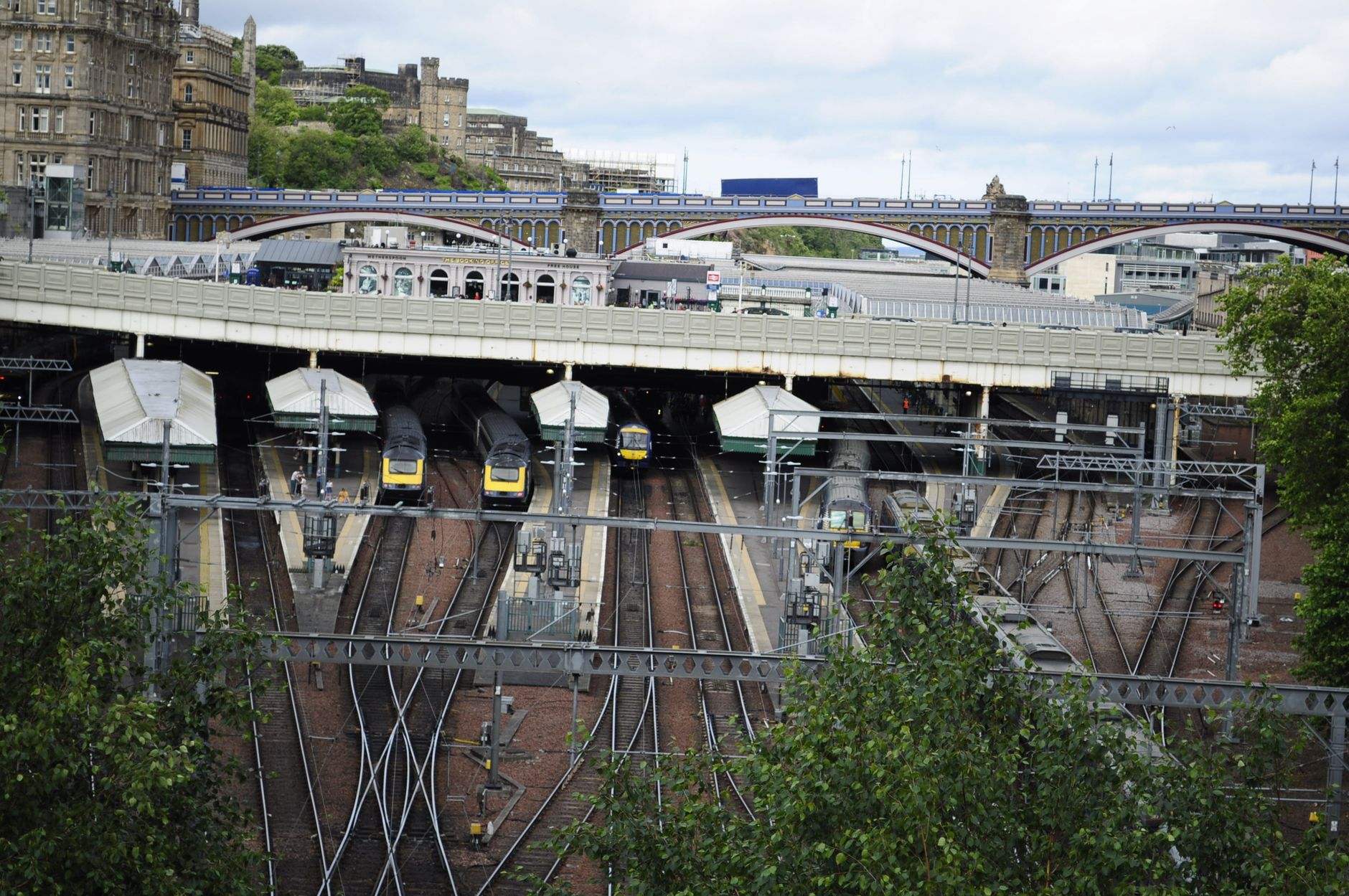
Waverley is unusual among major British stations in that it is below the city rather than beside it. The tracks run along the floor of the drained valley that was once the Nor Loch, with the Old Town on its ridge to the south and the New Town on its grid to the north. This has three practical consequences for the moment you step off the train.
- Every exit is uphill. There are lifts and escalators, but the geography is unavoidable. If you have heavy luggage, use the Princes Street exit at the north-west corner — it is the gentlest ramp and it puts you on the New Town side.
- Waverley Bridge, on the north side, is the transport hub. Airlink 100 airport buses, sightseeing buses and a taxi rank all sit there. The tram stop is a short walk east at St Andrew Square.
- The Royal Mile is directly above you to the south. Leave by Market Street or the Waverley Steps side and you are five minutes from the Old Town on foot. Most central hotels do not need a taxi at all.
If your accommodation is in the West End, Haymarket is the better station and most LNER services call there a few minutes before Waverley. Getting off at Haymarket can save you a twenty-minute walk back westwards. Our full guide to Edinburgh’s train stations covers both in detail, including left luggage, step-free routes and the exits worth knowing.
One 2026 note for anyone booking accommodation: Edinburgh’s visitor levy has applied since 24 July 2026. It adds 5% of the accommodation cost, before VAT, on the first five consecutive nights of any stay. It is not always shown in the headline room rate, so budget for it alongside your fare.
Train, Plane or Coach: The Honest Comparison
| Mode | Time | Typical cost | Verdict |
|---|---|---|---|
| Train (Advance) | 4h00–4h32 | £20–£60 | The right answer for almost everyone who books ahead. |
| Train (walk-up) | 4h00–4h32 | £90–£205 | Painful. Only if the flexibility is genuinely worth it. |
| Plane | c. 5.5–6h door to door | £40–£150 plus transfers | Rarely faster in practice. Makes sense for early same-day returns. |
| Coach | 9–11h | £15–£35 | The cheapest and by some distance the longest. An overnight coach saves a night’s accommodation and costs you the following day. |
| Sleeper train | Overnight | c. £50 seated, more for a berth | Saves a hotel night and arrives early. A different kind of trip — see our sleeper guide. |
The honest verdict: book an Advance train ticket eight to twelve weeks out and stop thinking about it. The only scenarios where another mode genuinely wins are a sub-£25 flight from an airport you can reach easily, or a coach when the budget is the constraint that matters. If your budget is tight but not that tight, our Edinburgh on a budget guide covers where the savings really are once you arrive — and it is not usually the fare.
Five Mistakes People Make on This Route
- Turning up at Euston. The daytime trains to Edinburgh leave from King’s Cross. Euston is the West Coast route and the sleeper. The two stations are a fifteen-minute walk apart, which is not enough time when you have cut it fine.
- Buying on the day. There is no last-minute discount on British trains. The price only goes up.
- Assuming a Lumo ticket works on LNER. It does not. They are separate companies and an Advance ticket is valid on one specific train only.
- Booking a return as a return. On this route two singles are almost always the same price or cheaper, and they let you mix operators and split tickets on each leg.
- Booking a taxi from Waverley. Look at a map first. The station is in the middle of the city and most central hotels are a five to fifteen minute walk, much of it faster than a car through the Old Town’s bus gates.
Frequently Asked Questions
How long is the London to Edinburgh train?
The fastest LNER services take about four hours from King’s Cross to Edinburgh Waverley. A typical service is around four hours and twenty minutes, and Lumo runs closer to four and a half hours because it makes more stops.
How far in advance should I book?
Advance fares are generally released eight to twelve weeks before travel, and the cheapest allocation on each train is small. Book as close to the release date as you can. Waiting until the week of travel typically doubles or triples what you pay.
Is split ticketing legal on the London to Edinburgh train?
Yes. The National Rail Conditions of Travel allow a journey to be made on a combination of tickets, provided the train calls at each station where the tickets change over. You do not need to change trains. Check the stopping pattern before you buy, because the fastest services skip some stations.
Which station in London do Edinburgh trains leave from?
Daytime LNER and Lumo services leave from London King’s Cross. The overnight Caledonian Sleeper leaves from London Euston. There is no direct Avanti West Coast service from Euston to Edinburgh — that route runs to Glasgow Central.
Which side of the train has the best view?
Travelling north, sit on the right. Between Alnmouth and Berwick-upon-Tweed the line runs along the Northumberland coast for roughly forty minutes. Southbound, sit on the left for the same view. Durham Cathedral appears on the left going north and Newcastle’s bridges on the right.
Is the train cheaper than flying to Edinburgh?
Booked ahead, usually yes once you include airport transfers at both ends. A £20 to £60 Advance train fare compares with a flight plus £6 to £7.90 for the airport bus or tram in Edinburgh and £45 to £90 in time and money getting to a London airport. Bought on the day, flying is often cheaper — but you will lose the time difference.
Can I take luggage on the train to Edinburgh?
Yes, with no weight limit, no size check and no charge. Luggage racks sit at the ends of each carriage and above the seats. This is one of the train’s biggest practical advantages over flying.
Do I need to reserve a seat?
Reservations are free with LNER Advance tickets and Lumo allocates a seat automatically. Always take the reservation. Friday afternoon and Sunday evening trains out of King’s Cross fill completely, and an unreserved passenger can end up standing for four hours.
Where does the train arrive in Edinburgh?
Edinburgh Waverley, in the valley between the Old Town and the New Town — about as central as a station gets. Most services also call at Haymarket a few minutes earlier, which is the better stop if you are staying in the West End.
Fares, timings and railcard details checked September 2026. Rail fares change at least annually and Advance prices move daily, so treat the figures above as bands rather than fixed prices.
Once you have your ticket, the rest of the planning gets easier. Our Edinburgh travel tips guide covers entry rules, costs and the practical layer underneath a first trip, the Edinburgh trip planning checklist works through everything in order, and where to stay in Edinburgh will tell you which side of the station to book. If you are arriving with a plan already half-formed, start with things to do in Edinburgh.
More Edinburgh Travel Practicalities
- The Caledonian Sleeper overnight train
- Getting from Edinburgh to Glasgow
- How many days you need in Edinburgh
Photo Credits
LNER Azuma at Edinburgh Waverley: LNER Azuma in Edinburgh Waverley by E235JREMU, CC BY-SA 4.0, via Wikimedia Commons.