Driving & Parking Edinburgh: 2026 Complete Guide
Driving in Edinburgh is not the easy choice that arriving by train or plane is. The city has a Low Emission Zone, 20mph limits across the centre, expensive central parking, and a medieval Old Town that was never designed for cars. That said, for visitors planning day trips to the Highlands, St Andrews, the Borders or the Trossachs — or for families with significant luggage — having a car is sometimes the most flexible option. This guide covers every angle of driving and parking Edinburgh: the Low Emission Zone rules, where to leave your car overnight, what it costs, the Park & Ride options that save you money, the speed limits, EV charging, hire cars, and the subtle local conventions that make Edinburgh driving easier than it first appears.
Should You Bring a Car to Edinburgh?
For most central-Edinburgh visits, the answer is no. The city is compact, the trams and buses are excellent, the taxis are reasonably priced, and walking is the best way to see the centre. Adding a car to a city break in Edinburgh usually means paying £20–£30 a day for parking, driving slowly along 20mph streets, dealing with the Low Emission Zone, and not being able to use it for the sights you actually came to see.
The cases where a car genuinely earns its place are: day trips to the Highlands, Loch Lomond, the Borders or East Lothian; visits with mobility issues that make taxis or buses impractical; families with children and large amounts of luggage; and longer Scottish road trips with Edinburgh as the starting or ending point. If your trip falls into one of these categories, the rest of this guide is for you.
Edinburgh’s Low Emission Zone
Edinburgh’s Low Emission Zone (LEZ) came into force on 1 June 2024. It covers most of the city centre, bounded broadly by the railway line to the north, Holyrood Park to the east, the Meadows to the south, and Lothian Road to the west. The full boundary is signposted with green LEZ signs at every entry point.
The LEZ restricts the most-polluting vehicles. Petrol cars must meet Euro 4 standard (broadly, registered after 2006); diesel cars must meet Euro 6 (broadly, registered after 2015). Non-compliant vehicles entering the zone face a £60 fine (£30 if paid within 14 days, doubled for repeat offences). Most modern hire cars are compliant; check your vehicle’s emission standard with the rental company before driving in. Motorcycles, taxis, buses and HGVs have their own compliance categories.
Compliance can be checked free at lowemissionzones.scot with your registration number. Permits and exemptions are available for disabled drivers and emergency vehicles. The zone operates 24 hours a day, every day of the year.
Speed Limits in Edinburgh
Edinburgh has implemented an extensive 20mph speed limit programme. Most central streets and residential roads are now 20mph. Main routes leading into the centre — Lothian Road, Princes Street section, Leith Walk — also include long 20mph stretches. Limits on the main roads in and out of the city vary, so follow the signs. The default in any unfamiliar Edinburgh street is to assume 20mph until you see otherwise; speed cameras enforce strictly.
Parking in Central Edinburgh
Central Edinburgh parking is regulated by the City of Edinburgh Council. Three principal types of central parking exist:
On-Street Pay & Display
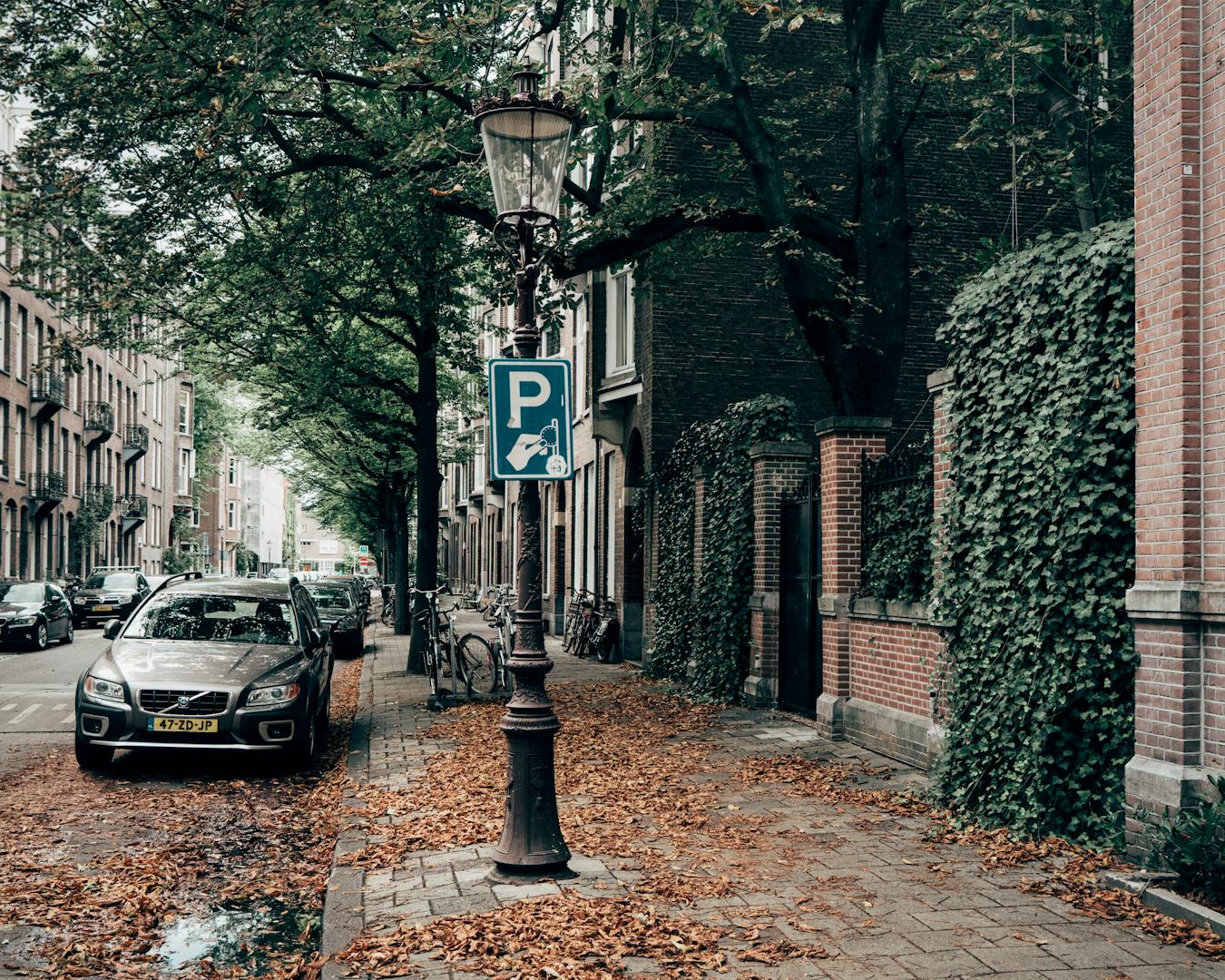
Most central streets have pay-and-display bays. Costs vary by zone: £9.00 an hour on George Street, St Andrew Square, Charlotte Square, Queen Street, Market Street and St Giles Street; £8.00 in the Old Town and around Stafford Street; £6.80 in the West End, Tollcross and Fountainbridge; £6.00 in the New Town; and £4.20–£4.60 in Bruntsfield, Stockbridge, Dean and the outer zones. The central zones charge Monday to Saturday 08:30–18:30 and Sunday 12:30–18:30. Maximum stays vary by street and are shown on the bay’s sign. Pay via the RingGo app (the council’s contracted provider), with the location code printed on the bay sign, or with coin/contactless at the on-street machines. Enforcement is by patrol officers and CCTV; a parking ticket is £100 (£50 if paid early).
Council-Operated Car Parks
- Castle Terrace Car Park — under the Castle, run by NCP: £7 for an hour, £36 for 4–9 hours and £38 for 9–24 hours. Most central paid option.
- Greenside Place Car Park — at the east end of Princes Street, behind the St James Quarter. £5/hr, £25/day.
- St James Quarter Car Park — newer multi-storey, large capacity, integrated with the shopping centre. £4/hr, £24/day with shopping validation.
- Greyfriars Car Park — close to the National Museum. £4/hr, £20/day.
- Quartermile — south of the Meadows, useful for South Side hotels. £3/hr.
Private NCP and Q-Park Car Parks
Several private operators run car parks in central Edinburgh. NCP Castle Terrace, NCP Greenside, Q-Park Omni Centre and Q-Park New Street are all in the centre. Booking in advance via the operator’s app is often cheaper than paying on the day.
Hotel Parking
Many central hotels charge for parking, and some include it in the room rate. Check before booking. Hotels with their own car parks include the Sheraton Grand, Apex hotels, Premier Inn Princes Street, Marriott Edinburgh, and the Caledonian.
Park & Ride: The Smart Option
Edinburgh has five Park & Ride sites on the edge of the city, all offering free parking and discounted onward travel to the centre. They are by far the most economical option for daytime visits.
Ingliston Park & Ride
Connected to the city by the Edinburgh tram (the Ingliston P&R tram stop). 1,000+ spaces, free parking, and a tram fare of £2.40 to the centre. The tram takes about 30 minutes to St Andrew Square. Perfect if you are driving down from Stirling or the West.
Sheriffhall Park & Ride
South-east of the city on the A720 City Bypass at the A7. Served by buses 33 and X33, plus 46 and 48. 561 spaces, free, with 24-hour access.
Newcraighall Park & Ride
South-east of the city on the A1 / A720 corner. Connected by Lothian Buses route 30 to the centre and by the Borders Railway from the adjacent station. 565 spaces, at 50p per 24 hours.
Hermiston Park & Ride
West of the city, on the A71 at the City Bypass. Connected by Lothian Buses services 25, 32, 34, 35, X40 and 70, with the N25 and N35 running at night.
Wallyford Park & Ride
East of the city, adjacent to Wallyford railway station. The Park & Ride itself is a bus site, with no terminal building, served by Lothian 44, X4, 113 and 124. Ideal for those coming from the North-East or East Lothian.
Hermiston, Sheriffhall, Wallyford and Newcraighall are open 24 hours. Ingliston opens 04:00–02:00, with no parking between 02:00 and 04:00 and no overnight stays. Most have electric vehicle charging points (free with the car park stay). Parking costs nothing except at Newcraighall (50p per 24 hours), but you still pay the onward fare: £2.40 for a single on the tram or a Lothian bus. Bus and tram fares checked October 2026.
Parking in Outlying Edinburgh Neighbourhoods
Outside the central paid zones, much of Edinburgh’s residential street parking is governed by “Controlled Parking Zones” (CPZs) — the peripheral zones 5 to 8 and the extended zones with N and S codes — where parking is restricted to permit-holders during weekday daytime hours (08:30–17:30 Mon–Fri). Visitor parking is permitted with a Pay & Display ticket or via RingGo in these zones, at £4.20–£6.80 per hour.
Streets outside CPZs (the further out you go from the centre) often have free unrestricted street parking. Areas like Cramond, Restalrig, Liberton, Colinton and Newhaven mostly have free street parking. Even in the inner suburbs (Marchmont, Bruntsfield, Stockbridge), evenings and Sundays often free up street parking.
Sundays and Evenings
On Sundays, the peripheral and extended CPZs are unrestricted, but the central zones charge from 12:30 to 18:30 (signage will say “Mon–Sun”). Always read the sign on the bay you choose. Evening parking on most central streets is free from 18:30 to 08:30, but private car parks often continue to charge through the night.
Disabled (Blue Badge) Parking
Blue Badge holders may park free of charge, with no time limit, in council pay-and-display and shared-use bays on street, as well as in many on-street spaces marked with a disabled bay sign. The Blue Badge does NOT exempt the holder from the Low Emission Zone — you still need a compliant vehicle or a separate LEZ exemption (which can be applied for online). Designated disabled bays are signposted in every central car park.
Electric Vehicle Charging
Edinburgh has been investing heavily in EV charging. The City of Edinburgh Council runs charge points on street and in car parks, with Tesla, Pod Point, BP Pulse, Allego and Charge Place Scotland all running networks in the city. Park & Ride sites have free charging (slow 7kW) included with the car park; rapid 50kW chargers are available at most NCP and Q-Park central sites. Rapid chargers cost around 50–70p per kWh; check the operator’s tariff before you plug in.
EV-only parking bays are increasingly common in central Edinburgh and at Park & Ride sites. Most hotels with parking provide one or more EV charge points; check at booking.
Car Hire in Edinburgh
All major rental brands operate at Edinburgh Airport — Avis, Hertz, Europcar, Enterprise, Budget, Sixt, Alamo and National — with desks in the arrivals hall and vehicles in the consolidated rental centre five minutes’ walk away. Most also have city-centre branches, typically at Waverley Steps (Hertz), Haymarket (Enterprise), or Edinburgh Park (Sixt). Rates vary with the season and the size of car, so compare a few brands before you book.
Considerations for hire car visitors:
- Confirm the car meets the LEZ standard before driving into the centre.
- Check the rental agreement for additional driver and young driver fees.
- Hire cars are usually delivered with a full tank — return full to avoid hefty refuelling charges.
- UK driving is on the LEFT — visitors from right-hand-drive countries should book an automatic if uncomfortable with a manual.
- Foreign driving licences (EU, US, Canadian, Australian, Japanese) are accepted for up to 12 months without an International Driving Permit.
Driving Routes In and Out of Edinburgh
The A720 City Bypass
The A720 is the main ring road, looping around the south and west of the city, connecting the A1 (east), A7, A68, A701, A702, M8 (west) and A8/A90 (Forth Bridges). It is your friend for getting in and out — most journeys into central Edinburgh from outside the city are easier via the bypass and an arterial than directly through residential streets. Be aware of two known congestion points: the Sheriffhall Roundabout (often busy in rush hour) and the Hermiston Gait junction.
The M8 (to Glasgow)
Edinburgh-Glasgow by the M8 takes about an hour, longer at rush hour. Joins the A720 City Bypass at Hermiston Gait. Tolls: none.
The M90 (to Perth and the Highlands)
North across the Queensferry Crossing. The Forth bridges are toll-free since 2008. The M90 then runs to Perth and on to the Highlands; check journey times and roadworks on Traffic Scotland before a long drive north.
The A1 (to North-East and London)
East from the city via Musselburgh, then south through Berwick-upon-Tweed. The A1 is the main long-distance road to Newcastle (2h 30m), York (4h), and London (8h+).
The A7 and A68 (Borders)
South to the Scottish Borders — Galashiels, Jedburgh, Hawick — and into Northumberland.
The A702/A703 (Pentlands and Biggar)
The fastest road south-west to the Lake District and Cumbria.
The Queensferry Crossing
The Queensferry Crossing opened in 2017 and carries most A90 traffic across the Forth (replacing the older Forth Road Bridge, which now carries buses, taxis and pedestrians). Free, with three lanes in each direction. Wind shielding makes it the most reliable Forth crossing — the old Road Bridge often closed in high winds. Adjacent is the historic Forth Rail Bridge, a UNESCO World Heritage site that is worth photographing from the South Queensferry waterfront (10 minutes’ walk from the crossing).
The Tram and Roadworks
The tram line is now complete, but minor road resurfacing and signal upgrades continue. Always check Traffic Scotland (trafficscotland.org) before driving across the city, especially around Picardy Place and the eastern New Town.
Parking Permits and Long Stays
For visitors staying more than a week and wanting to keep a car parked, options include:
- Edinburgh Park (free street parking 5 minutes’ tram ride from the centre).
- Park & Ride sites (free 24-hour parking).
- Hotel monthly arrangements (some negotiate for long-stay guests).
- Private long-stay car parks near the airport (prices vary, so book ahead).
- Pay-and-display bays in the CPZs (the council’s visitor permits are sold to residents, not to the public).
Safety on Edinburgh Roads
Edinburgh is one of the safer UK cities to drive in. Traffic moves slowly (20mph dominant in the centre), pedestrians have priority on Princes Street and the Royal Mile, and cyclists are increasingly protected by segregated lanes. The greatest hazards are tram tracks (especially in wet weather — never cross at a shallow angle), unfamiliar one-way systems in the New Town, and the cobble setts that turn slippery in rain. Be especially cautious driving the Old Town between St Giles’ Cathedral and the Castle — the streets here are narrow, steep, and often busy with pedestrians.
Drink Driving in Scotland
Scotland has a stricter drink-driving limit than England and Wales: 50mg of alcohol per 100ml of blood (compared to 80mg in England). In practical terms, the safest rule is zero alcohol if you intend to drive. Edinburgh’s public transport, taxi network and walking-friendly streets make a no-drive-after-dinner approach easy.
Mobile Phones and Driving
Hand-held mobile phone use while driving is illegal in the UK; hands-free is permitted but discouraged. Penalties are 6 penalty points and a £200 fine — and for foreign drivers, a fine is payable on the spot.
Parking Apps and Payment Methods
Edinburgh’s preferred parking app is RingGo, used for all council pay-and-display bays. Download the app before you arrive, register a credit card, and pay by entering the bay number printed on the sign. You can extend remotely (so you do not need to return to the car), get reminders, and see your parking history. Alternative apps for private car parks include APCOA Connect, NCP, Q-Park and PayByPhone. Contactless and chip-and-PIN payments are accepted at most on-street machines as well.
Driving Etiquette in Edinburgh
Edinburgh driving is on the gentler end of UK norms. A few local conventions:
- Letting buses pull out from stops is standard practice. Locals will often hold back for a bus indicator.
- Pedestrians on the Royal Mile and around Princes Street regularly cross between traffic — slow approach is expected.
- Roundabouts are common; give way to the right. Most central roundabouts are small and slow.
- The Sheriffhall, Hermiston Gait and Forth bridges roundabouts are larger, faster, and benefit from familiarity before peak-hour visits.
- Tram-track crossings should be perpendicular and at low speed — at sharp angles, motorbike and bicycle wheels can jam.
- Cobble setts are slippery when wet; ABS braking is your friend.
Winter Driving in Edinburgh
Edinburgh averages about 43 days a year with an air frost, and exposed ground outside the city sees more. Salt gritting is good on main routes but residential streets can be icy. Winter tyres are not legally required but are recommended for travel into the Highlands between November and March. Council snow ploughs prioritise the City Bypass, the main A-roads and bus routes; residential streets may be unsalted. The Met Office app and Traffic Scotland are essential winter resources.
Frequently Asked Questions
Can I drive into central Edinburgh?
Yes, but the central Low Emission Zone restricts older diesel and petrol vehicles. Central parking is expensive (£8–£9/hr in the Old Town and around George Street) and many residents prefer Park & Ride.
How much is parking in Edinburgh?
Central on-street: £6–£9 per hour, or £4.20–£4.60 further out. Council car parks: rates vary, so check the council’s site or RingGo. Park & Ride: free at most sites (Newcraighall charges 50p per 24 hours), plus a £2.40 bus or tram fare.
What is the Edinburgh Low Emission Zone?
A central zone restricting petrol cars older than 2006 and diesel cars older than 2015. Fines of £60 for non-compliant vehicles.
Where can I park for free in Edinburgh?
Park & Ride is free at Ingliston, Hermiston, Sheriffhall and Wallyford, and only 50p per 24 hours at Newcraighall. Most residential streets outside the central paid zones offer free parking. Sundays and evenings are often free in CPZ zones.
Are the Forth Bridges toll free?
Yes — all Forth bridge crossings (Queensferry Crossing, Forth Road Bridge, Forth Rail Bridge for trains) are toll-free since 2008.
Can I park overnight in Edinburgh?
Most central bays are free overnight (18:30–08:30). Hotel parking is the safest option for visitors. For Park & Ride, Hermiston (up to 3 nights) and Sheriffhall allow overnight parking; Ingliston does not, and Newcraighall charges 50p per 24 hours.
Does Edinburgh have congestion charging?
No — there is no London-style congestion charge. The Low Emission Zone is the closest equivalent.
Are there EV charging points in Edinburgh?
Yes — the council runs on-street and car park charge points, and you’ll also find them at most car parks, supermarkets, hotels and the Park & Ride sites.
What’s the cheapest way to park near the centre?
Park & Ride (free) plus tram/bus (£2.40 each way) at £4.80 round trip per day — far cheaper than any central car park.
Can I drive on the Royal Mile?
Vehicle access is restricted at most times of day; the section between the Castle and Holyrood is heavily pedestrianised and signed for permit holders, taxis and access vehicles only.
Final Word: Park Outside, Travel In
For most visitors, the smartest Edinburgh parking strategy is to park outside the centre and use public transport in. Ingliston Park & Ride combined with the tram is the most efficient (and usefully connects to the airport too). For day trips into Scotland, hiring at the airport on arrival and avoiding central Edinburgh entirely makes sense — pick up the car, head north or west, return on the final day. If you must drive into the centre, plan for the Low Emission Zone, the 20mph limits, and the £20–£30 daily parking cost.
For the rest of your Edinburgh planning, see our companion guides on Edinburgh Airport to city centre, Lothian Buses & trams, walking in Edinburgh, and our day trips from Edinburgh hub.