South Queensferry, the Forth Bridges and Inchcolm Island (2026)
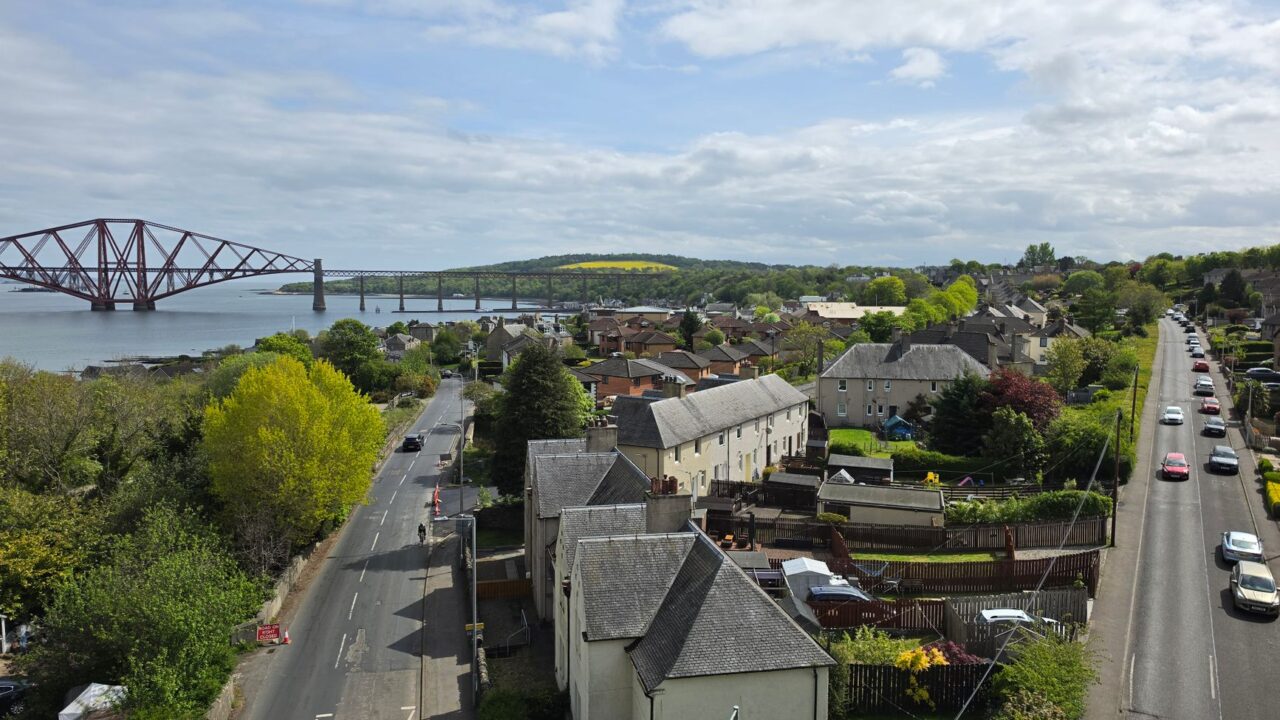
A South Queensferry day trip is the best short excursion from Edinburgh and it is consistently undersold, because the pages that rank for it are either a single boat operator’s booking form or a blog post about the bridges. What the village actually offers is a two-street medieval burgh on a beach, three of the most significant bridges in the world stacked up beside each other, and a boat to an island with a twelfth-century abbey on it — all reachable in twenty minutes from Waverley.
The one thing to know before you plan anything: Inchcolm Abbey is closed from 1 November to 31 March. If you are reading this in winter, the island is off the table and the village and the bridges are not. This guide sets out both versions of the day, with real 2026 boat prices, the train-versus-bus comparison, and an honest verdict on which cruise to take.
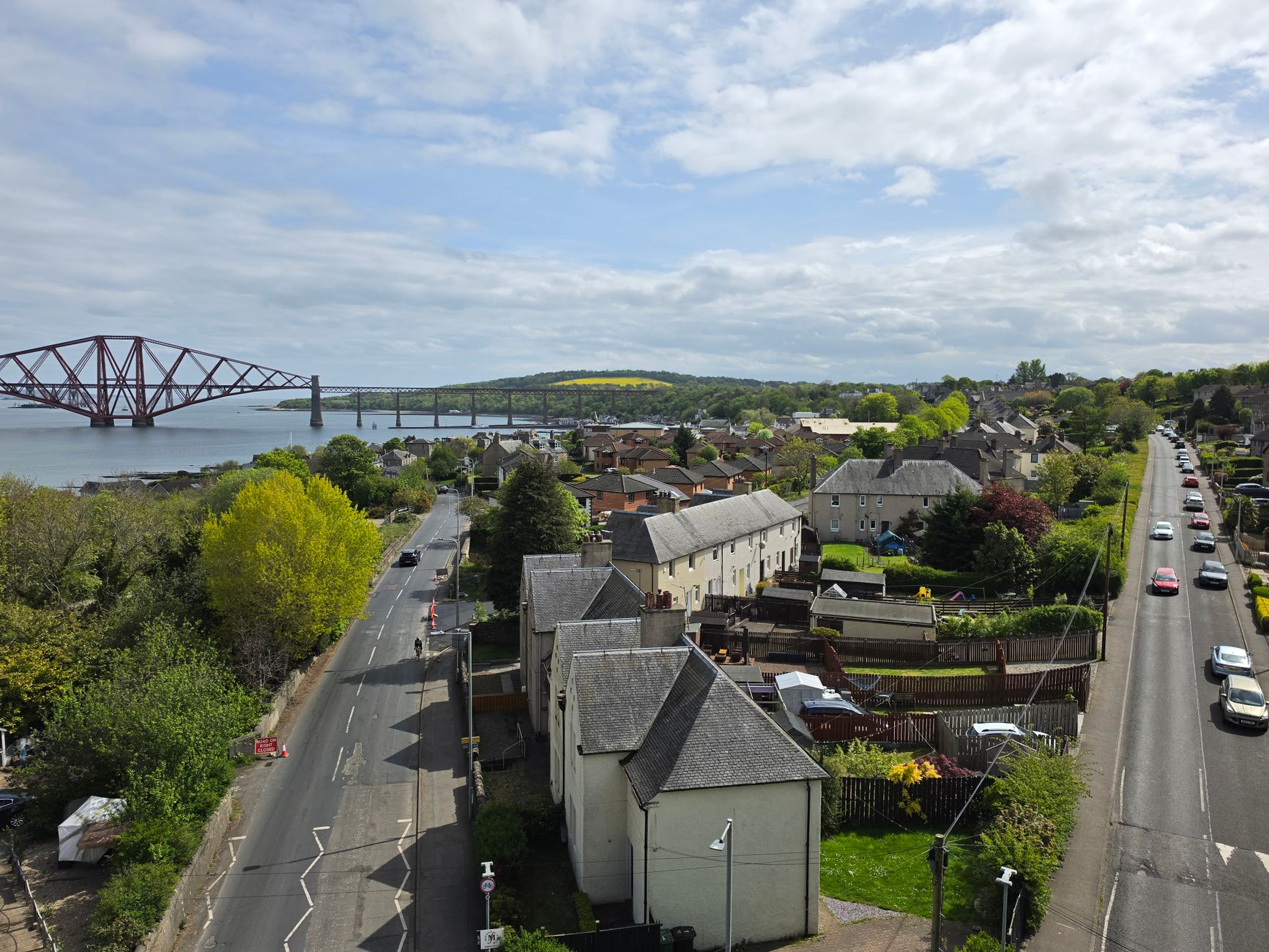
At a Glance
- Getting there: ScotRail from Edinburgh Waverley to Dalmeny, about 20 minutes, then a 15-minute walk down into the village. Or Lothian Country service 43, every 20 minutes through the day, Sundays included, and every 30 minutes in the evening.
- Three bridges in one view: the Forth Bridge (rail, opened March 1890, 2,467 m), the Forth Road Bridge (1964) and the Queensferry Crossing (2017).
- The Forth Bridge is a UNESCO World Heritage Site, inscribed on 5 July 2015 at the 39th session of the World Heritage Committee in Bonn.
- Maid of the Forth sails from Hawes Pier, EH30 9TB. Three Bridges cruise £18 adult / £10.50 child, 90 minutes. Inchcolm landing trip £21 / £12, three hours with 90 minutes ashore.
- The Inchcolm landing fee is extra and is added to your boat booking. Budget for it and ask the amount when you book.
- Inchcolm Abbey season: 1 April–30 September, 10:30 with last entry 16:45; 1–31 October, 10:30 with last entry 15:45. Closed 1 November to 31 March.
- HES members and Explorer Pass holders do not pay the landing fee, though they still pay the boat fare.
- Collect all tickets from the office at the top of Hawes Pier at least 15 minutes before departure.
- Under 5s sail free on the cruises. A one-hour high-speed RIB Seafari runs at £35 adult.
- Half a day is enough for the village and the bridges. A full day if you take the boat.
Getting There: Train vs Bus
Both work and they suit different days. The train is faster and drops you above the village; the bus is slower and drops you in it.
| Train to Dalmeny | Lothian Country 43 | |
|---|---|---|
| Journey | Waverley → Dalmeny, about 20 min | George Street → Queensferry, about 40 to 55 min |
| Then | A 15-minute walk downhill into the village | Nothing — it stops in the village |
| Frequency | Regular ScotRail service | Every 20 min through the day, every day; every 30 min in the evening |
| Best for | Getting there quickly; the walk down has the bridge view | Anyone with limited mobility, luggage, or a pushchair |
| Watch for | The walk back up to Dalmeny is uphill and takes longer | Slower, and slowest in the weekday rush hour |
The honest verdict: take the train out and the bus back. The walk down from Dalmeny gives you the approach to the village with the Forth Bridge opening up in front of you. Then, at the end of the day when you are tired and it is probably raining, the 43 runs from Queensferry back into town without a climb. Our guide to Edinburgh’s train stations covers Waverley, and Lothian buses and trams covers ticketing.
If you drive, there is parking in the village but it fills on summer weekends, and the streets are narrow and medieval. The train is genuinely easier.
The Three Bridges
This is the reason most people come, and it is worth understanding what you are looking at, because the three bridges are a hundred and thirty years of engineering laid out side by side in a single view.
The Forth Bridge (1890)
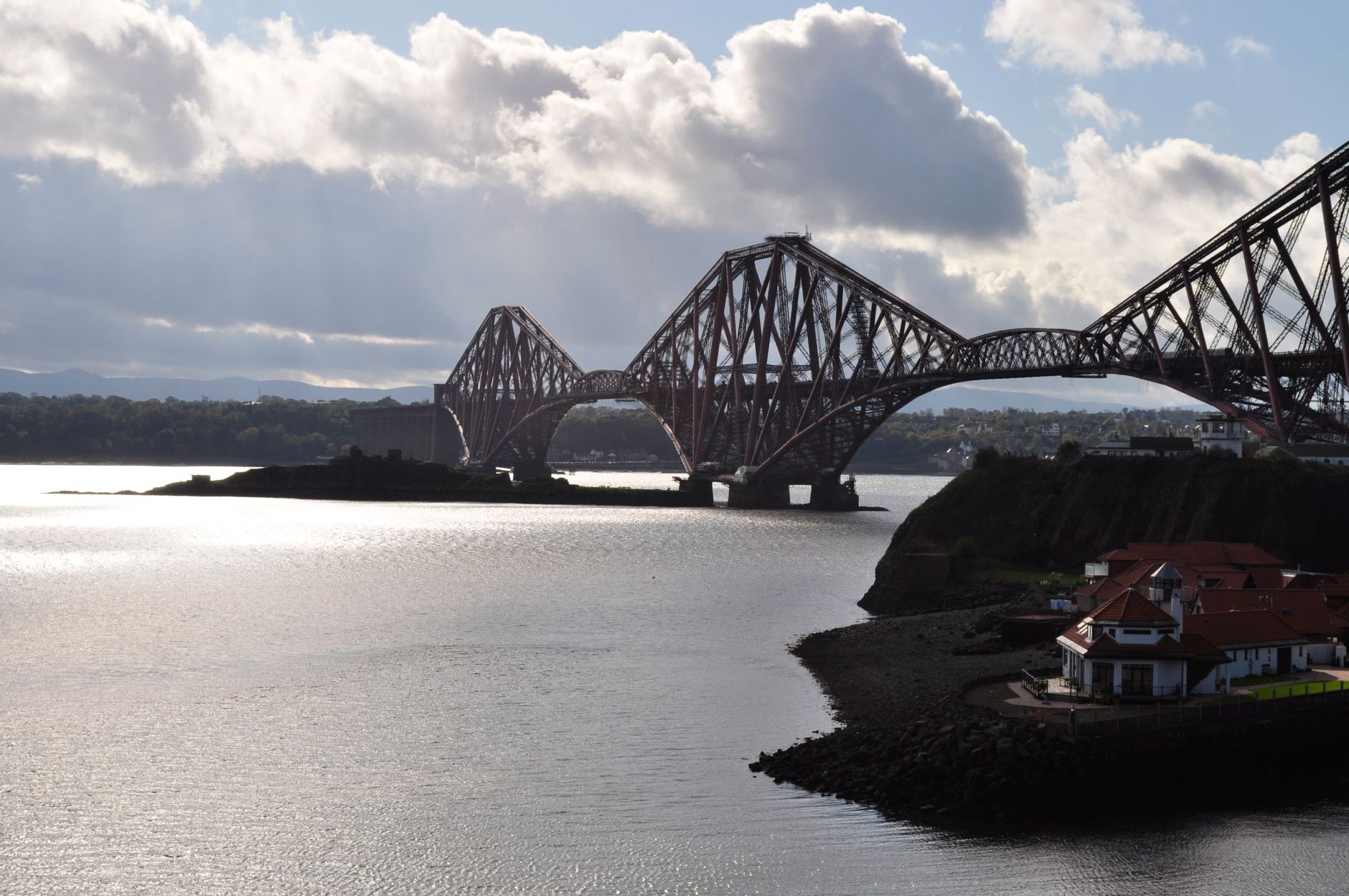
The red cantilever railway bridge, opened in March 1890, 2,467 metres / 8,094 feet long. It was designed in the aftermath of the Tay Bridge disaster of 1879, which is why it looks the way it does: the cantilever form was chosen to be visibly, almost aggressively over-engineered, so that the travelling public would believe it was safe. It worked. It is still carrying trains.
It was inscribed as a UNESCO World Heritage Site on 5 July 2015, at the 39th session of the World Heritage Committee in Bonn, after ICOMOS recommended inscription in May of that year. It is one of a small number of UNESCO sites in Scotland and the only one that is a working piece of railway infrastructure.
The best view is from the village foreshore, looking east, with the bridge rising directly out of the water beside you. The best photograph is from the shore just east of Hawes Pier, at low light.
The Forth Road Bridge (1964)
The suspension bridge in the middle. When it opened in 1964 it was the longest suspension bridge outside the United States, and it carried the main road to Fife for half a century. It now carries buses, cyclists and pedestrians rather than general traffic, which makes it the one you can walk across.
Walking the Forth Road Bridge is free and it is the single most underrated thing to do here. The footpath runs the full width of the firth, you are high above the water, and you get the classic view of the 1890 bridge from a completely different angle. Allow about 45 minutes each way and expect it to be windy — it is always windy.
The Queensferry Crossing (2017)
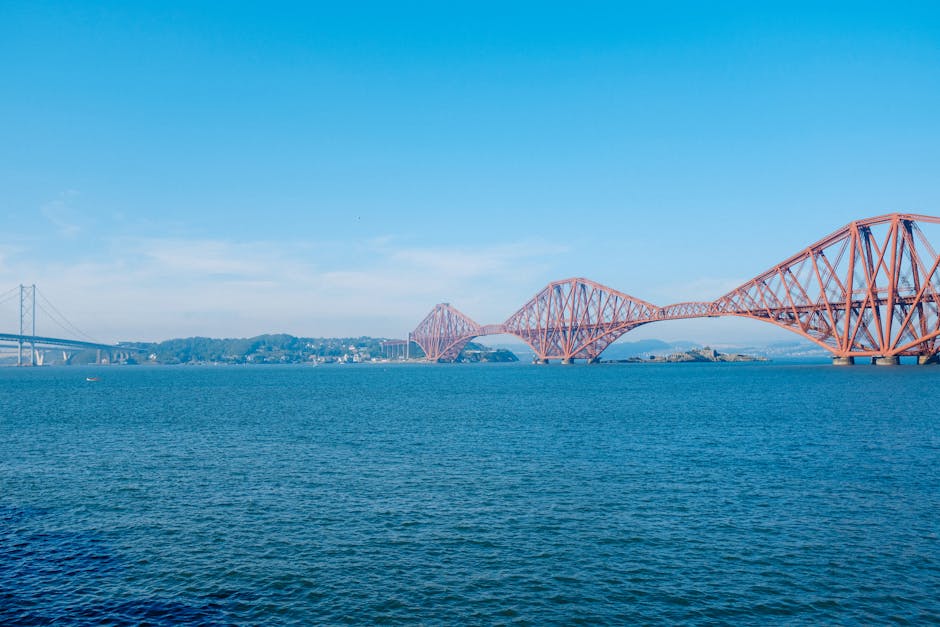
The cable-stayed bridge to the west, carrying the motorway since 2017. It is elegant and it is the one you cannot get onto — no pedestrian access at all. It is best appreciated from the water, which is one of the arguments for taking a boat.
The three-bridges view — cantilever, suspension and cable-stayed, in a line, all in use — does not exist anywhere else, and it is the reason the boat operators lead with it. Our guide to Edinburgh’s UNESCO World Heritage sites covers the Forth Bridge alongside the Old and New Towns.
The Boats: Which Trip to Take
Maid of the Forth sails from Unit 2, Hawes Pier, South Queensferry EH30 9TB. These are its 2026 prices, taken from the operator’s own site.
| Trip | Adult | Child 5–15 | Duration | What you get |
|---|---|---|---|---|
| Three Bridges cruise | £18.00 | £10.50 | 90 min | Under all three bridges, wildlife, commentary. No landing. |
| Bridges & Engineering cruise | Check at booking | Check at booking | 90 min | The same route with expert commentary on the engineering. |
| Inchcolm landing trip | £21.00 | £12.00 | 3 hrs | The 90-minute cruise plus 90 minutes ashore on Inchcolm. |
| Seafari (high-speed RIB) | £35.00 | £30.00 (8–15) | 60 min | Inchgarvie, Inchcolm and Inchmickery. 12 passengers. |
The honest verdict on which to book: the Inchcolm landing trip at £21 is the only one worth taking if the island is open. It includes the entire 90-minute three-bridges cruise, so you are paying £3 more than the cruise-only ticket for an extra hour and a half on a medieval island. That is not a close decision. Book the landing trip in season; book the cruise only if the island is shut or you cannot spare three hours.
The Seafari at £35 for an hour is a different product — twelve people in a rigid inflatable going fast past three islands. It is fun and it is not a substitute for the landing trip. It is also not the thing to book if anyone in your party dislikes spray or bouncing.
Practical: all tickets for the boat and the island must be collected from the ticket office at the top of Hawes Pier at least 15 minutes before departure. This catches people out — the pier is a five-minute walk from the High Street and the office is at the landward end. A second operator, Forth Boat Tours, also sails from Hawes Pier; check its prices and sailings directly with the operator.
Inchcolm Island and Abbey
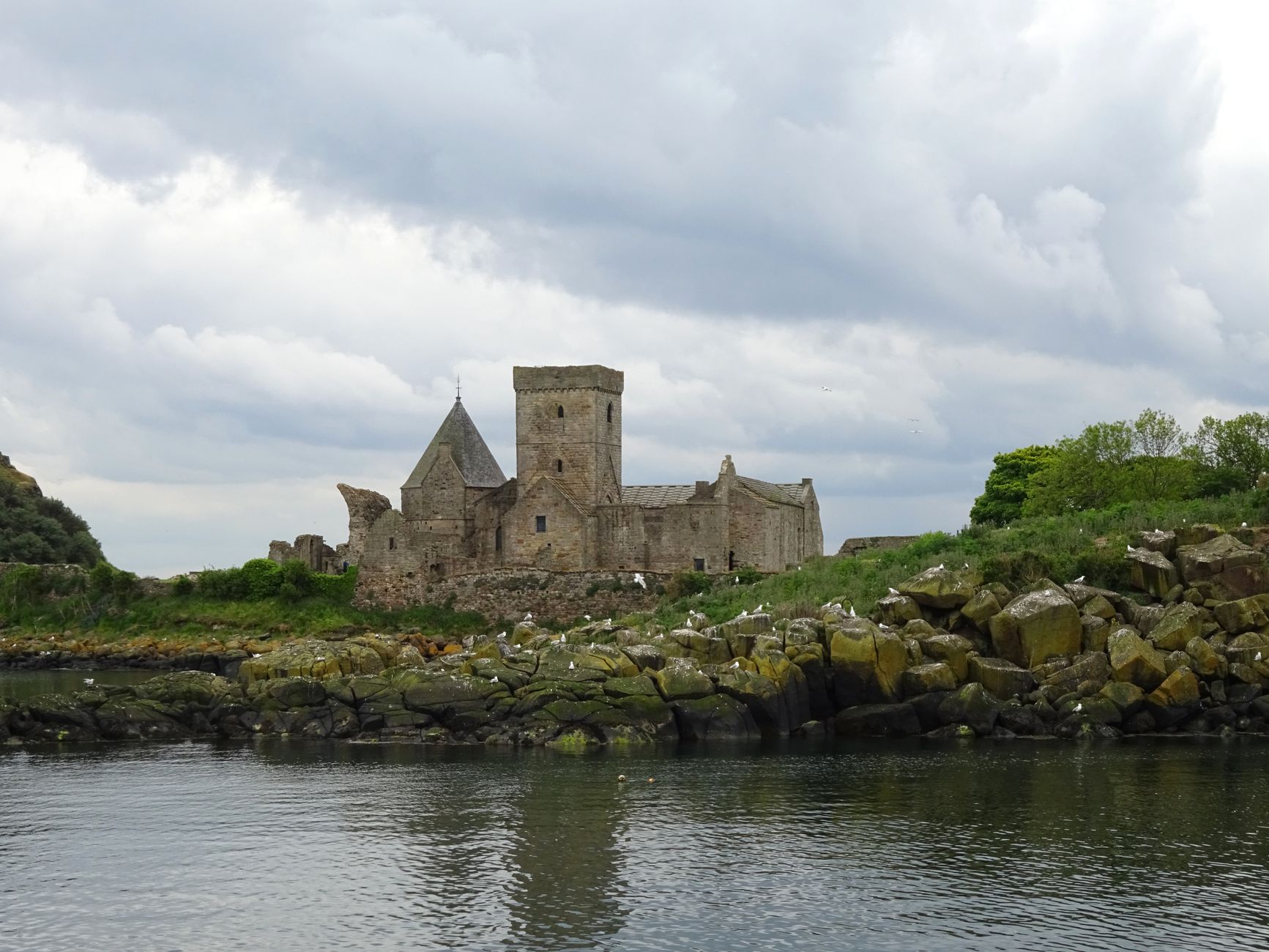
An island in the middle of the Firth of Forth with a twelfth-century Augustinian abbey on it, wartime fortifications including searchlight posts and an ammunition tunnel, and sandy beaches near the abbey. Ninety minutes ashore is exactly the right amount of time.
The abbey is the best-preserved group of monastic buildings in Scotland, and unusually you can go inside the cloister, the chapter house and the tower. Because it is on an island, it escaped the stone-robbing that hollowed out most Scottish abbeys after the Reformation — the roofs are still on parts of it, which is essentially unheard of.
| Season | Open | Last entry | Closes |
|---|---|---|---|
| 1 April – 30 September | Daily 10:30 | 16:45 | 17:30 |
| 1 – 31 October | Daily 10:30 | 15:45 | 16:30 |
| 1 November – 31 March | Closed | ||
The landing fee. Everyone who lands on Inchcolm pays a fee to Historic Environment Scotland on top of the boat fare, and it is added to your ferry booking rather than paid on the island. HES members and Explorer Pass holders do not pay it, though they still pay for the boat. The amount is set by HES and can change, so ask the operator when you book rather than budgeting from a third-party figure.
Wildlife: what you will and will not see
Seals are the reliable one. Grey and common seals haul out on the rocks around the islands and are visible on most sailings through the season. Puffins are the unreliable one: they are present in the Forth in the breeding season, roughly April to July, and they leave for the open sea afterwards. A boat trip in September will not show you puffins. Operators market wildlife generically and it is worth being clear about the calendar before you build expectations, particularly with children.
Gannets, guillemots, razorbills, cormorants and kittiwakes are all common in the firth, and the island itself is loud with gulls in the breeding season — genuinely loud, to the point of being unpleasant if you are unlucky with the timing.
The Village Itself
South Queensferry is worth an hour on its own and most people give it fifteen minutes between the station and the boat, which is a waste. The name is the giveaway: this was the crossing point used by Queen Margaret in the eleventh century, travelling between Edinburgh and Dunfermline, and a ferry ran here for the best part of nine hundred years until the road bridge opened in 1964.
- The High Street — a narrow terraced street on two levels, with a raised pavement, running parallel to the water. Genuinely handsome, and about a fifteen-minute walk end to end.
- The Hawes Inn, by the pier under the rail bridge, appears in Robert Louis Stevenson’s Kidnapped — it is where David Balfour is lured aboard. It is still a pub. See our literary Edinburgh guide for the wider Stevenson trail.
- The foreshore — a beach and a promenade directly beneath the rail bridge, which is the best free thing here. Trains pass overhead every few minutes and the noise is part of the experience.
- The walk east along the shore toward Dalmeny Estate, which is quiet, level and largely empty of visitors.
- The Loony Dook — the New Year’s Day swim in the freezing Forth, held here for decades. Arrangements have changed over the years, so check locally before travelling for it specifically.
The honest verdict on the village: it is small. Two streets, a beach, a handful of pubs and cafés, and no attraction of its own. What makes it good is the setting — a medieval burgh with a UNESCO bridge landing on top of it — and the fact that it feels like a real place rather than a day-trip destination, because it is one. Do not come expecting a town. Come expecting an afternoon.
Two Versions of the Day
In season, with the island (April to October)
- 09:40 — train from Waverley to Dalmeny, then the walk down.
- 10:15 — collect tickets at the top of Hawes Pier, well before the 15-minute cut-off.
- Late morning — the three-hour Inchcolm landing trip, with 90 minutes on the island.
- Mid afternoon — late lunch on the High Street, then the foreshore under the bridge.
- Late afternoon — the 43 back into Edinburgh, or walk the Forth Road Bridge if you have the legs.
Out of season (November to March)
- Late morning — train to Dalmeny and walk down. Winter light on the bridge is better than summer light.
- Midday — the High Street and lunch somewhere warm.
- Early afternoon — walk the Forth Road Bridge, about 45 minutes each way. This is the winter answer and it is free.
- Mid afternoon — back before dark, which in December means before 15:30.
Out of season the boats may not be running either — check with the operator rather than assuming. That makes South Queensferry a half-day trip in winter rather than a full one, which is still a better use of a grey afternoon than most things on the standard list. See our complete guide to day trips from Edinburgh for the alternatives.
Practical Notes
- Weather: the firth is exposed and it is colder on the water than on the shore by a noticeable margin. Take a layer more than you think, on any boat, in any month.
- Sailings are weather-dependent and do get cancelled. Book a trip early in your stay so you have a spare day.
- Inchcolm has no café and limited shelter. Take water and something to eat for the 90 minutes ashore.
- Accessibility: the walk down from Dalmeny is steep in places; the 43 bus is the better option. The island involves uneven ground and steps inside the abbey.
- With children: the boat, the seals and an island with a tunnel on it are a strong combination. Three hours is manageable; the 90 minutes ashore is the good bit. See Edinburgh with kids.
- Operator contact: Maid of the Forth, 0131 331 5000.
Boat prices and durations checked against maidoftheforth.co.uk, and Inchcolm Abbey’s opening season against Historic Environment Scotland listings, in October 2026. Confirm sailings, the landing fee and the 43 timetable directly before travelling.
Frequently Asked Questions
How do you get to South Queensferry from Edinburgh?
ScotRail from Edinburgh Waverley to Dalmeny takes about 20 minutes, then it is a 15-minute walk downhill into the village. Alternatively Lothian Country service 43 runs into the village itself, every 20 minutes through the day, Sundays included, taking about 40 to 55 minutes from George Street. Train out, bus back is the best combination.
How much does the Inchcolm Island boat trip cost?
Maid of the Forth charges £21.00 for an adult and £12.00 for a child aged 5 to 15 for the three-hour Inchcolm landing trip, which includes 90 minutes ashore. Under 5s go free. The Historic Environment Scotland landing fee is charged on top and added to your booking — ask the operator for the current amount.
When is Inchcolm Abbey open?
Daily from 10:30 between 1 April and 30 September, with last entry at 16:45 and closing at 17:30; and daily from 10:30 through October, with last entry at 15:45 and closing at 16:30. It is closed from 1 November to 31 March. If you are visiting Edinburgh in winter, the island is not available.
Which boat trip should I book from South Queensferry?
The Inchcolm landing trip, if the island is open. It costs £21 against £18 for the 90-minute cruise, and it includes that entire cruise plus 90 minutes ashore on a medieval island — £3 for an extra hour and a half is not a close decision. Take the cruise only if the island is shut or you cannot spare three hours.
Can you walk across the Forth bridges?
You can walk across the Forth Road Bridge, the 1964 suspension bridge, free of charge, on a footpath running the full width of the firth — about 45 minutes each way, and always windy. You cannot walk the 1890 rail bridge or the Queensferry Crossing, which has no pedestrian access at all.
Will I see puffins on a Forth boat trip?
Only in the breeding season, roughly April to July. Puffins leave the Forth for the open sea after that, so an August or September sailing will not show you any regardless of what the marketing implies. Seals are the reliable sighting and are visible on most sailings through the season.
Is the Forth Bridge a UNESCO World Heritage Site?
Yes. The 1890 cantilever rail bridge was inscribed on 5 July 2015 at the 39th session of the World Heritage Committee in Bonn, after ICOMOS recommended inscription in May that year. It is one of a small number of UNESCO sites in Scotland and the only one that is still a working piece of railway infrastructure.
How long do you need in South Queensferry?
Half a day for the village, the foreshore and the bridges. A full day if you take the three-hour Inchcolm landing trip. The village itself is two streets and takes about an hour to see properly, so the length of the day is set by whether you get on a boat.
Where to Go Next
South Queensferry is the shortest of the trips in our complete guide to day trips from Edinburgh — compare it with St Andrews and Stirling Castle, both of which are further and both of which take a full day. For the UNESCO context, see Edinburgh’s World Heritage sites. If it is the coast and the water you want rather than the bridges, Cramond and its tidal causeway and Portobello beach are both inside the city, and outdoor activities in Edinburgh covers the rest.