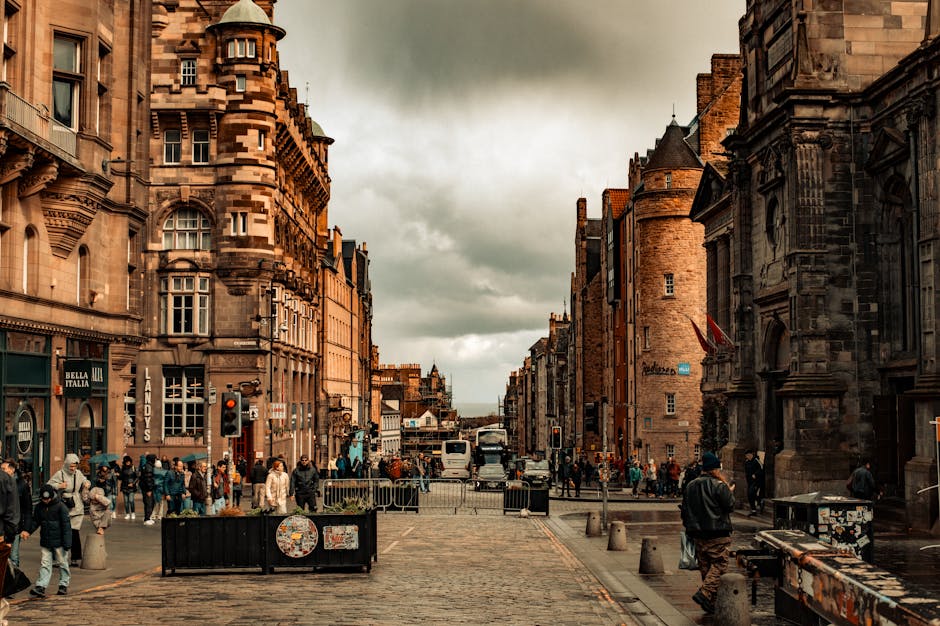
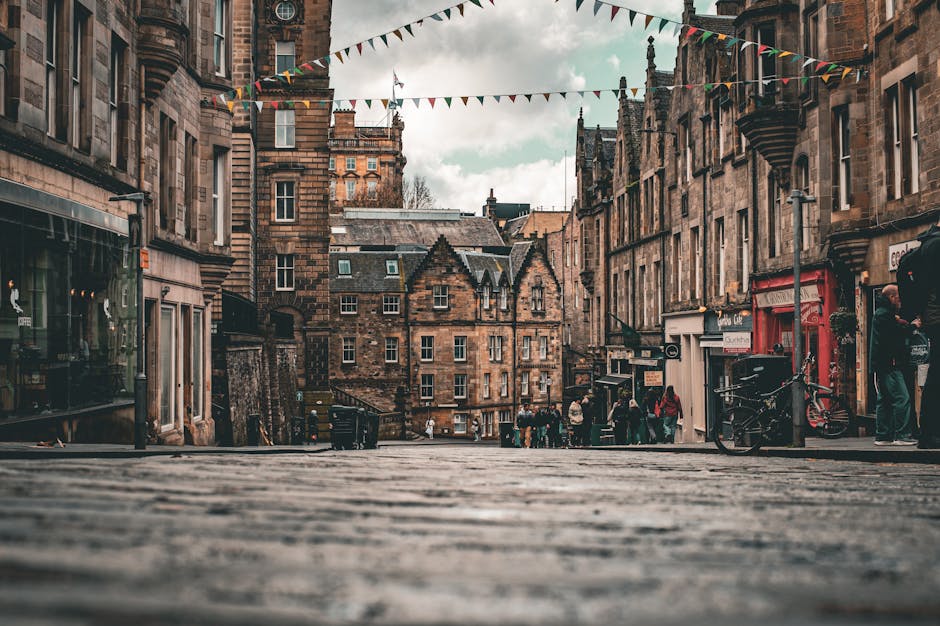
Edinburgh Graveyard Tours: Dark History Walks (2026 Guide)
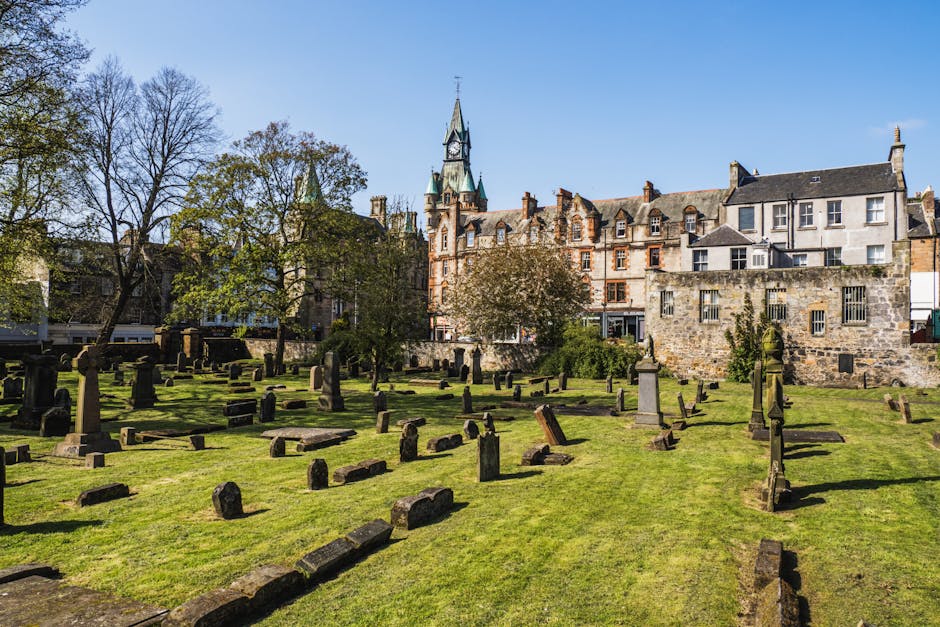
Edinburgh graveyard tours are the city’s most distinctive walking experience — a guided descent into 500 years of plague, witchcraft, bodysnatching, religious martyrdom, and recorded poltergeist activity, all within the walls of half a dozen surviving kirkyards. The best Edinburgh graveyard tours combine real history (rigorously researched), local legend (atmospherically told), and the kind of after-dark walking that makes Edinburgh’s cobbled closes feel genuinely uncanny rather than tourist-staged.
This guide covers every Edinburgh graveyard tour worth taking in 2026 — the operators, the routes, the haunted history, and the practical details for visiting independently. Whether you want to walk Greyfriars Kirkyard at dusk with a costumed guide or quietly explore Canongate Kirkyard on your own, you’ll find the right approach below.
Why Edinburgh Graveyard Tours Are Different
Most cities have one or two historic burial grounds with stories worth telling. Edinburgh has dozens — and the city’s tight medieval geography means graveyards sit shoulder-to-shoulder with daily life: a kirkyard tucked behind a primary school, an 18th-century cemetery next to a Tesco Metro, a Covenanters’ Prison hidden behind a wall ten minutes’ walk from the National Gallery.
What makes Edinburgh graveyard tours uniquely rich is the layering. In a single 90-minute walk through Greyfriars Kirkyard you’ll touch on the Reformation, the Covenanters’ Wars, plague, bodysnatching, the Burke and Hare murders, witch trials, the Scottish Enlightenment, and J.K. Rowling’s gravestone-hunting walks. The same kirkyard contains the resting places of philosophers, bishops, poets, executioners, and the dog whose loyalty inspired a city’s identity.
Tour operators have built dedicated graveyard walks around this layering — some focusing on supernatural reports (City of the Dead Tours), others on social history (Historic Edinburgh Tours), others on literary inspiration (specialist Harry Potter and Burke-and-Hare walks).
The Best Edinburgh Graveyard Tours (2026 Ranked)
1. City of the Dead Haunted Graveyard Tour
The signature evening tour and Edinburgh’s most famous graveyard walk. City of the Dead has exclusive after-hours access to the Covenanters’ Prison — a locked, hard-to-access section of Greyfriars Kirkyard normally closed to the public — where the Mackenzie Poltergeist has supposedly been attacking visitors since the late 1990s.
Route: Old Town closes around George IV Bridge, descent into Greyfriars Kirkyard, walk through the main kirkyard, and unlock the gate into the Covenanters’ Prison for the climactic stop.
Duration: 1 hour 15 minutes.
Times: 8:30pm, 9:30pm, 10:30pm typical (later in winter darkness).
Price: £14-£17 adult.
Tone: Theatrical, paranormal-leaning, designed to genuinely unsettle. Not for under-12s.
Book through: cityofthedeadtours.com.
2. Greyfriars Kirkyard Guided Tour (Historic Edinburgh Tours)
The serious-history option. Run by members of the City of Edinburgh Cemetery Guide Scheme — accredited guides who specialise in kirkyards rather than entertainment performers — Historic Edinburgh Tours offers a deep dive into Greyfriars’ real residents, monuments, and inscriptions.
Route: Greyfriars Kirkyard only, with extended stops at the Covenanters’ Memorial, the Black Mausoleum, the McGonagall and Riddell gravestones (Harry Potter connection), and the elaborate Adam family monument.
Duration: 90 minutes.
Times: Daytime, typically 10am or 2pm.
Price: £15-£20 adult.
Tone: Educational, fact-based, comparable to a museum tour. Good for history fans and older children.
Book through: historicedinburghtours.co.uk.
3. Auld Reekie Haunted Graveyard & Vaults Tour
Combines a graveyard walk with descent into the South Bridge Underground Vaults — two of Edinburgh’s most haunted locations in a single 90-minute tour at a reasonable price.
Route: South Bridge Vaults, Old Town closes, Greyfriars Kirkyard.
Duration: 90 minutes.
Times: Multiple daily slots from afternoon through late evening.
Price: £20-£25 adult.
Tone: Theatrical ghost stories with vault access — good middle ground between scares and history.
Book through: auldreekietours.com or GetYourGuide.
4. The Cadies & Witchery Murder & Mystery
While not strictly a graveyard tour, The Cadies’ Murder & Mystery walks pass through several Old Town burial-adjacent sites — the Grassmarket execution ground, the closes around the Royal Mile, and graveyard glimpses — with hidden actor jump scares throughout.
Route: Royal Mile and surrounding closes; doesn’t enter Greyfriars itself.
Duration: 90 minutes.
Times: Evening tours, 7pm and 9pm typical.
Price: £15-£17 adult.
Tone: Comedy horror with theatrical scares. Light on history, high on entertainment.
Book through: witcherytours.com.
5. Mercat Tours Ghosts & Ghouls
The premier Old Town operator includes graveyard stops in their evening ghost tour, with content that’s rigorously researched but theatrically delivered. Mercat’s exclusive vault access adds a unique element other graveyard-focused tours don’t have.
Route: Royal Mile closes, Greyfriars exterior, Blair Street Vaults.
Duration: 90 minutes.
Times: Multiple evening tours, year-round.
Price: £19-£22 adult.
Tone: Balanced between history and entertainment.
Book through: mercattours.com.
6. Free Guruwalk Graveyard Tours
Several independent Guruwalk guides run graveyard-focused free tours. Quality varies but the best are excellent and cost nothing beyond the expected £15-£20 tip.
Route: Varies; check individual listings.
Duration: 90 minutes to 2 hours.
Times: Various.
Price: Free (tip-based).
Best for: Budget travellers willing to experiment with newer guides.
Book through: guruwalk.com.
The Edinburgh Graveyards You’ll Visit
Most Edinburgh graveyard tours focus on one or two of these six burial grounds, each with distinct character and history.
Greyfriars Kirkyard
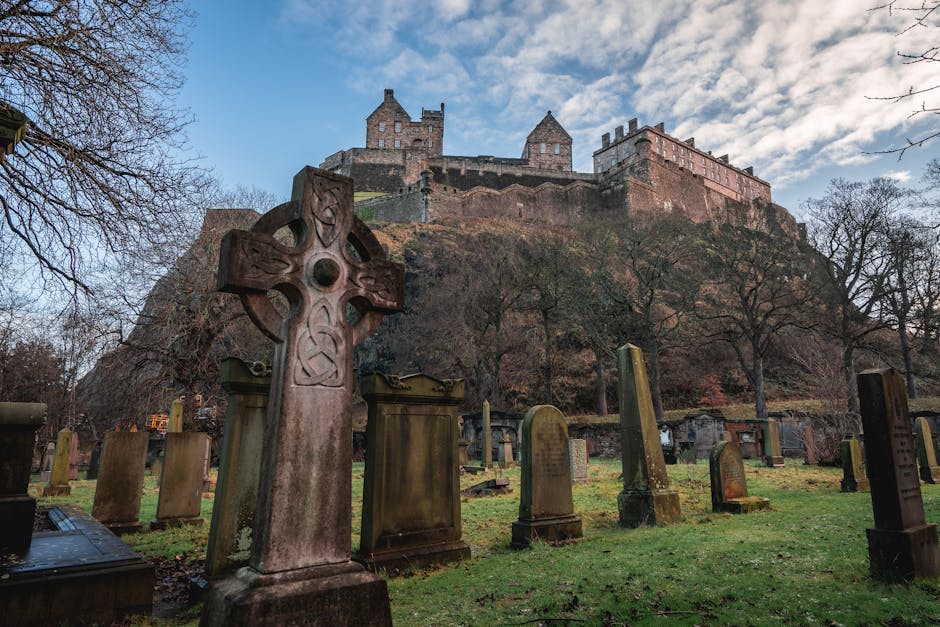
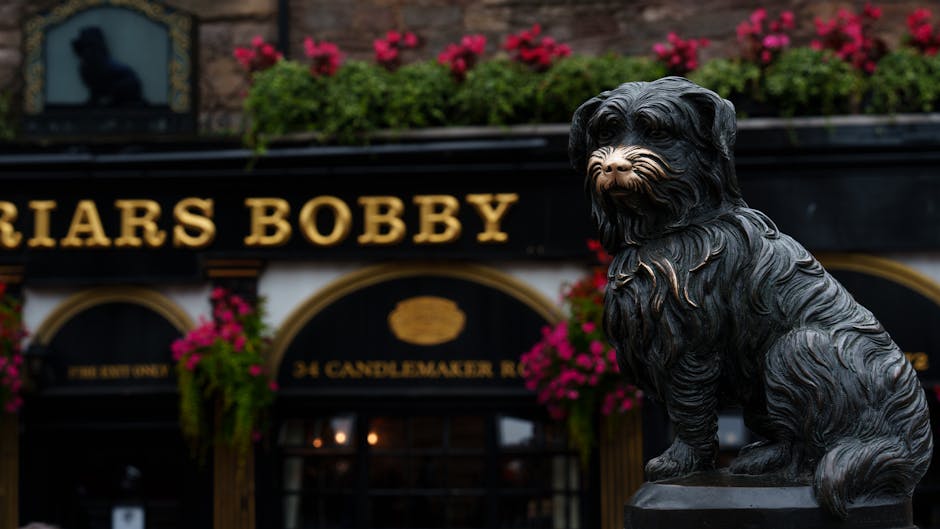
The centrepiece. Founded 1562, Greyfriars contains more dramatic history per square metre than any other graveyard in Britain. Highlights include the Covenanters’ Prison (Scotland’s first concentration camp, where 1,200 Presbyterian rebels were held in 1679), the Black Mausoleum (centre of the Mackenzie Poltergeist phenomenon), the Greyfriars Bobby grave, and dozens of monuments inscribed with names that famously appear in Harry Potter (Thomas Riddell, McGonagall, Scrymgeour). The kirkyard is open 24/7 but the Covenanters’ Prison is locked — only City of the Dead Tours and limited council-led visits get access. See our Greyfriars Kirkyard and Bobby guide for a comprehensive look.
Canongate Kirkyard
Lower Royal Mile, dating to 1688. The resting place of Adam Smith (the economist), Robert Fergusson (Robert Burns’ poetic inspiration, with a Burns-commissioned memorial), philosopher Dugald Stewart, and the artist David Allan. Far less visited than Greyfriars and beautifully maintained — a peaceful spot to sit between Royal Mile crowds.
Old Calton Burial Ground
On the slopes of Calton Hill, established 1718. Houses David Hume’s distinctive cylindrical mausoleum (designed by Robert Adam), the Political Martyrs’ Monument (an obelisk commemorating Scottish reformers transported to Australia in the 1790s), and the Emancipation Memorial — one of the first monuments to the abolition of American slavery anywhere outside the United States, featuring statues of Abraham Lincoln and a freed slave. For more Calton history, see our Calton Hill guide.
New Calton Burial Ground
The “new” burial ground was opened in 1820 when Old Calton ran out of space. It contains a Watch Tower (used as guard posts against bodysnatchers) and grand Victorian monuments. Quieter and more austere than Greyfriars.
Dean Cemetery
West End, opened 1846 in the Victorian “garden cemetery” style. Beautifully landscaped, with the graves of architects (William Playfair), photographers (David Octavius Hill), and judges. The atmosphere is more Pere Lachaise than medieval — peaceful walking ground rather than gothic horror.
Warriston Cemetery
The atmospheric north Edinburgh cemetery that fans of overgrown romantic decay seek out. Opened 1843, partially abandoned in the late 20th century, now slowly being restored. Tours rarely visit, but solo walkers find it genuinely unsettling — overgrown paths, collapsed tombs, ivy-strangled angels. Use caution if visiting alone; the cemetery is large and remote.
The Dark History You’ll Hear About
What Edinburgh graveyard tours actually cover, organised by theme. Even a 90-minute tour can’t fit everything, so different operators emphasise different threads.
The Covenanters’ Wars (1638-1688)
The bloodiest religious conflict in Scottish history. Presbyterian Covenanters refused to accept King Charles I’s Episcopal reforms; the “Killing Times” of 1679-1688 saw thousands tortured and executed. Greyfriars Kirkyard contains both the National Covenant signing site (1638) and the Covenanters’ Prison (1679), where 1,200 captured rebels were held in an open-air enclosure through a Scottish winter. About 400 died of exposure or were summarily executed. Tour guides walk you through the prison gate and tell the stories.
Plague and overcrowding (1500s-1600s)
Edinburgh’s medieval Old Town was Europe’s most densely populated city per acre. When plague struck — six major outbreaks in the 16th and 17th centuries — entire closes were sealed off, residents quarantined, and the dead piled in mass graves. Mary King’s Close holds the most famous of these stories (see our Mary King’s Close guide), but mass plague pits underlie much of the city. Greyfriars expanded several times to accommodate plague burials.
Bodysnatching and Burke and Hare (1820s)
Edinburgh’s anatomy schools led the world in medical training but couldn’t legally acquire enough corpses. Resurrectionists — bodysnatchers — would exhume freshly buried corpses and sell them to medical schools. Greyfriars Kirkyard installed iron mortsafes (cages over fresh graves) and a watchtower in response. William Burke and William Hare cut out the middleman by murdering 16 people in 1828 and selling the bodies directly to anatomy lecturer Dr Robert Knox. Burke was hanged, dissected publicly, and his skin used to bind a small book still on display at Surgeons’ Hall.
Witch trials (1500s-1700s)
An estimated 4,000-6,000 people were tried for witchcraft in Scotland between 1563 and 1736, with about 1,500-2,500 executions — most by strangulation followed by burning. The Witches’ Well at Edinburgh Castle marks the spot where over 300 women were burned. Tours touch on the trials, the legal procedures, and the inquisitorial torture used to extract confessions.
The Mackenzie Poltergeist (1998-present)
In December 1998, a homeless man broke into the Black Mausoleum (the tomb of Sir George Mackenzie, “Bloody Mackenzie” who prosecuted the Covenanters) and allegedly disturbed the spirits within. Since then, City of the Dead Tours has logged over 500 alleged attacks on visitors — scratches, bruises, faintings, and at least one confirmed case in 2003 where a visitor was found unconscious. Whether you believe it or not, the phenomenon is a real cultural artefact and the tour operator takes the reports seriously enough to lock the gate.
The literary inspirations
J.K. Rowling lived in Edinburgh while writing the early Harry Potter books and reportedly took her dog for walks through Greyfriars Kirkyard. Several Harry Potter character names appear on gravestones there: Thomas Riddell, Elizabeth Moodie, William McGonagall (the famously bad Victorian poet, whose real grave is nearby), and Scrymgeour. Robert Louis Stevenson grew up in Edinburgh and drew on the Old Town’s split personality — respectable Georgian New Town versus dark, vertical Old Town — when writing The Strange Case of Dr Jekyll and Mr Hyde.
Visiting Edinburgh Graveyards on Your Own
Most Edinburgh graveyards are free to visit at any time. A guided tour adds context and access (Covenanters’ Prison) you can’t get alone — but solo visits work well too if you know where to look.
Greyfriars Kirkyard solo route (45-60 minutes)
Enter from George IV Bridge through the main gate. Take the path straight ahead to the Adam Mausoleum (the columned monument with skull carvings). Turn left along the back wall to find Greyfriars Bobby’s grave (small flat stone, often with sticks placed by visitors). Walk along the south wall to spot the Thomas Riddell stone (Harry Potter fans will recognise it). Loop back via the Martyrs’ Memorial and exit through the Flodden Wall gate to Candlemaker Row. The Covenanters’ Prison gate (behind the church) is usually locked.
Canongate Kirkyard solo route (20-30 minutes)
Enter from the Royal Mile gate. The church itself is sometimes open for visitors. Walk anticlockwise around the kirkyard: Adam Smith’s grave is on the west wall (the polished slab with his economic dates 1723-1790). Robert Fergusson’s memorial (commissioned by Burns) sits centrally with the famous inscription “No Sculptured Marble Here, Nor Pompous Lay” engraved by Burns himself. The kirkyard is quiet and atmospheric early morning or late afternoon.
Old Calton Burial Ground solo route (20-30 minutes)
Enter from Waterloo Place. Hume’s cylindrical mausoleum is immediately visible on the highest ground. Walk west to find the Political Martyrs’ Obelisk (60 feet tall, easily the most striking monument). Continue south along the wall for the American Civil War / Emancipation Memorial with the freed slave statue. Views from the upper terraces stretch across to Holyrood Park and Arthur’s Seat.
Dean Cemetery solo route (30-40 minutes)
Enter from Dean Path. The Victorian “garden cemetery” layout means winding paths rather than grid lines. Look for the elaborate Playfair monument (the architect of much of Edinburgh’s New Town has an appropriately classical tomb), the Christison family monuments, and the central war memorial. Far quieter than Old Town kirkyards; visit on a sunny afternoon for the atmospheric tree-shaded peacefulness.
Etiquette for solo visits
These are working burial grounds with active interments and visiting families. Speak quietly, don’t sit on tombstones, don’t photograph mourners, don’t take rubbings from monuments (it damages soft sandstone), and keep dogs on leads. Greyfriars and Canongate sometimes have Sunday services or memorial events — give those spaces.
What to Bring on an Edinburgh Graveyard Tour
Practical preparation for a graveyard walk.
Footwear: Sturdy walking shoes with good grip. Kirkyards have uneven ground, exposed roots, and worn stone paths. Heels are a bad idea.
Layers: Even in summer, Edinburgh evenings cool down significantly. A fleece under a waterproof shell works for evening tours year-round.
Torch / phone flashlight: Evening tours from October to March happen in genuine darkness. Most operators provide guidance but a phone torch helps with footing.
Cash for tipping: Free tours rely on cash tips. Paid tours don’t expect them, but £5-£10 per guide is appreciated for exceptional tours.
Camera: Allowed in most kirkyards (Greyfriars yes, others usually yes). Flash is discouraged out of respect for the space.
Best Times to Take an Edinburgh Graveyard Tour
For atmosphere: October-March evenings
Darkness falls by 5pm in winter, creating genuinely atmospheric conditions for evening tours. Frost, fog, and mist are common — the city looks like a Bram Stoker novel. October is peak ghost-tour season; expect crowds and book early.
For comfort: May-September daytime
Long daylight hours mean you can take a Greyfriars tour at 6pm and still have light. Better for older travellers, families with younger kids, or anyone uncomfortable with after-dark walks.
For depth: shoulder season weekday tours
November (after Halloween) and March-April are quietest. Tour groups are small, guides have time to answer questions, and you’ll often have major monuments to yourself.
Avoid: Hogmanay week (Dec 30-Jan 2)
Many tours pause for the holiday. Some kirkyards close briefly. Plan around this if visiting at New Year.
Edinburgh Graveyard Tours for Different Travellers
For history buffs
Historic Edinburgh Tours’ Greyfriars walk. Fact-based, accredited guide, deep on Covenanters, monuments, and inscriptions. Skip the paranormal angle entirely.
For paranormal enthusiasts
City of the Dead Haunted Graveyard Tour, evening slot, with Covenanters’ Prison access. The only tour with after-hours prison entry. If you’re a sceptic, you’ll find it theatrical fun; if you’re a believer, you’ll find it unnerving.
For families with kids 10+
Mercat Tours or a daytime Historic Edinburgh Greyfriars walk. Avoid City of the Dead and Cadies (genuinely scary). Real Mary King’s Close indoor tour is family-suitable for ages 7+.
For couples
The Cadies Murder & Mystery for date-night fun (jump scares included) or Mercat’s Ghosts & Ghouls for the smarter, history-rich version.
For solo travellers
City of the Dead is excellent solo — group size is small enough to feel intimate but large enough to feel safe. Pair it with a daytime self-guided Greyfriars walk to absorb the history.
For repeat Edinburgh visitors
Skip the Greyfriars classics you’ve already done. Try Old Calton with a focus on David Hume and the Enlightenment, or Dean Cemetery for Victorian-era social history. Or book a private Blue Badge tour focused specifically on Burke and Hare or the witch trials.
Edinburgh Graveyard Tour FAQ
Are Edinburgh graveyard tours scary?
Daytime tours are atmospheric but not scary. Evening tours range from mildly spooky (Historic Edinburgh) to deliberately frightening (City of the Dead, The Cadies). Choose based on your tolerance.
Can children attend Edinburgh graveyard tours?
Most operators set a 12+ minimum for evening ghost tours; some 8+. Daytime guided tours of Greyfriars are family-friendly for ages 7 and up.
Are Edinburgh graveyards safe to visit at night?
Greyfriars is technically open 24/7 and many tours operate there in the evening — it’s safe in groups. Solo night visits to remote cemeteries like Warriston are not recommended.
How much does an Edinburgh graveyard tour cost?
£15-£25 for standard paid tours. Free tours rely on £15-£20 tips. Private tours run £200-£350 for groups of up to 6.
Is Greyfriars Kirkyard free to visit?
Yes. Open 24/7, no admission charge. Tours add guide-led context and (in one case) Covenanters’ Prison access. The kirkyard itself is always free.
What’s the best Edinburgh graveyard tour for first-time visitors?
Mercat Tours Ghosts & Ghouls — balances history and entertainment, includes vault access, well-paced for 90 minutes.
Are Edinburgh graveyard tours wheelchair accessible?
Most aren’t — kirkyards have uneven ground, steps, and loose paths. Contact operators directly about adapted options.
Do Edinburgh graveyard tours run in winter?
Yes. Most operators run year-round, with reduced winter schedules.
Do I need to book Edinburgh graveyard tours in advance?
Strongly recommended in summer and around Halloween. Booking is usually free 24-48 hours ahead.
What should I wear on an Edinburgh graveyard tour?
Sturdy walking shoes, layers, waterproof jacket. Evening tours: warm hat in winter.
What’s the difference between graveyard and ghost tours in Edinburgh?
Significant overlap. “Graveyard tours” emphasise burial-ground locations and real history; “ghost tours” emphasise the paranormal and theatrical scares. Most operators blur the categories.
Can I take photos on Edinburgh graveyard tours?
Yes, in the kirkyards. The Covenanters’ Prison is photography-permitted but flash is discouraged. Mausoleum interiors (Black Mausoleum etc.) may have specific rules.
Beyond Graveyard Tours: Pairing Edinburgh’s Dark History
A complete Edinburgh “dark history” itinerary pairs graveyard tours with related experiences. Spend the morning at the Edinburgh Underground Vaults, the afternoon at Real Mary King’s Close, and the evening on a Greyfriars graveyard tour. Add the Surgeons’ Hall Museum (Burke’s death mask and book bound in his skin) and the Museum of Edinburgh’s witch-trial materials, and you’ve covered four centuries of the city’s grimmest stories in two days.
For evening atmosphere without the scares, our Edinburgh ghost tours guide compares lighter theatrical options. For a less morbid alternative, our self-guided walking tour Edinburgh guide offers five routes that touch on graveyard history without making it the main focus.
The Bottom Line
Edinburgh graveyard tours are the city’s most distinctive — and most repeatable — walking experience. Greyfriars Kirkyard rewards a daytime self-guided visit, a guided history tour, and a haunted evening tour, all telling different versions of the same five-hundred-year story. Pick the operator whose tone matches your taste (history, theatrical, paranormal), bring sturdy shoes, and don’t skip the Covenanters’ Prison if you can possibly get inside. It’s the most loaded square of ground in Britain.