Serviced Apartments and Self-Catering in Edinburgh: The Short-Let Rules Explained (2026)
If you booked a flat in Edinburgh five years ago and are trying to do it again, you will have noticed that the supply looks different. That is not your imagination. Since 2022 every short-term let in Scotland has needed a licence, the whole of Edinburgh has been designated a short-term let control area, and the council has been refusing the great majority of planning applications to run a second property as a holiday let. The informal Airbnb stock that Edinburgh had in 2019 is being squeezed out by design.
All of this has been written about extensively — for hosts. Almost nothing has been written for the traveller, who mainly needs to know three things: what the difference is between a serviced apartment, an aparthotel and a self-catering flat; how to check that the listing you are about to pay for is legal; and that a 5% visitor levy now applies to all of them. This guide covers those. Regulations, dates and figures below were checked in October 2026, and where a statistic comes from an industry source rather than the council we say so.
At a Glance
- Every short-term let in Scotland needs a licence. The scheme went live on 1 October 2022; existing operators had to apply by 1 October 2023. Anyone starting after October 2022 cannot take a booking until the licence is granted.
- The licence number must appear in every advert, including on Airbnb, Booking.com and any other platform. If it is not there, something is wrong.
- Operating without a licence is a criminal offence, punishable by a fine of up to £2,500.
- There are four licence types: home sharing, home letting, secondary letting, and home letting plus home sharing. A whole flat that is not somebody’s home is secondary letting — the hardest one to get.
- The entire city of Edinburgh is a short-term let control area. Secondary letting of a whole dwelling that is not your principal home has needed planning permission for a change of use since 5 September 2022.
- Those applications are refused far more often than granted. Reported figures include 566 refusals out of 632 applications from October 2022, and 464 refusals against 88 approvals from 1,091 applications between January 2025 and April 2026.
- Tenements and shared main doors are treated as presumed refusals — a rebuttable presumption against granting secondary letting in those buildings.
- The visitor levy applies to you. From 24 July 2026, 5% of the accommodation cost before VAT, on the first five consecutive nights, on hotels, B&Bs, hostels, self-catering and serviced apartments alike.
- Aparthotels are not short-term lets. Purpose-built operations such as Cheval Old Town Chambers, Staycity West End, PREMIER SUITES Edinburgh Fountain Court, Destiny Scotland and Roomzzz are the part of this market that is not shrinking.
- The practical upshot: book earlier than you used to, and prefer a professional operator over an individual host unless the licence number checks out.
Serviced Apartments, Aparthotels and Self-Catering: The Categories That Matter
These words are used interchangeably by booking sites and they are not the same thing. In Edinburgh in 2026 the distinction has practical consequences, because the regulations bear on the categories very differently.
| Type | What it is | Regulatory position | Reliability |
|---|---|---|---|
| Aparthotel | A purpose-built block with a reception, run as a hotel with kitchens in the rooms | Operates as a hotel; not caught by the short-term let squeeze | Highest. It will still exist when you arrive |
| Serviced apartment | A flat let by a professional operator, often with housekeeping and a managed check-in | Licensed; larger operators have the planning position settled | High |
| Self-catering / holiday let | A whole flat let by its owner, usually through a platform | Secondary letting — needs a licence and planning permission | Variable. Check the licence number |
| Home letting | Somebody’s actual home, let while they are away | Licensed, but a different and easier licence type | Fine, but often only available on certain dates |
| Home sharing | A room in a home with the host present | The easiest licence category | Fine; a different kind of stay |
The honest verdict: if you want the certainty of a hotel with the kitchen and space of a flat, book an aparthotel. It is the category the regulations are not squeezing, it has a reception desk if something goes wrong, and there is no chance of a cancellation because a licence lapsed. If you want a real Edinburgh flat in a real Edinburgh street, book a self-catering let — but check the licence number first, and understand you are in the part of the market that is contracting.
The Licensing Regime, Explained for Travellers
Scotland introduced mandatory short-term let licensing in 2022. Every council administers it, and every short-term let — a whole flat, a room in a house, a cottage — needs a licence from its local authority.
- 1 October 2022: the scheme opens. Anyone starting a short-term let from this point must hold a licence before taking bookings.
- 1 October 2023: the deadline for existing operators to have applied. Those who applied in time could keep trading while their application was determined.
- Four licence types: home sharing (host present in their own home), home letting (host absent from their own home), secondary letting (a property that is not the host’s principal home — the classic buy-to-let Airbnb), and home letting plus home sharing.
- The licence number must be displayed in all advertising, including every online listing.
- Operating without a licence is a criminal offence with a fine of up to £2,500. Councils take reports from the public; suspected unlicensed operators are referred onward.
- Licensing brings standards with it — fire safety, gas and electrical safety, and insurance are conditions of holding one. That is the traveller’s real interest in this.
Why this matters to you and not just to hosts: a licence is a safety certificate as much as a permission. A licensed let has had its fire detection, gas and electrical safety checked as a condition of trading. An unlicensed one has not, and it is also being run by somebody committing an offence, which is not a promising basis for the handling of your booking.
Edinburgh’s Control Area: Why Whole-Flat Lets Are Disappearing
Licensing is national. The control area is Edinburgh’s own additional layer, and it is the reason this city’s short-let market looks different from Glasgow’s or Inverness’s.
The entire city of Edinburgh is designated a short-term let control area. Inside a control area, using a whole dwelling that is not your principal home for short-term letting is a change of use requiring planning permission — for changes made after 5 September 2022. So a secondary let needs two separate things: a licence, and planning consent.
The planning consent is the hard part. Reported figures on refusal rates are stark:
| Period | Reported outcome | Source type |
|---|---|---|
| From October 2022 | 566 of 632 applications refused — about 90% | Reported from a freedom of information request |
| January 2025 – April 2026 | 1,091 applications; 464 refused, 88 accepted | Industry reporting |
| Traditional short-term lets, excluding commercial conversions | 97.2% refused | Industry analysis |
| Tenements and shared main doors | A rebuttable presumption against granting secondary letting | Council policy position |
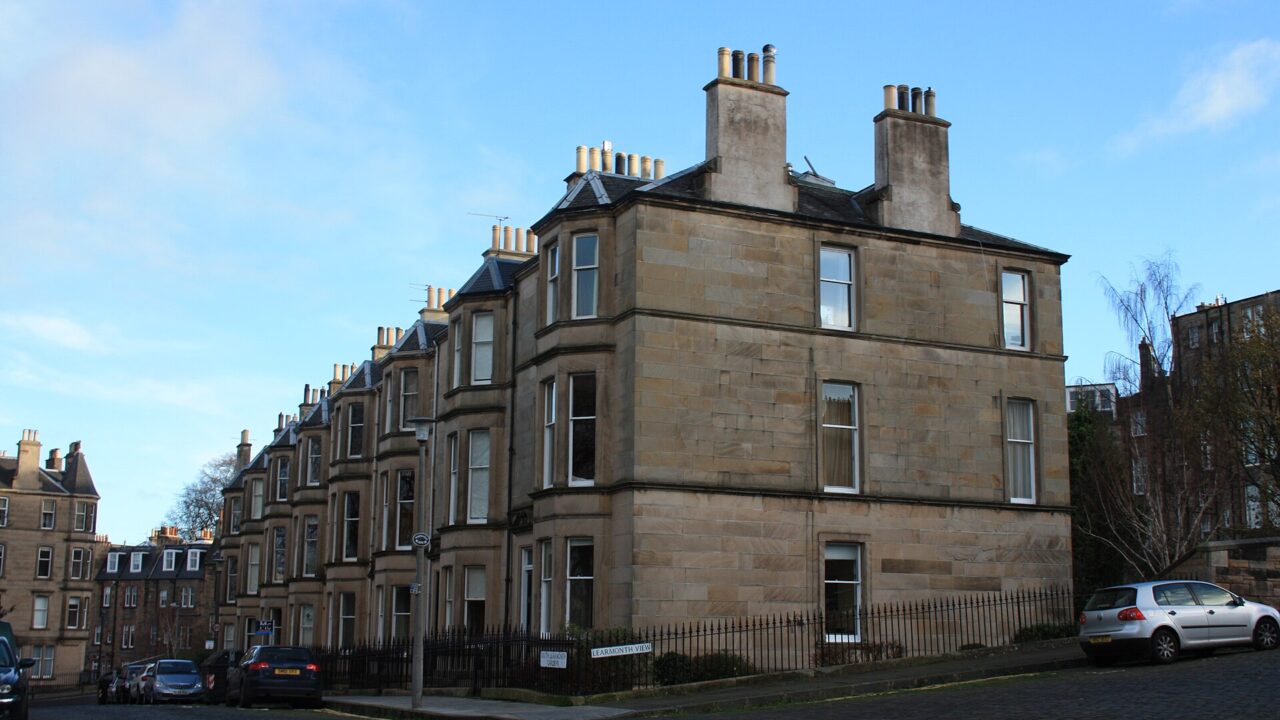
The honest verdict: if you are trying to book a whole flat in a tenement in the Old Town or the New Town, you are shopping in the part of Edinburgh’s accommodation market that the council is actively shrinking, and most of what remains is either long-established, professionally operated, or in a building type that does not attract the presumption against. That is not a reason to avoid self-catering — it is a reason to book early and check the licence.
How to Check a Listing’s Licence Before You Pay
This is the section written for hosts everywhere and for travellers nowhere. It takes about two minutes.
- 1. Look for a licence number in the listing itself. Scottish law requires it to appear in all advertising, and the major platforms have fields for it. Scroll to the bottom of the listing description — that is usually where it sits.
- 2. If there is no number, ask the host directly through the platform, in writing, before booking. A licensed operator will supply it immediately. Hesitation is the answer.
- 3. Check it against the council’s public register. Licensing authorities in Scotland maintain public registers of short-term let licences; the City of Edinburgh Council’s licensing pages are where to look.
- 4. Check the licence type matches the stay. A whole flat should be under a secondary letting licence, or a home letting one if it is genuinely the host’s own home. A home-sharing licence does not cover a whole-property let.
- 5. Note the address. Licences are granted for a specific property; a number that belongs to a different address is not evidence of anything.
- 6. If it is unlicensed, do not book it, and consider reporting it. Councils accept reports from the public and enforcement is active.
The practical risk you are managing: not fraud so much as cancellation. An unlicensed operator can be shut down between your booking and your arrival, and the platform’s remedy — a refund — is worth very little when you land in Edinburgh in August with nowhere to sleep. The licence number is a five-second check against a genuinely disruptive outcome.
The Visitor Levy: 5% on Your Apartment Too
A lot of visitors assume the new Edinburgh visitor levy is a hotel tax. It is not.
- Live from 24 July 2026. The first city-wide visitor levy in the UK.
- 5% of the accommodation cost, calculated before VAT, on the first five consecutive nights only.
- It covers self-catering apartments, aparthotels, holiday and short-term lets as well as hotels, B&Bs, guest houses, hostels, student lets let to visitors, caravan and campsite pitches, and stationary vessels and vehicles.
- It is charged on the accommodation only — not on parking, cleaning fees charged separately, meals or transport.
- Stays booked and paid for, in part or in full, before 1 October 2025 are exempt, even for later stays.
- The provider is liable and files quarterly returns; in practice it appears on your bill.
- Worked example: an apartment at £180 a night for three nights is £540, and the levy is about £27.
There are exemptions — for people with no usual residence, and for recipients of Disability Living Allowance, Disability Assistance, Attendance Allowance, Pension Age Disability Benefit or Personal Independence Payment — but note the mechanism: exempt guests still pay the levy to the accommodation provider and then claim reimbursement from the council with evidence. There is no stated blanket exemption for children. Full detail is in our guide to the ETA and the Edinburgh visitor levy.
The honest verdict: 5% on a week’s apartment is real money but it is not a reason to change your plans, and it is capped at five nights, which favours longer stays. What it does change is comparison shopping — a self-catering listing quoting a nightly rate and a hotel quoting a nightly rate now both carry it, so it does not tilt the choice either way.
Serviced Apartments Edinburgh Visitors Actually Book
These are established operators in the serviced apartment and aparthotel sector in Edinburgh, listed rather than ranked. Rates move constantly, so check the current price on each operator’s own site when you book.
- Cheval Old Town Chambers — luxury serviced apartments in the Old Town, about two minutes’ walk from Waverley station and five from the Castle.
- Staycity Aparthotels – West End — studios, one- and two-bedroom apartments and four-bedroom townhouses with full kitchens, in the West End near the theatres.
- PREMIER SUITES Edinburgh Fountain Court — West End, near Haymarket and the financial district, roughly eight minutes’ walk from Haymarket station.
- Destiny Scotland — serviced apartments across central Edinburgh locations.
- Roomzzz Aparthotel Edinburgh — opened in 2023, fully equipped kitchens, grab-and-go breakfast, close to the Royal Mile and Princes Street.
The honest verdict on where to base yourself: the West End is the sweet spot for apartments — it has the density of purpose-built stock, it is a genuine residential neighbourhood so there are shops to actually cook from, and Haymarket station puts you one stop from Waverley and on the direct line to the airport tram. The Old Town is the most atmospheric and the least practical: steep, noisy at night, and short of a supermarket. Our guide to the best area to stay in Edinburgh compares all of them properly.
When an Apartment Beats a Hotel
| Situation | Better choice | Why |
|---|---|---|
| Two people, two or three nights | Hotel | You will eat out anyway; a kitchen you never use is not worth the premium |
| Family with young children | Apartment | Separate bedrooms, a bath, and the ability to eat at 17:30 rather than at a restaurant’s convenience |
| Four or more adults | Apartment | Two hotel rooms almost always cost more than one two-bedroom flat |
| A week or longer | Apartment | Laundry, breakfast at home, and the levy caps at five nights either way |
| August, during the Festival | Whatever you can get, booked very early | The whole city’s stock is committed months ahead |
| Special dietary needs | Apartment | Cooking for yourself removes the daily negotiation entirely |
| You want a reception desk | Aparthotel | Both things at once — kitchen plus staff on site |
Booking Advice for 2026
- Book earlier than you would have five years ago. The legal whole-flat supply in central Edinburgh is smaller than it was and it is not coming back.
- Check the licence number before paying. Two minutes, and it removes the only serious risk in this category.
- Expect the 5% levy on top of whatever the listing quotes, on the first five nights.
- Read the cleaning fee. On a two-night stay a flat cleaning fee can outweigh the nightly saving against a hotel entirely.
- Check what floor it is on and whether there is a lift. Many older Edinburgh tenement buildings have no lift, and listings do not always say.
- For August, book by the previous autumn. See our guide to Festival accommodation.
- If the price looks impossibly good, check the licence first. That is usually what the discount is.
Licensing dates, licence types, advertising and penalty requirements checked against Scottish Government guidance in September 2026; Edinburgh control area and refusal figures come from council policy and industry reporting, including a freedom of information disclosure, and are flagged as such in the text. Visitor levy detail from City of Edinburgh Council scheme pages. Operator details are for identification only; we have not verified rates.
Frequently Asked Questions
Are Airbnbs legal in Edinburgh in 2026?
Licensed ones are. Every short-term let in Scotland has needed a licence since the scheme opened on 1 October 2022, with a 1 October 2023 deadline for existing operators to apply, and operating without one is a criminal offence carrying a fine of up to £2,500. In Edinburgh a whole-flat secondary let also needs planning permission, because the entire city is a short-term let control area. Check for a licence number in the listing before you book.
How do I check a short-term let licence in Edinburgh?
The licence number must by law appear in the advertising, so look in the listing description first — usually near the bottom. If it is not there, ask the host in writing through the platform before booking. Then check the number against the City of Edinburgh Council’s public licensing register, confirm the licence type matches the kind of let you are booking, and confirm it is registered to that address.
What is a short-term let control area?
A designated zone in which using a whole dwelling that is not your principal home for short-term letting counts as a change of use and therefore needs planning permission. The whole of Edinburgh is a control area, and the requirement applies to changes made after 5 September 2022. It is separate from, and additional to, the national licensing requirement.
Why are there fewer Edinburgh apartments to rent than there used to be?
Because the council refuses most secondary-letting planning applications. Reported figures include 566 refusals from 632 applications from October 2022, and 464 refusals against 88 approvals from 1,091 applications between January 2025 and April 2026, with one industry analysis putting refusals of traditional short-term lets at 97.2%. There is also a rebuttable presumption against granting consent for tenements and properties with shared main doors, which describes most central Edinburgh flats.
Does the visitor levy apply to serviced apartments and self-catering?
Yes. From 24 July 2026 the Edinburgh visitor levy is 5% of the accommodation cost before VAT, on the first five consecutive nights, and it covers self-catering apartments, aparthotels, short-term and holiday lets exactly as it covers hotels and hostels. It is charged on the accommodation only, not on parking, meals or transport, and stays booked and paid for, in part or in full, before 1 October 2025 are exempt.
What is the difference between an aparthotel and a serviced apartment?
An aparthotel is a purpose-built block with a reception desk, run as a hotel with kitchens in the rooms — it is regulated as a hotel and is not affected by the short-term let squeeze. A serviced apartment is a flat let by a professional operator, usually with housekeeping and managed check-in, and it sits inside the licensing regime. For reliability, the aparthotel is the safer booking; for the feel of a real Edinburgh flat, the serviced apartment.
Is a serviced apartment cheaper than a hotel in Edinburgh?
Not for two people on a short stay — a cleaning fee spread over two nights usually wipes out the nightly saving. It becomes clearly cheaper with four or more people, where one two-bedroom flat undercuts two hotel rooms, and on stays of a week or more, where cooking some meals matters. The 5% visitor levy applies to both, capped at five nights, so it does not change the comparison.
What happens if I book an unlicensed short-term let?
The main risk is not fraud, it is cancellation — an unlicensed operator can be stopped between your booking and your arrival, and a platform refund is small comfort if you land in Edinburgh in August with nowhere to stay. There is also a safety dimension: fire, gas and electrical safety checks are conditions of holding a licence, so an unlicensed property has not had them verified.
Which area of Edinburgh is best for a serviced apartment?
The West End. It has the greatest concentration of purpose-built serviced apartments and aparthotels, it is a genuine residential neighbourhood with shops you can actually cook from, and Haymarket station is one stop from Waverley and on the tram line to the airport. The Old Town is more atmospheric and less practical — steep, noisy after dark and short of a supermarket.
Where to Go Next
This guide belongs to our complete Edinburgh accommodation guide. For the neighbourhood decision, see the best area to stay in Edinburgh; for hotels specifically, our guides to the New Town and the Old Town. For the rules that now apply to every visitor, see the UK ETA and the Edinburgh visitor levy. If the budget is the constraint, cheap accommodation in Edinburgh and the city’s hostels cover the other end of the market.
Photo Credits
South Learmonth Gardens tenements: 1 to 8 South Learmonth Gardens, Edinburgh by Stephencdickson, CC BY-SA 4.0, via Wikimedia Commons.
A bedroom at the Scotsman Hotel: ExectuiveRoom1 by ScotsmanHotel, CC BY-SA 3.0, via Wikimedia Commons.