Edinburgh’s Royal Mile is far more than a street — it is the ancient spine of one of Europe’s most perfectly preserved medieval cities, a mile-long corridor of history that runs from the gates of Edinburgh Castle at its summit to the Palace of Holyroodhouse at its foot. Along its length and branching from it in every direction, Edinburgh’s Old Town unfolds in a labyrinth of narrow closes, hidden courtyards, soaring tenements, and atmospheric wynds that have barely changed in outline since the 16th century. Together, the Royal Mile and Old Town form one half of Edinburgh’s UNESCO World Heritage Site — and they represent one of the most extraordinary urban landscapes anywhere in the world.
This comprehensive guide takes you through the Royal Mile section by section, explores the hidden closes and wynds that most visitors walk straight past, covers every major landmark and attraction in Edinburgh’s Old Town, and provides the practical insider knowledge you need to experience this remarkable quarter at its best. Whether you’re planning your first visit or your fifth, Edinburgh’s Old Town always has something new to reveal.
Understanding the Royal Mile: A Street in Five Parts
The Royal Mile is not actually a single street but a succession of five connected streets that run downhill from Edinburgh Castle to Holyroodhouse, covering exactly one Scots mile (approximately 1.8 kilometres or 1.12 imperial miles). Each section has its own distinct character and history, and understanding this structure transforms a walk down the Royal Mile from a simple tourist stroll into a journey through a thousand years of Scottish urban life.
Castlehill
The Royal Mile begins at the Castle Esplanade and descends through Castlehill, the shortest and steepest section. This was historically the most prestigious address in Edinburgh — proximity to the castle meant proximity to power. Today Castlehill is home to some of the Royal Mile’s most popular attractions, including Camera Obscura and World of Illusions, the Scotch Whisky Experience, and the Tartan Weaving Mill. The Outlook Tower (housing Camera Obscura) has been entertaining visitors since 1853, making it Edinburgh’s oldest purpose-built visitor attraction. The Hub, a striking Gothic spire building that serves as Edinburgh Festival headquarters, dominates the lower end of Castlehill. Cannonball House, on the north side, has a cannonball embedded in its west-facing wall — the purpose of which is still debated, though local tradition claims it marks the gravitational height of Edinburgh’s first piped water supply from Comiston Springs.
Lawnmarket
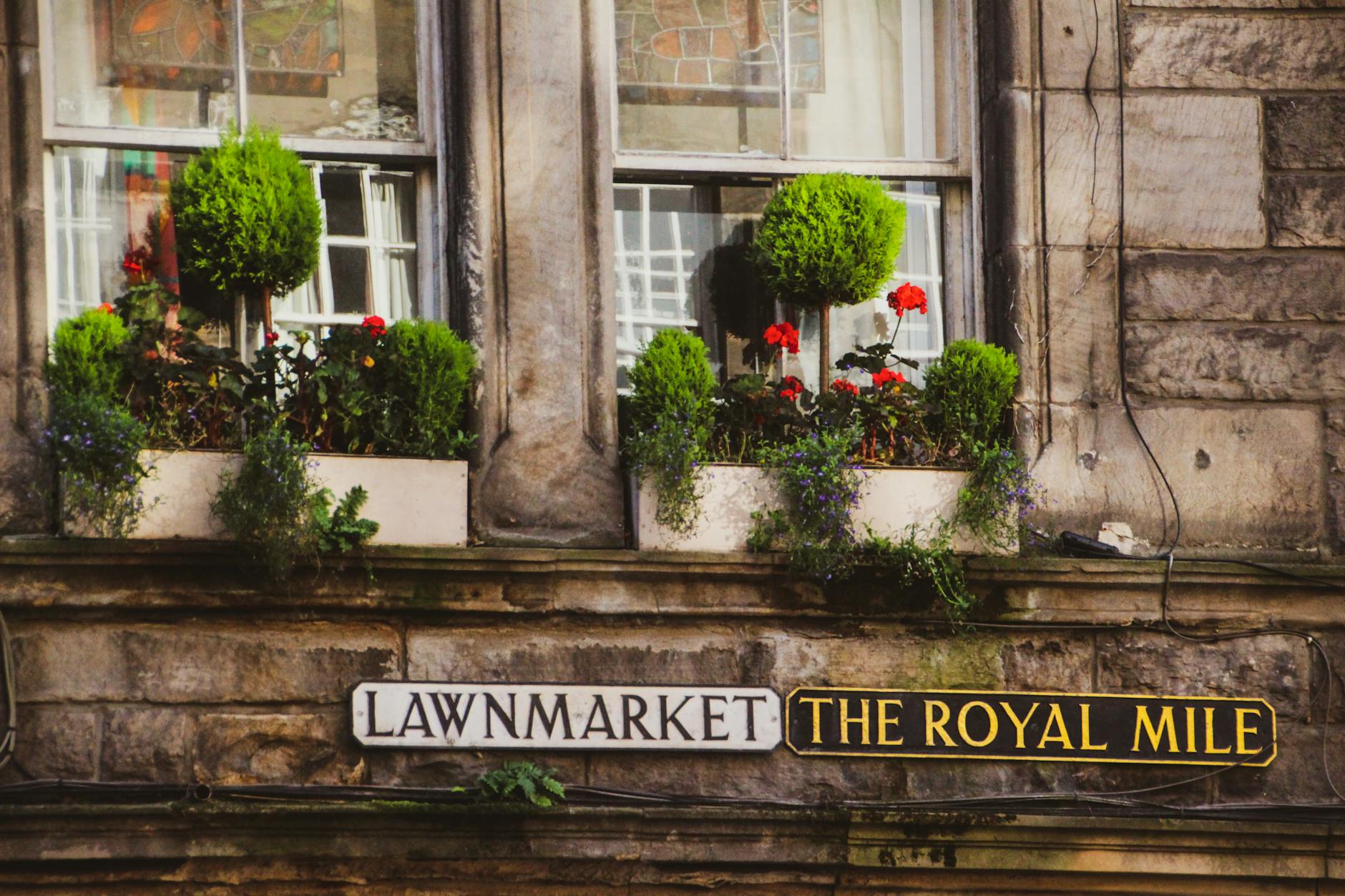
Below Castlehill, the street widens into the Lawnmarket (from “Land Market,” where goods from the surrounding countryside were once traded). This is where some of Edinburgh’s finest surviving medieval buildings stand, including Gladstone’s Land — a remarkably preserved 17th-century merchant’s house managed by the National Trust for Scotland, with original painted ceilings and period furnishings that vividly recreate life in the Old Town four centuries ago. Lady Stair’s Close, just off the Lawnmarket, leads to the Writers’ Museum, a free museum celebrating Robert Burns, Sir Walter Scott, and Robert Louis Stevenson in a beautiful 1622 townhouse. Riddle’s Court, recently restored, is one of the Old Town’s finest Renaissance courtyard houses and offers guided tours. James Court, home at various times to the philosopher David Hume and the biographer James Boswell, is one of the best-preserved close complexes on the Royal Mile.
High Street
The central and longest section of the Royal Mile is properly called the High Street. This was the commercial and civic heart of medieval Edinburgh, and it remains the most bustling stretch today. St Giles’ Cathedral stands at its centre, the historic heart of Edinburgh’s religious life. The Mercat Cross — the traditional gathering point for royal proclamations and public announcements — stands nearby. The High Street is also where you’ll find the entrance to the Real Mary King’s Close, the Edinburgh City Chambers (built over the buried streets of the original close), and the Tron Kirk, a 17th-century church that now serves as a heritage centre. The intersection with George IV Bridge and South Bridge creates a natural focal point where the Old Town meets the routes south and east.
Canongate
Below the junction with St Mary’s Street and Jeffrey Street, the Royal Mile enters the Canongate — historically a separate burgh from Edinburgh, governed by the Augustinian canons of Holyrood Abbey. The Canongate retained its independent status until 1856 and still has a subtly different character from the upper Royal Mile, with wider streets, lower buildings, and a more residential feel. Key landmarks include the Museum of Edinburgh (housed in the 16th-century Huntly House), Canongate Kirk (where economist Adam Smith is buried), and the beautifully restored Dunbar’s Close Garden — a hidden 17th-century-style formal garden that is one of the Old Town’s most peaceful secret spaces. The Canongate also features some of the finest recent architecture on the Royal Mile, including the Scottish Poetry Library and the new Canongate housing developments that blend contemporary design with traditional Old Town proportions.
Abbey Strand
The Royal Mile’s final section, Abbey Strand, is the short approach to the Palace of Holyroodhouse and the ruins of Holyrood Abbey. Brass studs set into the road mark the historic boundary of the Holyrood sanctuary — a zone where debtors could claim refuge from arrest. The “S” marks (for “Sanctuary”) on the gatehouse of Abbey Strand can still be seen. This area also provides access to Holyrood Park and the dramatic volcanic landscape of Arthur’s Seat.
Edinburgh’s Hidden Closes & Wynds: The Old Town’s Secret Heart
The true magic of Edinburgh’s Old Town lies not on the Royal Mile itself but in the hundreds of narrow passageways that branch from it. These closes, wynds, and courts are the arteries of a medieval city where tens of thousands of people once lived within walls barely 140 acres in extent — making Edinburgh one of the most densely populated cities in the world. Understanding these passageways is the key to understanding Edinburgh’s Old Town.
What’s the Difference Between a Close, a Wynd, and a Court?
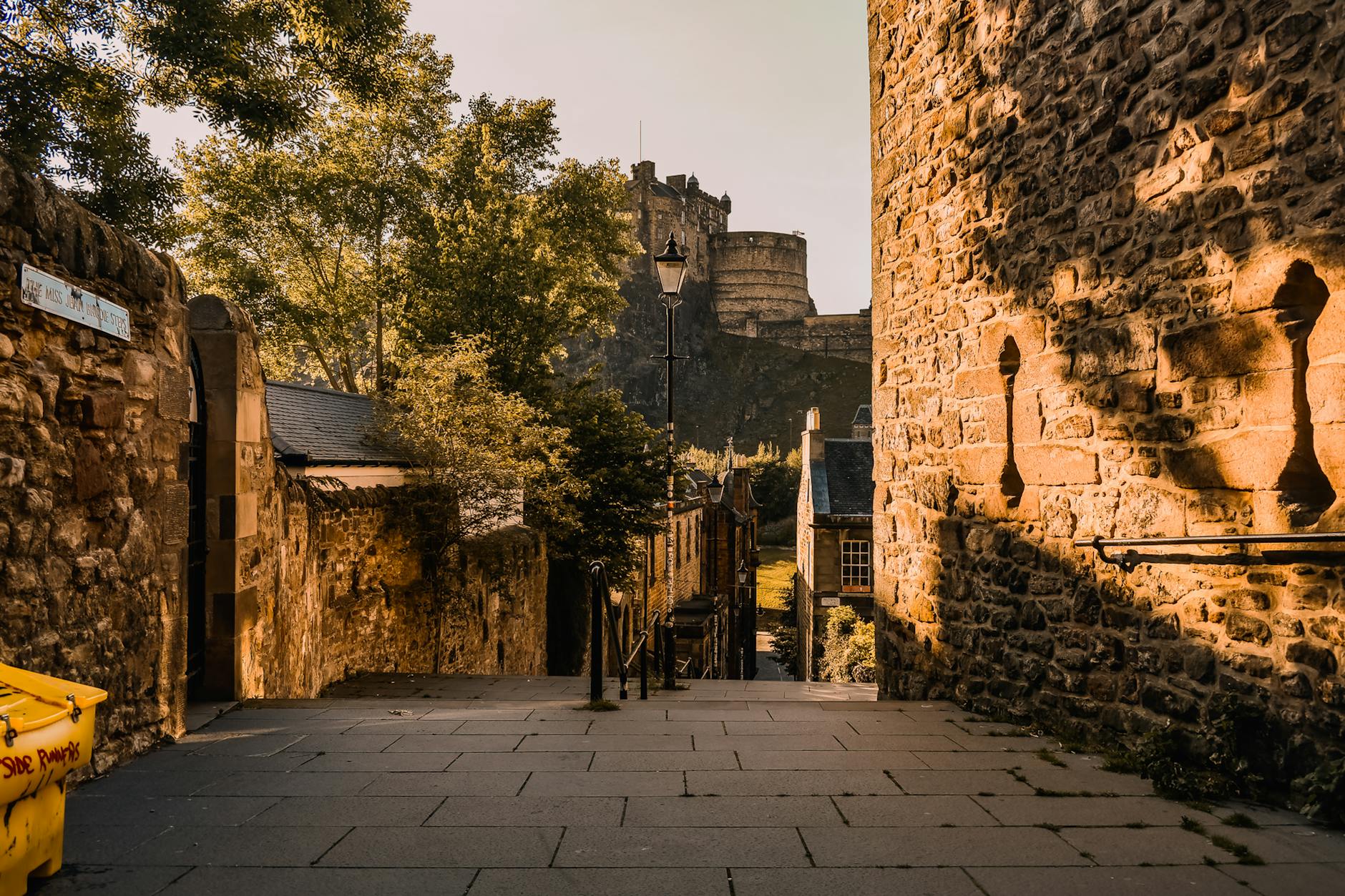
Edinburgh’s Old Town vocabulary can be confusing for visitors. A close is a narrow passageway, usually covered at least partially by the buildings above, that connects the Royal Mile to the lands behind it — the word comes from the Scots for “enclosed.” A wynd is a wider lane, typically open to the sky, that connects the Royal Mile to the streets running parallel below it (the Cowgate to the south, the Nor’ Loch — now Princes Street Gardens — to the north). A court or courtyard is an enclosed space within a building complex, usually reached through a close. Many of Edinburgh’s most beautiful hidden spaces are courts accessed through narrow, unremarkable-looking close entrances.
The Best Closes to Explore on the Royal Mile
There are over 70 named closes on the Royal Mile, and discovering them is one of Edinburgh’s greatest pleasures. Here are the ones most worth seeking out, arranged roughly from the Castle end downhill.
Advocate’s Close — One of the most photographed closes on the Royal Mile, Advocate’s Close descends steeply from the High Street towards Cockburn Street and offers a famous framed view of the New Town and the Firth of Forth through its narrow gap between towering tenements. The Devil’s Advocate restaurant, housed in a former pump house at the bottom of the close, is one of Edinburgh’s finest cocktail bars and restaurants.
Lady Stair’s Close — This close leads from the Lawnmarket to a beautiful courtyard containing the Writers’ Museum (free entry), housed in a 1622 townhouse called Lady Stair’s House. The close itself is paved with flagstones inscribed with literary quotations from Scottish writers — look down as you walk through.
Riddle’s Court — A stunning double-courtyard merchant’s house dating to the 1590s, recently restored to magnificent effect. The painted ceilings in the upper chambers are among the finest surviving examples of Scottish Renaissance decorative art. The court was home to David Hume and later hosted a banquet for King James VI. Guided tours are available.
Anchor Close — This unassuming close was once the site of the printing works where the first edition of the Encyclopaedia Britannica was printed in 1768. A plaque marks the spot. The Anchor Tavern that once stood here was a favourite meeting place of Edinburgh’s 18th-century literary elite, including Robert Burns.
Bakehouse Close — Outlander fans will instantly recognise this beautifully preserved close as the filming location for A. Malcolm’s print shop in Season 3 — the scene where Claire and Jamie are reunited after 20 years. The close is freely accessible and remarkably atmospheric, with original 17th-century stonework and a quiet, self-contained courtyard.
Dunbar’s Close — Hidden behind an unassuming entrance on the Canongate, Dunbar’s Close opens into a formal 17th-century-style garden that is one of the Old Town’s most delightful secret spaces. Maintained by volunteers, this walled garden with geometric hedging, herbs, and benches is the perfect place to rest and gather your thoughts during a Royal Mile walk.
Tweeddale Court — Another Outlander location, Tweeddale Court is a spacious and atmospheric courtyard that once housed the head office of the Royal Bank of Scotland and was the site of a notorious unsolved robbery in 1806. The court now houses creative businesses and has a distinctly artistic feel.
Major Landmarks & Attractions on the Royal Mile
St Giles’ Cathedral
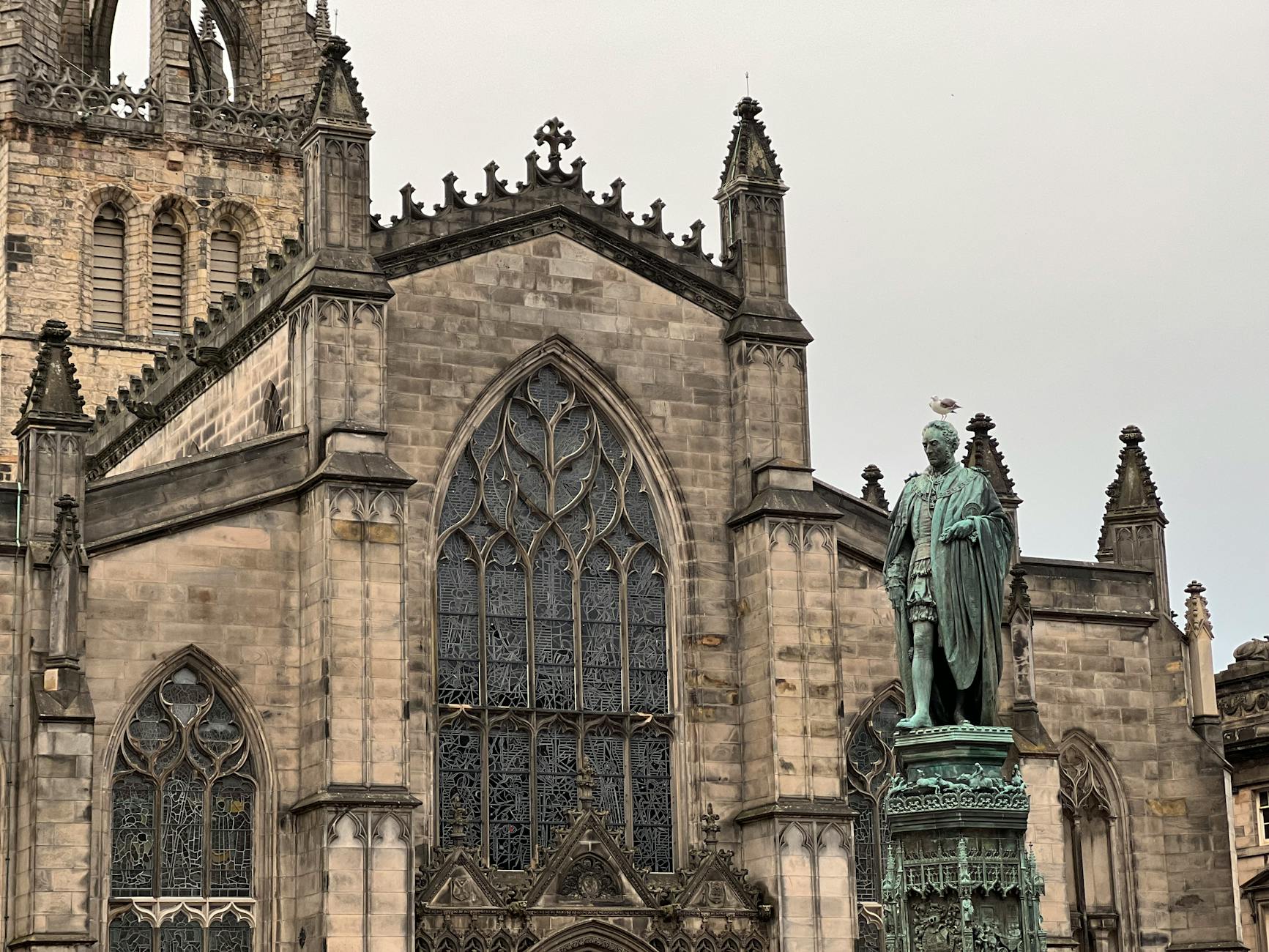
Standing at the very heart of the Royal Mile, St Giles’ Cathedral (properly the High Kirk of Edinburgh) has been a place of worship since the 9th century. The present building dates largely to the 14th and 15th centuries, and its distinctive crown steeple — added in 1500 — is one of Edinburgh’s most recognisable silhouettes. Inside, the highlight is the Thistle Chapel, designed by Sir Robert Lorimer in 1911 for the Knights of the Order of the Thistle (Scotland’s highest order of chivalry). The chapel is a masterpiece of Gothic Revival craftsmanship, with extraordinarily detailed carvings of angels, animals, heraldic symbols, and even a carved angel playing bagpipes. Entry to the cathedral is free (a £3 donation is suggested), and free guided tours run daily at 10:30am and 2:30pm.
The Real Mary King’s Close
Beneath the Royal Mile’s cobblestones lies a network of 17th-century streets that were sealed off and built over when the Edinburgh City Chambers were constructed in the 1750s. The Real Mary King’s Close offers guided tours of these remarkably preserved underground spaces — original rooms, streets, and buildings frozen in time beneath the modern city. The tours bring to life the everyday experiences of the people who lived here, from prosperous merchants to plague victims. Standard tours last about an hour and cost from £30. Booking in advance is essential, especially during summer. Specialised tours include LGBTQIA+ history tours, medical history tours, and seasonal themed experiences.
Camera Obscura & World of Illusions
Edinburgh’s oldest purpose-built visitor attraction has been operating from its tower on Castlehill since 1853. The centrepiece is a genuine Victorian camera obscura — a live, moving panorama of Edinburgh projected onto a viewing table using only mirrors and lenses, accompanied by a guide who points out landmarks across the city. The five floors below the camera obscura are filled with interactive optical illusions, holograms, magic tricks, and mind-bending visual experiences. The rooftop terrace offers some of the best 360-degree views in Edinburgh. Adult tickets are £21.95 (early bird 8–8:45am saves £4). Book online for guaranteed entry — the attraction sells out frequently.
The Palace of Holyroodhouse
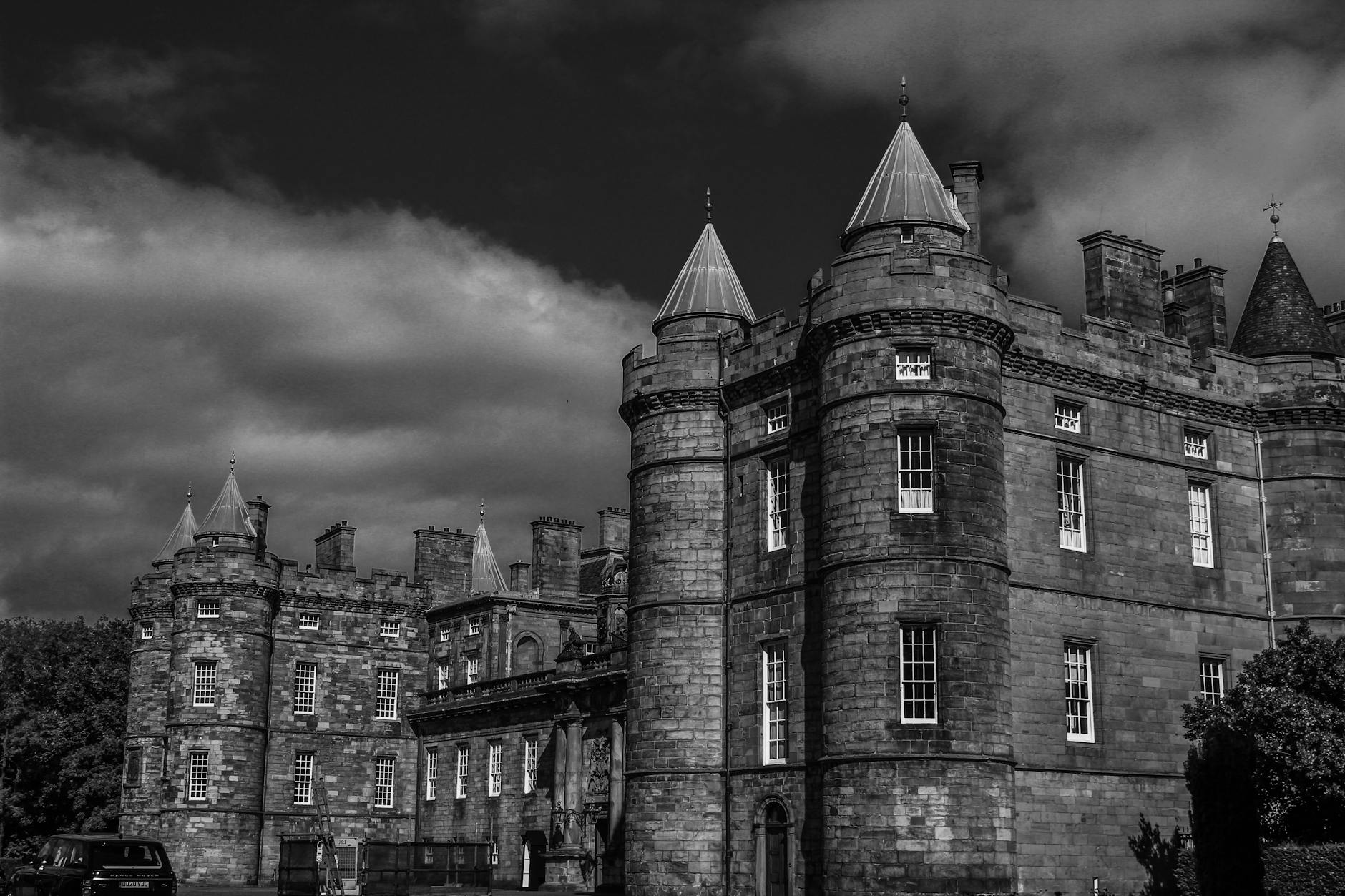
At the foot of the Royal Mile stands the Palace of Holyroodhouse, the official Scottish residence of the British monarch. Originally founded as a monastery in 1128 by King David I, the palace has witnessed some of the most dramatic chapters in Scottish history — most infamously the murder of David Rizzio, private secretary to Mary, Queen of Scots, who was dragged from the queen’s supper chamber and stabbed 56 times in 1566. Today visitors can explore the grand State Apartments, the Great Gallery with its 96 portraits of Scottish monarchs (all painted by the same artist in just two years), and the atmospheric ruins of the medieval Holyrood Abbey. Advance tickets cost £19.80 for adults.
The Scottish Parliament

Opened in 2004, the Scottish Parliament building at the foot of the Royal Mile is one of the most distinctive contemporary buildings in Europe. Designed by Spanish architect Enric Miralles, the building is an audacious composition of shapes, materials, and references to Scotland’s landscape and history — from the boat-shaped committee rooms to the bamboo-inspired concrete beams. Whether you love it or hate it architecturally, the Parliament is free to visit and offers excellent guided tours that explain both the building’s design philosophy and the workings of Scottish democracy. When Parliament is in session, you can watch debates from the public gallery. The building also hosts regular exhibitions and events.
Beyond the Royal Mile: Edinburgh’s Old Town Neighbourhoods
The Old Town extends well beyond the Royal Mile itself, and some of its most rewarding experiences lie in the streets and squares that surround it.
Victoria Street & the Grassmarket
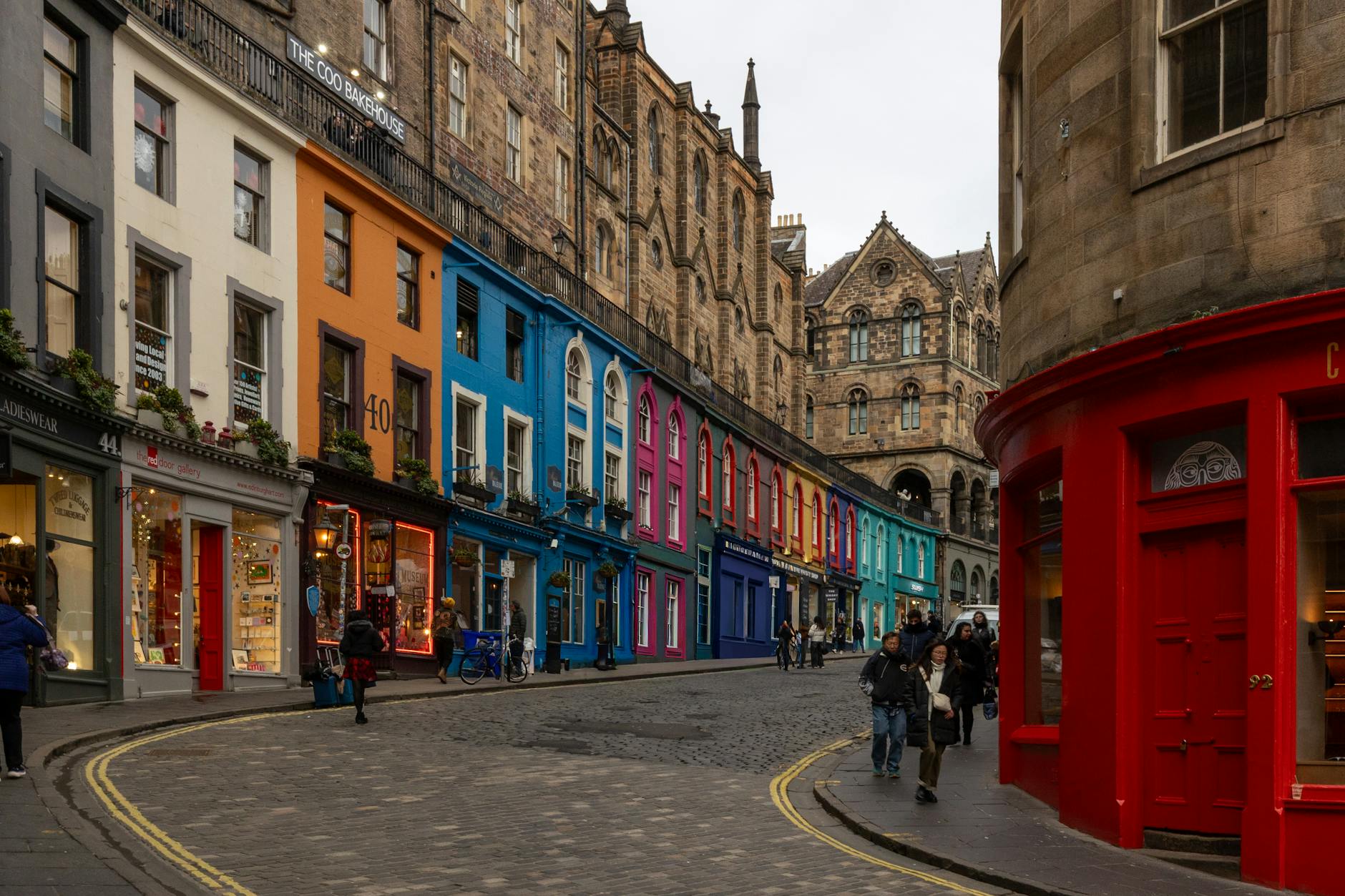
Victoria Street is arguably Edinburgh’s most visually stunning street — a curving, two-tiered thoroughfare lined with brightly painted shopfronts in every colour, widely believed to have been J.K. Rowling’s inspiration for Diagon Alley in the Harry Potter books. The street descends from George IV Bridge to the Grassmarket and is lined with independent boutiques, vintage shops, specialist cheese shops, and unique Edinburgh souvenirs. On the upper level, Victoria Terrace provides an elevated walkway with excellent views down over the street and across to the Grassmarket.
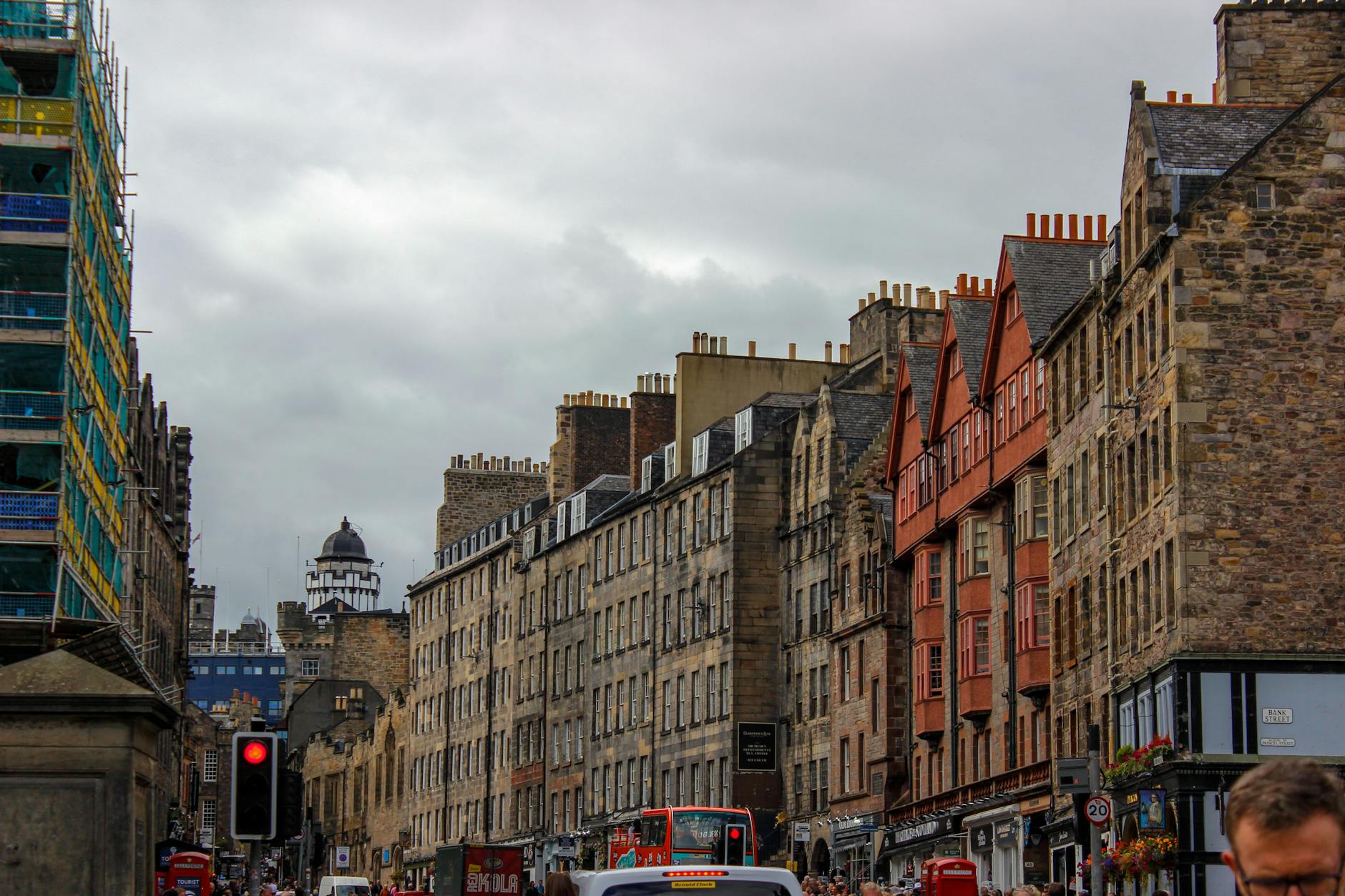
The Grassmarket opens below, a broad historic square that was Edinburgh’s main marketplace — and its public execution ground — for centuries. Today the atmosphere is considerably more cheerful, with a bustling collection of independent shops, traditional pubs (The Last Drop, named for the gallows that once stood here, and the White Hart Inn, Edinburgh’s oldest pub), and excellent restaurants. The view of Edinburgh Castle from the Grassmarket, towering dramatically on its cliff face overhead, is one of the most iconic views in the city. Weekend markets regularly fill the square with local artisans and food vendors.
Greyfriars Kirkyard & Greyfriars Bobby
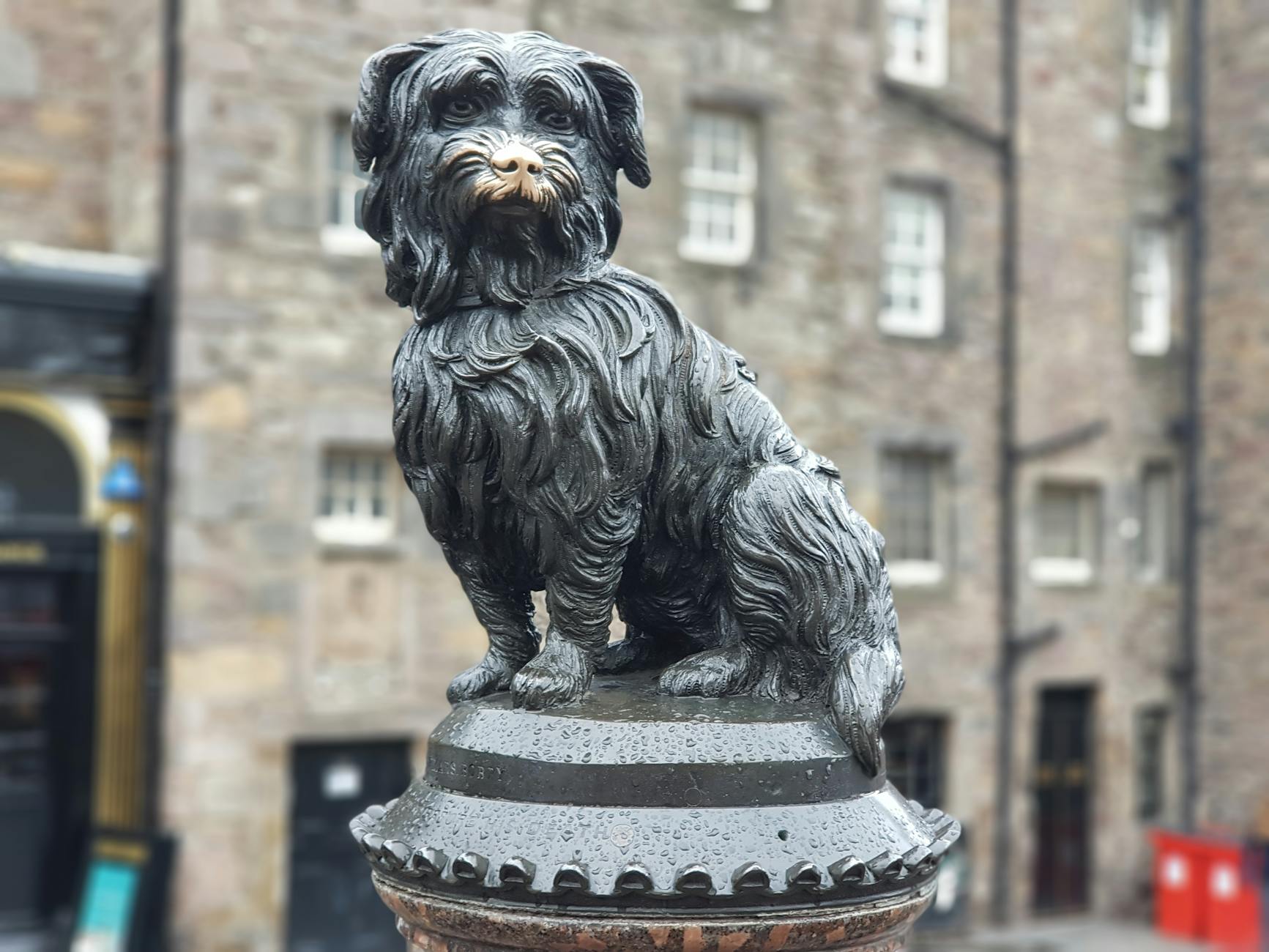
Greyfriars Kirkyard is one of Edinburgh’s most atmospheric and historically significant spaces — a burial ground dating to 1562 that has become a place of pilgrimage for history enthusiasts and Harry Potter fans alike. The kirkyard contains the graves that reputedly inspired character names in J.K. Rowling’s books, including Thomas Riddell (Voldemort’s real name) and William McGonagall. George Heriot’s School, visible from the kirkyard and dating to the 1620s, has a Hogwarts-like appearance complete with four houses and turrets. Beyond the Potter connections, Greyfriars Kirkyard is historically significant as the place where the National Covenant was signed in 1638, and it was later used as an open-air prison for captured Covenanters after the Battle of Bothwell Bridge in 1679. The small bronze statue of Greyfriars Bobby — the Skye Terrier who guarded his master’s grave for 14 years — sits at the kirkyard entrance on Candlemaker Row and is one of Edinburgh’s most photographed landmarks.
The Cowgate
Running parallel to the Royal Mile one level below, the Cowgate is the Old Town’s “other” main street — and it has a very different character. Where the Royal Mile is polished and tourist-friendly, the Cowgate is grittier, more local, and considerably more atmospheric after dark. By day it’s a quiet residential and commercial street, but by night it transforms into the heart of Edinburgh’s nightlife and live music scene, with a concentration of pubs, clubs, and music venues that makes it the go-to destination for locals looking for a night out. During the Edinburgh Festival Fringe in August, the Cowgate becomes one of the most electrifying streets in the world, with pop-up venues, street performers, and a carnival atmosphere that runs until the early hours. The three bridges that cross above the Cowgate — George IV Bridge, South Bridge, and the Cowgate Port — create a layered, canyon-like atmosphere that is unique in Edinburgh.
Walking the Royal Mile: A Practical Guide
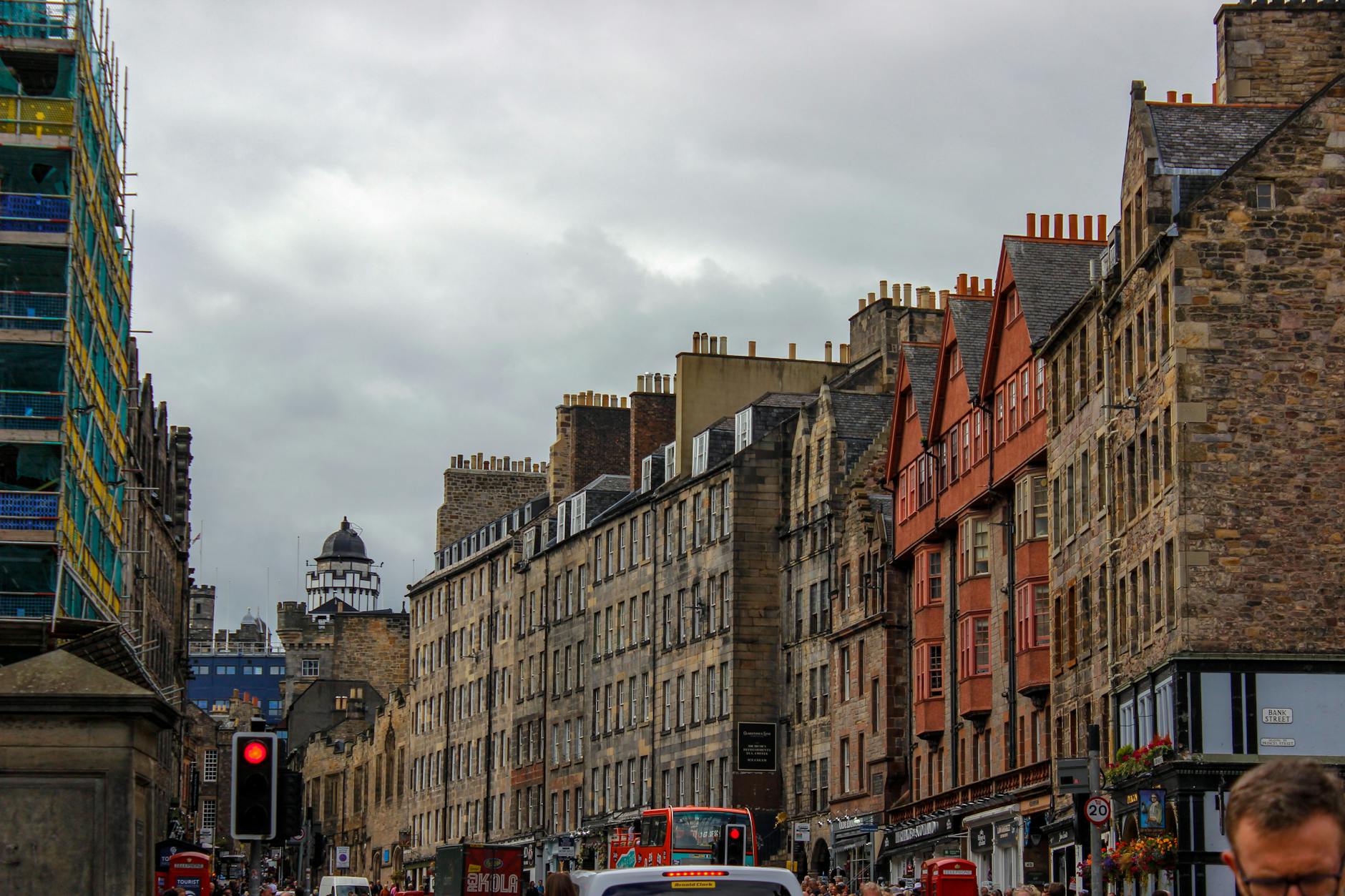
How Long Does It Take to Walk the Royal Mile?
Walking the Royal Mile from Edinburgh Castle to Holyroodhouse without stopping takes approximately 20–25 minutes downhill (castle to palace) or 25–30 minutes uphill (palace to castle). However, this barely scratches the surface. A meaningful exploration of the Royal Mile — ducking into closes, visiting a cathedral, browsing shops, pausing for photographs — requires at least two to three hours. If you plan to enter any of the paid attractions (Edinburgh Castle, Real Mary King’s Close, Camera Obscura, Holyroodhouse), allow a full day. For the deepest experience, spread your Royal Mile exploration across two days — one focused on the upper half (Castle to St Giles’), one on the lower half (St Giles’ to Holyrood) — with detours into the Grassmarket, Cowgate, and surrounding closes each day.
The Best Time to Walk the Royal Mile
The Royal Mile’s character changes dramatically depending on when you visit. Early morning (before 9am) is magical — the cobblestones are quiet, the light is soft, and you can have the closes almost entirely to yourself. This is the best time for photography and for experiencing the Old Town’s atmosphere without crowds. Midday to mid-afternoon is the busiest period, especially in summer, when the street fills with tourists, buskers, and (during August) festival performers. Late afternoon and evening bring a golden light that is beautiful on the Old Town’s stone facades, and as darkness falls the floodlit castle and the lamplight in the closes create an atmosphere that is genuinely unmatched anywhere in Europe. For the quietest experience overall, visit in the shoulder seasons (April–May or September–October) or on weekday mornings during any season.
What to Wear
The Royal Mile and Old Town involve significant walking on cobblestoned and uneven surfaces, including some steep sections (particularly the closes descending to the Cowgate and Grassmarket). Comfortable, sturdy shoes with good grip are absolutely essential — this is not a neighbourhood for heels, smooth soles, or flip-flops. Edinburgh weather is notoriously changeable, even in summer, so carry a waterproof jacket and a warm layer regardless of the forecast. An umbrella is less useful than a hood in Edinburgh’s wind.
Avoiding the Crowds
The Royal Mile is Edinburgh’s busiest tourist street, and during summer and the August festivals it can feel genuinely crowded, particularly between St Giles’ Cathedral and the Castle. The most effective crowd-avoidance strategy is to explore the closes and parallel streets rather than walking the main thoroughfare. The Cowgate (one level below), Victoria Terrace (one level above Victoria Street), Cockburn Street (a curving descent to Waverley Station), and Fleshmarket Close are all excellent alternatives that run parallel to or connect with the Royal Mile while carrying a fraction of the foot traffic. The closes themselves are almost always quiet, even when the main street is packed.
The Old Town’s UNESCO World Heritage Status
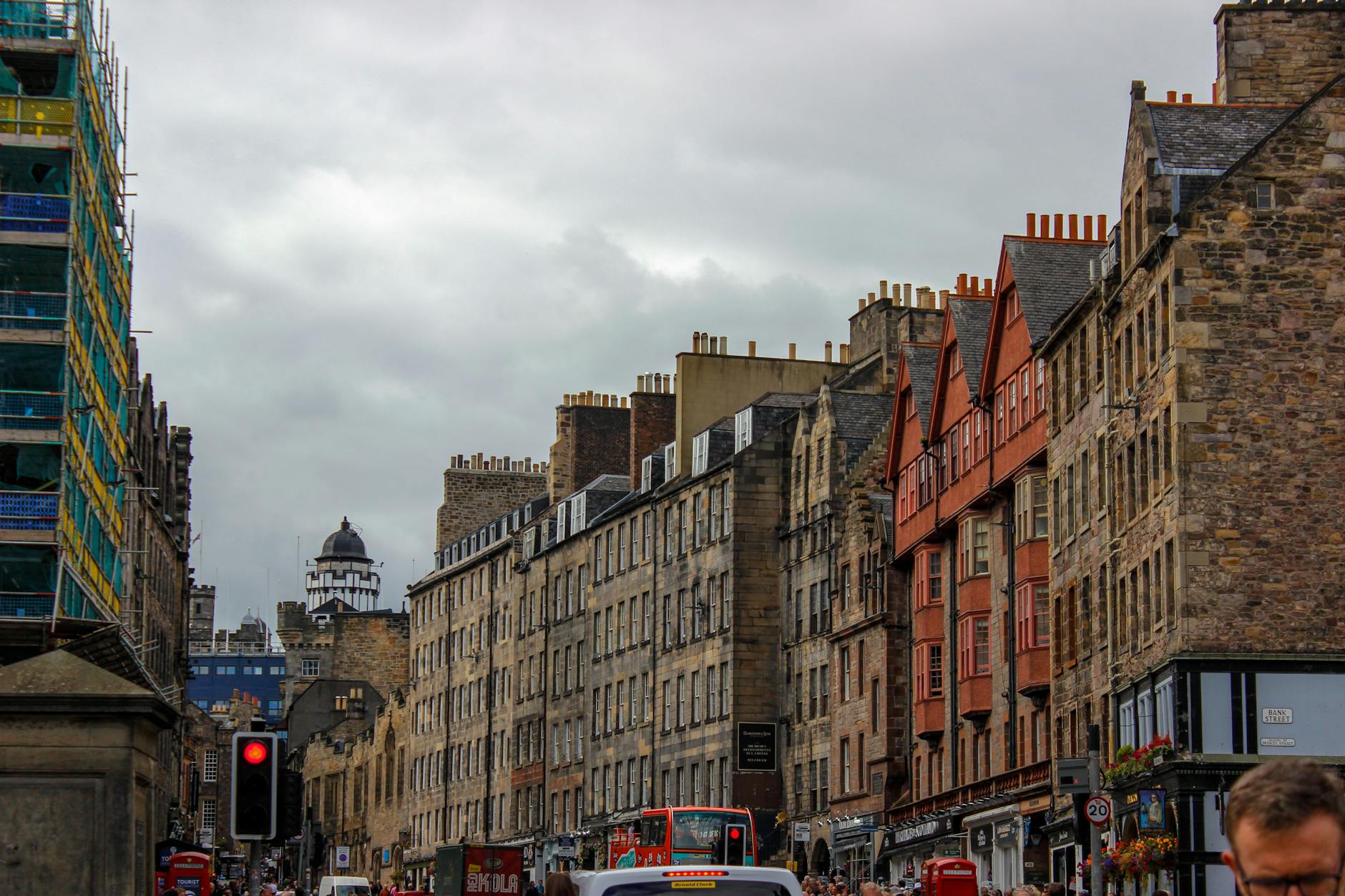
Edinburgh’s Old Town and New Town were jointly inscribed as a UNESCO World Heritage Site in 1995, recognising them as an outstanding example of the way two distinct urban planning traditions — medieval organic growth and Georgian neoclassical planning — exist side by side in a single city. The Old Town’s significance lies in its remarkably complete medieval street plan, its surviving tower houses and tenement buildings (some rising to 11 storeys — effectively the world’s first “skyscrapers”), and the way the city’s geological setting has shaped its development over a thousand years.
The “crag and tail” formation of Castle Rock — an ancient volcanic plug with a ridge of softer rock trailing behind it — created the natural backbone for the Royal Mile and determined the Old Town’s distinctive pattern of a single main street with closes branching from it. The defensive walls that once enclosed the Old Town forced the city to grow upward rather than outward, producing the extraordinarily tall tenement buildings that astonished visitors in the 17th and 18th centuries and that remain one of the Old Town’s most distinctive features today.
Where to Eat & Drink on the Royal Mile
The Royal Mile and surrounding Old Town streets offer an exceptional range of dining options, from traditional Scottish fare to contemporary fine dining. Here are the establishments worth seeking out.
For traditional Scottish food in an atmospheric setting, The Piper’s Rest (near the castle) serves excellent haggis, neeps and tatties with live traditional music. The Witchery by the Castle, housed in a 16th-century building at the top of the Royal Mile, is one of Edinburgh’s most theatrical dining experiences — richly decorated Gothic interiors and a menu that showcases the finest Scottish produce. Wedgwood the Restaurant on the Canongate has built a devoted following for its creative seasonal menus using foraged Scottish ingredients. For a quick, quality lunch, Mums Great Comfort Food on Forrest Row (just off the Grassmarket) serves outstanding traditional Scottish home cooking at reasonable prices.
For drinks, The Jolly Judge (hidden in James Court off the Lawnmarket) is one of Edinburgh’s best-kept secrets — a tiny, atmospheric pub in a 17th-century basement that most tourists walk straight past. The Bow Bar on Victoria Street is widely regarded as one of Scotland’s finest traditional pubs, with an exceptional selection of real ales and single malt whiskies. Deacon Brodie’s Tavern on the Lawnmarket is named after the real Edinburgh citizen who inspired Robert Louis Stevenson’s Dr Jekyll and Mr Hyde — Brodie was a respected councillor by day and a burglar by night. The Devil’s Advocate, at the bottom of Advocate’s Close, combines cocktails with Scottish-influenced small plates in a beautifully converted Victorian pump house.
Shopping on the Royal Mile
The Royal Mile offers shopping that ranges from mass-market tartan souvenirs to genuinely exceptional independent retailers. For the best experience, avoid the generic souvenir shops that cluster around the castle end and head instead to the independent businesses further down the Mile and on the side streets.
Armchair Books on West Port (near the Grassmarket) is one of Edinburgh’s finest second-hand bookshops — a floor-to-ceiling treasure trove of rare and unusual volumes. Mr Wood’s Fossils on Cowgatehead specialises in fossils, minerals, and gemstones, and is far more fascinating than it might sound. The Fudge Kitchen on the Canongate makes fudge in front of you using traditional copper kettles. Ness on the High Street stocks beautifully designed Scottish clothing and accessories. Cranachan & Crowdie (also High Street) carries a carefully curated selection of contemporary Scottish art, ceramics, and gifts. The Edinburgh Farmers’ Market on Castle Terrace every Saturday morning (9am–2pm) is the best place to buy locally sourced Scottish produce.
Frequently Asked Questions About the Royal Mile & Edinburgh Old Town
How long is the Royal Mile?
The Royal Mile is exactly one Scots mile in length — approximately 1.8 kilometres or 1.12 imperial miles. It runs from Edinburgh Castle at the top to the Palace of Holyroodhouse at the bottom, passing through five distinct streets: Castlehill, Lawnmarket, High Street, Canongate, and Abbey Strand. Walking the full length without stopping takes about 20–25 minutes downhill.
Is the Royal Mile worth visiting?
The Royal Mile is absolutely worth visiting — it is the historic heart of Edinburgh and one of the most atmospheric streets in Europe. However, to get the most from it, look beyond the main street and explore the closes, courts, and side streets that branch from it. The real treasures of Edinburgh’s Old Town are often hidden just a few steps from the main thoroughfare. A walking tour (free or paid) is an excellent way to unlock the layers of history that aren’t visible from the surface.
What are Edinburgh’s closes?
Closes are the narrow passageways — often covered by the buildings above — that branch from the Royal Mile into the interior of the Old Town’s building blocks. The name comes from the Scots word for “enclosed.” In medieval Edinburgh, thousands of people lived in the tall tenements that lined these closes, and they served as the primary routes of daily life. Today there are over 70 named closes on the Royal Mile, many freely accessible to visitors and containing hidden courtyards, gardens, restaurants, and historical sites.
Are Edinburgh’s closes safe to explore?
Yes, Edinburgh’s closes are safe to explore during the day and generally safe in the evening. The closes off the Royal Mile are in the heart of a major tourist area and are well-lit and frequently visited. Some closes are gated and close at night, while others are accessible 24/7. As with any urban area, use common sense after dark — stick to well-lit routes and avoid deserted closes late at night if you’re alone.
What are the best free things to do on the Royal Mile?
The Royal Mile offers exceptional free experiences: exploring the closes and hidden courtyards, visiting St Giles’ Cathedral (free entry, donation suggested), the Writers’ Museum in Lady Stair’s Close (free), the Museum of Edinburgh on the Canongate (free), Dunbar’s Close Garden (free), Greyfriars Kirkyard (free), walking the full length of the Mile and soaking in the architecture and atmosphere, and joining a free walking tour (tip-based). During the Edinburgh Festival Fringe in August, the Royal Mile becomes an enormous free outdoor stage with street performers, musicians, and impromptu entertainment.
When is the best time to visit the Royal Mile?
Early morning (before 9am) offers the most atmospheric and crowd-free experience. The shoulder seasons of April–May and September–October provide pleasant weather with significantly fewer visitors than peak summer. August is the most exciting month — the Edinburgh festivals fill the Royal Mile with extraordinary energy and entertainment — but also the most crowded and expensive. Winter offers the quietest experience, magical Christmas markets, and dramatic low-angled light, though daylight hours are short and weather can be challenging.
Can you visit the Royal Mile with a wheelchair or pushchair?
The main Royal Mile is accessible for wheelchairs and pushchairs, though the surface is cobblestoned in many sections and the gradient is significant (it’s a steady uphill walk from Holyrood to the Castle). The closes are generally not accessible — most involve steep steps or very uneven surfaces. The major attractions (St Giles’ Cathedral, the Scottish Parliament, Museum of Edinburgh) have level or ramped access. Edinburgh Castle offers a courtesy vehicle for visitors with mobility difficulties. For the smoothest route, walk downhill from the Castle to Holyrood.
Leave a Reply